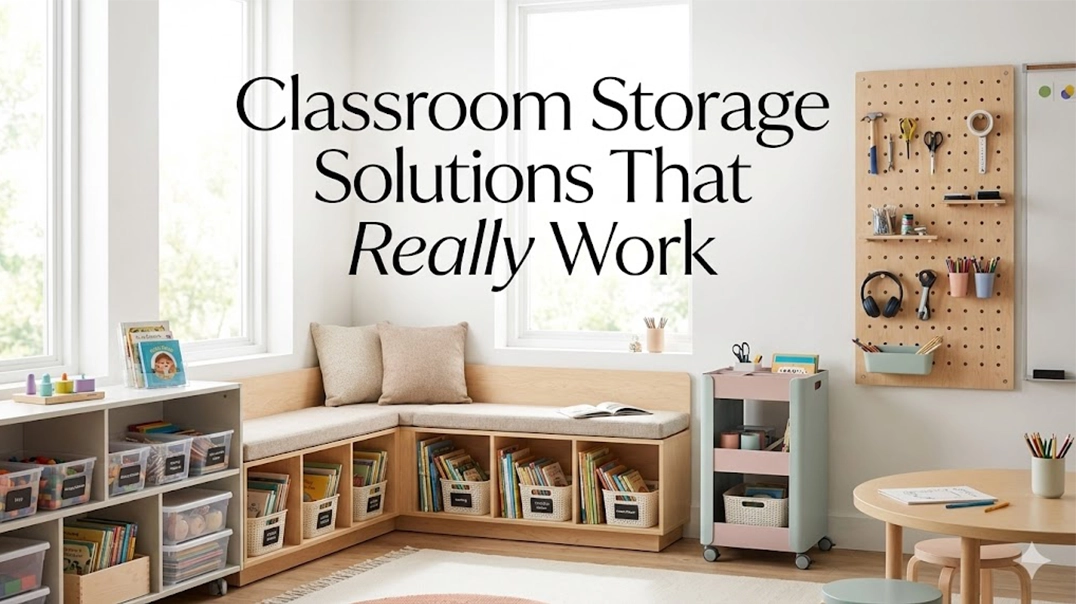
Classroom storage solutions are the systems and routines a classroom uses to keep learning materials, student belongings, and shared supplies organized, easy to find, and easy to put back. When storage works well, teachers spend less time searching and resetting, and students spend more time learning, moving independently, and taking responsibility for their space.
In real classrooms, storage problems rarely come from having too little space. They come from unclear categories, hard to reach shelves, containers that look the same, and areas that do not match how the room is actually used. The goal is not to hide everything. The goal is to make the right things visible at the right time, and keep the rest stored safely, cleanly, and consistently.
This guide walks through practical classroom storage solutions you can apply in any learning environment, from early years to elementary and specialist rooms. You will learn how to choose storage that supports daily routines, how to plan by zones and student access, and how to build an organization system that stays stable even when activities and seasons change.
Why Effective Classroom Storage Matters
Effective classroom storage solutions are not only about keeping materials tidy. They shape how a classroom functions, how students move through their day, and how teaching time is used.
When storage is aligned with daily routines and student needs, the classroom becomes easier to manage and more effective as a learning space. This foundation makes every other classroom decision simpler and more sustainable over time.
Smart Furniture and Multi-Purpose Storage Options
Large storage furniture plays a central role in effective classroom storage solutions because it defines how space is used and how flexible a classroom can be. When storage and furniture functions are combined, classrooms gain organization without sacrificing movement or learning areas.
Mobile Storage Units for Flexible Classrooms
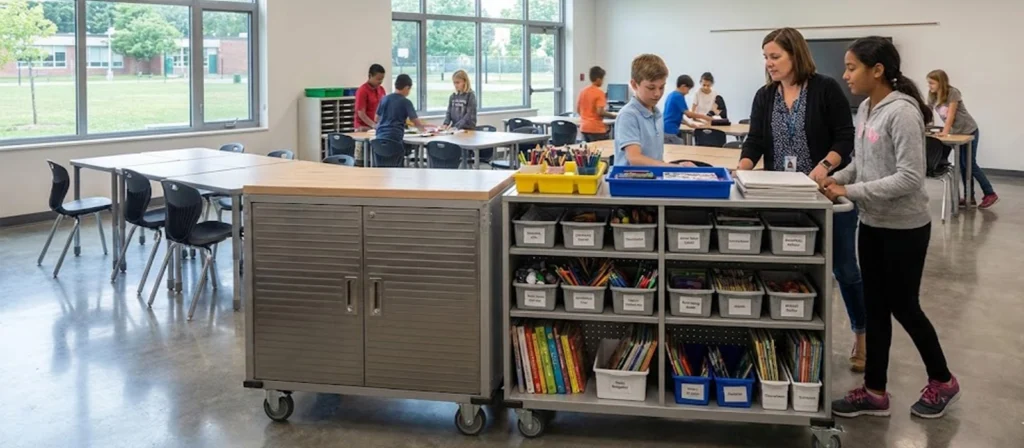
Mobile storage units such as rolling cabinets, carts, and trolleys allow teachers to adapt the classroom layout as activities change. These classroom storage solutions are especially useful in shared or multi use spaces where furniture needs to move frequently. By keeping materials close to where they are used, mobile storage reduces unnecessary movement and helps lessons flow more smoothly.
Seating with Integrated Storage
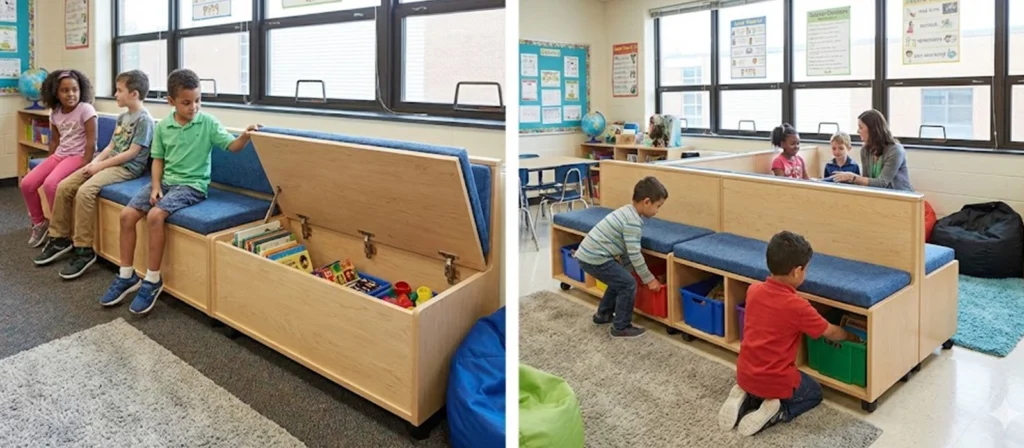
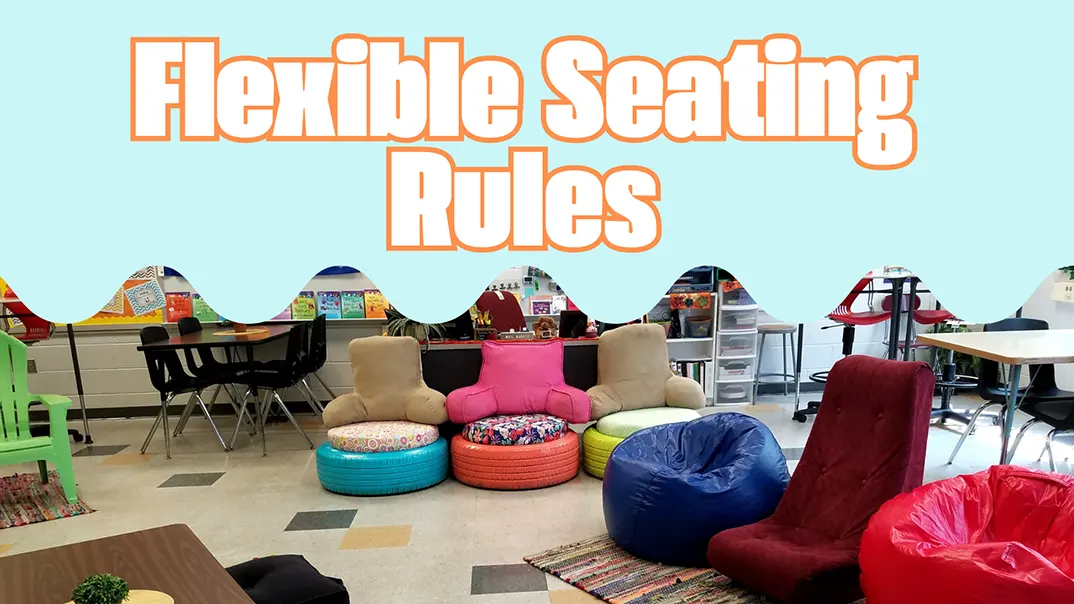
Storage furniture that combines seating and built in compartments offers a practical way to save space without adding visual clutter. Benches with lift up lids or cubby seating units can store books, manipulatives, or personal items while also serving as places for students to sit. This type of classroom storage solution works well in reading areas, circle time spaces, and entry zones.
Multi-Functional Shelving Systems
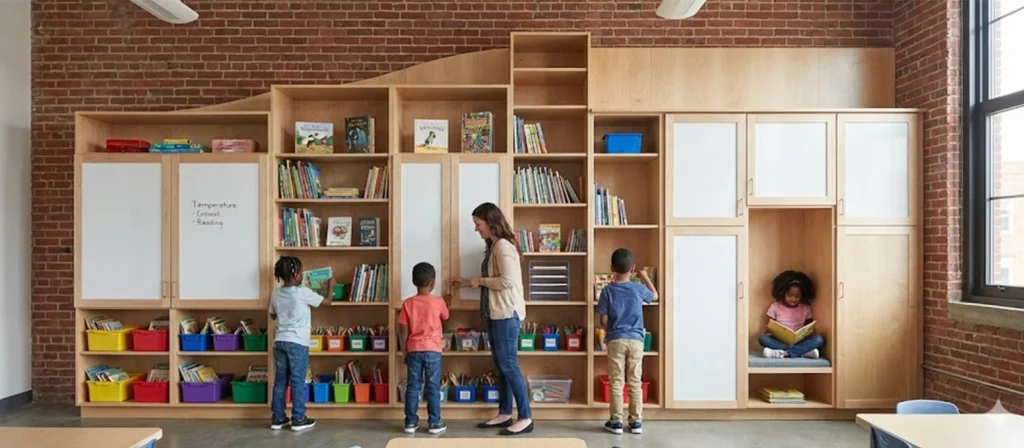
Multi purpose shelving systems support different materials and activities within a single unit. Adjustable shelves, open and closed sections, and mixed height designs allow teachers to store a variety of items in one place. These classroom storage solutions help reduce the number of separate furniture pieces while keeping materials organized and easy to access.
Key Benefits of Smart Furniture and Multi-Purpose Storage Options
- Mobile storage units support flexible layouts and allow materials to move with the activity, helping lessons stay smooth and organized.
- Seating with integrated storage combines sitting and storage in one piece, saving space while keeping frequently used items within reach.
- Multi-functional shelving systems reduce the need for multiple furniture pieces by storing different materials in a single, adaptable unit.
When furniture and storage are designed to work together, classrooms become easier to manage and easier to adapt. These smart classroom storage solutions support both organization and flexibility, which are essential for modern learning environments.
Visible and Accessible Storage for Students
Visible and accessible classroom storage solutions play a key role in helping students understand their environment and take ownership of daily routines. When materials are easy to see and reach, students rely less on adult direction and more on clear visual cues built into the space.
Open Shelving at Child Height
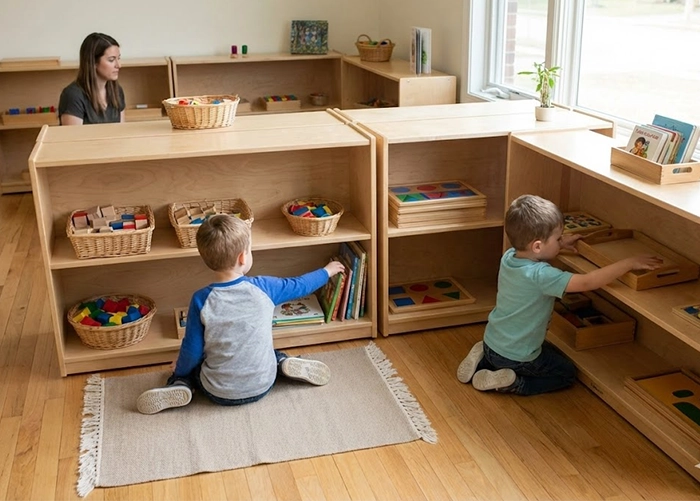
Open shelving positioned at child height allows students to recognize, choose, and return materials without adult assistance. This approach respects children as capable learners and supports the development of consistent classroom routines, particularly in early learning and elementary environments where independence is intentionally encouraged.
Key benefits include:
- Encourages self direction and responsibility by giving students control over materials
- Reduces interruptions since students do not need to ask for access
- Makes daily routines more predictable and easier to maintain
- Supports visual learners who benefit from seeing materials clearly displayed
Clearly Labeled Containers and Bins
Clearly labeled containers and bins help students understand where materials belong, even before they are able to read fluently. Using simple words, images, or color cues creates a shared visual language in the classroom and reduces confusion during transitions.

Key benefits include:
- Helps students quickly identify and return materials correctly
- Supports early literacy through repeated exposure to words and symbols
- Keeps shared supplies organized throughout the day
- Saves time during clean up and activity changes
Classroom Layout That Supports Access
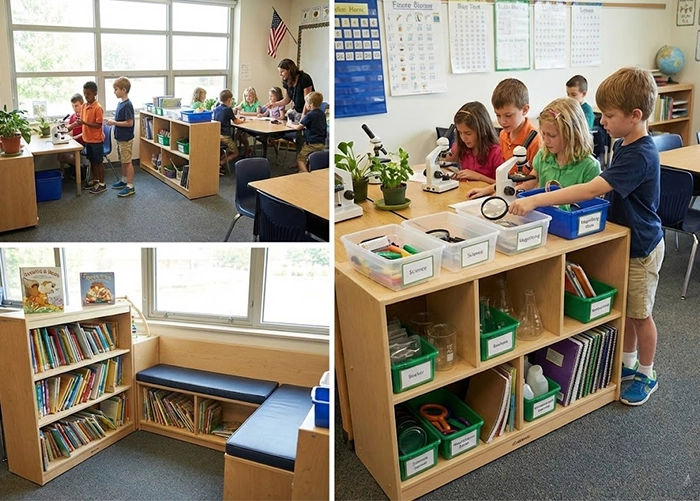
Storage is most effective when it is placed near the activities it supports. When materials are located close to work areas, students move less, stay more focused, and remain engaged in their tasks. Thoughtful placement is an essential part of effective classroom storage solutions rather than a final adjustment.
Key benefits include:
- Creates a more natural and efficient learning flow
- Minimizes unnecessary movement across the classroom
- Helps students remain focused on learning activities
- Reduces congestion and noise during transitions
When students can see and access what they need independently, the classroom becomes more predictable, efficient, and respectful of learners at every stage.
Vertical and Wall-Mounted Storage Ideas
Using vertical space is one of the most effective ways to improve classroom storage solutions without crowding the floor. Walls can hold a wide range of materials when used thoughtfully.
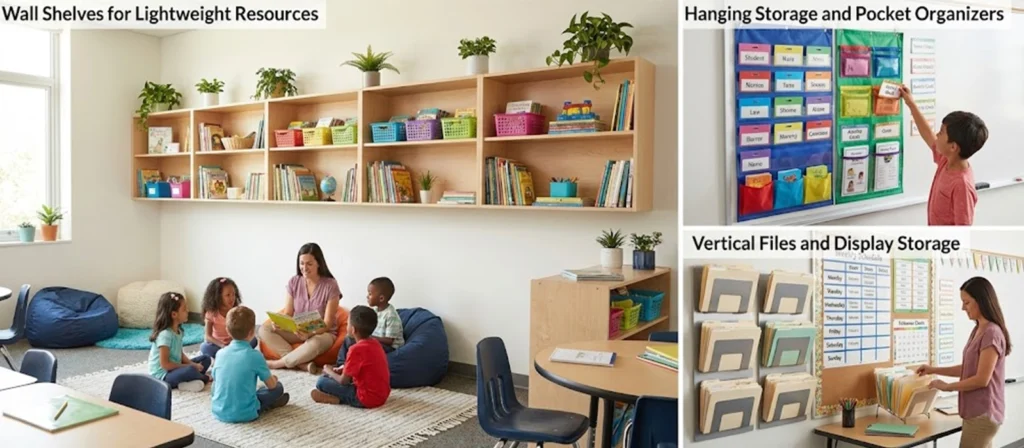
Wall Shelves for Lightweight Resources
Wall mounted shelves offer a simple and reliable way to store books, baskets, and lightweight teaching materials. When placed thoughtfully above active classroom zones, they keep essential resources within reach while allowing the floor area to remain open and flexible.
- Help free up floor space, making the classroom feel more open and easier to move through
- Keep frequently used materials visible and easy to access without disrupting activities
- Support consistent organization by giving books and resources a clear, permanent home
- Allow teachers to rotate materials seasonally without rearranging furniture
Hanging Storage and Pocket Organizers
Hanging storage systems, including fabric pockets and vertical organizers, bring a sense of flexibility to classroom storage. They are especially helpful for items that change often or need to stay visible throughout the day.
- Make small supplies easy to sort and retrieve without opening drawers or bins
- Adapt quickly to changing lessons, themes, or student needs
- Encourage students to take responsibility for returning items to the correct place
- Add storage capacity without taking up valuable shelf or table space
Vertical Files and Display Storage
Vertical file holders and wall mounted display units provide an organized home for paper based materials. They help keep documents structured and accessible while reducing surface clutter.
- Maintain a clean, calm visual environment that supports focus and order
- Prevent worksheets and folders from piling up on desks and counters
- Keep schedules, reference sheets, and daily materials clearly visible
- Support smoother lesson transitions by organizing papers in sequence
When walls are used intentionally, vertical storage increases capacity while supporting a more open and functional classroom layout.
Personal and Seasonal Storage Solutions
Personal and seasonal classroom storage solutions help manage items that are important but not used all the time. When these materials are stored thoughtfully, classrooms stay organized without sacrificing flexibility or comfort.
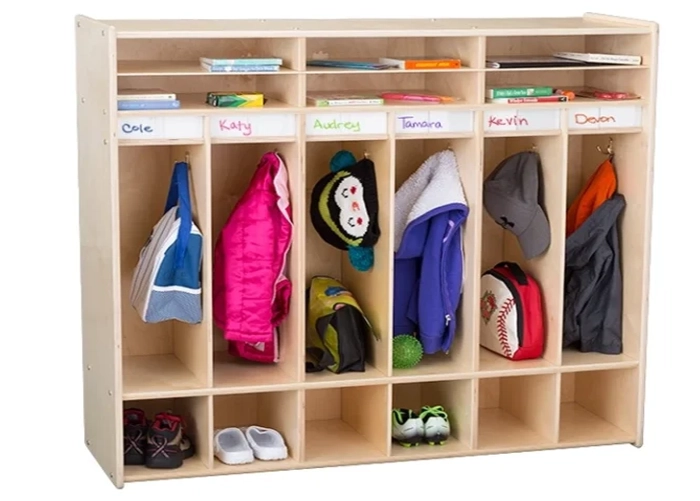
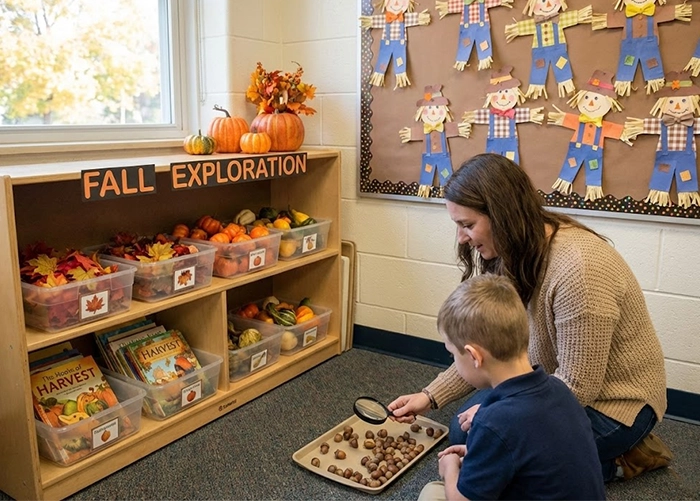
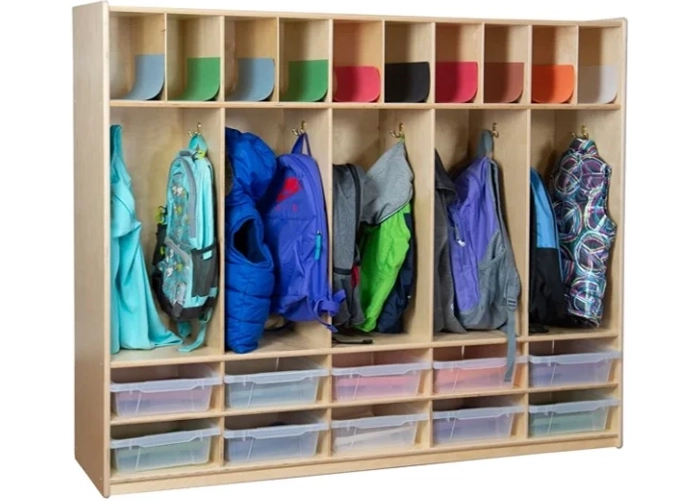
When personal and seasonal storage is planned as part of the overall classroom storage solutions strategy, the classroom stays adaptable throughout the year. This approach supports changing needs while keeping the learning environment calm, organized, and functional.
Storage by Classroom Zone and Activity
Planning classroom storage solutions by learning zone helps materials stay where they are used most. When storage is aligned with activities, transitions feel natural, students know what to expect, and the classroom operates with less interruption. Below are four common indoor classroom zones and practical storage approaches for each.
1. Reading and Literacy Area
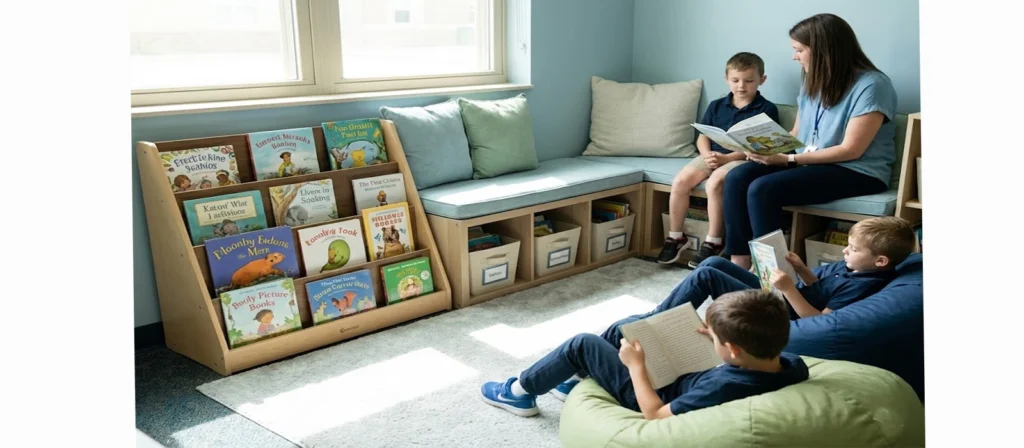
The reading area benefits from calm, predictable storage that keeps books inviting and easy to return. Storage here should support quiet use and visual order without overwhelming the space.
Recommended storage furniture
- Front facing book display shelves to showcase book covers and encourage choice
- Low open bookcases for leveled readers and shared texts
- Small labeled baskets or bins for topic based or guided reading materials
- Soft seating with integrated storage for cushions or reading tools
2. Art and Creative Area
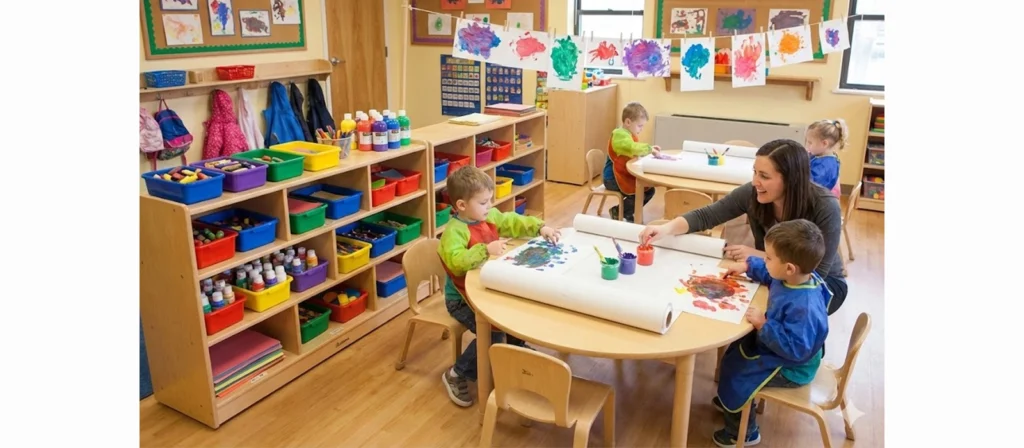
Art spaces require storage that balances accessibility with control. Materials should be easy to reach during activities but simple to organize at the end of a session.
Recommended storage furniture
- Mobile drawer units or rolling carts for art supplies
- Open shelving for paper, trays, and frequently used tools
- Vertical drying racks or flat shelves for artwork in progress
- Clearly labeled bins for paints, brushes, and craft materials
3. STEM and Discovery Area
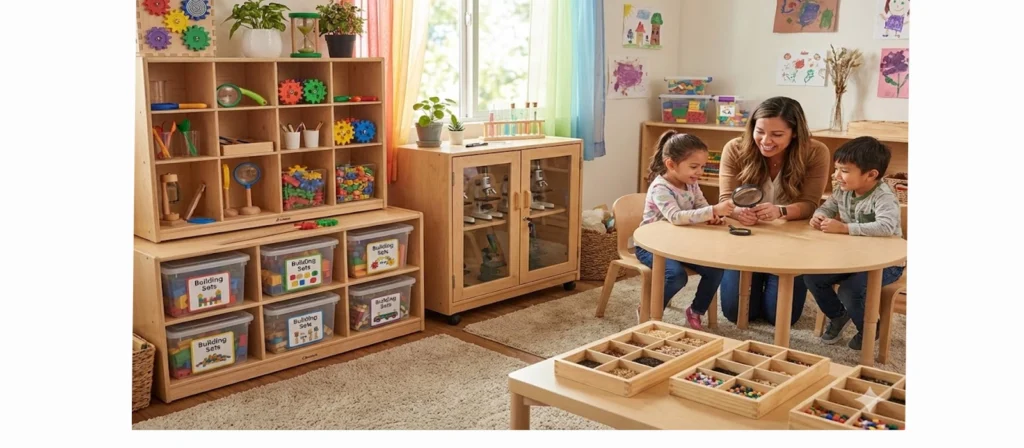
IL STEM or discovery zone often includes hands on materials that benefit from clear categorization. Storage should protect materials while still encouraging exploration.
Recommended storage furniture
- Compartmentalized shelving for science tools and manipulatives
- Transparent bins for building sets and experiment kits
- Lockable cabinets for delicate or teacher guided materials
- Flat trays or shallow drawers for sorting small components
4. Quiet Work and Small Group Area
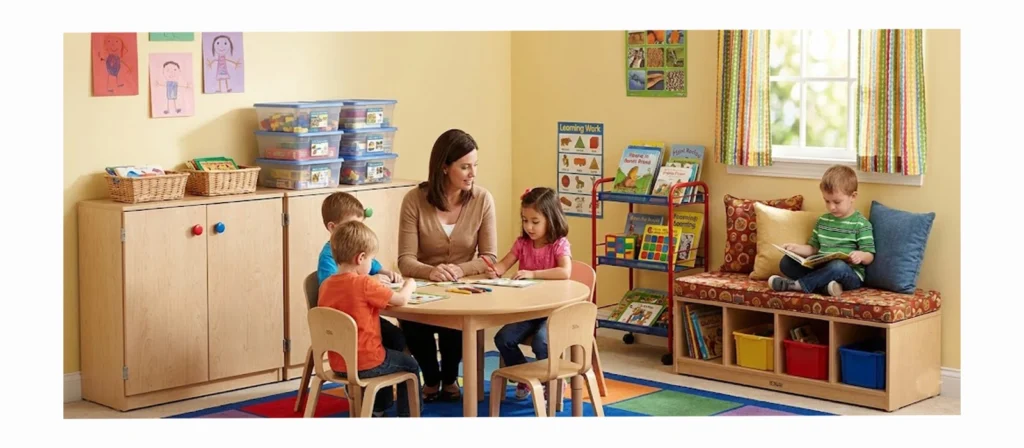
This area supports focused tasks, intervention work, or independent practice. Storage here should be minimal, calm, and purpose driven.
Recommended storage furniture
- Low storage cabinets for work materials and games
- Stackable bins or drawers for small group resources
- Slim shelving units for worksheets and learning aids
- Storage benches or tables with built in compartments
Organizing classroom storage solutions by zone helps students understand both the space and their responsibilities within it. When each area has its own clear system, the classroom feels structured without feeling rigid, and learning flows more smoothly from one activity to the next.
Conclusione
Well planned classroom storage solutions do more than organize materials. They support learning routines, encourage student independence, and help teachers manage the classroom with less effort. By choosing storage that fits daily activities, student age, and room layout, classrooms become calmer, more efficient, and easier to adapt as needs change. Thoughtful storage is not an extra feature. It is a core part of an effective learning environment.

 Italian
  English
  Arabic
  French
  German
  Spanish
  Thai
Thai  Japanese