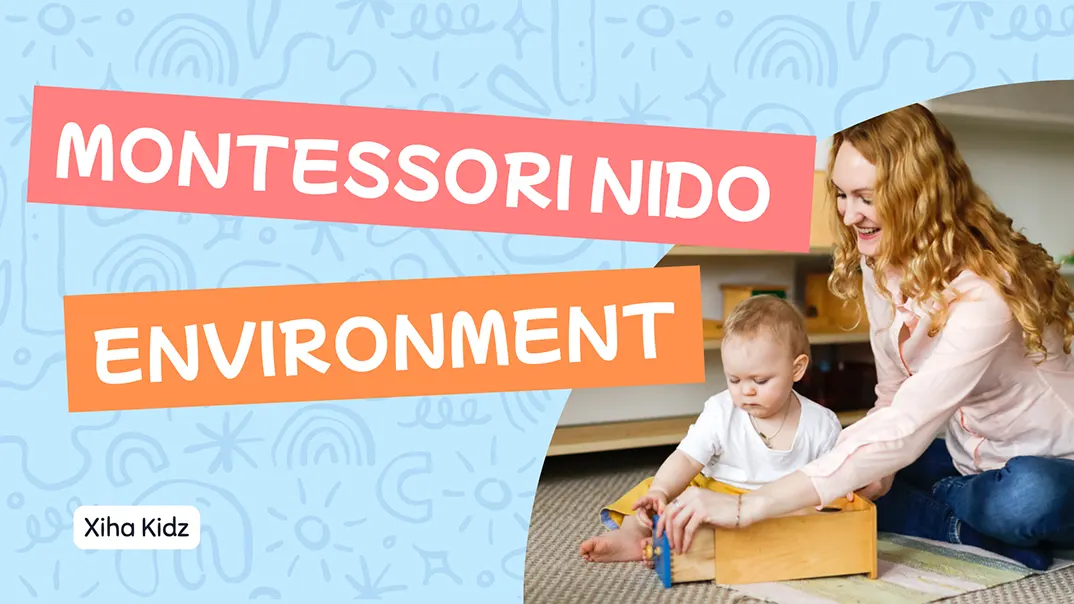
A Montessori Nido Environment is a specialized, scientifically prepared space designed exclusively for infants from birth to approximately 18 months (or until they are walking confidently). Rooted in Montessori philosophy, the Nido supports an infant’s earliest need for movement, exploration, and secure attachment by offering a calm, orderly environment that respects the child as an active participant in their own development rather than a passive recipient of care.
But a Montessori Nido Environment is far more than just a poetic name for a daycare room. It is a physical and psychological bridge between the comfort of the home and the complexity of the outside world.
If you were to walk into a Nido classroom today, the first thing you might notice is what is missing. You won’t find high chairs that restrain movement, cribs that cage the child, or loud, flashing battery-operated toys. Instead, you will find a serene, “yes-environment” where everything is scaled to the infant’s perspective. It is a space built on a premise: that even the youngest babies are capable of concentration, communication, and independence when given the right tools.
So, how does this environment actually work, and why do Montessori advocates believe it is crucial for a child’s early brain development? Let’s step inside the “Nest” to discover how this unique environment nurtures the spirit of the child from day one.
The Origin and Meaning of “Nido” in Montessori Education
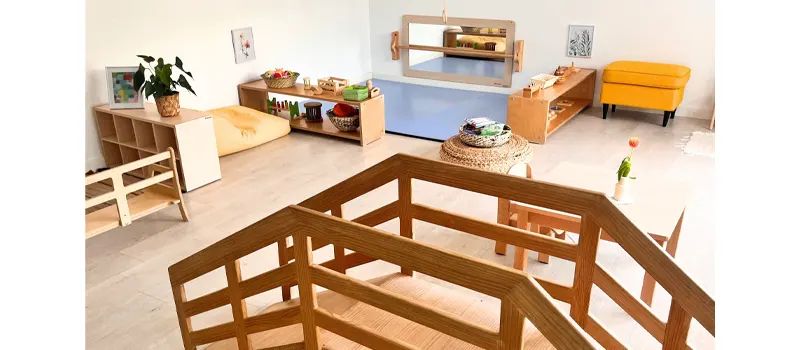
The term “Nido” comes from the Italian word for “nest,” a meaning that reflects both physical protection and emotional security. In モンテッソーリ教育, the Nido refers to the first prepared environment for infants, typically serving children from birth to around 18 months. It is designed as a calm, predictable space where infants can explore freely while feeling safe, supported, and respected.
Maria Montessori’s work emphasized that development begins at birth, not when formal education starts. In the years following the Second World War, Montessori and her collaborators began to articulate more clearly how Montessori principles could be applied to the earliest stage of life. This work laid the foundation for the Montessori 0–3 approach, shifting the focus toward careful observation, respect for the infant, and the preparation of an environment that supports natural development rather than structured teaching.
During this period, educators such as Adele Costa Gnocchi played an important role in advancing Montessori practice for infants through training and practical application in Rome during the late 1940s. Their collaborative efforts helped shape what is now known as the Montessori Nido environment, grounding it in everyday care routines, movement, and close adult observation.
Core Principles of a Montessori Nido Environment
The core principles of a Montessori Nido environment center on respect for the infant, freedom of movement, order, simplicity, and careful adult observation. Together, these principles guide how the space is prepared, how materials are selected, and how adults interact with infants, ensuring that the environment supports development from birth in a calm, intentional, and responsive way.

1. Respect for the Infant as an Individual
At the heart of the Montessori Nido environment is the belief that even the youngest child deserves to be treated with dignity and respect. Infants are not seen as passive recipients of care but as active participants in their own development. Caregivers speak softly, move slowly, and communicate directly with the infant during caregiving routines. This respectful interaction fosters trust, promotes emotional security, and lays the foundation for a positive self-image.
2. Freedom of Movement
A fundamental principle in Montessori education, freedom of movement begins at birth. In a Montessori Nido environment, babies are given safe, open space to move, stretch, roll, and explore. They are not confined to restrictive equipment such as walkers, jumpers, or high chairs for extended periods. Instead, the environment encourages natural motor development by allowing the child to discover their own capabilities through independent movement.
3. A Carefully Prepared Environment
The Nido is designed with purpose and precision. Every material, surface, and layout choice is made to support the infant’s stage of development. The environment is calm, beautiful, and orderly, using natural light, soft textures, and neutral colors to reduce overstimulation. Low mirrors, graspable objects, soft rugs, and simple shelves create an inviting space that supports sensory exploration and independent interaction.
4. Observation and Individualized Support
Rather than directing the child’s every move, the adult in a Montessori Nido environment acts as a careful observer. Through close observation, the caregiver gains insight into each child’s needs, interests, and readiness for new challenges. This approach allows support to be timely and appropriate, promoting true learning instead of adult-led instruction.
5. Consistency, Order, and Predictability
Young children thrive on routine and structure. In the Montessori Nido, the day follows a predictable rhythm that includes time for rest, feeding, movement, and interaction. Materials are always returned to their place, and the layout of the room remains consistent. This sense of order helps infants feel secure, reducing anxiety and encouraging exploration.
How to Set Up a Montessori Nido Environment?
Setting up a Montessori Nido environment requires more than just selecting age-appropriate furniture or toys. It involves designing a space that reflects respect for the infant’s natural development, encourages independence from birth, and provides a calm and orderly foundation for exploration and care. Every element must be chosen with intention, creating a space that nurtures both the body and mind of the child.
1. Start with the Physical Layout
Divide the room into clearly defined functional areas: movement, sleep, feeding, and care. Each space should serve its purpose without overstimulating or overlapping with others.
The Movement Area
The movement area is the core space for infants during their waking hours in a Montessori Nido environment. Rather than limiting movement through playpens or infant seats, this area is designed as an open and secure space where exploration can happen freely. The focus is on allowing infants to discover their own movements and gradually build confidence in their bodies.
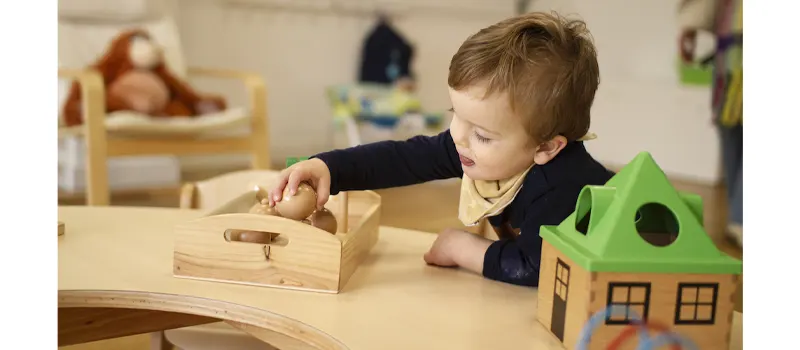
- Movement Mat and Mirror
A soft mat is placed on the floor in front of a low, securely mounted mirror. For non-mobile infants, this setup supports observation of their own movements, helping to develop concentration and early self-awareness. - Low, Open Shelving
Materials are displayed on low shelves rather than stored in bins or boxes. Usually, only a small number of items are available at one time, allowing infants to move toward a material, make a simple choice, and return it when finished. - Visual or Tactile Mobiles
Carefully selected mobiles may be positioned above the mat to encourage visual tracking and sustained attention, without overwhelming the infant with excessive stimulation.
The Sleeping Area
The sleeping area in a Montessori Nido environment is designed to support rest while respecting the infant’s growing independence. Instead of traditional cribs, infants sleep on low beds or floor-level mattresses, allowing them to move into and out of rest independently as their development allows.

- Floor Beds or Low Mattresses
Sleeping surfaces are placed directly on the floor, eliminating barriers and allowing infants to wake, observe quietly, or move away from the bed without waiting for adult assistance. - Minimal Visual Stimulation
Soft colors, limited artwork, and uncluttered walls help signal that this space is meant for rest rather than activity. - Gentle Lighting
Lighting is kept subdued to support natural sleep rhythms and create a sense of calm throughout the day.
The Eating Area
In a Montessori Nido environment, eating is treated as a meaningful daily routine rather than a task to be completed quickly. Once infants can sit independently, the eating area supports participation, coordination, and a sense of autonomy.

- Child-sized Table and Chair
A small, sturdy table and chair allow infants to sit with their feet resting on the floor, providing stability and comfort during meals. - Use of Real Materials
Small glass cups and ceramic dishes are commonly used instead of plastic. These materials encourage careful handling and help infants develop awareness of their actions and movements. - A Calm, Focused Atmosphere
The eating area is arranged to reduce distractions, allowing infants to focus on the experience of eating and participating in the routine.
The Care Area
The care area is where routines such as diapering, washing, and dressing take place. In a Montessori Nido environment, this space is designed to encourage cooperation and communication rather than passive care.

- 共同作業 チェンジング・テーブル
Changing surfaces are positioned to allow face-to-face interaction between the adult and the infant. All necessary items are kept within reach so the adult can remain attentive and present. - Stand-Up Changing Station
As infants gain strength, diapering and dressing may occur while standing. A secure grab bar and low mirror support balance and allow the child to remain actively involved. - Clear Organization of Materials
Items used for care routines are arranged consistently, helping infants become familiar with the sequence and expectations of daily care.
2. Use Natural, Soft, and Simple Materials
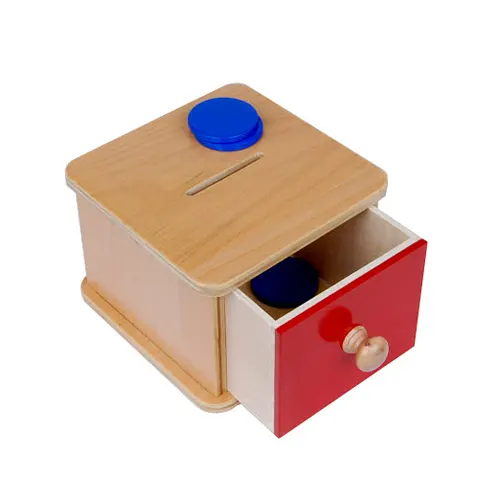
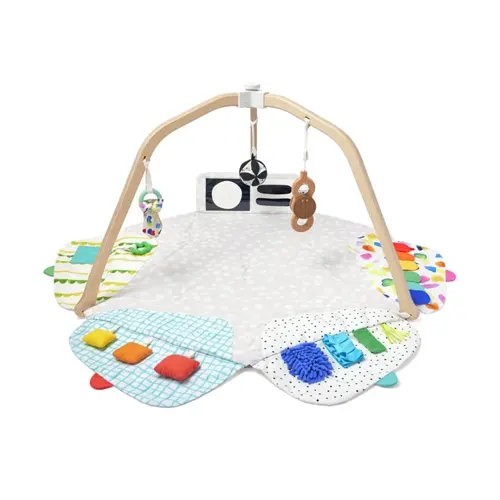
The Montessori Nido environment favors natural materials like wood, cotton, wool, and glass. These モンテッソーリ教材 offer rich sensory experiences, are safe to touch and mouth, and connect the child to the real world. Avoid plastic, battery-operated toys, and bright synthetic colors, which can be overstimulating or distracting. Choose soft lighting and neutral wall colors to create a calm, grounded atmosphere. Keep the environment visually simple so the infant can focus on a few things at a time.

3. Prioritize Accessibility and Freedom of Movement
Everything in the room should be within the infant’s reach, scaled to their size, and promote independent exploration. Furniture must be low, stable, and safe. Toys should be displayed on open shelving, with only a few materials available at once to avoid visual clutter and promote focus. Ensure that there are no physical barriers that limit movement. The floor should be clean and soft enough to support rolling, crawling, and eventually pulling up to stand.
4. Create Predictable Rhythms and Routines
Consistency supports security. Structure the daily flow with predictable periods for movement, sleep, feeding, and care. Even though infants may not follow a strict schedule, maintaining a calm rhythm helps them feel safe and oriented. Design the space so that each activity can happen peacefully and without rushing. For example, feeding should be calm and unhurried, diapering should be interactive, and transitions between activities should be smooth and respectful.
5. The Role of the Teacher
In a Montessori Nido environment, the teacher is often referred to as a guide or caregiver, but their role goes far beyond basic supervision. The teacher is a calm and intentional presence, whose primary responsibility is to observe, respond, and support the infant’s natural development with sensitivity and respect.
Summary Checklist for the Setup
- Sightlines: Can the baby see the whole room from the floor?
- アクセシビリティ: Is every toy and tool within the child’s reach?
- 安全性: Are outlets covered and heavy furniture anchored? (Because a Nido is a “Yes Space,” safety must be absolute, so the adult rarely has to say “No.”)
The Benefits of a Montessori Nido Environment
The Montessori Nido environment offers a unique and highly intentional approach to infant care and early learning. Rooted in the understanding that the first years of life are foundational for all aspects of development, this carefully prepared setting supports the child’s natural growth. From motor coordination to emotional regulation, the benefits of a Montessori Nido environment are both immediate and long-term.

1. Supports Holistic Development
In a Montessori Nido environment, the infant is viewed as a whole person with physical, cognitive, emotional, and social needs. The design of the space, the materials provided, and the role of the adult all work together to encourage exploration and learning across multiple domains. Whether reaching for a soft ball or observing movement in a mirror, the child is constantly engaging with stimuli that promote sensory integration, motor skills, and early problem-solving.
2. Fosters Early Independence
From the earliest months, children in a Montessori Nido environment are encouraged to move freely, choose activities, and interact with their surroundings without unnecessary interference. Furniture is low to the ground, shelves are within reach, and even daily routines such as diapering or feeding are approached with respect for the child’s autonomy. This early practice of independence builds a strong foundation for self-confidence and initiative.
3. Builds Trusting Relationships Between Infants and Adults
The quality of interaction between infants and adults is central to the Nido environment. Adults observe attentively, respond calmly, and avoid unnecessary intervention. Through these interactions, infants develop trust and a sense of emotional safety, forming the foundation for healthy social and emotional development.
4. Encourages Concentration and Focus
Unlike overstimulating or chaotic settings, the Montessori Nido environment is calm, quiet, and intentionally designed to allow uninterrupted exploration. Activities are simple yet purposeful, and children are given the time and space to engage at their own pace. This fosters an early ability to concentrate, which becomes increasingly valuable as the child grows into more complex learning stages.
5. Provides Emotional Security and a Sense of Order
A consistent environment plays an important role in helping infants feel secure. Clearly defined spaces, familiar routines, and a calm atmosphere allow infants to anticipate what comes next. This predictability supports emotional regulation and helps infants remain engaged with their surroundings rather than distracted by uncertainty.
Nido vs. Traditional Daycare
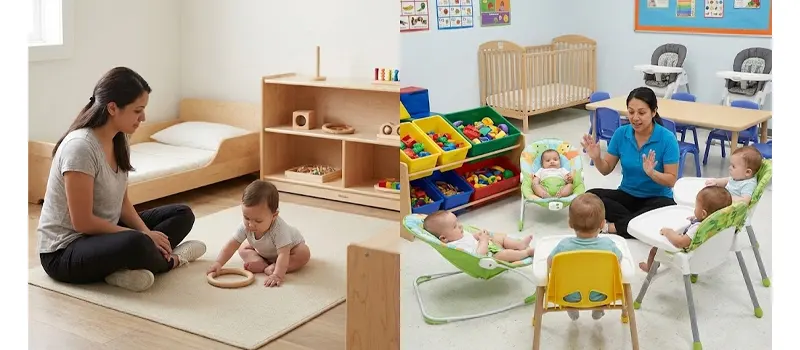
Though both environments care for infants, the Montessori Nido environment and traditional daycare differ greatly in their values, setup, and approach to child development. Below is a clear comparison of their core differences:
1. Educational Philosophy
- Traditional:
Focuses on group routines, safety, and general caregiving. Activities are often centered around keeping children entertained. - Montessori Nido:
Based on a deep respect for the infant’s natural development. Each child is seen as an active, capable participant in their own learning journey.
2. Physical Environment
- Traditional:
May include bright colors, plastic toys, swings, bouncers, and high cribs. The space can be visually cluttered or overstimulating. - Montessori Nido:
Calm, orderly, and carefully prepared. Uses natural materials, soft lighting, and defined areas for movement, sleep, feeding, and care. Infants are free to move without being confined.
3. Role of the Teacher
- Traditional:
Caregivers manage groups, follow fixed routines, and focus on basic physical needs such as feeding and diapering. - Montessori Nido:
The adult acts as a respectful observer and guide, responding to the child’s cues, building emotional security, and using daily care moments as chances for connection and learning.
4. Materials and Activities
- Traditional:
Often provides many toys, including electronic or light-up items, designed to entertain or distract. - Montessori Nido:
Offers simple, purposeful materials that promote sensory exploration, coordination, and independent focus. No electronic toys or screens are used.
5. Approach to Independence
- Traditional:
Emphasizes supervision and group management. Opportunities for independence may be limited or unstructured. - Montessori Nido:
Actively encourages independence from infancy. Children choose their own materials, feed themselves when ready, and participate in self-care routines to build autonomy and confidence.
よくある質問
What Age Is Appropriate for a Montessori Nido Environment?
The Montessori Nido environment is designed for infants from around 2 or 3 months old until approximately 14 to 16 months, or until the child is confidently walking and ready to transition to a toddler or “Young Children’s Community” environment.
What kind of toys or materials are used in the Nido environment?
Montessori Nido classrooms use simple, natural, and developmentally appropriate materials. These include wooden grasping toys, soft balls, sensory bottles, rings on dowels, and mirrors. Electronic toys and overstimulating items are avoided.
What type of furniture is needed for a Montessori Nido environment?
A Montessori Nido environment typically requires low floor beds, infant movement mats, weaning tables and chairs, low shelves, and changing tables. All furniture should be safe, scaled to infant size, and made from natural materials to support sensory and motor development.
What safety standards do your classroom furniture meet?
Our Montessori Nido furniture meets international safety standards for infant use. All materials are non-toxic, rounded-edge, and tested for stability and durability. Certifications can be provided upon request, including for markets like the US, Canada, Europe, and Australia.
Do you offer packages for starting a new Montessori Nido program?
Yes, we provide starter packages that include the essential furniture and materials needed for a Montessori Nido environment. These packages are ideal for new schools, daycare centers, or early childhood programs looking to adopt the Montessori infant model.
Do you ship Montessori furniture internationally?
Yes, we ship worldwide. Our logistics team will help you handle customs documentation, local safety compliance, and transportation, ensuring a smooth delivery from our factory to your school.
結論
A Montessori Nido environment represents a thoughtful approach to infant development that begins at birth. By focusing on respect, freedom of movement, order, and careful observation, the Nido creates conditions that support growth in a calm and intentional way. Rather than directing learning, the environment allows infants to engage with the world at their own pace through movement, sensory experience, and daily care routines.
What defines a successful Nido is not a single element or prescribed layout, but the coherence between principles, space, and adult practice. When these elements work together, the environment supports both physical and emotional development, helping infants build confidence, security, and early independence.
If you are planning to build or upgrade a Montessori classroom, we’re here to help with customized furniture, layout design, and professional guidance tailored to your program. Let’s work together to create an environment where even the youngest children can thrive.



 Japanese
  English
  Arabic
  French
  Italian
  German
  Spanish
  Thai
Thai