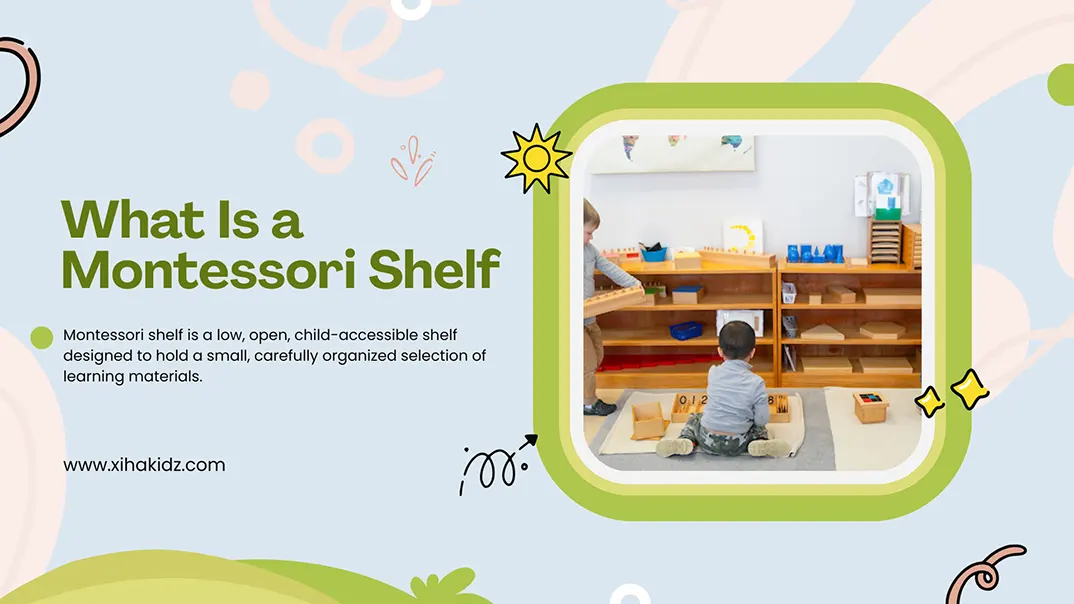
A Montessori shelf is a low, open, child-accessible shelf designed to hold a small, carefully organized selection of learning materials. In Montessori education, the environment is designed to guide learning, and the shelf is one of the structures that quietly shape children’s behavior, choices, and independence. The way materials are displayed, spaced, and organized on the shelf influences how a child approaches work, how long they concentrate, and how confidently they act without adult direction.
In many Montessori classrooms, children do not ask where materials are kept. They walk to the shelf, look over the materials, choose an activity, and begin working on their own. That quiet moment of independence is not accidental. It is made possible by the way the shelf is designed. That is why ‘What Is a Montessori Shelf’ deserves closer attention, especially for schools and learning spaces that want to build environments where children can work independently from the very beginning.
Key Characteristics of a True Montessori Shelf
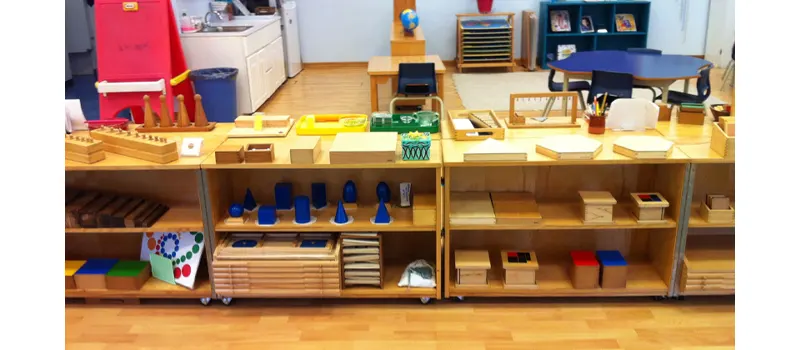
Not every low shelf qualifies as a Montessori shelf. In authentic Montessori environments, shelving is designed with very specific educational purposes in mind. The structure, height, materials, and visual presentation all work together to support independence, concentration, and order.
1. Child-Appropriate Height
A Montessori shelf is always proportioned to the child, not the adult. Children must be able to see the مواد مونتيسوري clearly, reach them without stretching, and return them without assistance. When shelves are too tall, adults end up managing access, which reduces opportunities for independence. Proper height allows children to make choices freely and move with confidence in the classroom.
2. Open and Fully Accessible Design
Montessori shelves are open, without doors, lids, or high front barriers. This ensures that materials are visible and inviting, and that children can independently select and replace items. supports child-led activity and decision making.
3. Display-Focused, Not Storage-Focused
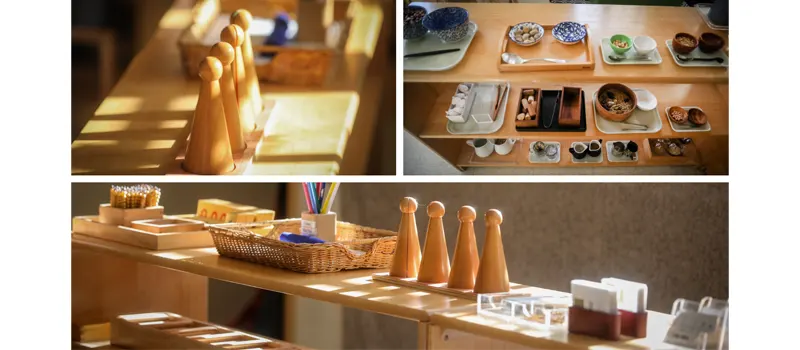
A true Montessori shelf is meant to display a limited number of carefully selected materials, not store large quantities of supplies. Each activity is typically presented on its own tray or in a defined container, with clear space around it. This uncluttered layout reduces visual overload and helps children focus on one task at a time.
4. Calm, Natural Aesthetic
Montessori environments are designed to be visually peaceful. Shelves are commonly made of natural materials such as wood, with neutral tones that do not compete with the learning materials.
5. Stability and Safety
Because children move independently and handle materials without constant adult supervision, shelves must be structurally stable. Units should not tip when a child leans or reaches, and edges should be smooth and child-safe. In school settings, durability is also important, as shelves are used continuously throughout the day by many children.
6. Clear Organization by Learning Area
Montessori shelves are often arranged according to curriculum areas such as Practical Life, Sensorial, Language, Math, or Cultural Studies. This organization helps children understand that each material has a purpose and a place, reinforcing the sense of order that is central to Montessori education.
Why Montessori Shelves Matter in Child Development?
In a Montessori setting, the shelf is part of the learning process itself. The way materials are arranged, limited, and made accessible shapes how children think, choose, and work. Instead of relying on constant adult direction, children interact with an environment that quietly guides their behavior. This has a direct influence on several key areas of development.
Supports Independence
تعليم مونتيسوري emphasizes helping children do things for themselves. When materials are placed on child-height shelves and arranged clearly, children can choose their own activities, carry them to a workspace, and return them afterward without assistance. This repeated cycle of choosing, working, and restoring builds practical independence and confidence. Over time, children begin to trust their own abilities rather than waiting for adult instruction.
Builds Concentration
A well-prepared shelf presents only a limited number of materials, each spaced clearly and displayed in an orderly way. This reduces visual distraction and helps children focus on one activity at a time. Montessori educators have long observed that orderly environments support longer periods of engagement. When children are not overwhelmed by clutter, they are more likely to concentrate deeply and complete tasks.
Strengthens Executive Function Skills
Executive function includes planning, decision making, task completion, and self-control. A Montessori shelf encourages these skills every day. Children decide what to work on, gather the materials, follow a sequence of steps, and return everything to its place. This process builds working memory, self-regulation, and organizational thinking in a natural, practical way.
Develops a Sense of Order
Dr. Maria Montessori emphasized that young children have a strong sensitivity to order. Consistent placement of materials on shelves helps children understand where things belong and what to expect in their environment. This predictability supports emotional security and cognitive organization. When children can rely on the environment to remain structured, they feel more settled and ready to learn.
Encourages Responsibility and Care
Because shelves are open and materials are visible, children learn that their actions affect the environment. Returning materials neatly and keeping the shelf organized become part of daily classroom life. This fosters responsibility, respect for shared resources, and care for the learning space, which are key social and emotional skills.
How Montessori Shelves Are Used in Classrooms?
In Montessori classrooms, shelves are not arranged randomly or used simply to hold supplies. Each shelf has a clear educational purpose and is organized to support specific areas of learning. The layout helps children understand what type of work is available and guides them through increasingly complex activities as they grow.
1. Materials Are Organized by Learning Area
Shelves typically group materials by subject or skill area, such as practical life, sensorial activities, language, mathematics, or cultural studies. This helps children gradually understand that learning is organized into meaningful categories. The physical layout supports mental organization, making it easier for children to connect activities with specific types of learning.
Practical Life Shelves
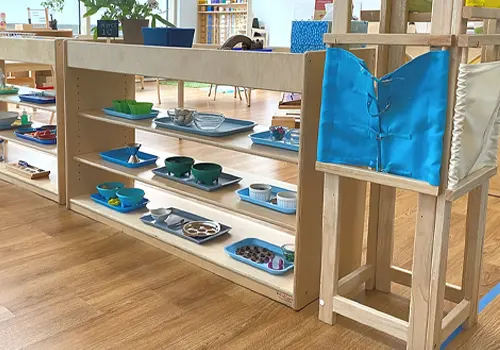
Practical Life materials are often placed on shelves near the entrance of the classroom. These activities focus on everyday skills such as pouring, spooning, transferring, cleaning, and care of the environment. Materials are arranged from simple to more complex, allowing children to build coordination and independence step by step. Because these activities are familiar and purposeful, they help children settle into the classroom and prepare for more academic work.
Sensorial Shelves
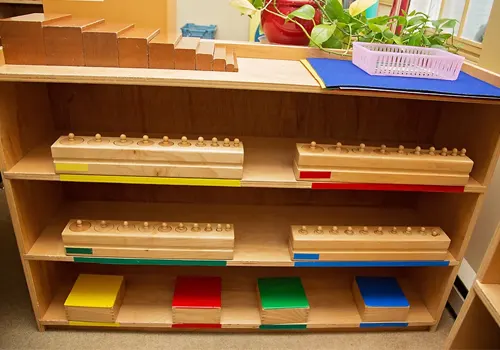
Sensorial shelves contain materials designed to refine the senses, including sight, touch, sound, smell, and sometimes taste. Items such as knobbed cylinders, color tablets, sound boxes, and geometric solids are displayed neatly with space between them. These materials help children classify and compare qualities like size, shape, texture, and color. The orderly arrangement on the shelf supports careful observation and precise work.
Language Shelves

Language materials are organized to support spoken language, early literacy, and writing development. Shelves may include sandpaper letters, movable alphabets, object-to-picture matching sets, and phonetic reading materials. Items are usually arranged in a logical progression, moving from sound awareness to word building and reading. Clear shelf organization helps children choose work that matches their developmental stage.
Math Shelves
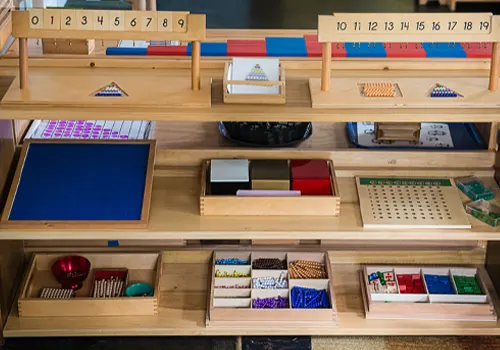
Math shelves introduce quantity, number symbols, and later arithmetic concepts using hands-on materials. Bead chains, number rods, spindle boxes, and golden bead materials are commonly found here. Materials are sequenced so children move from concrete experiences to more abstract understanding. The shelf structure makes this progression visible, helping children build mathematical concepts gradually.
Cultural and Science Shelves
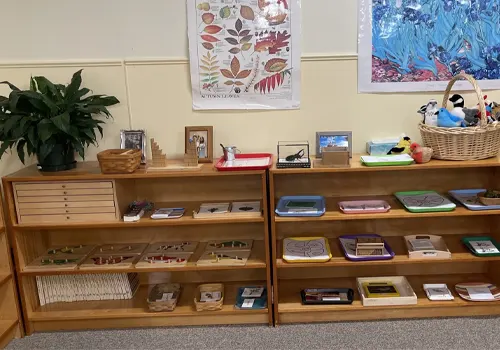
Cultural shelves include geography, biology, history, and science-related materials. You may find puzzle maps, classified cards for plants and animals, life cycle models, and simple science experiments. These shelves expand children’s understanding of the world while maintaining the same principles of order and accessibility.
2. Material Rotation and Balance
Teachers do not fill every space on a shelf. Instead, materials are rotated based on children’s interests and developmental needs. A balanced shelf offers variety while avoiding overcrowding. This careful curation keeps the environment engaging and prevents visual overload.
3. Materials Are Displayed From Left to Right and Simple to Complex
The placement of materials often follows a logical sequence. Activities may progress from easier to more advanced or from concrete to more abstract. This visual flow helps children build understanding step by step and supports the development of logical thinking.
4. Everything Has a Defined Place
Each tray, basket, or learning material has a consistent location on the shelf. Children learn where to find items and where to return them after use. This consistency builds responsibility and reinforces the sense of order that is central to Montessori learning.
What Is the Difference Between Montessori Shelves and Regular Shelves?
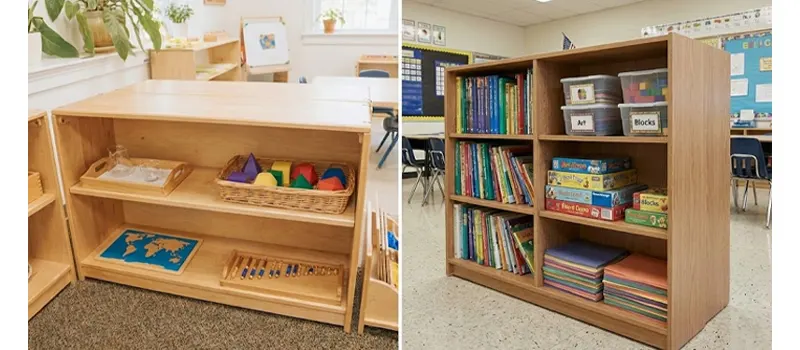
At first glance, a Montessori shelf and a regular shelf may look similar. Both hold materials, both may be made of wood, and both sit against a wall. The difference lies in purpose, design intention, and how each one shapes children’s behavior and learning.
Purpose: Learning Tool vs Storage Furniture
A Montessori shelf is part of the learning environment. It is designed to support independence, concentration, and self-directed activity. Every item placed on it has an educational purpose and is presented intentionally. A regular shelf, on the other hand, is usually meant for storage. It holds books or supplies efficiently, but it is not designed as an active part of the learning process.
Accessibility: Child-Led vs Adult-Controlled
Montessori shelves are always child height and fully accessible. Children can see, reach, and return materials without help. This supports decision-making and responsibility. Regular shelves are often sized for adults, with higher shelves that require supervision or assistance. Access is controlled more by the teacher than the child.
Presentation: Display vs Containment
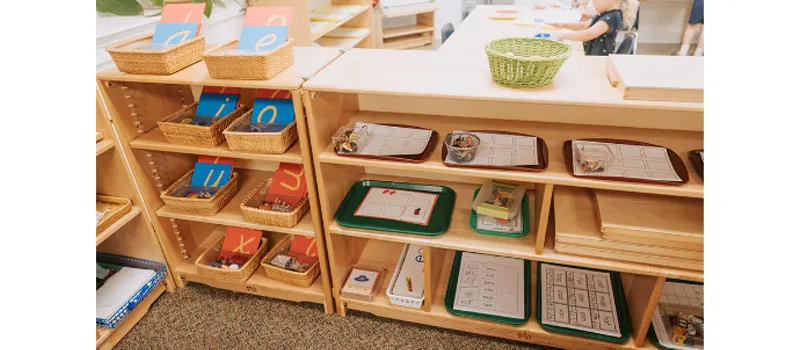
On a Montessori shelf, materials are displayed with space around them. Each activity is presented on its own tray or container, making choices clear and visually calm. A regular shelf typically holds items close together or stacked, prioritizing capacity rather than clarity. This can create visual clutter and make independent selection more difficult for young children.
Quantity of Materials: Limited vs Maximized
Montessori environments intentionally limit the number of materials on a shelf to avoid overwhelming children. Fewer choices encourage deeper focus. Regular shelves often maximize storage space, leading to crowded surfaces that can distract attention and reduce concentration.
Educational Structure: Organized by Learning Area vs General Storage
Montessori shelves are usually arranged by curriculum area, such as Practical Life, Sensorial, Language, or Math. This structure helps children understand that each material has a specific purpose and place. Regular shelves do not typically follow a developmental learning sequence and may mix unrelated items together.
Impact on Child Development
Because Montessori shelves are designed with independence, order, and concentration in mind, they actively support cognitive and social development. Regular shelves may be functional, but they do not intentionally guide children’s behavior or learning habits.
How to Choose the Right Montessori Shelf?
Choosing a Montessori shelf involves more than matching a style or filling empty space. The shelf must function as part of the prepared environment, supporting independence, order, and purposeful activity. A thoughtful selection helps children move, choose work, and return materials smoothly throughout the day.
Start With the Children’s Height and Reach
The first step is always the child’s perspective. Children should be able to see the top surface clearly and reach every shelf level without stretching or climbing. When materials are physically accessible, children make choices more confidently and rely less on adult assistance.
Check the Shelf Depth and Proportions
Montessori shelves work best when they are not overly deep. Moderate depth allows materials to be displayed in a single row rather than stacked behind one another. Proper proportions keep the shelf visually calm and make each activity easy to identify.
Evaluate Stability and Build Quality
In a classroom, shelves experience constant use. Children may lean on them while selecting materials or returning trays. A well-built shelf should feel solid, with no wobbling or risk of tipping. Smooth edges, rounded corners, and a durable finish are important for safety and long-term use.
Choose Materials That Support a Calm Environment
Neutral tones and natural materials help maintain a peaceful visual atmosphere. Bright colors, glossy finishes, or busy patterns can distract attention from the learning materials themselves. The shelf should support the materials, not compete with them.
Consider How Materials Will Be Displayed
Before choosing a shelf, think about the types of materials it will hold. Trays, baskets, and learning sets need enough surface space to be presented neatly with room around them. Shelves that are too narrow or divided into small compartments can limit proper material presentation.
Plan for Classroom Layout and Flexibility
Shelves should fit naturally into the classroom flow, leaving enough walking space and floor area for children to work. Units that can be rearranged or combined offer flexibility as classroom needs change. This is especially helpful for schools managing multiple age groups or expanding programs.
Look for Designs Made for Educational Settings
Furniture designed for home use may not withstand the demands of a busy classroom. Montessori environments benefit from shelves built for educational settings, with durable construction and finishes suitable for frequent cleaning.
الأسئلة الشائعة
What is the ideal height for a Montessori shelf?
A Montessori shelf should be at a height that allows children to see and reach materials independently without stretching or climbing.
Why are Montessori shelves usually made of wood?
Wood provides a natural, calm appearance that supports a peaceful learning atmosphere. It is also durable and stable, which is important in classrooms where shelves are used frequently by many children. The goal is to create an environment that feels orderly and warm.
How often should materials on a Montessori shelf be changed?
Materials are rotated based on children’s interests, developmental progress, and classroom goals. Rotation keeps the environment engaging while maintaining order. Instead of replacing everything at once, teachers typically change a few activities at a time to maintain consistency and familiarity.
Are Montessori shelves important for classroom layout?
Yes. Shelves help define learning areas, guide movement within the classroom, and influence how children choose work. Their placement affects traffic flow, activity zones, and how independently children can function in the environment.
خاتمة
A Montessori shelf is easy to overlook because it does not move, speak, or actively “teach.” Yet in a Montessori classroom, it quietly shapes how learning happens every single day. The height of the shelf determines whether a child can act independently. The spacing of materials influences focus. The order of presentation guides decision-making. Over time, these small environmental cues build habits of concentration, responsibility, and self-direction that extend far beyond one activity or one school year.
For schools and learning centers creating or improving Montessori classrooms, shelving design is one of the foundational pieces of the prepared environment. We work with educators to provide classroom-ready Montessori shelving and support with layout planning, helping ensure shelves are appropriately sized, durable, and integrated effectively into different learning areas. When the environment is thoughtfully arranged, children move more confidently, classroom routines run more smoothly, and the learning space functions the way Montessori education intends.
 Arabic
  English
  French
  Italian
  German
  Spanish
  Thai
Thai  Japanese