In early childhood education, the role of natural materials is far from decorative. Rooted in pedagogies such as Reggio Emilia, Montessori, and Waldorf (Steiner), these materials are considered essential to nurturing a child’s intellectual, emotional, and sensory development. The Reggio Emilia approach positions the environment as the “third teacher,” with natural elements acting as open-ended tools for exploration and communication. Maria Montessori emphasized real-world materials like wood, metal, and stone because they provide more meaningful sensory feedback.
Instead of offering children fixed-purpose, mass-produced toys, materials of nature encourage slow observation, discovery, and manipulation. Their irregular textures and organic forms reflect the complexity of the real world, fostering adaptability, creativity, and problem-solving. These materials also build aesthetic awareness and environmental connection, helping children develop a deeper relationship with the world around them. As evidence continues to show the developmental power of tactile and grounded experiences, natural materials remain foundational in high-quality early learning environments.
What Are Natural Materials?
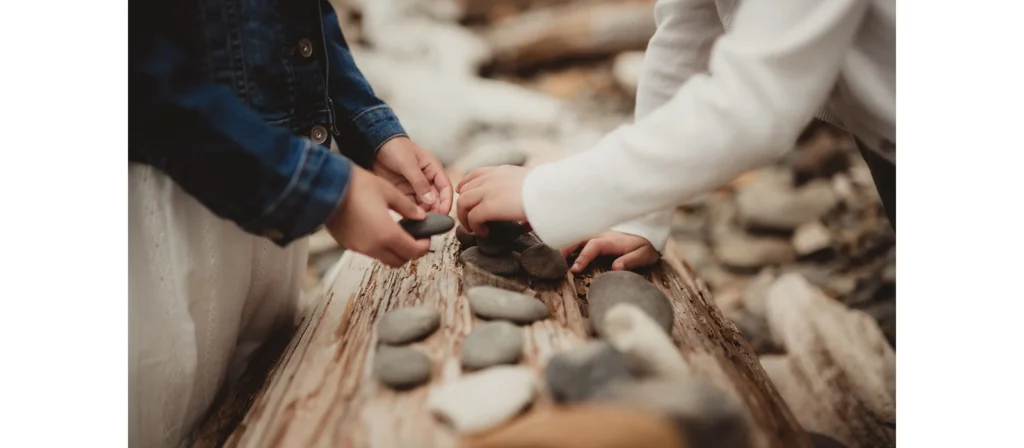
Natural materials are substances derived directly from the Earth or living organisms, typically unprocessed or only minimally altered by humans. They can be grouped into several categories: plant-based such as wood, leaves, seeds, and cotton; mineral-based such as stones, sand, and clay; animal-based such as wool, feathers, and shells; and elemental materials like water, air, and sunlight. These materials offer a wide range of intrinsic properties including texture, temperature, weight, scent, and sound, providing children with complex and multi-sensory learning experiences.
Unlike manufactured toys which are often uniform and highly structured, natural materials are variable, open to interpretation, and inherently non-prescriptive. A single pinecone may become a character, a tool, or a counting object depending on the child’s intent. This variability encourages divergent thinking, allowing children to explore multiple functions, narratives, and outcomes. In early development, such tactile exploration plays a critical role in building sensory integration, spatial awareness, and problem-solving skills.
Natural materials also integrate seamlessly into both indoor and outdoor learning environments. In classrooms, they can be used for sorting, patterning, building, or scientific observation. Outside, they form part of dynamic, living landscapes that invite movement and inquiry. Their flexibility and responsiveness support physical, cognitive, and emotional development while encouraging creativity, resilience, and a sense of connection to the natural world.
The Benefits of Natural Materials in Child Development
Natural materials play a critical role in supporting early childhood development across multiple domains. From sensory refinement to environmental awareness, their impact goes far beyond aesthetics or play. Below, we explore key areas where these materials support growth and learning in meaningful ways.
Sensory Development and Neural Growth
Natural materials offer rich, multi-sensory experiences that are essential during the early years, when the brain is rapidly forming connections. The weight of a stone, the roughness of bark, or the cool texture of a metal object activates tactile, visual, and proprioceptive systems. These varied inputs help children organize sensory information, improving focus, regulation, and body awareness. Research in developmental neuroscience confirms that diverse sensory stimulation enhances brain plasticity, especially when the materials are real and varied.
Fine and Gross Motor Skills
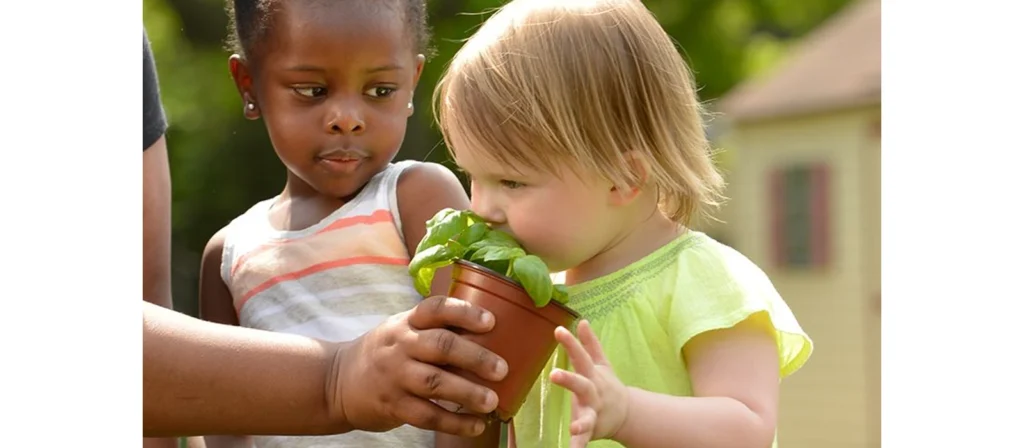
Handling natural parts like pinecones, acorns, or smooth pebbles encourages precise hand movements and grip control, which are foundational for writing and tool use. Activities like stacking rocks or transporting water also build strength, coordination, and balance. Unlike standardized toys, natural materials often come in unpredictable shapes and sizes, requiring children to adapt and problem-solve physically in real time.
Cognitive and Language Development
Natural materials invite children to question, sort, classify, and hypothesize. When a child explores whether a leaf sinks or floats, or how sand flows through a funnel, they are engaging in basic scientific thinking. These moments build vocabulary and reasoning. Additionally, open-ended conversations often emerge around natural items such as “Why is this shell shiny?” or “How many seeds do we have?” This kind of dialogue encourages both expressive and receptive language development in meaningful contexts.
Emotional Regulation and Wellbeing
Organic textures and natural tones can have a calming effect, offering relief from overstimulating, overly colorful environments. For some children, natural materials become a form of self-regulation. Touching a soft feather, sifting soil, or feeling the grain of wood can anchor them emotionally. Educators working with neurodiverse learners often use natural sensory items in calming corners or quiet spaces to support self-soothing.
Creative and Imaginative Play
Natural materials are quintessential open ended materials. A stick might become a fishing rod, a sword, or a magic wand. There are no instructions, no rules, and no fixed outcomes. This flexibility supports divergent thinking, creativity, and narrative development. Because natural items don’t dictate how they should be used, they allow children to project ideas onto them, facilitating rich symbolic and pretend play.
Environmental Connection and Values Formation
Frequent interaction with materials of nature cultivates a sense of environmental empathy. When children build with sticks or examine insect trails in bark, they develop an early respect for living systems. This connection nurtures sustainability consciousness, helping children understand their role in protecting and preserving the natural world. These experiences often form the foundation for later ecological literacy and responsible citizenship.
Natural Materials Examples for Early Learning
In early learning environments, natural materials are not just decorative objects. They serve as versatile, developmentally appropriate resources that support cognitive, physical, emotional, and social growth. Their irregular textures, organic forms, and sensory diversity invite exploration, experimentation, and imagination. Below are several categories of commonly used natural materials, along with specific examples and their educational value.
1. Plant-Based Materials
These are among the most accessible and varied. Children can collect and use them independently, enhancing their observation and fine motor skills.
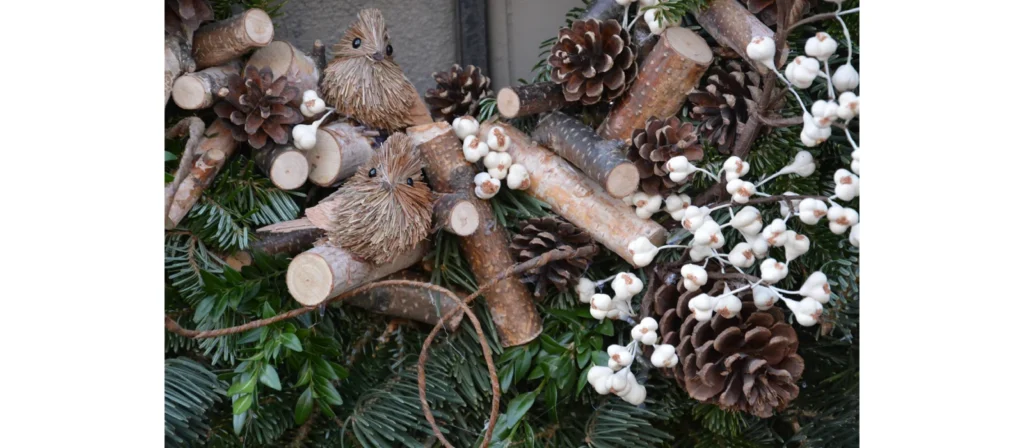
Beispiele: Leaves, twigs, bark, pinecones, flower petals, seed pods, hay, moss
Uses: Pattern-making, sorting, art collages, pretend play, nature-based storytelling
2. Mineral-Based Materials
Often heavier or textured, these materials support tactile discrimination, physical reasoning, and construction skills.
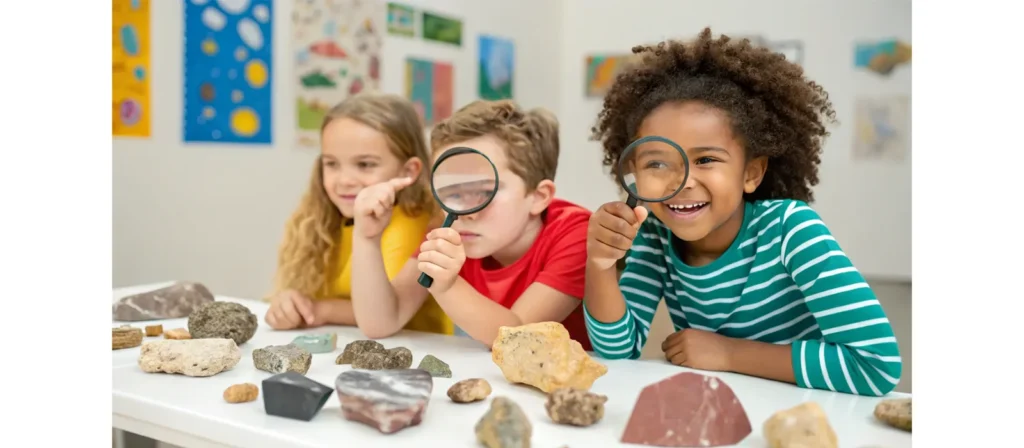
Beispiele: Pebbles, stones, gravel, sand, clay, mud, crystals
Uses: Sensory bins, stacking, weighing, sculpting, creating landforms or natural small worlds
3. Animal-Based Materials
These items introduce children to natural textures and are especially useful in thematic or science-based learning.
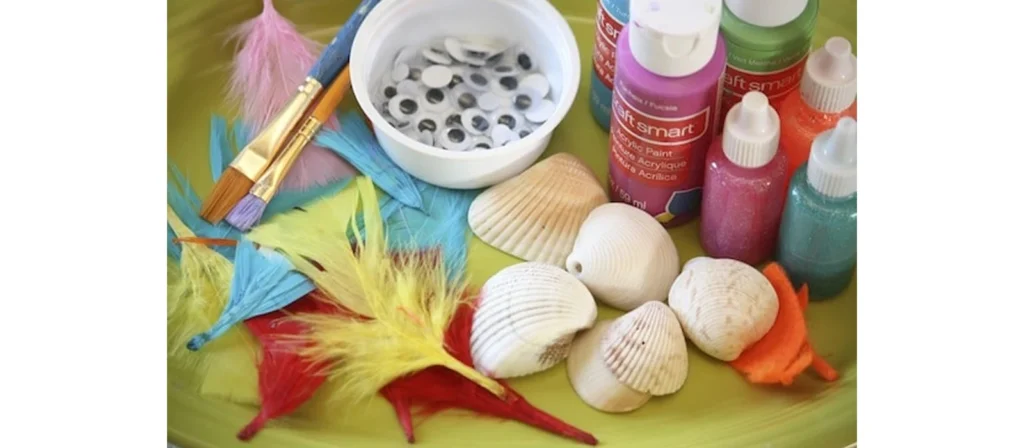
Beispiele: Feathers, shells, wool, bones (cleaned), nests, beeswax
Uses: Texture exploration, classification, role play, storytelling, seasonal displays
4. Elemental and Environmental Materials
These are drawn from the immediate environment and support experiential learning about natural systems.
Beispiele: Water, ice, wind, sunlight, shadows, soil
Uses: Pouring and measuring, observing evaporation, making shadows, creating mud kitchens or puddle play
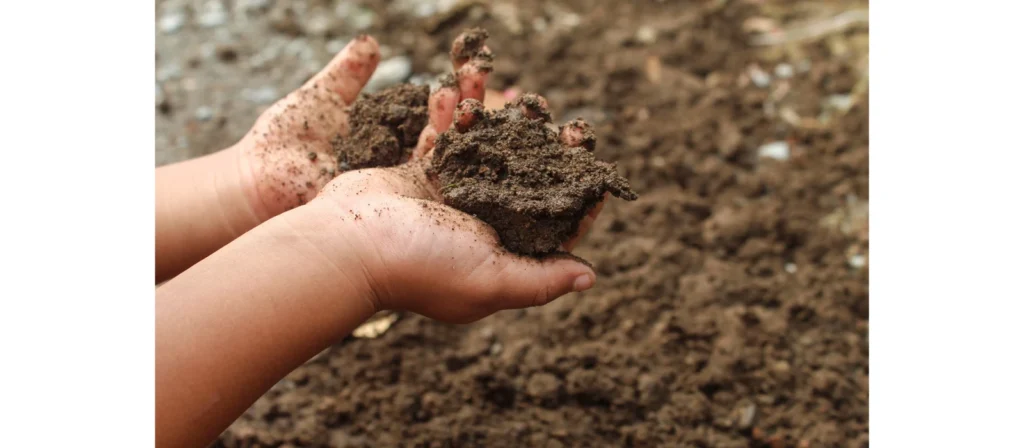
Natural materials can be used across disciplines such as counting tools in math, building blocks in STEM projects, or loose parts for creative arts. Their open-ended nature ensures that there is no single correct way to use them, giving children the confidence and autonomy to explore on their own terms.
When intentionally selected and thoughtfully presented, these natural materials examples become more than just things to play with. They become co-teachers in a learning environment that honors curiosity, connection, and creativity.
Incorporating Natural Play Elements Indoors and Outdoors
Bringing natural play elements into both indoor and outdoor learning environments helps children form meaningful connections with nature while supporting a wide range of developmental goals. When carefully integrated, these elements offer dynamic, flexible opportunities for exploration, movement, problem-solving, and creativity.
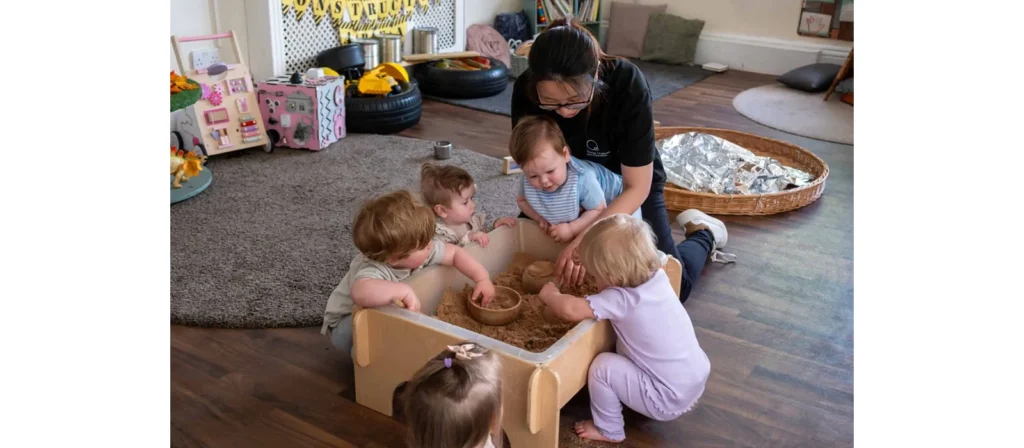
Indoors, educators can introduce nature corners, sensory trays filled with sand, leaves, or stones, and loose parts shelves containing twigs, feathers, and shells. Classrooms may include baskets of seasonal items that children can touch, observe, and manipulate. Windows can become observation points for weather, shadows, or plant growth, helping children interact with nature even in enclosed settings.
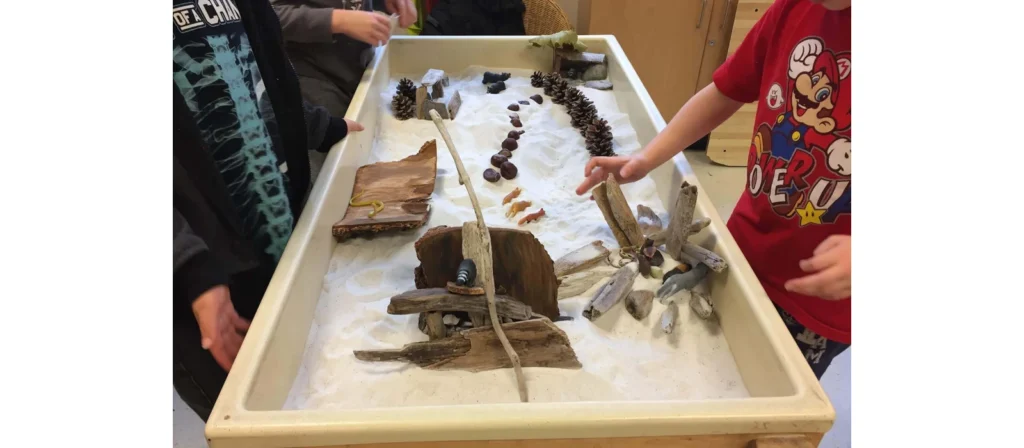
Outdoors, the environment itself becomes a living classroom. Logs can be used for balancing, large stones for climbing or seating, and tree stumps for building or imaginative play. Natural loose parts like sticks, pinecones, and mud invite open-ended exploration and cooperative play. Gardens, digging areas, and water play zones support inquiry-based learning while reinforcing physical development and environmental responsibility.
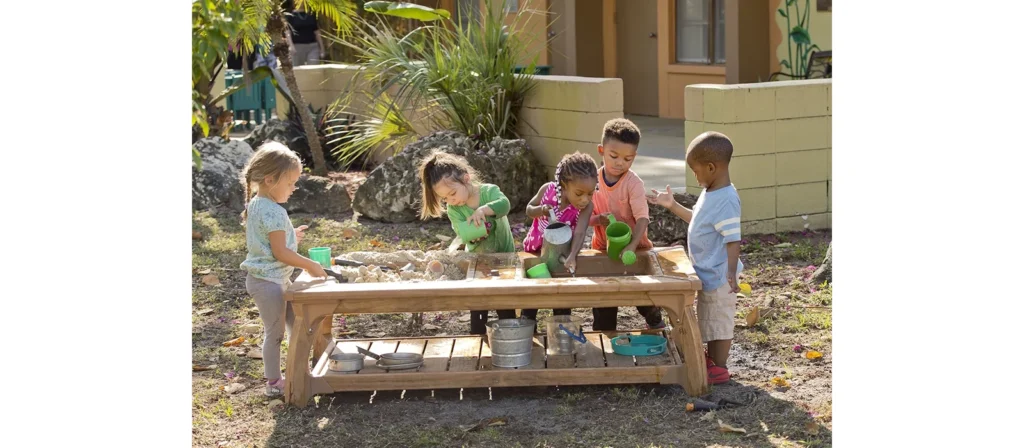
Whether inside or out, incorporating natural play elements cultivates a sense of wonder, encourages autonomy, and helps children regulate through sensory grounding. These experiences foster not only cognitive and motor growth but also emotional wellbeing and ecological empathy.
Design Nature-Inspired Activity Tables for Authentic Learning
At Xihakidz, we specialize in creating child-centered furniture that supports sensory-rich, open-ended exploration with natural materials. Our activity tables are designed to organize loose parts, encourage independent inquiry, and blend seamlessly into nature-based learning environments. Get expert support in building indoor and outdoor setups that nurture creativity, calmness, and hands-on engagement through every stage of early development.
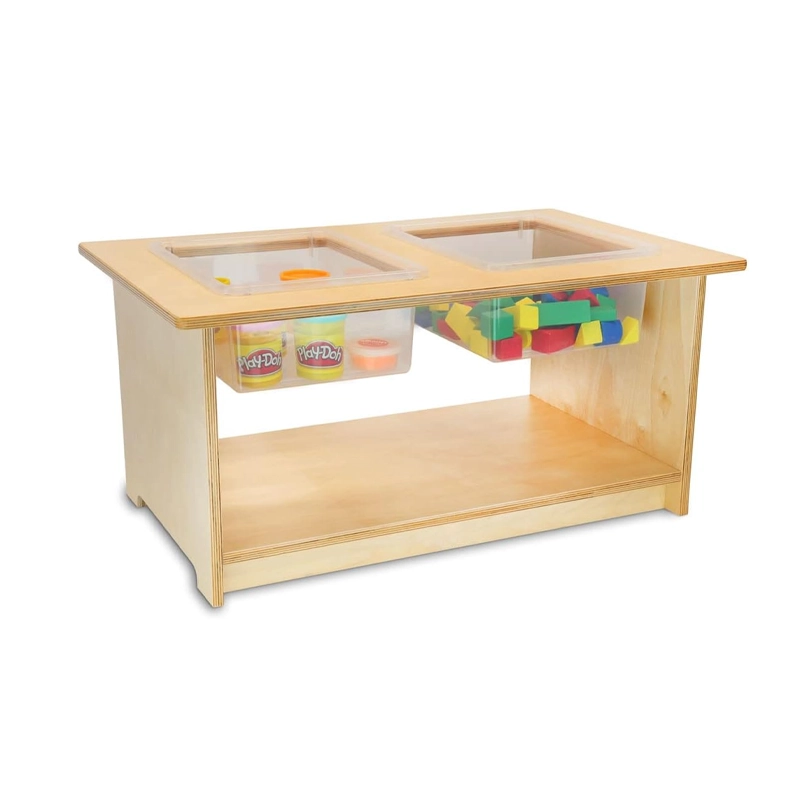 Explore Nature-Based Design Solutions
Safety and Sustainability Considerations
When using natural materials in early childhood settings, educators must prioritize both child safety and environmental responsibility. Below are key considerations for each area:
Safety Guidelines for Using Natural Materials
- Altersangemessenheit
Choose materials suitable for the developmental stage. Avoid small items like acorns, seeds, or pebbles for children under three due to choking hazards. - Non-Toxic and Allergen-Free
Ensure all items are free from toxins, chemicals, or allergens. Avoid unknown plants, especially those with berries or milky sap. - Surface and Structural Safety
Check for sharp edges, splinters, mold, or signs of decay. Smooth out wood and clean stones before use. - Cleanliness
Wash all materials thoroughly, especially items collected from outdoor environments. Soaking in vinegar or baking soda water can help sanitize without harsh chemicals. - Storage and Rotation
Keep materials dry, clearly labeled, and rotate them regularly to prevent contamination and maintain freshness. - Supervision and Guidelines
Clearly communicate classroom rules for handling natural materials. Encourage exploration within safe boundaries and under adult supervision.

Sustainability Practices for Ethical Use
- Responsible Sourcing
Collect only what is needed and avoid disturbing living plants or wildlife. Focus on fallen leaves, broken branches, or naturally discarded items. - Local and Seasonal Collection
Use materials that are native to the region and appropriate for the current season. This reduces environmental impact and supports ecological learning. - Reusable and Compostable Options
Choose materials that can either be reused across multiple activities or safely composted after use. - Avoid Synthetic Replacements
Prioritize authentic natural items rather than plastic or artificial imitations, which diminish the sensory and ecological value. - Teach Environmental Respect
Involve children in collecting, cleaning, and returning materials to nature. Use these routines to promote respect, responsibility, and care for the environment.
With clear safety protocols and sustainable practices in place, natural materials can serve as powerful tools for early education while also modeling respect for both the learner and the planet.
Schlussfolgerung
Natural materials are far more than passive objects scattered across a classroom or playground. They are dynamic, responsive, and developmentally rich tools that support every facet of early childhood growth. Through texture, weight, scent, and form, they engage children’s senses, spark creativity, and nurture problem-solving in ways plastic toys cannot replicate. Rooted in educational philosophies like Montessori and Reggio Emilia, their value is supported by both theory and practical evidence.
When used thoughtfully and safely, these materials offer more than just play. They build cognitive flexibility, emotional regulation, motor skills, and ecological awareness. Whether it’s a smooth stone placed on a light table or a muddy stick turned into a dragon’s sword, each encounter with nature becomes a learning moment. As educators and caregivers, choosing to integrate natural materials is also a choice to honor the child’s instinct to explore, to imagine, and to connect with the world around them.




 German
  English
  Arabic
  French
  Italian
  Spanish
  Thai
Thai  Japanese