
Les aires de jeux sont fréquemment exposées à diverses conditions météorologiques et sont utilisées quotidiennement par un grand nombre d'enfants. Sans inspections et entretien réguliers, des dangers pour la sécurité peuvent survenir. D'après notre expérience dans les projets d'aires de jeux extérieures, de nombreux problèmes majeurs découlent de la négligence de petits problèmes.
Compte tenu de la sécurité des enfants et des coûts d'entretien pour le propriétaire du terrain de jeu, je pense qu'il est nécessaire de partager nos conseils d'entretien des terrains de jeu dans l'espoir d'aider les gestionnaires à réaliser l'importance de l'entretien des terrains de jeu.
Pourquoi l'entretien des aires de jeux est-il important ?
La plupart des problèmes de sécurité découlent généralement de petits problèmes, tels que des vis desserrées. Au fil du temps, ces petits problèmes peuvent affecter la sécurité, augmenter les coûts d'entretien et raccourcir la durée de vie de l'aire de jeux.
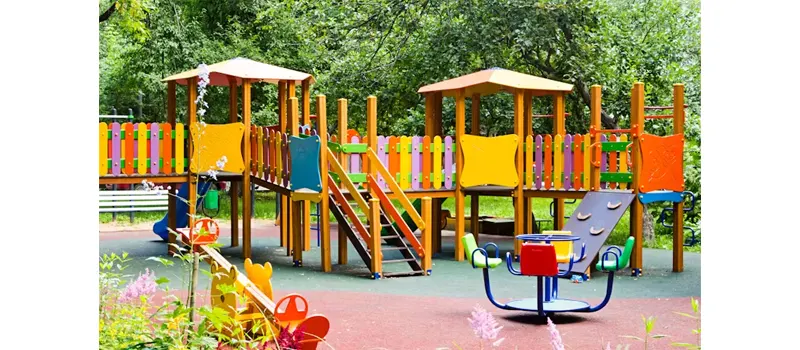
- Prévenir les problèmes et garder la cour de récréation en sécuritéLes boulons desserrés, les fissures et l'usure se développent souvent progressivement. Une inspection précoce permet de résoudre les problèmes avant qu'ils n'affectent la sécurité et réduit la probabilité d'accidents dans les environnements à forte utilisation.
- Prolonger la durée de vie de l'équipementLes aires de jeux extérieures sont sujettes aux dommages causés par les intempéries et une utilisation fréquente. Un resserrage, un nettoyage et un remplacement réguliers des pièces peuvent ralentir cette usure, permettant ainsi à l'équipement de durer plus longtemps.
- Réduire les coûts : Les réparations et l'entretien mineurs sont beaucoup moins coûteux que les révisions et remplacements majeurs. Le remplacement de l'équipement entraîne des perturbations opérationnelles, affectant négativement le nombre d'inscriptions à la maternelle et réduisant les revenus commerciaux. Garder les aires de jeux ouvertes et minimiser les temps d'arrêt peut entraîner des profits plus élevés.
7 conseils d'entretien essentiels pour les aires de jeux
De nombreux gestionnaires de terrains de jeux adoptent la mentalité de ne réparer qu'une fois que les choses se sont cassées, ce qui peut facilement entraîner des coûts d'entretien plus élevés et des dangers pour la sécurité. Pour protéger véritablement votre investissement et garantir une expérience de jeu sûre et de haute qualité, nous avons compilé 7 conseils d'entretien importants pour les terrains de jeux.
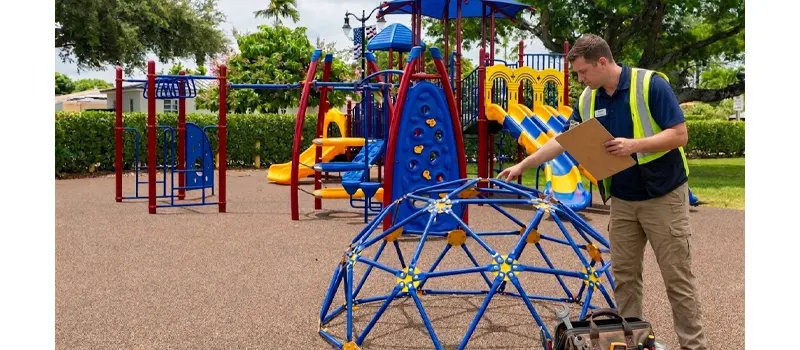
1. Créer un calendrier d'inspection régulière des terrains de jeu
Vous et votre personnel devez inspecter le terrain de jeu régulièrement, quotidiennement, hebdomadairement et mensuellement, et élaborer un plan d'inspection. Plus les inspections sont fréquentes, plus le risque de problèmes est faible.
Inspection quotidienne
Avant l'arrivée des enfants, le personnel doit procéder à une inspection visuelle rapide et attentive. En se concentrant sur les problèmes à haut risque tels que les pièces détachées, les bords tranchants, les composants endommagés et les débris. Porter une attention particulière aux zones à forte utilisation. équipement de jeu autoportant zones comme les balançoires et les toboggans.
Inspection mensuelle/trimestrielle
Observez attentivement le fonctionnement de ces appareils. Vérifiez la stabilité, testez les pièces mobiles et inspectez les connecteurs, les surfaces et les matériaux pour détecter toute usure ou tout dommage. Lors de l'inspection, les travailleurs doivent utiliser des outils pour resserrer les pièces desserrées et identifier de manière proactive les premiers signes de détérioration des matériaux, tels que la rouille sur le métal ou les fissures sur le bois.
Inspection annuelle de l'intégrité structurelle
Idéalement, les inspections annuelles devraient être effectuées par un Inspecteur certifié de la sécurité des aires de jeux (CPSI) ou par un professionnel désigné par le fabricant. Cette inspection rigoureuse va au-delà de la surface, vérifiant la corrosion ou la dégradation des fondations souterraines et des systèmes d'ancrage pour garantir que votre équipements de jeux respecte constamment les normes internationales de sécurité, protégeant ainsi votre organisation de toute responsabilité.
Conserver les rapports d'inspection
Conservez toujours un journal écrit de vos inspections et réparations. Vous devez y inscrire la date, les articles nécessitant une réparation ou un remplacement, les étapes que vous avez suivies pour nettoyer l'équipement, et les noms du personnel ayant participé à l'inspection. Cela permet de suivre la durée de vie de votre équipement et constitue également un document de conformité essentiel pour les audits de sécurité.
Si vous ne savez pas comment inspecter, ne vous inquiétez pas. Notre équipement de plein air est généralement accompagné d'une liste de contrôle de maintenance au cas où les clients ne seraient pas sûrs de la manière d'effectuer une inspection de routine de l'équipement.
2. Identification et résolution des problèmes d'usure courants
Ce qui suit sont nos solutions basées sur l'expérience pour des problèmes simples. Cependant, si vous n'êtes pas du tout familier avec l'entretien de l'équipement, vous devez demander l'aide d'un professionnel pour éviter que une manipulation incorrecte ne cause des dangers pour la sécurité. Les clients qui ont acheté nos produits peuvent nous contacter à tout moment pour une consultation.
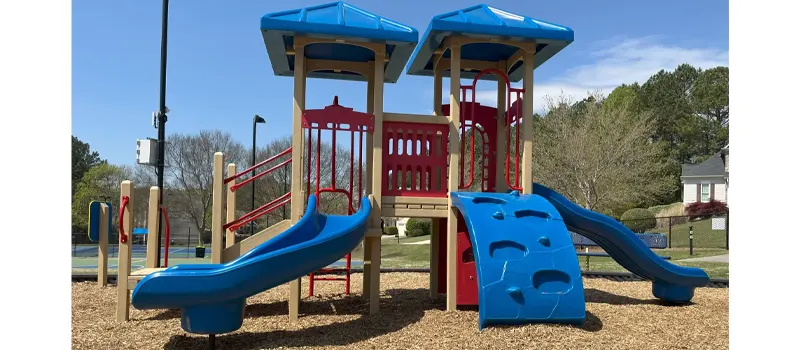
Usure de surface de la rouille et du métal
Si vous remarquez des signes précoces de rouille ou d'écaillage du revêtement en poudre sur l'équipement, ne peignez pas directement. Utilisez d'abord une brosse métallique ou du papier de verre de grain moyen à gros pour poncer la rouille jusqu'au métal. Essuyez et laissez sécher complètement avant d'appliquer un apprêt antirouille. Enfin, pulvérisez une peinture métallique d'extérieur non toxique, résistante aux UV et de couleur assortie pour repousser l'humidité et prévenir toute corrosion supplémentaire.
Fissures, éclats et bords rugueux
Inspectez la surface de l'équipement pour y détecter des dommages qui pourraient égratigner les enfants ou accrocher leurs vêtements. Les pièces en bois peuvent être poncées avec du papier de verre fin pour enlever les bords rugueux et les éclats, puis recouvertes d'un scellant pour bois sans danger pour les enfants et résistant aux intempéries. Les éraflures mineures sur les pièces en plastique peuvent être poncées. Cependant, n'essayez jamais de coller ou de fixer avec du ruban adhésif les fissures structurelles dans les pièces en plastique (ces réparations échoueront sous pression). Les pièces en plastique sévèrement fissurées doivent être complètement remplacées.
Matériel desserré ou manquant
Si l'équipement bouge ou vacille, resserrez rapidement toute articulation instable à l'aide d'une clé appropriée. Évitez de serrer trop fort, car cela pourrait endommager les filetages ou faire craquer le plastique environnant. Pour les boulons qui se desserrent fréquemment en raison d'une utilisation intensive, envisagez d'appliquer une goutte de frein filet de force moyenne avant de serrer. Si des pièces de fixation ou des capuchons de boulons sont manquants, remplacez-les immédiatement par des pièces d'origine pour vous assurer qu'elles respectent les spécifications exactes en matière de charge et de sécurité.
3. Remplacer les pièces endommagées et manquantes
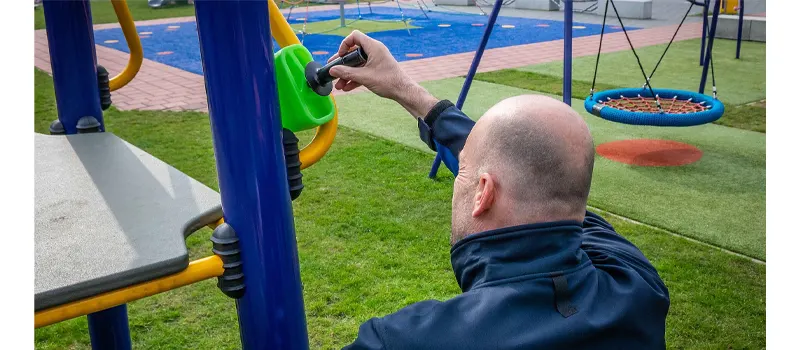
Ne négligez jamais les petites pièces qui se révèlent défectueuses ou endommagées, car de petits problèmes peuvent rapidement s'aggraver en cas d'utilisation fréquente. Parfois, la réparation n'est pas utile. Il est préférable de remplacer rapidement les pièces défectueuses. Lors du remplacement de pièces, évitez les substitutions arbitraires ; il est préférable d'utiliser des pièces du fabricant d'origine pour garantir une compatibilité exacte et une utilisation sûre.
Ne pensez pas que trouver les pièces d'origine soit compliqué. Nous pouvons rapidement fournir à nos partenaires un support de remplacement de pièces pour réduire les temps d'arrêt et assurer le bon fonctionnement du parc d'attractions.
4. Garder la surface du terrain de jeu sécuritaire
En plus de l'inspection de l'équipement, l'entretien de la surface au sol est également important. Les administrateurs doivent inspecter régulièrement le sol du terrain de jeu pour s'assurer qu'il reste plat et propre. Inspectez attentivement tout signe de fissures, de bords relevés ou de séparation des joints. Ces problèmes non seulement réduisent l'atténuation des chocs, mais créent également des risques de trébuchement importants pour les enfants qui courent.
Faites attention aux matériaux de remplissage lâches tels que le sable ou le caoutchouc, et vérifiez tout déplacement ou tassement après une utilisation fréquente ou des changements climatiques. Ratissez, nivelez et renouvelez régulièrement le matériau de remplissage pour maintenir une épaisseur constante, en particulier dans les zones à fort impact. Un bon entretien de la couverture permet d'absorber les chocs et de réduire le risque de blessures pendant le sport.
Pour les pelouses naturelles ou les zones de terre, vérifiez l'usure et le tassement importants. Le trafic piétonnier continu de haute intensité peut compacter le sol naturel en une couche dure, éliminant ses propriétés naturelles d'absorption des chocs.
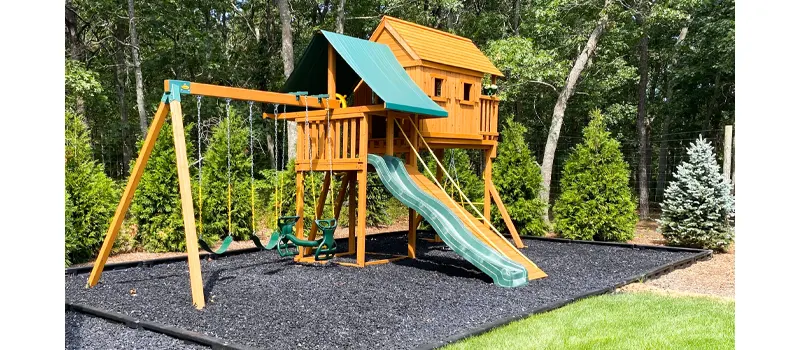
5. Ne Pas ignorer les débris naturels
Les feuilles mortes augmentent le risque de glissade sur les paliers et les escaliers, et peuvent facilement cacher dangers potentiels comme des panneaux cassés ou du matériel manquant. De plus, les feuilles en décomposition retiennent l'humidité, favorisent la prolifération des bactéries et accélèrent le vieillissement des revêtements protecteurs.
Après la pluie, vérifiez les zones où l'eau stagne et le drainage est médiocre. L'eau sous les balançoires ou au pied des toboggans peut se transformer en flaques glissantes et, dans les régions plus froides, en glace dangereuse, créant des risques de glissade. L'humidité persistante accélère également la rouille, favorise la décomposition du bois et crée des conditions idéales pour la croissance des moisissures.
Par conséquent, veuillez intégrer le nettoyage de l'aire de jeux à votre routine matinale quotidienne pour maintenir sa surface propre et sèche. Assurez-vous que la pente naturelle de l'aire de jeux et tout système de drainage installé restent dégagés. Ratissez et nivelez régulièrement les dépressions profondes dans les surfaces à matériau meuble où l'eau a tendance à s'accumuler.
6. Le nettoyage fait également partie intégrante de l'entretien
Un terrain de jeu sale et désordonné peut saper la confiance des parents, entraînant une baisse des inscriptions scolaires et de l'utilisation des aires de jeux commerciales. De plus, l'accumulation de saleté accélère l'usure des matériaux et rend les dommages plus difficiles à détecter lors des inspections. Pour prolonger la durée de vie de votre équipement et maintenir l'aspect visuel de votre établissement, suivez ces conseils de nettoyage :
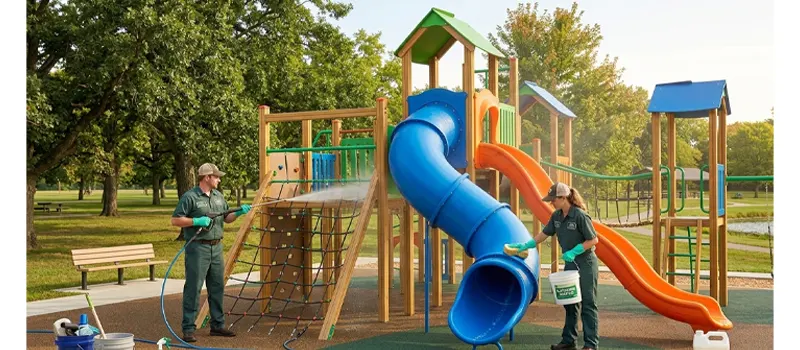
- Utilisez les bonnes solutions de nettoyage : Éloignez-vous des produits chimiques industriels agressifs, de l'eau de Javel ou des dégraissants puissants. Ceux-ci peuvent décaper les couches protectrices UV des glissières en plastique et ternir les couleurs vives de votre équipement. Préférez plutôt un mélange d'eau tiède et de savon à vaisselle liquide doux et non toxique. Pour désinfecter, utilisez des désinfectants sans danger pour les enfants, approuvés par l'EPA, spécifiquement conçus pour les plastiques et les métaux des aires de jeux.
- Choisir les bons outils : Vous pouvez utiliser des brosses souples, des éponges ou des chiffons en microfibre. N'utilisez jamais de laine d'acier, de brosses métalliques ou de tampons à récurer très abrasifs sur la surface de l'équipement, car ceux-ci créeront des micro-rayures où la saleté et les bactéries s'installeront de manière permanente.
- Attention zones à fort trafic Portez une attention particulière aux zones fréquemment touchées par les enfants. Les mains courantes, les chaînes de balançoires, les volants et les panneaux de jeu interactifs doivent être essuyés et désinfectés fréquemment, surtout pendant la saison de la grippe, afin d'empêcher la propagation des bactéries et de maintenir l'hygiène des installations.
- Éliminez rapidement les taches tenaces : La sève d'arbre et les fientes d'oiseaux sont très acides. Si on les laisse sécher au soleil ardent, elles peuvent attaquer de façon permanente les panneaux en plastique et les finitions métalliques. Retirez ces taches dès que vous les apercevez lors de vos inspections visuelles quotidiennes avec de l'eau tiède savonneuse et un chiffon doux, avant qu'elles ne durcissent.
7. Éduquer tous les utilisateurs à la sécurité du terrain de jeu (enfants, enseignants, employés et gestionnaires).
Enseigner aux enfants les bases comme faire leur tour, attendre patiemment et utiliser du matériel adapté à leur âge suffit souvent à prévenir de nombreux accidents courants.
Les responsables doivent être minutieusement formés pour reconnaître les risques courants dans les aires de jeux. L'établissement d'un flux de travail interne clair garantit que tout problème de sécurité ou pièce défectueuse est rapidement identifié, signalé et résolu avant qu'il ne puisse causer de préjudice.
Les enseignants et le personnel doivent observer comment le matériel est utilisé. Intervention précoce et dissuasion des enfants des comportements dangereux. Installation de panneaux ou d'indices visuels simples et faciles à comprendre dans la cour de récréation. Des graphiques adaptés aux enfants et des limites claires aident à rappeler aux enfants comme aux surveillants la bonne manière d'interagir avec l'espace.
Conseils d'entretien saisonnier des aires de jeux
Les différentes saisons apportent différents défis climatiques qui peuvent affecter l'équipement de votre aire de jeux. Par conséquent, il est nécessaire d'ajuster les priorités de maintenance en fonction de la saison pour maintenir la sécurité de l'aire de jeux.
Printemps
Après le froid hivernal, une inspection complète des équipements est nécessaire pour éliminer tout danger potentiel causé par le rude hiver. Une attention particulière doit être accordée à l'inspection de la fondation et du système d'ancrage, car le cycle de gel-dégel du sol peut provoquer des déplacements structurels et un desserrement du sol. De plus, un nettoyage en profondeur est requis, car de nombreuses installations de jeux sont fermées pendant l'hiver. La surface de l'aire de jeux doit également être soigneusement ratissée, ameublie et réapprovisionnée en matériaux meubles compactés par la neige abondante.
Été
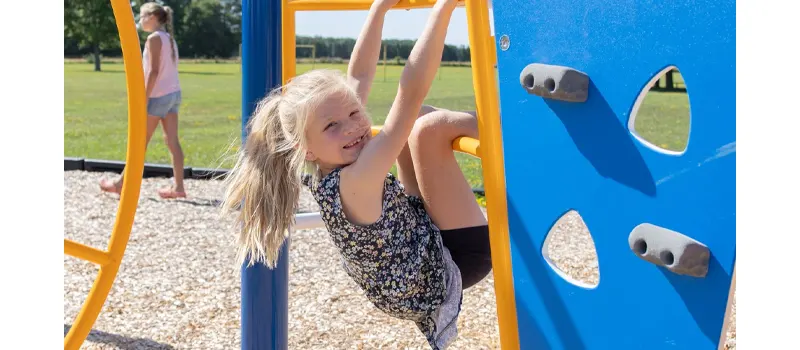
En été, des précautions doivent être prises contre les rayons ultraviolets et les températures élevées. Vérifiez la température des parties métalliques des équipements à la mi-journée pour éviter les brûlures chez les enfants ; ajoutez un filet d'ombrage si nécessaire. Pour les structures en plastique, surveillez également la déformation ou la fissuration sous haute température. Gérez les plantes autour de la zone, contrôlez les nuisibles et empêchez les enfants de se faire mordre. Le nettoyage doit être plus fréquent en été, car les restes de nourriture et autres déchets sont sujets à la moisissure et à la prolifération bactérienne.
Automne
La tâche principale de l'automne est de dégager rapidement les feuilles tombées naturellement et de se préparer au froid de l'hiver. Il serait encore mieux d'appliquer un lubrifiant résistant au froid aux pièces mobiles telles que les paliers oscillants et les mécanismes rotatifs avant l'arrivée du froid hivernal.
Hiver
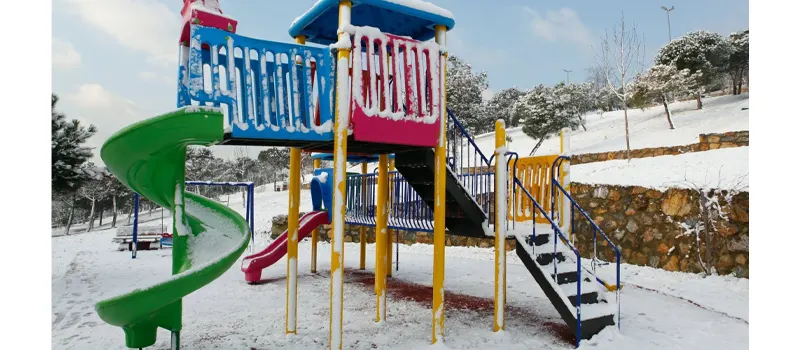
Le temps froid rend les plastiques plus cassants et entraîne le rétrécissement et le desserrage des pièces métalliques. Inspectez et dégagez régulièrement la glace et la neige des aires de jeux. Assurez-vous que les chemins et les rampes utilisés par les enfants et le personnel sont exempts d'objets glissants. Les aires de jeux extérieures doivent être temporairement fermées dans les régions extrêmement froides.
Réflexion finale
Agissez maintenant et prenez l'habitude d'inspections régulières. Le temps vous prouvera que l'entretien des aires de jeux peut vous faire économiser des coûts et prévenir efficacement les accidents de sécurité.
Si vous prévoyez de construire ou de moderniser une aire de jeux extérieure mais hésitez encore sur l'équipement et la disposition, n'hésitez pas à choisir Xiha Kidz. Nous fournissons non seulement une solution complète, mais offrons également un support continu pour votre maintenance et vos mises à niveau ultérieures.
FAQ
Les 5 S de la sécurité dans les aires de jeux sont :
1. **Sol** (Surface) : S'assurer que le sol est bien aménagé avec des matériaux absorbant les chocs (copeaux de bois, sable, caoutchouc, etc.) pour amortir les chutes.
2. **Surveillance** (Supervision) : Toujours surveiller les enfants pendant qu'ils jouent.
3. **Sécurité** (Safety equipment) : Vérifier que l'équipement de jeu est en bon état, sans pièces cassées ou qui dépassent, et qu'il est adapté à l'âge des enfants.
4. **Situé** (Setting) : Choisir un emplacement sûr pour l'aire de jeux, loin des dangers comme les routes ou les piscines, et s'assurer qu'elle est sécurisée par des clôtures si nécessaire.
5. **Spectacle** (Setup) : S'assurer que l'aire de jeux est bien organisée, avec suffisamment d'espace entre les différents équipements pour éviter les collisions.
Les 5 S de la sécurité des aires de jeux font généralement référence à la Surface, la Structure, l'Espacement, la Surveillance et les règles de Sécurité. Une aire de jeux sûre nécessite une surface amortissant les chocs, un équipement stable et bien entretenu, un espacement adéquat entre les structures, une surveillance active et des règles d'utilisation claires.
À faire et à ne pas faire dans la cour de récréation ?
Faire : utilisez le matériel comme prévu, faites la queue, portez des vêtements appropriés et respectez les zones de jeu adaptées à l'âge. Ne pousser les autres, grimper en dehors des zones désignées, utiliser du matériel endommagé ou surcharger les structures de jeu. Des règles simples comme celles-ci aident à réduire les accidents et à minimiser l'usure inutile du matériel.
La caractéristique de sécurité la plus importante sur n'importe quel terrain de jeu ?
Une surface adéquate ! Même avec un équipement bien conçu, des chutes peuvent survenir. Les surfaces absorbant les chocs, comme le caoutchouc, le sable ou les copeaux de bois traités, réduisent considérablement le risque de blessures. Maintenir la surface en bon état est aussi important que l'équipement lui-même.
Puis-je agrandir ou moderniser mon terrain de jeu au lieu de le remplacer entièrement ?
Oui, agrandir une aire de jeux existante est un moyen très rentable d'accueillir une augmentation des inscriptions ou de redynamiser l'attrait de votre établissement. Parce que nous offrons des services complets et sur mesure, nous vous aidons à intégrer en toute transparence de nouvelles structures de jeu adaptées à l'âge, qui correspondent parfaitement à votre agencement et à votre esthétique actuels.
Supportez-vous des projets complets de terrain de jeux ou seulement des produits individuels ?
Nous prenons en charge les deux. Que vous ayez besoin d'équipements individuels, de pièces de rechange ou d'un équipement complet de terrain de jeu, nous pouvons vous aider à planifier l'agencement, à sélectionner les produits et à fournir l'approvisionnement en fonction des besoins de votre projet.







 French
  English
  Arabic
  Italian
  German
  Spanish
  Thai
Thai  Japanese