
Remember the joy of digging in the garden as a kid, mixing dirt and water to create the perfect mud pie? Those moments were simple, messy, and full of imagination. Yet many children today spend most of their time indoors, with fewer opportunities to explore freely or connect with natural materials.
A mud kitchen for kids brings that childhood magic back in a purposeful way. It gives children a place to experiment with textures and materials while developing early problem-solving and language skills. The space becomes a small outdoor laboratory where imagination leads the way.
In this post, we’ll answer common questions like what a mud kitchen actually is, what age it’s suitable for, and how it benefits young learners. We’ll also share practical setup tips and must-have tools to help you get started.
What Is a Mud Kitchen?
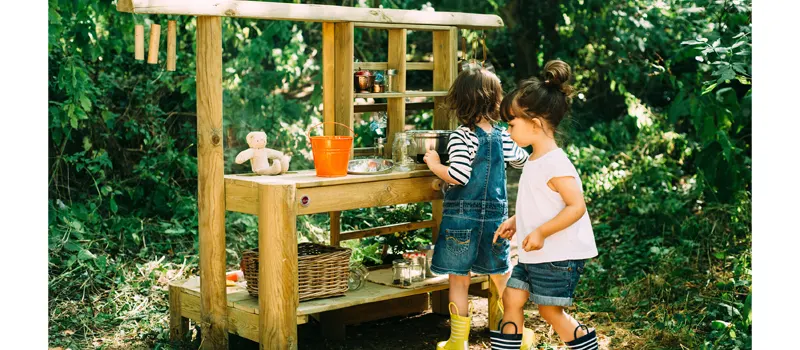
A mud kitchen for kids is an outdoor play area where children use soil, water, and natural materials to pretend they are cooking, baking, or running a small restaurant. Instead of real food and appliances, they work with mud, sand, leaves, flowers, stones, and sticks. The setup usually includes a surface that acts as a counter, a sink or bowl for mixing, and simple tools like spoons, ladles, pots, and trays. It is essentially a child-sized outdoor kitchen designed for messy, sensory-rich play.
Unlike a regular toy kitchen that often sits inside a bedroom or playroom, a mud kitchen for kids lives outdoors and invites children to interact with the natural environment. The focus is on open-ended exploration rather than perfect pretend meals. Children scoop soil, add water, stir mixtures, pour from one container to another, and decorate their creations with items they find in the garden. The experience feels like cooking, but the main goal is experimenting with textures, cause and effect, and imaginative storylines.
What Age Is a Mud Kitchen For?
Mud kitchens are versatile play spaces that can be adapted to suit a wide range of age groups, typically starting from around 18 months to 8 years old. However, the way children interact with the mud kitchen will vary based on their developmental stage, motor skills, and individual interests.
Toddlers (18 Months to 3 Years)
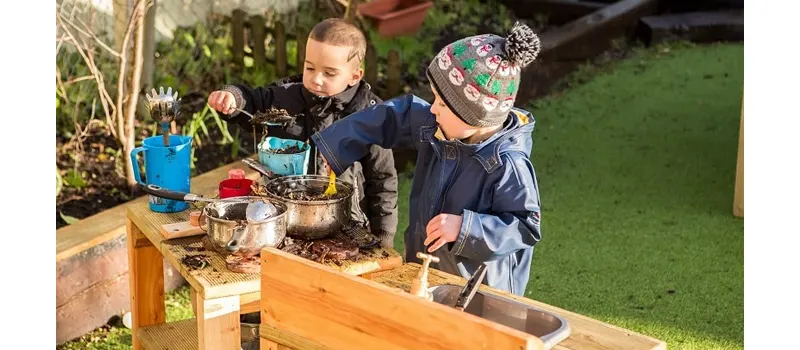
At this early stage, children are developing sensory awareness and basic motor control. A mud kitchen provides a perfect sensory-rich environment where toddlers can scoop, pour, and feel different textures. Play is mostly exploratory and unstructured, so the setup should be simple, low to the ground, and free of small or sharp tools.
Bambini in età prescolare (dai 3 ai 5 anni)
This is often the prime age for a mud kitchen for kids. Children begin to engage in imaginative role-play, take on social roles like “chef” or “customer,” and use language to communicate during shared play. They may start combining materials, counting items, or experimenting with cause and effect.
Early Elementary (6 to 8 Years)
Older children enjoy deeper engagement through structured play, creative problem-solving, and independent exploration. They might design recipes, decorate their “restaurant,” or set up rules for play with peers. This age group benefits from more advanced setups with added features like pretend sinks, labeled containers, and more complex tools.
Benefits of Mud Kitchens for Kids
A mud kitchen is more than just a fun outdoor activity. It serves as a powerful developmental tool that supports early learning in multiple domains. From physical coordination to cognitive growth, a well-designed mud kitchen for kids nurtures the whole child through hands-on, open-ended play.
Sviluppo sensoriale
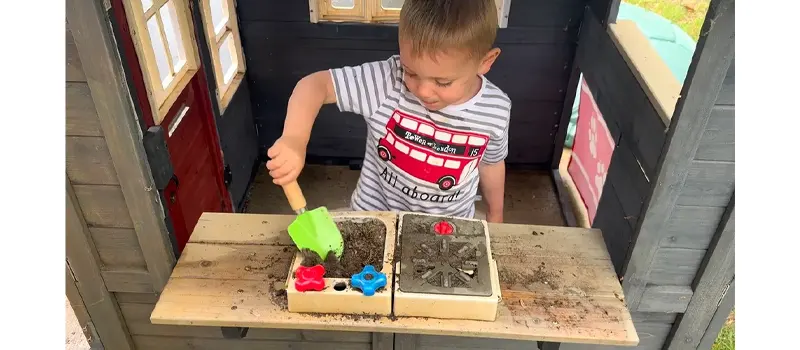
Children strengthen their senses as they touch wet and dry soil, compare textures, and experiment with temperature and moisture levels. These experiences help build sensory processing skills, which support focus, emotional regulation, and overall readiness for structured learning.
Fine Motor and Coordination Skills
Scooping, pouring, stirring, and squeezing all require controlled hand movements. These actions help children build the fine motor strength needed for writing, cutting, and daily tasks. The physical nature of the space also supports coordination and improved hand-eye connection.
Creatività e immaginazione
The mud kitchen serves as an open canvas for pretend play. Children create recipes, plan menus, build imaginary restaurants, and explore storytelling through their actions. This type of play nurtures flexible thinking and supports early literacy because children naturally verbalize their ideas.
Early Science and Math Concepts
A mud kitchen for kids introduces scientific thinking through simple experiments. Children observe changes in texture, test what happens when different materials mix, and compare quantities while filling bowls and containers. These moments build a foundation for measurement, classification, and cause-and-effect understanding.
Social and Emotional Growth
The mud kitchen encourages cooperation as children share tools, negotiate roles, and work together on imaginary tasks. These shared experiences help them build empathy, communication skills, and confidence. The open outdoor setting also provides a calming environment that reduces stress and encourages positive emotional expression.
Stronger Connection to Nature
Regular interaction with soil, plants, and water helps children feel more comfortable in outdoor spaces. They develop curiosity about natural materials and learn to appreciate the environment through direct experiences rather than screens or structured lessons.
How to Set up a Mud Kitchen for Children?
Setting up a mud kitchen for kids involves choosing a safe outdoor location, assembling a child-friendly base structure, and stocking it with simple tools like bowls, spoons, and water containers. The goal is to create an open-ended, sensory-rich environment that invites creativity, role-play, and hands-on exploration.
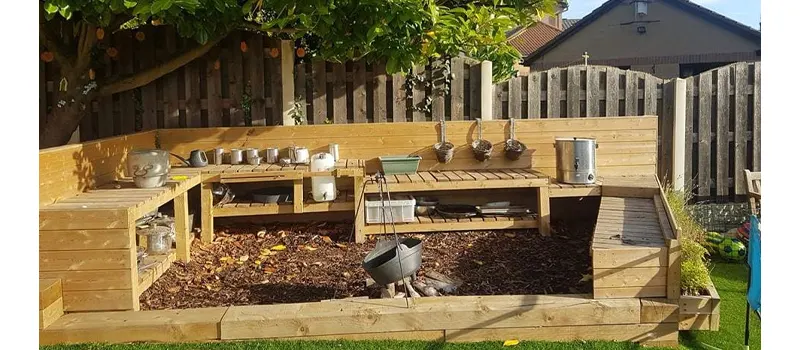
Choose the Right Location
Select an outdoor area that is safe, shaded, and easy to clean. Backyards, preschool gardens, and even community green spaces can work well. Ideally, the spot should have access to soil and water and be away from delicate plants or high-traffic zones.
Good drainage is essential, as muddy play naturally involves water. A slightly sloped area or ground covered with gravel or mulch can help reduce mess and prevent slippery surfaces.
Choose the Right Surface and Layout
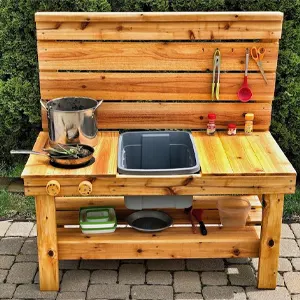
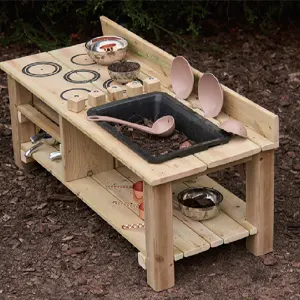
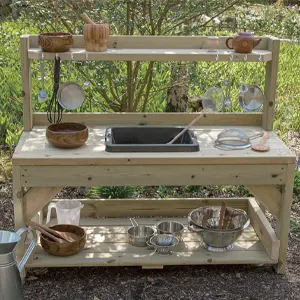
A stable, flat surface is important so children can mix and pour without tipping containers. Many mud kitchens use simple wooden tables or shelves arranged at child height. A layout with a main work surface, a mixing section, and a storage area helps children understand where to find tools and where to create their recipes.
Gather Essential Tools and Utensils
The setup can be simple, but basic items make the space more engaging. Bowls, scoops, strainers, small pots, and old kitchen utensils give children endless ways to explore textures. Choose tools that are safe, durable, and easy to clean. Metal and sturdy plastic options are usually the most practical for outdoor environments.
Provide Natural Materials
A mud kitchen for kids becomes richer when natural materials are readily available. Offer soil, sand, stones, leaves, pinecones, and pieces of bark so children can mix and compare different textures. Keep these materials in open containers or baskets to make independent play easier and more organized.
Create Access to Water
Water is essential for mud play, yet it should be managed in a controlled way. A small bucket, child safe water dispenser, or nearby outdoor tap allows children to add water independently. Having a dedicated water area helps keep the workspace from becoming overly muddy and supports smoother cleanup.
Support Independent Play with Clear Organization
Children play more confidently when they can see where everything belongs. Open shelving, labeled baskets, and simple sorting systems help them manage tools and materials themselves. Clear organization also encourages responsibility as children learn to return items after use.
Include Safety and Hygiene Practices
A mud kitchen is a safe activity when basic routines are followed. Remind children to wash their hands before and after play, keep materials out of their mouths, and wear appropriate outdoor clothing. Regularly check tools and surfaces to ensure everything remains clean and free of sharp edges.
Essential Materials and Tools for a Mud Kitchen
A functional mud kitchen for kids does not need to be fully equipped from the beginning. It is perfectly fine to start small, using a few basic items that you already have at home. As your child explores the space and begins to play more regularly, you can gradually add new tools and natural materials based on their interests and how they use the kitchen.
The list below includes commonly used items that support pretend play, sensory experiences, and apprendimento pratico. You can adapt these suggestions to suit your space, your child’s age, and what is easily available to you.
Basic Kitchen Tools
Start by providing a small set of tools that children can use to mix, pour, stir, and scoop. These tools help develop fine motor skills.
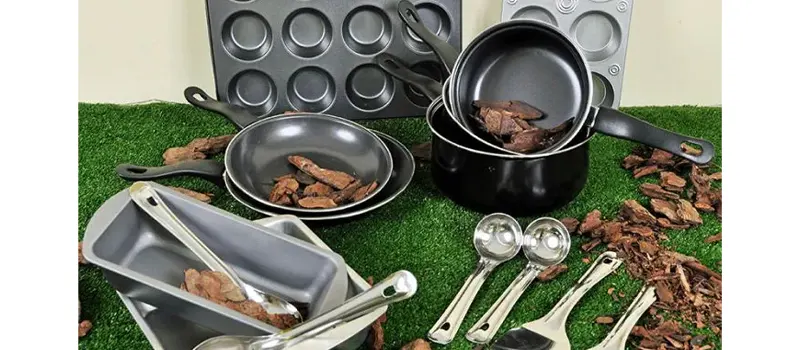
- Bowls in different sizes
- Spoons, ladles, and spatulas
- Measuring cups or containers
- Baking trays and muffin tins
- Small plastic or metal pots
- Child-safe scoops or garden trowels
Containers and Work Surfaces
Children need a flat and sturdy surface to work on, along with containers to organize materials and tools. A simple table or shelf at child height can serve this purpose well.
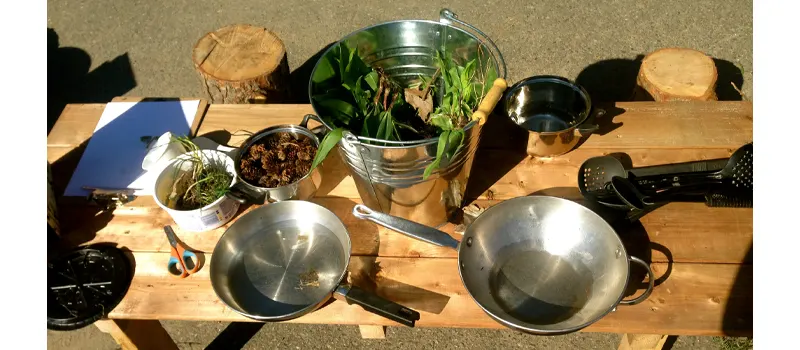
- Buckets for water and mud
- Storage bins or baskets for loose items
- Flat tabletop or board for mixing and pretend cooking
- Open shelves or cubbies for easy access
- Recycled jars or boxes for collecting small nature items
Natural Play Materials
The heart of any mud kitchen lies in what children play with. Offer a variety of natural textures and ingredients to spark creativity. You can rotate or refresh these materials depending on the season or local environment.
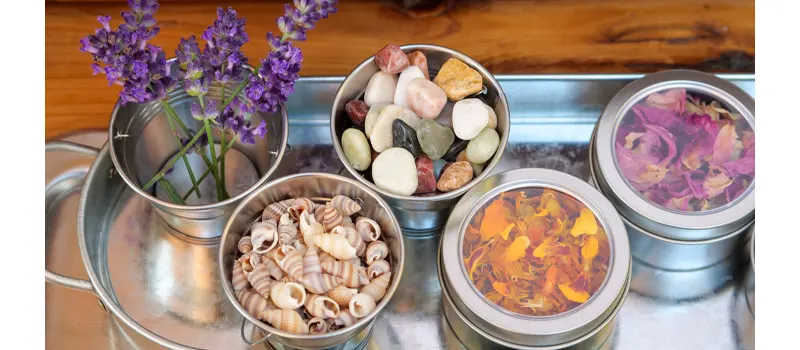
- Soil or garden-safe mud
- Sand and water
- Leaves, twigs, bark, or pinecones
- Petals, herbs, or dried flowers
- Stones or gravel
Optional Items to Enrich Play
As your mud kitchen for kids becomes a regular play space, you might consider adding a few extras to keep it engaging and dynamic.
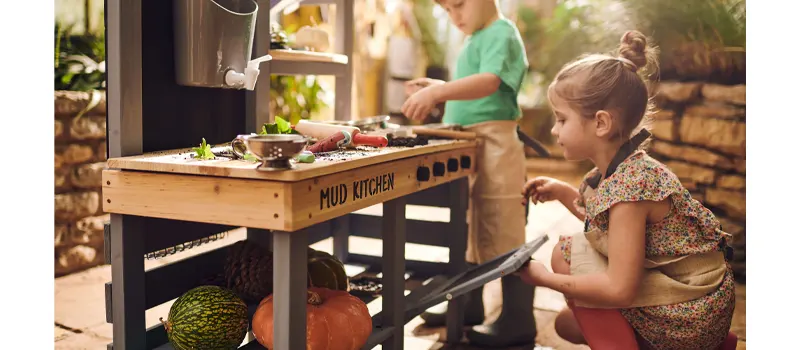
- A chalkboard or menu board
- Toy plates, cups, or trays
- Watering cans or squeeze bottles
- Dress-up aprons or play chef hats
- A plastic basin to pretend as a sink
- Nearby herb plants or small garden boxes
Creative Ideas for a Mud Kitchen
Once your mud kitchen for kids is set up, the possibilities for play are endless. Here are some simple and fun ideas to keep children engaged and inspired:
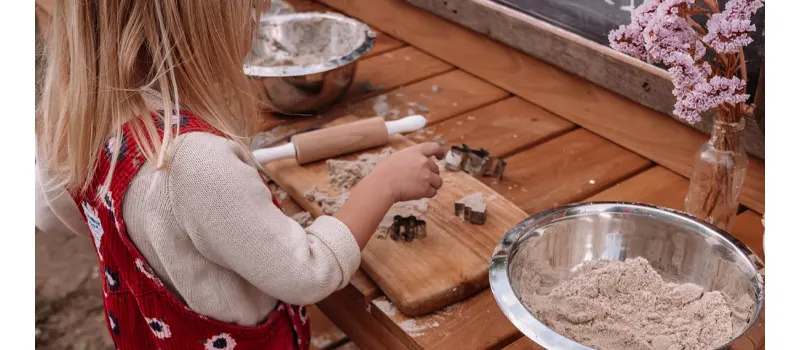
- Mud Pie Bakery
Set out muffin tins, pie plates, and cookie cutters. Encourage kids to create mud cakes and decorate them with leaves, flower petals, and pebbles. Add a “bakery menu” chalkboard so they can name their treats. - Potion Making Station
Offer jars, small bottles, and spoons. Let kids mix mud with water, petals, grass, and even food coloring to create “magic potions.” Give each potion a silly name and have them explain what it does. - Nature Soup Kitchen
Provide ladles, bowls, and old pots. Have children collect ingredients from the yard like twigs, herbs, pinecones, and sand to make their own garden soup or stew. They can pretend to serve it to customers or dolls. - Restaurant Role Play
Use toy plates and cups to create a pretend café. One child can be the chef while another takes orders and serves dishes. Add a chalkboard menu with items like “dirt lasagna” and “rock salad.” - Washing-Up Station
Set up a separate tub with soapy water and a sponge. Kids can clean their cooking tools after each “meal,” learning responsibility while having fun with water play. - Color Mixing Experiments
Provide food coloring or natural colorants like beet juice or turmeric. Let kids mix colors into mud or water and observe what happens, adding a little science to the fun. - Garden Tea Party
Use toy teacups, pretend sugar cubes (small stones), and herbal leaves for a fancy mud tea party. Kids can invite their stuffed animals or friends for a garden gathering.
FAQs About Mud Kitchens
What mud do you use for mud kitchens?
The best mud for a mud kitchen is soft, clean garden soil mixed with water until it reaches a thick, workable consistency. Avoid using clay-heavy soil, which can become too sticky, or overly sandy soil that won’t hold shape. Ideally, the mud should be free of sharp stones, chemicals, or animal waste to ensure safe play.
Where can I get mud for a mud kitchen?
You can make your own mud by mixing clean topsoil or potting soil with water in a large container. Soil can be purchased from garden centers, hardware stores, or landscaping suppliers. If collecting soil from your yard, choose an area free from pesticides or pet traffic, and consider sifting it to remove debris before use.
Are mud kitchens safe for children?
Yes, mud kitchens are safe for children when set up and used properly. Use child-safe tools without sharp edges, ensure the structure is stable and age-appropriate, and always supervise younger children during play. Teach children to wash their hands after playing, and use clean water and soil to reduce hygiene risks.
How do I keep the mud kitchen clean?
While mud kitchens are meant to be messy, you can manage cleanliness by using washable containers, regularly changing water sources, and designating a “mud zone” with mulch or gravel to reduce splashing. Teach children to wash their hands after play and store tools properly.
Conculsion
A mud kitchen for kids is one of the most effective ways to bring meaningful outdoor play into daily learning. With simple materials and thoughtful setup, the space supports sensory exploration, creativity, cooperation, and early problem-solving in a way that feels joyful and natural for children.
By choosing safe tools, offering natural materials, and encouraging open exploration, educators and families can create a long-lasting play space that strengthens a child’s connection to nature. A well-designed mud kitchen for kids becomes more than an activity. It becomes a foundation for curiosity, confidence, and rich childhood memories.




 Italian
  English
  Arabic
  French
  German
  Spanish
  Thai
Thai  Japanese