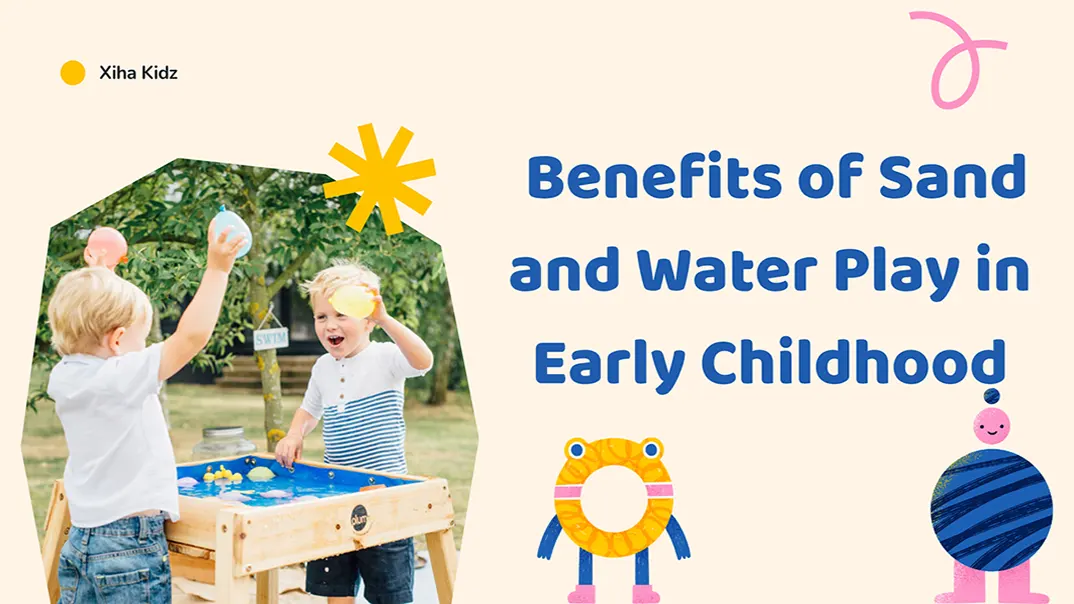
The benefits of sand and water play in early childhood go far beyond keeping kids busy. At its core, this type of sensory play is essential for developing fine and gross motor skills, introducing foundational early math and science concepts (like volume, displacement, and gravity), and supporting emotional regulation. It also provides a highly engaging environment where toddlers and preschoolers naturally practice cooperative play, negotiation, and language building.
Be honest. When you think about setting up a tavola di sabbia e acqua in your classroom or backyard, your first thought is probably the cleanup. The sweeping, the wet sleeves, and the sand tracked across the floor. It is undeniably messy. But there is a reason these sand and water play have been a staple in quality early childhood environments for decades. The mess isn’t an accident; it is the byproduct of serious, hands-on learning.
As Fred Rogers famously noted, “Play is often talked about as if it were a relief from serious learning. But for children, play is serious learning.” When a three-year-old repeatedly fills a plastic jug with water and watches it spill over the edges, they aren’t just making a puddle. They are actively testing cause and effect. They are little scientists in a laboratory of their own making, learning how the physical world works through trial and error.
So, is the extra sweeping and wiping down worth it? Absolutely. Let’s explore the benefits of sand and water play in detail, and share practical ways to set up a space that actually supports learning.
What is Sand and Water Play?
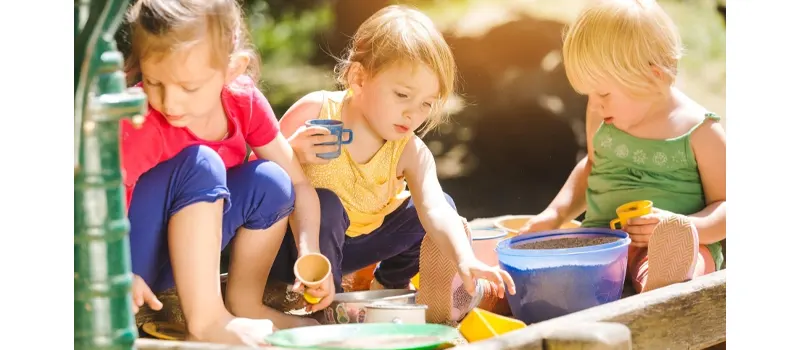
At its most basic level, sand and water play is often categorized under the broader umbrella of “sensory play” or “messy play”. It involves providing children with access to these raw, natural elements, typically contained within a dedicated sensory table, a sturdy classroom bin, or an outdoor sandbox.
However, from an early childhood education perspective, this type of play is defined by no rigid instructions, no fixed sequence to follow, and no single result a child is expected to produce. It is a form of open-ended play. When a child approaches a sensory table, there is no final product they are supposed to assemble. There are no battery-operated buttons to press and no “wrong” way to engage. Instead, the activity is entirely child-led. They might choose to bury small toys, watch how water flows through a plastic funnel, or simply feel the texture of dry sand slipping through their fingers.
Educators often refer to this as process-oriented play. For example, a three-year-old might spend twenty minutes repeatedly filling a plastic cup with wet sand and dumping it out. To an observing adult, nothing tangible has been “made.” But to the child, they are conducting an intense, hands-on experiment. They are testing the weight of the water, the structural integrity of the damp sand, and the concept of cause and effect.
The Benefits of Sand and Water Play in Early Childhood
While it might look like simple playtime, sand and water play is actually a comprehensive tool for early development. The core benefits span across physical, cognitive, and social growth. By engaging with these open-ended materials, toddlers and preschoolers naturally build motor skills, grasp foundational STEM concepts, and practice emotional regulation.
Strengthens Fine and Gross Motor Skills
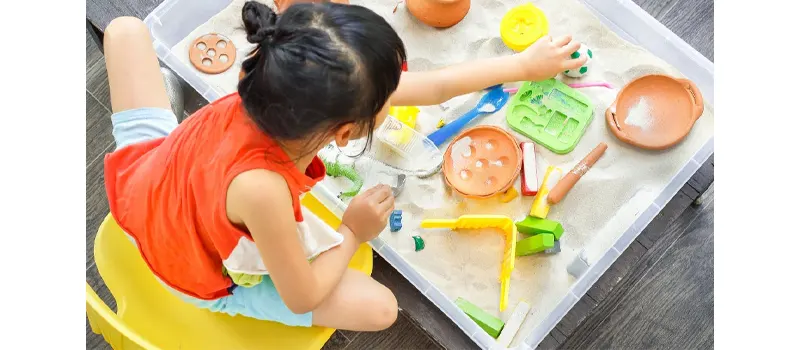
Sand and water play helps children develop both fine and gross motor skills through repeated, hands-on movement.
Abilità motorie fini
When children scoop sand, pour water, squeeze sponges, or pick up small objects, they are strengthening hand muscles and improving control. These actions support hand-eye coordination and help prepare children for later tasks such as writing, drawing, and using classroom tools.
Abilità motorie grossolane
Gross motor development happens when children carry buckets, dig with larger tools, bend, squat, reach, and move around the play area. These movements help improve balance, coordination, and overall body control, especially in larger outdoor setups.
Develops Early Math and Science Skills
Sand and water play introduces early math and science concepts naturally. Children begin to notice volume, measurement, weight, speed, and cause and effect as they fill containers, compare amounts, test what floats, or observe how wet and dry materials behave differently. These ideas are easier to understand because children are learning through action.
Improves Language and Communication
Sensory play gives children a chance to talk through their process. They use descriptive words like full, empty, heavy, light, wet, and dry in real contexts, which expands their vocabulary naturally. In shared play, children also practice essential communication skills: asking questions, explaining ideas, and active listening.
Supports Social Skills and Cooperation
Sand and water play often takes place in shared spaces, which gives children regular chances to interact with others. They learn to take turns, share tools, wait, observe what other children are doing, and solve small conflicts as they play. Because the activity feels low-pressure, these social skills often develop more naturally than in forced group tasks.
Helps with Emotional Regulation
Sand and water play is calming because the actions are repetitive, simple, and easy to control. Pouring, scooping, and transferring materials can help children slow down, focus, and settle into the activity. For some children, this kind of play offers a quiet way to regulate their emotions and stay engaged for longer periods of time.
Encourages Creativity and Imagination
There is no fixed result in sand and water play, which gives children room to create their own ideas. One child may build a small world in the sand, while another may turn the water area into a pretend kitchen, construction site, or science experiment. This freedom supports creative thinking because children are not trying to copy a model or reach a single correct answer.
How to Set Up an Effective Sand and Water Play Area?
An effective sensory play area requires thoughtful planning. Whether the space is located indoors or outdoors, the core objective remains the same: children must be able to access the materials independently and stay engaged. Simultaneously, the setup has to be practical for educators to supervise and maintain. A successful sand and water station simply balances a child’s need for flexible exploration with the daily realities of classroom management.
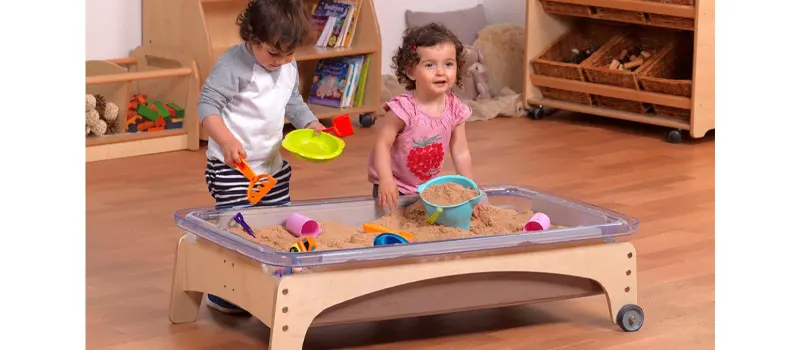
Indoor Setup: Controlling the Environment
Indoor spaces require strict boundary management and easy cleanup protocols.
- Strategic Placement: Never place a sensory table on a carpet. Position it on hard, slip-resistant flooring, ideally within a few steps of a classroom sink to make filling and draining efficient.
- Floor Protection: Place a heavy-duty, waterproof splash mat directly underneath and extending at least two feet around the table. This defines the physical play boundary and catches inevitable spills before they create a slipping hazard.
- Equipment Selection: Choose a compact, sturdy table with a fitted lid. The lid is non-negotiable for indoor setups; it prevents dust accumulation and clearly signals to children when the station is “closed.”
- Water & Sand Limits: A common mistake is overfilling. Fill water basins only one-third full. Provide smaller, controlled amounts of sand to keep the mess manageable.
- Accessible Storage: Install low, open shelving immediately next to the table. Store loose parts (funnels, cups, scoops) in transparent, labeled bins so children can independently select and return their tools without asking for help.
Outdoor Setup: Scaling for High Traffic and Weather
Outdoor setups allow for vigorous, full-body play, but the equipment must handle constant exposure to the elements and larger groups of children.
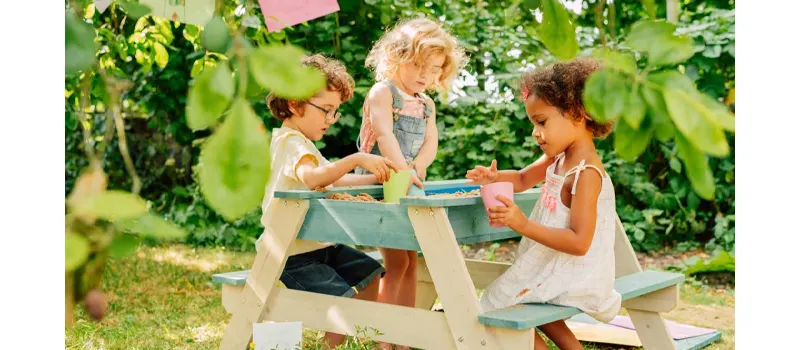
- Climate Control & Location: Always position the outdoor station under a natural tree canopy or install a UV-blocking shade sail. Place it near an outdoor hose or water spigot to avoid carrying heavy buckets across the playground.
- Ground Management: Avoid placing the table directly on dirt, which quickly turns into a permanent mud pit. Install the table over pea gravel, rubber safety surfacing, or wood chips to ensure immediate drainage when water spills.
- Choosing the Right Furniture: Outdoor setups require serious durability. When outfitting extreme-climate projects, we learned that flimsy plastic cracks under UV rays and freezing temperatures. Invest in solid, weather-treated sensory tables with removable basins and built-in drainage valves.
- Weather-Proof Storage: Do not leave tools sitting in the water overnight. Use mesh bags or perforated plastic baskets hung on a nearby fence or rack. This allows wet tools to air-dry naturally and prevents mold growth.
Stocking the Station: Essential Tools
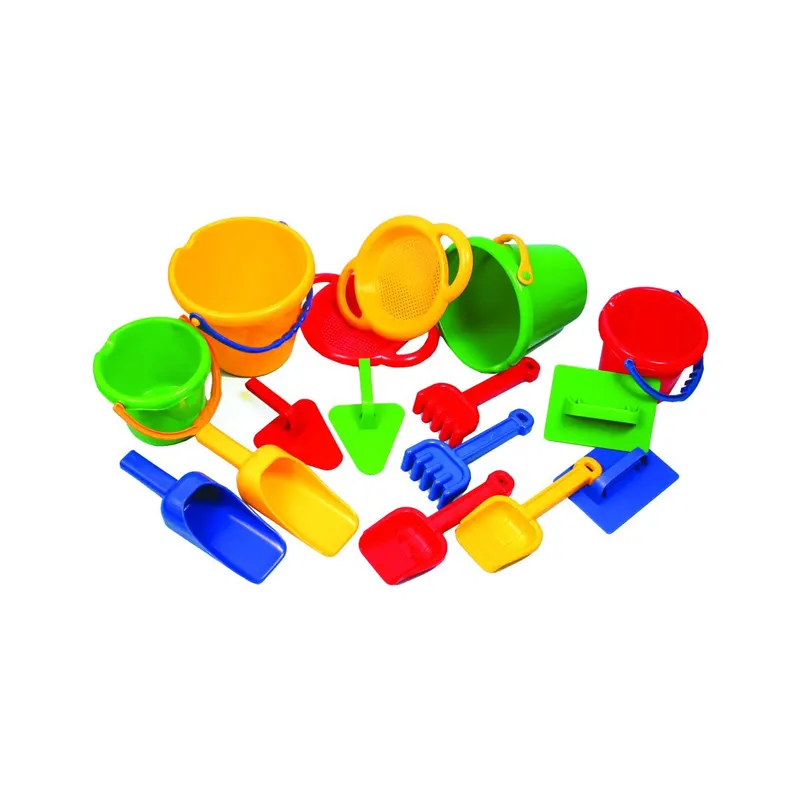
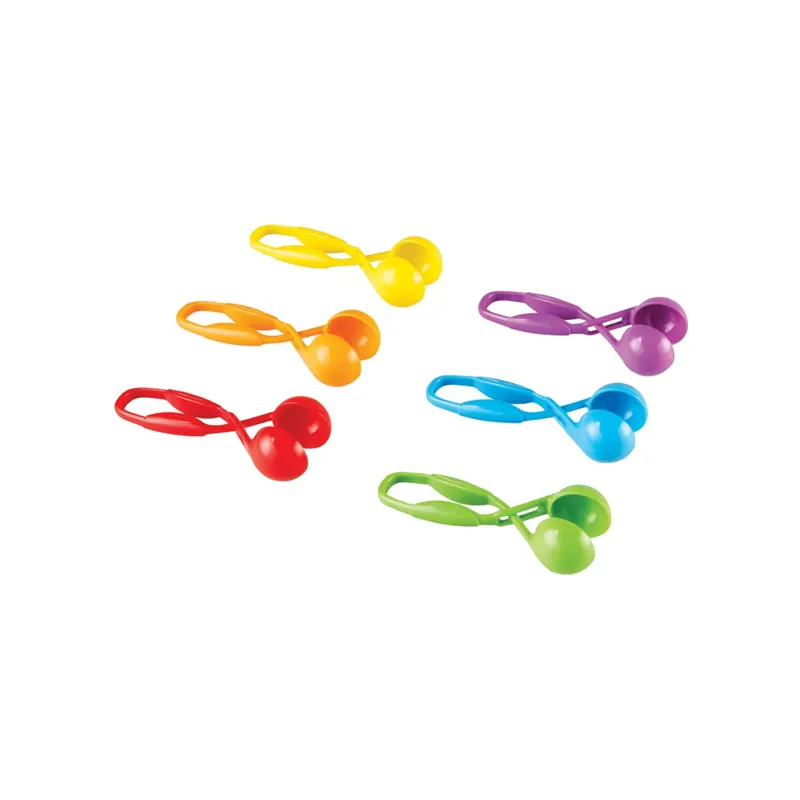
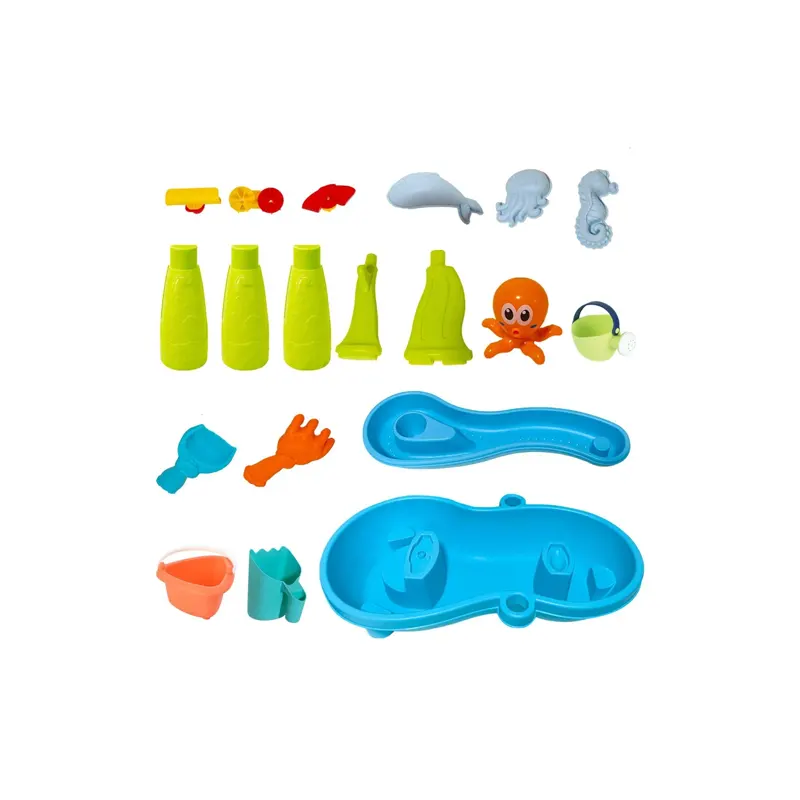
A great setup relies on the right loose parts. Provide tools that encourage open-ended exploration:
- For Pouring and Measuring: Plastic beakers, different-sized funnels, pipes, and durable measuring cups.
- For Fine Motor Work: Jumbo tweezers, sponges for squeezing, eye droppers, and small slotted spoons.
- For Digging and Scraping: Sturdy hand trowels and small rakes.
- Natural Elements: Introduce pinecones, smooth river stones, or wooden corks to observe what sinks and what floats.
How to Encourage Sand and Water Play in the Classroom?
To get the maximum developmental value from sand and water play, educators need to actively facilitate engagement without taking over the activity. Here are actionable strategies to encourage meaningful, sustained play at the sensory station:
Let the Furniture Do the Work
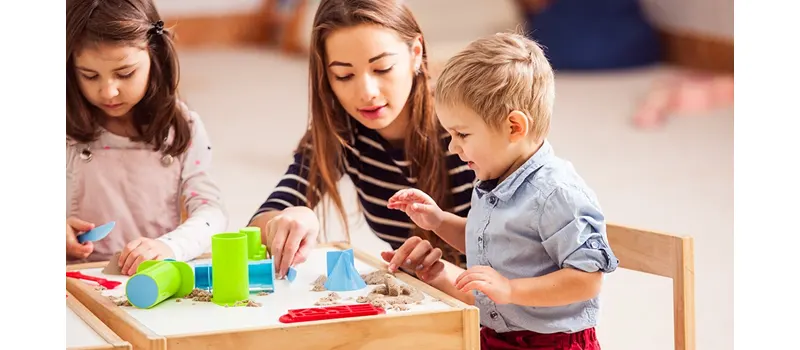
Children will not stay engaged if they are physically uncomfortable. If a basin is too high, they cannot get the leverage needed to dig. If it is placed directly on the floor, they will lose focus and walk away. A high-quality, solid wood sensory table set at the exact ergonomic height for toddlers naturally encourages them to stand comfortably, lean into their work, and play for longer periods. When the furniture matches their physical developmental stage, sustained engagement happens organically.
Make the Area Easy to Access
Children naturally gravitate toward spaces they can control. To encourage spontaneous play, the physical layout must match their developmental scale. Ensure there is clear space around the station so multiple children can move freely. Keep the setup simple: the table height, tools, and storage should match their age and size, and display loose parts on low, open shelving. When materials are instantly visible and easy to return, children take full ownership of their learning.
Create an Invitation to Play
In the Reggio Emilia educational approach, an “invitation to play” is crucial. Do not just leave a messy pile of sand or a tub of empty water. Before the children arrive, arrange a few specific tools deliberately. Place a balancing scale next to a pile of river stones, or leave a single large funnel resting inside a clear jug. This thoughtful visual cue naturally draws children in and sparks immediate curiosity.
Ask “I Wonder” Questions
The educator’s role is to observe and extend the learning, not to direct it. Avoid giving instructions like, “Let’s build a castle.” Instead, use open-ended questions to trigger critical thinking and early STEM problem-solving. Ask, “I wonder what will happen if we pour water on this dry mound?” or “How many scoops do you think it will take to fill this tall tube?” This encourages children to test hypotheses themselves.
Support Sensory-Hesitant Children
Not every child enjoys getting their hands dirty or wet. For toddlers with sensory processing sensitivities, a large tub of wet sand can be intimidating. Provide a physical “bridge” to the activity. Offer long-handled ladles, wooden tongs, or even thick paintbrushes so they can manipulate the materials without direct skin contact. Once they feel safe and in control, they will gradually become more willing to engage physically.
Rotate the Materials Regularly
You do not need a new sensory table to create a completely new experience; you simply need to change the inputs. Keep the core setup consistent, but rotate the loose parts weekly to maintain high interest levels:
- Add Color and Temperature: Drop safe food coloring or ice cubes into the water basin.
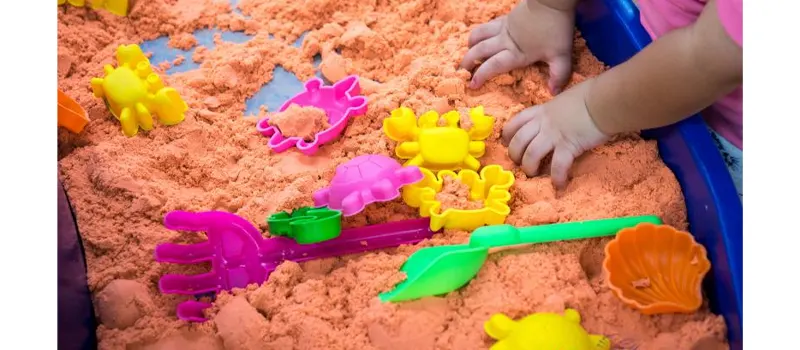
- Change the Texture: Swap standard play sand for kinetic sand, dried lentils, or cornmeal for a few days.
- Introduce Real-World Tools: Bring in real (but safe) kitchen utensils like whisks, basters, and metal spoons instead of relying solely on plastic toys.
Allow Enough Time for Real Play
One of the most common reasons sand and water play falls flat is that children are not given enough time. This kind of play often starts slowly. Children may repeat the same actions for several minutes before their ideas become more complex. If the session ends too quickly, the most valuable part of the play never has time to develop. Regular access and unhurried time are often more important than adding more materials.
Connect It to Children’s Interests
Sand and water play becomes more meaningful when it reflects what children are already curious about. Educators use daily observations to identify emerging interests and adapt the play area accordingly. If they are interested in construction, the area might include small trucks and pipes. If they are talking about the beach, the setup could include shells and boats. When the play area connects to children’s current interests, engagement usually becomes more focused and more sustained.
Interesting Sand and Water Activities
You don’t need a long list of complicated setups to make sand and water play meaningful. In most classrooms, a few simple ideas are enough. To move beyond basic play, try these activities designed to challenge children’s thinking and coordination.
Sink or Float Exploration
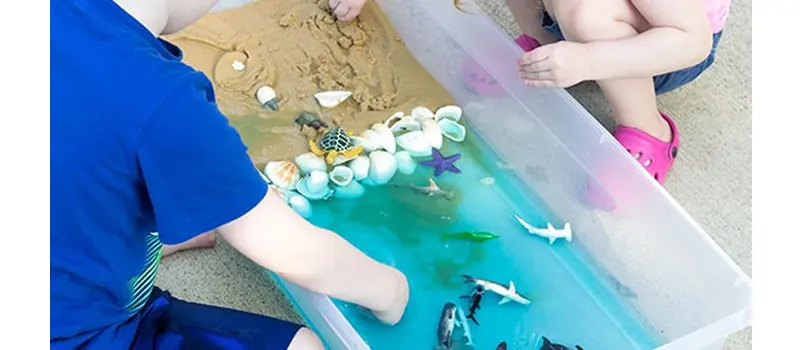
Just fill the water table and drop in a mix of objects. Wood, metal, cork, stones, anything with a different weight or texture. Some children will start testing right away. Others will pause, look, and then decide what to try first. You’ll often hear them make guesses before dropping something in. After a few tries, they begin to notice patterns on their own.
Construction Site Digging
Add a bit of water to the sand. Dry sand flows, but damp sand can be shaped, packed, and moved in chunks. That’s usually when the play becomes more focused. With a few tools and maybe some small trucks, children start building roads, piles, or tunnels. Sometimes it works, sometimes it collapses. They rarely mind. They just rebuild. That repetition is where most of the learning happens.
Color Mixing with Water
Handing a child an eye dropper and a few cups of red, blue, and yellow water is a guaranteed way to capture their attention. Moving tinted water between clear containers is a fantastic practice for fine motor control. More importantly, the instant visual feedback of creating new colors keeps them completely absorbed, helping them understand how variables change when combined.
Hidden Treasure Hunt
By burying shells, polished stones, or small figures deep in the sand and offering tools like brushes and sieves, you create an environment that demands focus. Children become highly methodical, carefully sifting through the grit, which builds both patience and longer attention spans here.
Water Flow Exploration
Give children a funnel, a tube, or even just a tilted container, and they will start figuring things out. At first, water spills everywhere. Then they adjust. They will constantly tweak the angles and test the volume, learning exactly how gravity and direction work every time the water flow gets stuck.
Sensory “Soup” Play
Toss natural materials like leaves, petals, and small twigs into the water alongside bowls, ladles, and simple kitchen tools. Some children immediately turn it into pretend play. They start “cooking,” mixing, naming what they’ve made. Others stay focused on texture, stirring, squeezing, watching things change in the water. Their language development is naturally fostered as they describe the changing textures, ingredients, and actions to their peers.
Frozen Toy Rescue
Freeze small toys inside large blocks of ice and place them in the water table. Provide warm water in spray bottles or small salt shakers. As children work to “rescue” the toys, they observe states of matter (solid to liquid) and learn about temperature and melting points through direct interaction.
Final Thought
In many classrooms, sand and water play starts small. A single table, a few tools, and a clear place in the classroom are enough. Over time, as the space becomes part of the routine, it can grow into a more complete learning area that supports different types of play and different age groups.
The right layout, durable equipment, and accessible storage can turn a simple activity into a reliable part of the classroom. At Xiha Kidz, we understand the daily realities of early childhood environments. We specialize in designing and manufacturing premium sensory tables and comprehensive kindergarten furniture built to withstand the rigors of active play.
Explore our collection of preschool furniture and outdoor play products to build a sensory space that truly supports early development.
Domande frequenti
At what age should a child start using a sand and water table?
Children can begin engaging in sensory table play as soon as they can stand steadily on their own, typically around 15 to 18 months. For toddlers under three, close supervision is essential, and water levels should be kept very shallow. As they grow into preschool age, you can introduce deeper water, more complex tools, and heavier materials like wet sand to match their developing motor strength.
What are the best mess-free alternatives to sand for indoor sensory play?
If your indoor space isn’t suitable for traditional sand, consider using kinetic sand. Kinetic sand sticks together, making it very easy to clean. For dry pouring and scooping, dried lentils, chickpeas, or coarse oatmeal are excellent, low-dust alternatives that still provide the weight and resistance needed for fine motor development.
Can sand and water play be done in small classrooms?
Yes, even a small classroom can support sand and water play with the right setup. A compact sensory table, a shallow bin, or a mobile play station can provide enough space for meaningful play. The focus should be on accessibility and ease of cleanup rather than size.
How often should you change the play sand and water in a classroom?
For health and hygiene, water in a sensory bin must be emptied, and the basin must be wiped down and sanitized at the end of every single day. Standing water breeds bacteria quickly. Play sand lasts longer; you should sift it daily with a slotted scoop to remove debris and keep it covered overnight. Depending on classroom traffic, completely replace the indoor sand every 3 to 6 months, or immediately if it becomes contaminated with food or dirty water.
What should you look for when choosing a sand and water table?
A good sand and water table should be stable, easy for children to access, and simple to clean. Height, durability, and storage options all matter in busy classrooms. Many schools also look for designs that support multiple children at once and fit smoothly into their daily routines. At Xiha Kidz, we focus on designing sand and water tables that are built for real classroom use.
Can Xiha Kidz help design a sand and water play area for a classroom?
Yes, we offer layout suggestions, product recommendations, and customized solutions based on classroom size, age groups, and teaching needs. This can be especially helpful for new schools or larger projects where the goal is to create a complete and functional learning environment rather than just adding a single piece of equipment.




 Italian
  English
  Arabic
  French
  German
  Spanish
  Thai
Thai  Japanese