
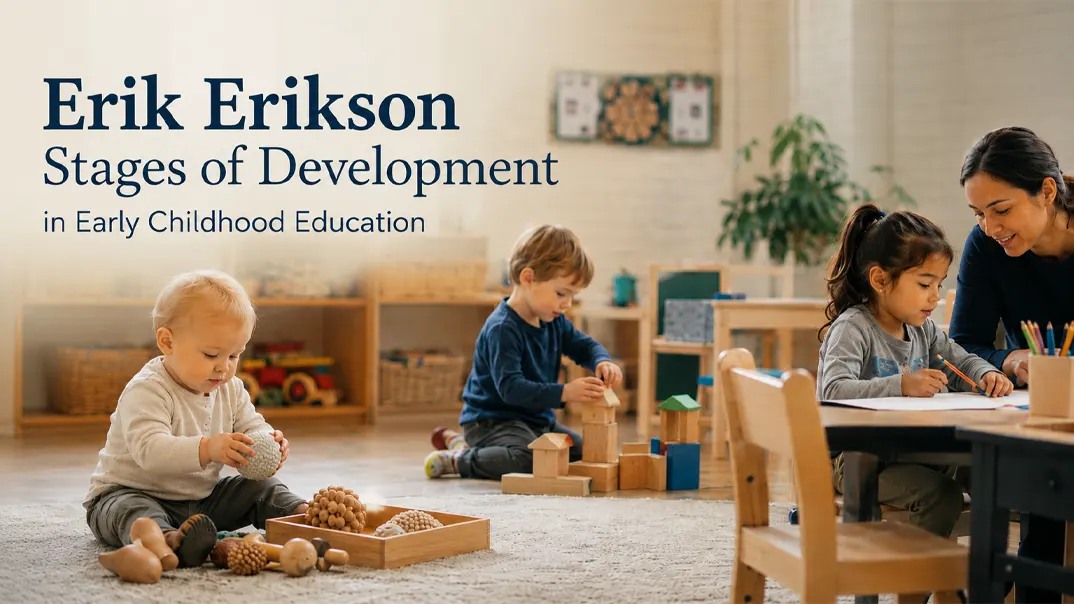
Erik Erikson believed that people develop through a series of social and emotional challenges throughout life. His theory includes eight stages, from infancy to late adulthood. Each stage centers on a key conflict, such as trust, independence, initiative, identity, or relationships, that can influence how a person develops.
In this guide, you will learn what Erik Erikson stages of development mean and how to apply his theory in everyday classroom practice. By recognizing developmental needs at different stages, you can respond more effectively to children’s behavior and create a classroom that supports their confidence and growth.
What Are Erik Erikson Stages of Development?
Erik Erikson was a prominent developmental psychologist who created one of the most widely accepted frameworks for understanding human growth. His Theory of Psychosocial Development suggests that a person’s personality develops in a specific, predetermined order through eight stages, spanning from birth all the way to late adulthood. Each stage involves a different psychosocial conflict that reflects an important developmental need at that point in life.
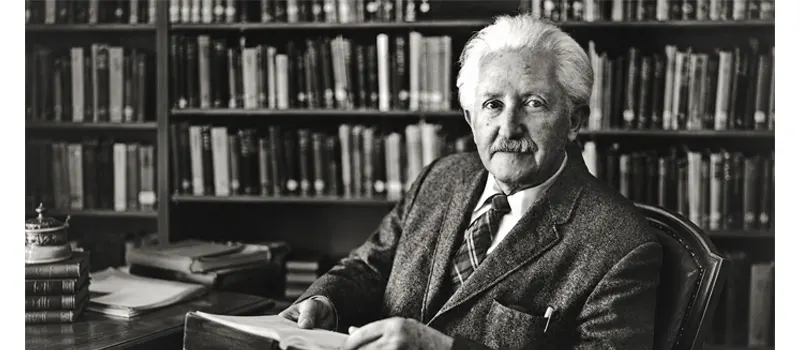
Stage 1: Trust vs. Mistrust (Birth to 18 Months)
During infancy, the child is in a completely dependent state, relying on caregivers for survival needs such as food, comfort, and emotional warmth. If caregivers respond consistently and sensitively, the infant develops trust. If care is inconsistent or neglectful, mistrust may develop.
Healthy development does not mean developing complete trust and eliminating all mistrust. Some caution is necessary. The goal is a favorable balance in which trust is strong enough for the child to engage with the world while still developing an appropriate awareness that not every situation is predictable or safe.
Stage 2: Autonomy vs. Shame and Doubt (18 Months to 3 Years)
At this stage, children begin to develop physical and emotional independence. They explore their environment, practice self-help skills, and assert their own choices in everyday routines.
When you give children the space to try, explore, and safely make mistakes, children build confidence in their own abilities (Autonomy). If you do everything for them or scold them harshly for little accidents, children begin to doubt themselves (Shame and Doubt).
The positive outcome is the formation of willpower, which means that children are confident in their ability to act independently and make choices.
Stage 3: Initiative vs. Guilt (3 to 5 Years)
Preschoolers have big imaginations and lots of energy. They start to invent games, ask endless “why” questions, and lead activities with other children.
When educators encourage this curiosity and provide spaces for open-ended play, children learn how to take the lead and make decisions (Initiative). If their questions are treated as annoying or their play is overly restricted, they may feel bad for wanting to explore (Guilt).
Initiative goes a step further than simple independence. It is the drive to come up with an idea, make a plan, take on a social role during play, and see what happens. When educators give children the room to test these ideas within safe boundaries, children learn that their thoughts and actions have real value.
Guilt also has a place in healthy development. A child eventually needs to understand that actions affect other people and that not every impulse should be acted on. The problem comes when guilt becomes so strong that the child starts to feel that taking initiative itself is wrong.
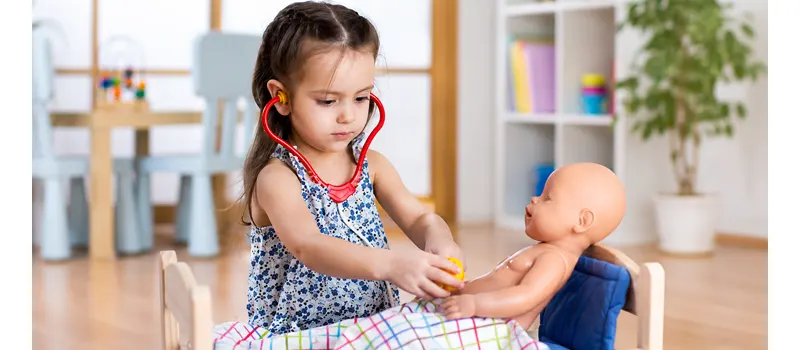
Stage 4: Industry vs. Inferiority (6 to 11 Years)
During school age, children begin to evaluate themselves in a more systematic way. They compare their performance with each other, notice differences in skills, and gradually become aware of expectations in academic and social situations.
The hallmark of this stage is not merely achievement, but the formation of an inner belief: “Effort can change my abilities.” This belief is formed through repeated practice, gradual progress, and positive feedback.
A child with reading difficulties who receives guidance and help and eventually makes progress will begin to develop a sense of diligence—not because they are “good at reading,” but because they have made progress over time (Industry). Conversely, a child who repeatedly encounters difficulties without appropriate help may interpret the difficulties as personal limitations (Inferiority).
A key characteristic of this stage is that children are very sensitive to comparison. Therefore, as educators, it is important to ensure that your own comparisons are balanced with the recognition of individual progress. You should help children build a stable belief that skills can be developed through continuous effort, rather than being innate abilities.
Stage 5: Identity vs. Confusion (12 to 18 Years)
During adolescence, young people begin asking important questions about who they are and who they want to become. They may explore different interests, values, beliefs, and future roles while developing a clearer sense of personal identity.
Having opportunities to explore these possibilities can help adolescents form a stable sense of self. Difficulty developing that identity may lead to uncertainty about their values, direction, or role in society.
A healthy identity is not about rigidly deciding your whole life at 16, nor is it blindly copying whatever is popular. It requires a balance between exploring new ideas and committing to personal values. When a teenager successfully figures this out, they develop Fidelity—the ability to be true to themselves while accepting and committing to others, even when there are differences.
Stage 6: Intimacy vs. Isolation (18 to 40 Years)
In young adulthood, development increasingly focuses on forming close and meaningful relationships. People may build deeper friendships, romantic partnerships, and other long-term emotional connections.
Those who develop a secure sense of identity are often better prepared to form relationships based on trust and commitment. Difficulty creating close relationships may result in loneliness or isolation. Successful development during this stage leads to love, which Erikson associated with the ability to build lasting and caring relationships.
Stage 7: Generativity vs. Stagnation (40 to 65 Years)
During middle adulthood, many people become increasingly concerned with contributing to others and leaving something meaningful behind. This may happen through parenting, work, mentoring, community involvement, or helping younger generations.
A sense of contribution can create feelings of usefulness and accomplishment. When people feel disconnected from growth or contribution, they may experience stagnation. The positive quality associated with this stage is care, reflecting concern for others and future generations.
Stage 8: Integrity vs. Despair (65 Years and Up)
In later adulthood, people often reflect on their lives and consider the experiences, relationships, achievements, and choices that shaped them.
Those who can accept their lives with a sense of meaning and satisfaction may develop integrity. Those who focus mainly on regrets or missed opportunities may experience despair. A positive resolution of this final stage develops wisdom—the ability to accept life as a whole, including both its successes and difficulties.
A Summary Chart of Erikson’s 8 Stages of Development
The table below gives you a quick overview of Erikson’s eight psychosocial stages. The age ranges are approximate, so you should use them as a guide rather than a strict developmental timetable.
| Stage | Approximate Age | What the Person Is Learning | Positive Outcome |
|---|---|---|---|
| 1. Trust vs. Mistrust | Birth to 18 months | Whether caregivers and the environment are safe, predictable, and responsive | Hope and trust |
| 2. Autonomy vs. Shame and Doubt | 18 months to 3 years | Independence, self-control, and confidence in making simple choices | Will and independence |
| 3. Initiative vs. Guilt | 3~5年 | Taking initiative, trying new ideas, planning play, and making decisions | Purpose and initiative |
| 4. Industry vs. Inferiority | 6 to 11 years | Completing tasks, developing skills, and comparing their abilities with others | Competence |
| 5. Identity vs. Role Confusion | 12 to 18 years | Personal identity, values, interests, and future roles | Fidelity and a stronger sense of identity |
| 6. Intimacy vs. Isolation | 18 to 40 years | Forming meaningful, committed relationships while maintaining a sense of self | Love and connection |
| 7. Generativity vs. Stagnation | 40 to 65 years | Caring for others, contributing through work or family, and creating something of lasting value | Care and contribution |
| 8. Integrity vs. Despair | 65 years and older | Reflecting on life with acceptance rather than regret | Wisdom and acceptance |
Why Was Erik Erikson’s Theory Important?
Erikson’s theory changed the way people thought about human development. Instead of treating childhood as the only period that shapes a person, Erikson argued that social and emotional development continues throughout the entire lifespan. Each stage brings a new challenge, and experiences at one stage can influence how a person approaches later.
As an educator, the theory helps you look beyond a child’s behavior and consider the developmental need behind it.
Helps You Respond to Behavior More Effectively
When you understand Erikson’s stages, you stop seeing behavior as simply “good” or “bad” and start seeing it as meaningful.
A toddler insisting “I can do it myself” is not being defiant. They are practicing independence. A preschooler taking control of a game is not being bossy. They are exploring leadership and initiative.
This shift helps you respond in ways that support development rather than simply controlling behavior. As a result, classroom interactions become smoother, and many conflicts can be reduced or prevented.
Improves Your Teaching Decisions
In early childhood education, you constantly make quick decisions: should I step in, wait, guide, or let the child try?
Erikson’s theory gives you a simple developmental reference point to guide those choices. You can adjust your responses based on what children are likely trying to develop at their age.
This leads to more consistent and intentional teaching. Children experience clearer expectations, and you can reduce the time spent making random responses to similar behaviors in different situations.
Helps You Support Independence in a More Balanced Way
Erikson’s theory changes how you think about “helping.” Support does not always mean stepping in immediately. Sometimes the most effective support is giving children time to try, fail, and try again. It also improves judgment—you become better at knowing when to assist and when to step back.
Designing Environments That Actually Match Development
Erikson emphasized that development is not only something that happens inside a person. Instead, it is strongly influenced by the world around us. The theory helps you think beyond interaction and into environment design.
A well-designed environment reduces unnecessary dependence on adults and supports smoother classroom management.
Helps You Set More Realistic Expectations
Erikson’s theory shows that development is not about perfection, but about balance between two tendencies (such as trust and doubt, or initiative and guilt).
It helps you avoid expecting all children of the same age to behave in exactly the same way. Instead, you can recognize that variation is normal and adjust your expectations accordingly.
As a result, your assessments become fairer, your responses become more flexible, and your teaching becomes more responsive to individual children.
In short
The real value of Erikson’s theory is not theoretical—it is practical. It helps you:
- understand behavior more accurately
- make better real-time teaching decisions
- support independence without losing structure
- design more effective learning environments
- and respond to children in a more consistent and professional way
How Do You Apply Erikson’s Theories in the Classroom?
You do not need to turn Erikson’s theory into a separate classroom activity. The most useful way to apply it is through the small decisions you make every day.
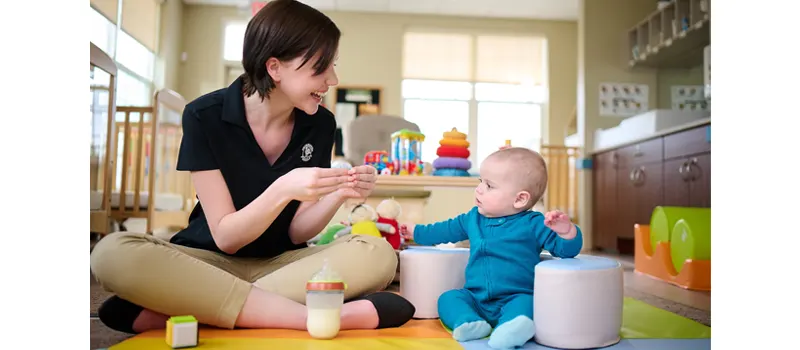
Creating Predictable Daily Routines
Consistency is the foundation of trust. Infants learn that the world is safe when their needs are met promptly and predictably. You can apply this by maintaining steady feeding and sleeping schedules, keeping caregiver transitions smooth, and always responding to a child’s distress signals with comfort rather than leaving them to cry it out.
Offer Managed Choices
Toddlers are desperate to prove they can do things on their own. Instead of directing their every move, you should offer limited, safe options. Asking, “Do you want to put away the blocks or the books?” gives the child a sense of control. Allow them the time to try their own, even if it is messy and takes a little longer.
Giving Children Meaningful Responsibilities
Assigning small, achievable classroom jobs helps children feel capable and included in the group. Tasks such as distributing materials or caring for classroom items give children a sense of contribution. You need to pay attention to whether the responsibilities your child takes on match their abilities; otherwise, it will not only fail to boost their self-confidence but will also have the opposite effect.
Encourage Open-Ended Play
You need to give preschoolers the opportunity to lead activities or lessons. Your classrooms should provide open-ended materials. Let children create their own rules for role-playing games or decide how to build their creations. If a child’s idea fails or becomes a mess, guide them to clean it up instead of scolding them; this avoids unnecessary guilt about trying.
Praise Progress More Than Comparison
As children start comparing their skills to their peers, they are highly sensitive to feeling inadequate. You can build a child’s sense of competence by focusing praise on their hard work and problem-solving. Highlighting personal growth, such as comparing current skills to earlier attempts, makes learning feel achievable and individualized.
Responding to Mistakes Without Creating Shame
Mistakes should be treated as part of learning rather than something to criticize. When children spill, misbuild, or struggle with a task, you should guide them toward a simple solution that helps them stay confident and willing to try again.
How Can the Classroom Environment Support Erikson’s Developmental Stages?
While teachers guide the emotional experience, the physical classroom is what makes those experiences possible. In early childhood education, the environment is often called the “third teacher.” When you align your spatial zoning and furniture choices with Erikson’s stages, you create a space that actively reduces challenging behaviors and naturally supports a child’s psychological needs.
Supporting Trust in the Infant Room (Ages 0–1.5)
In the Trust vs. Mistrust stage, an infant’s primary need is safety and immediate response from caregivers. The room layout must make supervision effortless.
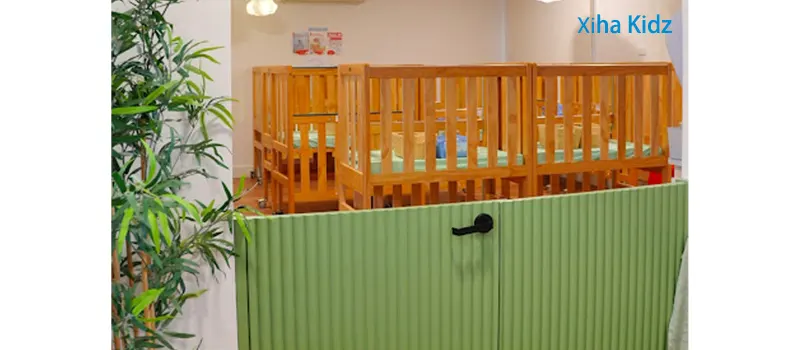
- Unobstructed Visibility: Use low room dividers and transparent barriers. Caregivers need a clear, unblocked line of sight across the entire room so they can make immediate eye contact and respond to a crying infant instantly.
- Safe Exploration Zones: Infants need secure, dedicated floor spaces to practice crawling and rolling without the interference of older, faster-moving children.
- Choose Stable, Child-Safe Furniture: All cribs, changing stations, and sensory tables must feature smoothly rounded edges to ensure absolute safety during daily care routines.
Supporting Autonomy in the Toddler Room (Ages 1.5–3)
During the Autonomy vs. Shame and Doubt stage, the toddler’s constant thought is, “I can do it myself.” This is where integrating Montessori principles becomes incredibly effective. The physical space should be scaled down to their eye level.
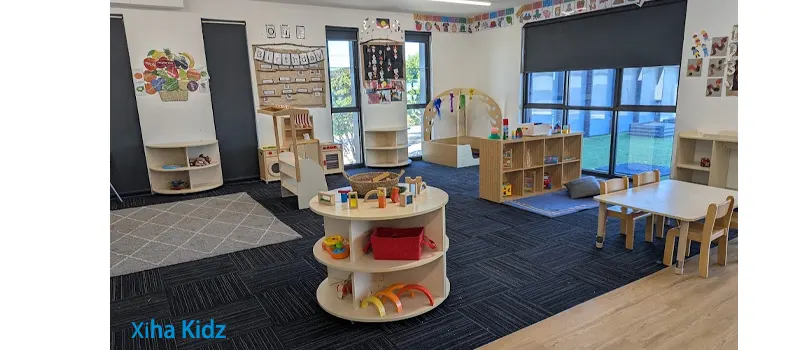
- Low, Open Shelving: Place frequently used toys, books, and materials on low open shelves that toddlers can reach independently.
- 提供する Child-Sized Furniture: Tables, chairs, cubbies, and coat storage should be sized for children so they can use them without having to ask you for help.
- Create Simple, Visible Choices: Do not overcrowd shelves. A small number of clearly displayed materials makes it easier for children to choose an activity and return it when they finish.
- Wide Pathways: Toddlers are still developing coordination. Avoid narrow passages and complicated circulation paths between activity areas. Children should be able to move from one part of the room to another without squeezing between furniture.
When you plan toddler and preschool classrooms, one useful question is: “How many everyday things can this child actually do without an adult physically doing it for them?”
Supporting Initiative in the Preschool Room (Ages 3–5)
During Initiative vs. Guilt, children begin creating their own games, stories, plans, and social roles. A preschool classroom should therefore provide more opportunities for children to decide what they want to do and how they want to use materials.
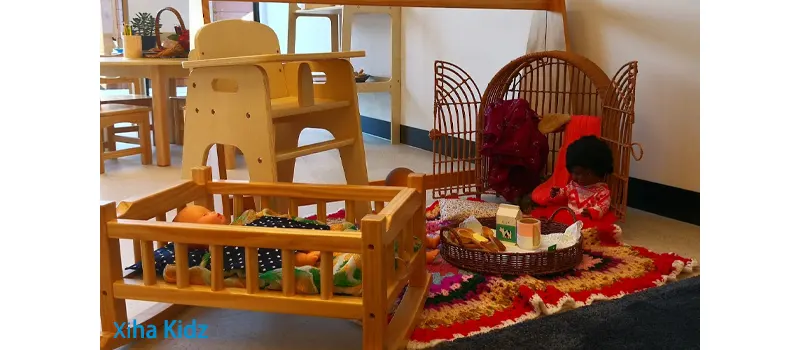
- Create Clearly Defined Activity Areas: Include spaces for dramatic play, blocks, art, and reading. Clear zoning helps children understand their options and move between activities more independently.
- Keep Play Areas Flexible: Avoid designing every area for only one fixed activity. A dramatic play area, for example, can become a home, café, market, or clinic when children have movable props and open-ended materials.
- Provide Enough Open Floor Space: Preschool activities often expand beyond a table. Block structures, group games, and pretend play all require floor space, so avoid using every available area for furniture.
- Include Space for Ongoing Projects: Children do not always finish a construction, artwork, or group project in one session. Providing a place where work can remain temporarily allows them to return to their ideas rather than starting over each time.
Supporting Industry in the Early Elementary Classroom (Ages 6–11)
During Industry vs. Inferiority, children are focused on mastering real skills. The classroom should support longer tasks, more complex projects, and both independent and collaborative work.
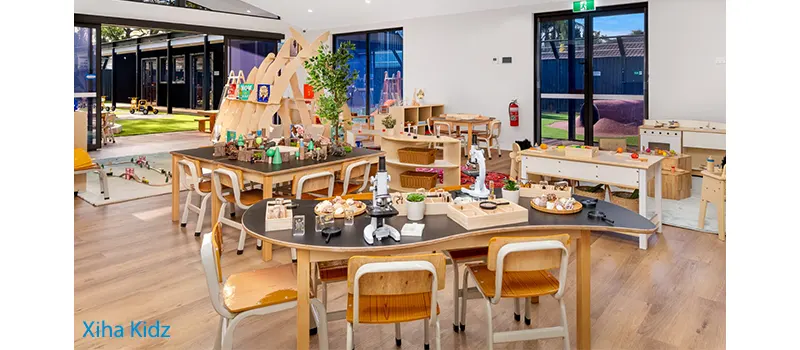
- Provide Different Types of Workspaces: Combine individual work areas, small-group tables, and larger collaborative spaces so children can work in different ways depending on the activity.
- Organize Materials Clearly: Use labeled or visually organized storage. This helps school-aged children learn organizational skills and take pride in managing their environment. More complex activities become easier when resources have predictable locations.
- Provide Project and Work Storage: Longer projects may take several days. Shelving, trays, or designated project areas allow children to store unfinished work safely and continue it later.
- Make Children’s Work Visible: Use accessible display areas for artwork, writing, science projects, and other completed work. The classroom should show children that their own work has value.
よくある質問
What Does “Psychosocial” Mean in Erikson’s Theory?
“Psychosocial” refers to the relationship between a person’s psychological development and their social experiences. Erikson believed that relationships with caregivers, family, peers, teachers, and society all influence how a person develops.
What Is the Main Idea of Erikson’s Theory?
The main idea of Erik Erikson’s theory is that human psychological development is a lifelong journey consisting of eight distinct stages from birth to old age, rather than stopping in early childhood. At each stage, an individual faces a specific social and emotional conflict.
Is Erikson’s Theory Still Relevant Today?
Yes. Erikson’s theory is still widely used because it offers a simple way to understand social and emotional development from infancy through adulthood. For educators, it can be especially useful when thinking about children’s needs for security, independence, initiative, and competence, although it should be used as a flexible framework rather than a strict developmental timetable.
Why Is Erikson’s Theory Criticized?
Erikson’s theory is sometimes criticized because human development does not always follow eight clear stages or fixed age ranges. Some parts of the theory can also reflect cultural expectations that may not apply equally to every family or society, so it is better used as a general guide for understanding development rather than a precise rule for judging individuals.
Can a Child Be Between Two Erikson Stages?
Yes. The stages are not separated by exact birthdays. A child may still be working through one developmental challenge while beginning to show behaviors associated with the next stage. Age ranges should be treated as general guides, not strict cutoffs.
What Are the Key Differences Between Erikson and Piaget’s Developmental Theories?
Erikson focused mainly on social and emotional development, while Piaget focused on cognitive development—how children think, reason, and understand the world. Erikson’s theory also continues throughout adulthood, while Piaget’s stages primarily describe development from childhood through adolescence.
結論
Erikson’s theory should not become a rigid rule for judging every child. Age ranges are approximate, development varies from child to child, and culture, family background, and individual experience all matter. The value of Erikson’s theory is giving you another useful lens—not a fixed formula—for making more thoughtful decisions about your classroom.
で シーハ・キッズ, we can turn your educational approach into a practical classroom with tailored layout support and high-quality preschool furniture.



 Japanese
  English
  Arabic
  French
  Italian
  German
  Spanish
  Thai
Thai