If you think back to your own school days, you probably remember rows of identical desks and chairs lined up neatly across the room. Students were expected to sit still for hours, regardless of comfort, attention span, or individual needs. We all know this rigid approach didn’t help us develop better, especially not in early childhood.
Flexible seating offers young children the opportunity to choose how they learn best. It allows children to adjust posture, shift positions, and select seating that helps them concentrate. When thoughtfully implemented, flexible seating supports focus, collaboration, independence, and classroom harmony rather than disrupting it.
In this comprehensive guide, we’ll explore the 23 best flexible seating options for preschool classrooms, helping you find the perfect solutions to transform your space.
What Are the Benefits of Flexible Seating in Early Learning Environments?
Flexible seating in early learning environments improves engagement, supports self-regulation, encourages independence, and creates more inclusive classroom spaces. By giving young children appropriate choices in how and where they sit, educators can better align the physical environment with developmental needs.
Supports Physical Development and Healthy Movement
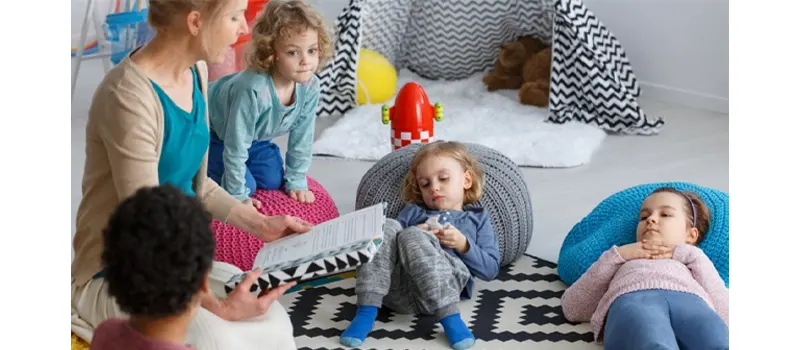
Preschool children are still developing core strength, balance, and postural control. Long periods of rigid sitting can lead to restlessness. Seating options that allow gentle motion, floor positioning, or varied posture help children engage their muscles while participating in learning activities.
This type of purposeful movement supports proprioceptive input and body awareness, both of which contribute to improved attention and self-regulation.
Encourages Autonomy and Decision-Making
Early childhood education emphasizes independence. Allowing children to choose where and how they sit provides controlled autonomy within a structured environment. When children make small, appropriate decisions about their learning space, they often demonstrate increased responsibility and engagement.
Choice also reduces power struggles. Instead of directing every seating behavior, educators can guide children in selecting options that help them succeed.
Improves Focus and On-Task Behavior
Contrary to common concerns, flexible seating does not automatically create chaos. When expectations are clearly established, children tend to settle more quickly into learning tasks because their physical needs are acknowledged.
Children who require subtle movement to concentrate benefit from wobble seating or dynamic stools. Others who prefer grounded positions may focus better at low tables or on floor cushions. Matching seating to individual sensory needs can reduce off-task behavior and classroom disruptions.
Supports Different Learning Styles and Activity Types
Preschool classrooms are dynamic. A single day may include circle time, small group instruction, independent exploration, art activities, and quiet reading. A variety of seating options allows educators to design zones that support different types of engagement. Soft seating may work well for literacy corners. Stable stools may be better for tabletop fine motor work. Floor seating can enhance collaborative play. Flexible seating helps align furniture with instructional goals.
Promotes Social Interaction and Collaboration
Rigid rows encourage passive listening. Varied seating arrangements encourage interaction. When children gather on rugs, share low tables, or sit in small clusters, natural conversation and peer learning increase. Flexible seating makes it easier to rearrange spaces quickly, supporting group projects and cooperative activities without physically restructuring the entire classroom.
Reduces Behavioral Management Time
When children are physically uncomfortable or overstimulated, educators often spend time redirecting behavior. Seating that accommodates movement and sensory needs can reduce these friction points. Over time, classrooms designed with flexibility in mind often experience smoother transitions and fewer conflicts related to space and personal boundaries.
Top 23 Flexible Seating Options for Preschools
Preschool classrooms require seating solutions that balance movement, safety, and structure. Below are 23 carefully selected flexible seating options designed specifically for preschools. Each one serves a different purpose, whether supporting focus, encouraging collaboration, or helping children regulate their energy throughout the day. Choosing the right combination can dramatically improve both engagement and classroom flow.
1. Bean Bag Chairs
Best for: Reading corners, quiet time, calming spaces
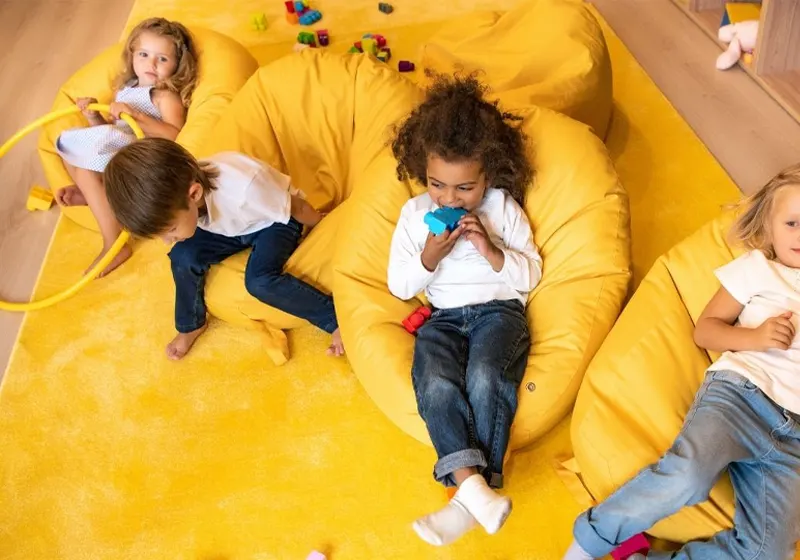
Bean Bag Chairs are ideal for creating a relaxed reading corner where children can unwind while listening to stories or exploring books independently. In preschool classrooms, they work best when placed against a wall or in a defined corner to avoid disrupting traffic flow. Choose structured, high-density filling that maintains shape and prevents excessive sinking, as overly soft models can affect posture. Durable, removable, and washable covers are essential for hygiene. They are not recommended for structured academic tasks that require an upright writing posture.
2. Wobble Chairs
Best for: Table activities, children with high energy
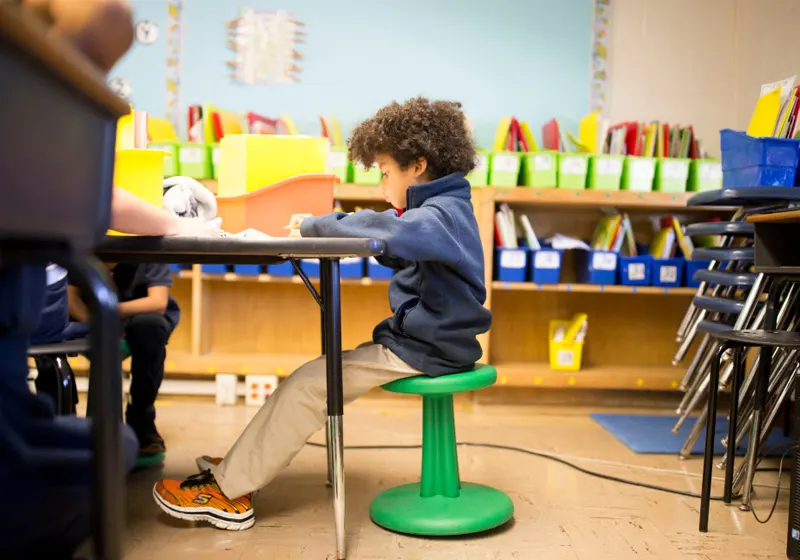
Wobble Chairs allow controlled movement while keeping children engaged at a table. They are particularly effective for preschoolers who struggle to remain still during fine motor tasks, art projects, or short instructional activities. When selecting wobble seating, ensure the base is stable and non-slip to reduce tipping risk. Introduce them gradually rather than replacing all chairs at once, as not every child benefits from active seating. Clear classroom expectations should be established so movement remains purposeful.
3. Exercise Balls
Best for: Short focus tasks, movement integration
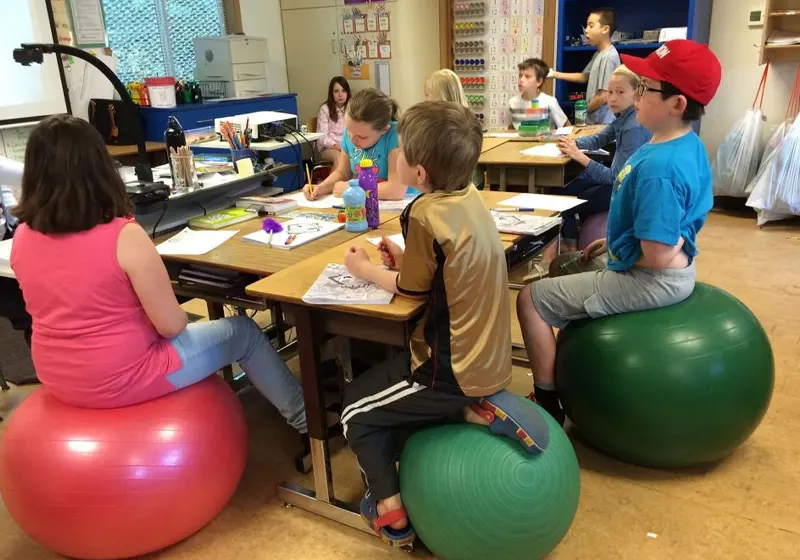
Exercise Balls encourage active sitting and core engagement, which can improve concentration for some preschoolers. However, they should be used in rotation rather than as full-day seating solutions. Proper sizing is critical; children’s feet must rest flat on the floor for stability. Consider using ball bases or stability frames to prevent rolling accidents. These are most suitable for short learning blocks rather than extended instructional periods.
4. Floor Pillows
Best for: Flexible group layouts, partner discussions
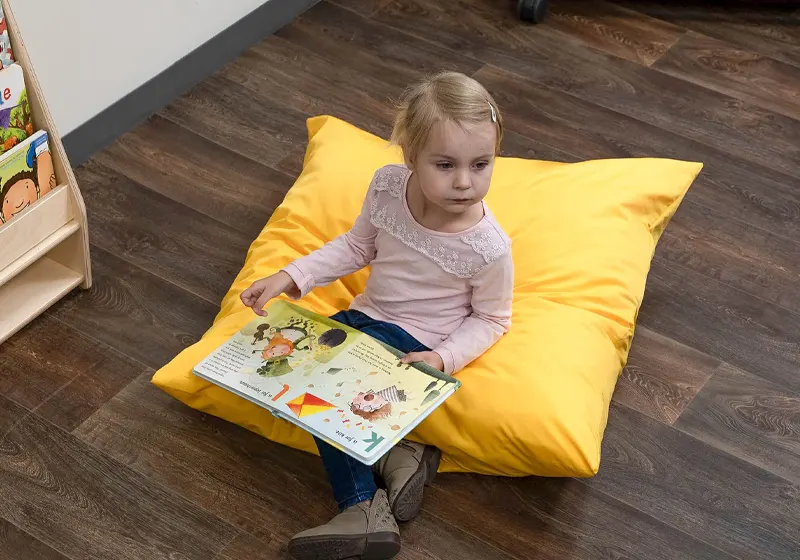
Floor Pillows provide adaptable seating that can quickly transform open floor space into collaborative learning areas. They are useful during circle time, small group reading, or peer interaction activities. For preschool use, select firm, structured pillows that provide slight elevation and support. Thin decorative cushions may flatten quickly and reduce comfort. Store them in a designated area to maintain classroom organization and reduce clutter.
5. Cushions or Mats
Best for: Montessori-style floor work, independent learning
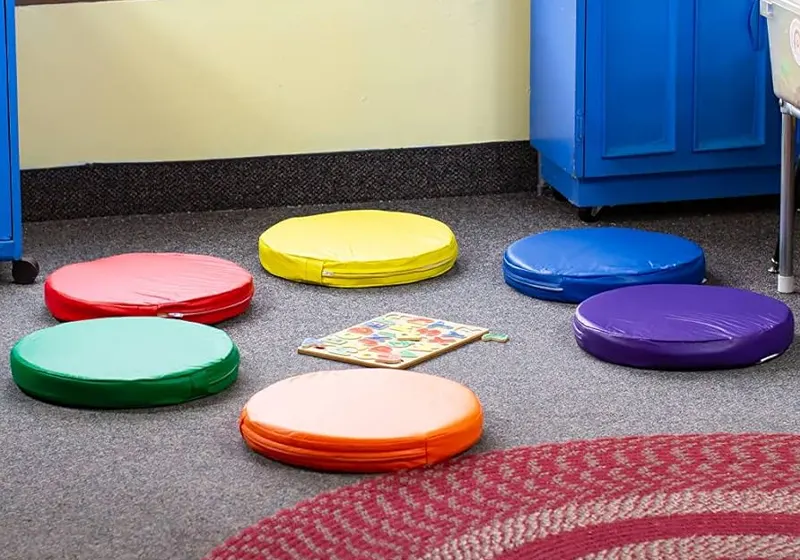
Cushions or Mats help define personal workspace and are essential in classrooms that emphasize floor-based learning. They allow children to move freely between shelves and activity areas while maintaining clear spatial boundaries.
For preschool environments, choose mats made from non-slip, easy-to-clean materials with consistent sizing to reinforce classroom structure. To make them more functional for drawing or early writing tasks, pair them with Portable Lap Desks. This combination maintains flexibility while providing the stable surface children need for fine motor work.
6. Scoop Chairs
Best for: Circle time and structured group learning、
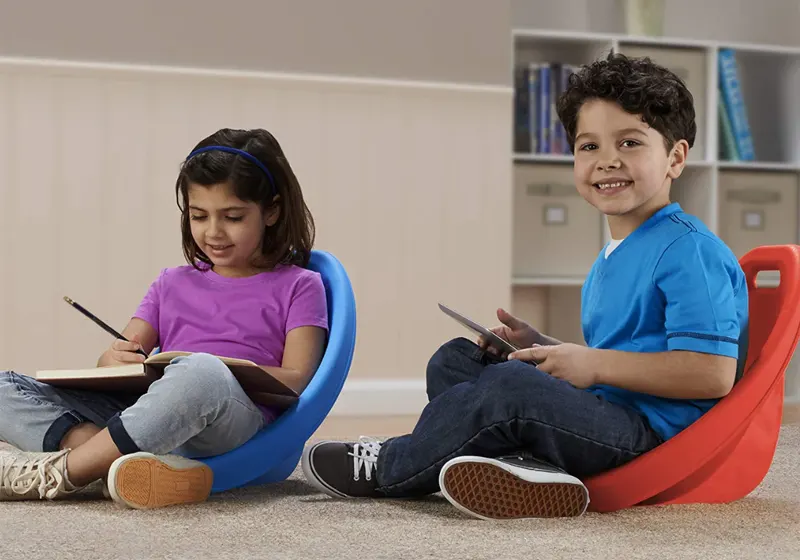
Scoop Chairs provide stable back support while keeping children close to the ground, which is ideal for circle discussions and guided instruction. Their molded design encourages upright sitting without feeling rigid. In preschool settings, lightweight construction allows children to move them independently, supporting classroom responsibility. Look for smooth edges and durable surfaces that withstand frequent repositioning.
7. Stools
Best for: Art stations and flexible activity areas
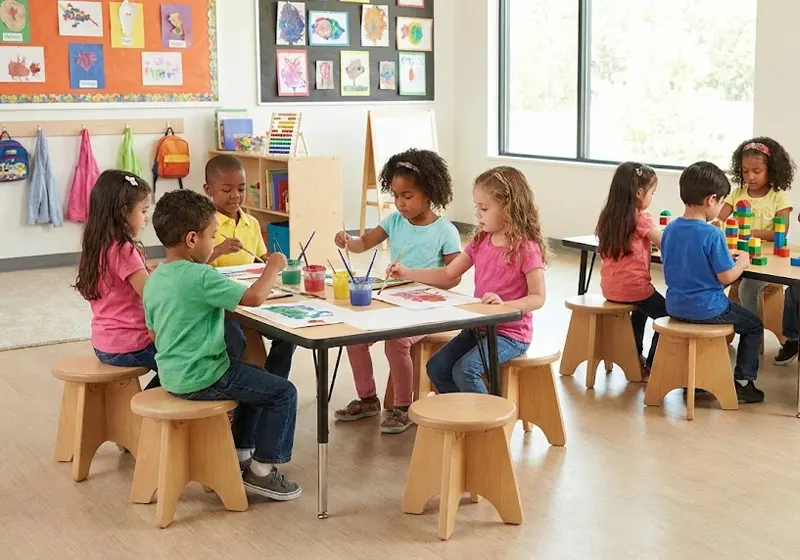
Stools are compact and versatile, making them well-suited for art tables, building centers, and hands-on activities. Their smaller footprint keeps the classroom visually open and easy to navigate. When selecting stools for preschoolers, ensure the height allows children’s feet to rest securely on the floor. Stable bases and sturdy materials are important for daily classroom use.
8. Stackable Stools
Best for: Classrooms that frequently reconfigure layouts
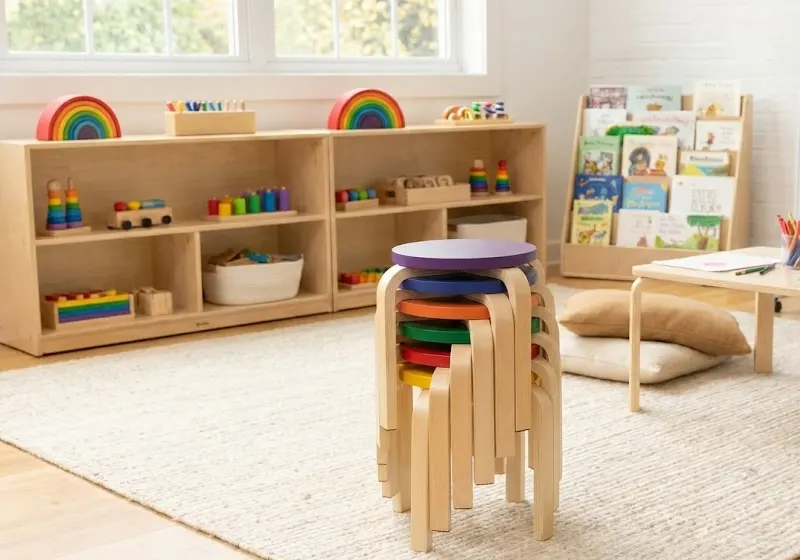
Stackable Stools offer flexibility for spaces that transition between different learning setups throughout the day. They are practical for teachers who need to quickly clear floor space for movement activities or rearrange tables for group work. Choose models that stack securely and maintain structural strength over time. Easy-clean finishes simplify maintenance in busy preschool environments.
9. Rolling Chairs
Best for: Collaborative table work
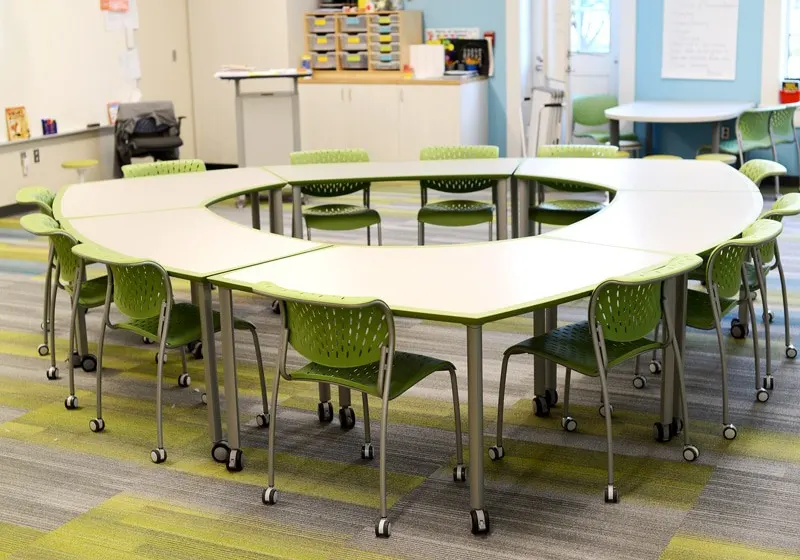
Rolling Chairs allow children to shift positions easily during group projects or shared activities. In preschool classrooms, smooth-rolling casters improve mobility and make transitions between tables more efficient. Look for designs with stable bases and child-appropriate height. Chairs with locking wheels provide added control when needed, especially during focused tasks.
10. Wave Seat
Best for: Flexible group seating and informal gathering areas
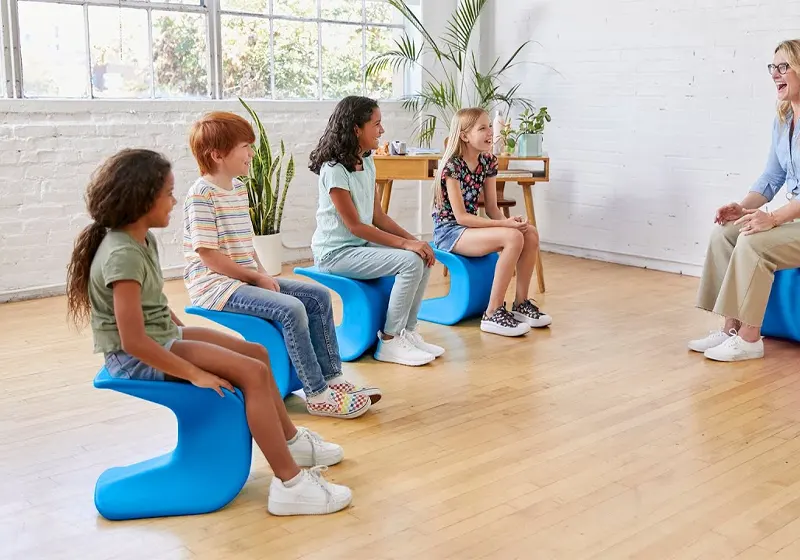
Wave Seats are a practical option when you want to create small-group zones without using rigid, straight-line seating. If your circle time often transitions into breakout discussions, partner reading, or collaborative storytelling, wave-style seating naturally encourages children to gather in smaller clusters. The curved design subtly guides positioning, helping children sit closer together while still maintaining personal space.
They work especially well in reading corners, discussion areas, or open activity zones where you want structure without making the space feel formal. Teachers often choose Wave Seats when they need a seating solution that supports interaction and fluid movement.
11. Couches
Best for: Reading corners and creating a home-like atmosphere
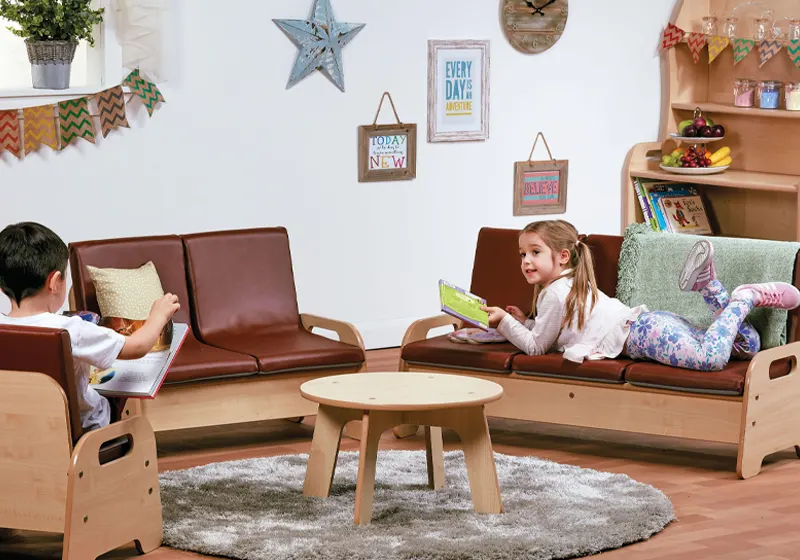
Couches are often chosen when a preschool wants to soften the classroom environment and make the reading area feel inviting rather than instructional. If children tend to rush through book time or avoid the literacy corner, adding a small couch can shift the mood from “task” to “choice.” It works particularly well in classrooms that prioritize social-emotional development and independent reading. Teachers often notice that children stay longer in spaces that feel comfortable and familiar.
12. Floor Dots
Best for: Managing personal space during group activities
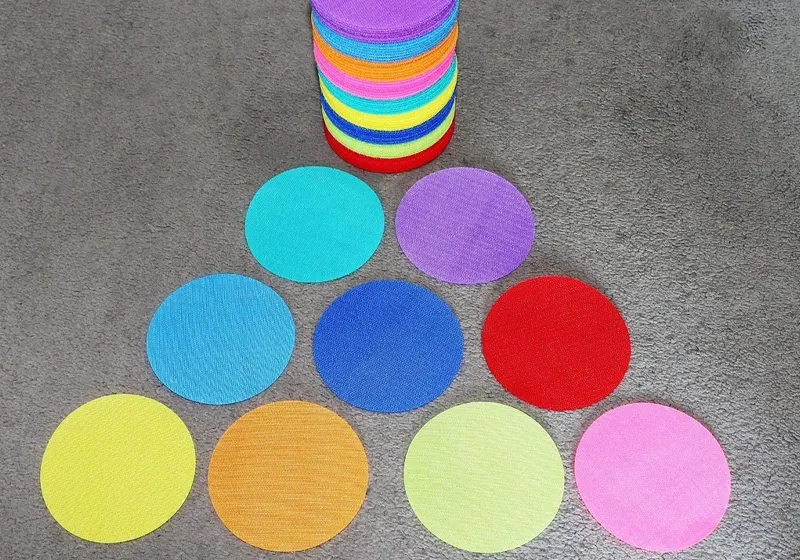
When children bunch together, argue over spots, or drift during circle time, Floor Dots create instant clarity. Each child has a defined place without the need for bulky furniture. They are especially helpful in classrooms with high energy or large groups, where maintaining personal space can be difficult. If you want smoother transitions and fewer reminders about “scoot back” or “give space,” Floor Dots offer a simple but effective structure.
13. Back Support Floor Chairs
Best for: Longer seated floor activities
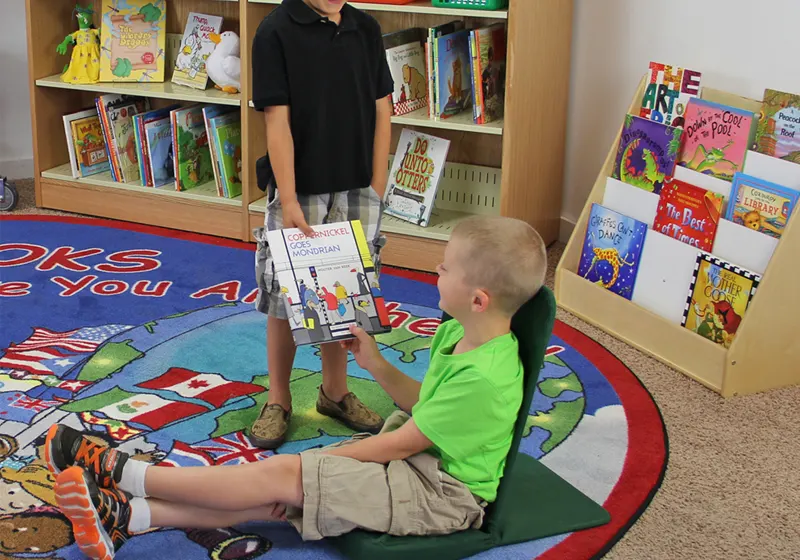
Back Support Floor Chairs are helpful when children enjoy floor seating but struggle to maintain posture during longer lessons. If you frequently conduct storytelling, guided discussions, or music sessions on the floor, this type of chair provides additional support. It maintains the flexibility of floor-based learning while giving added comfort during extended group time.
14. Floor Rug
Best for: Circle time structure, defined gathering space, classroom routines
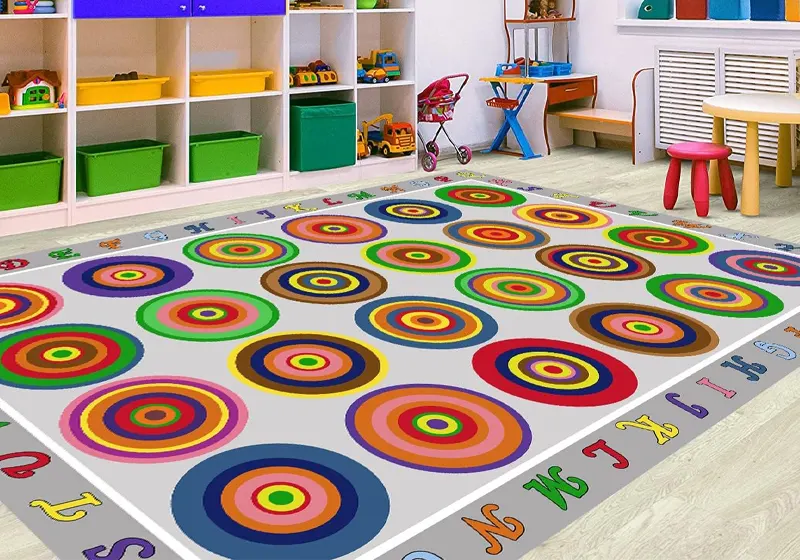
A Floor Rug is often the first flexible seating “tool” a preschool adds because it quietly organizes the whole room. It creates an obvious place for group gathering, helps children understand where circle time happens, and reduces the scattered feeling that can come from open layouts. Beyond seating, it supports daily routines: lining up, transition songs, morning meetings, and small-group instruction. Choose a rug when your classroom needs a clearer structure without adding more furniture.
15. Soft Ottomans
Best for: Flexible small-group seating and adaptable classroom layouts
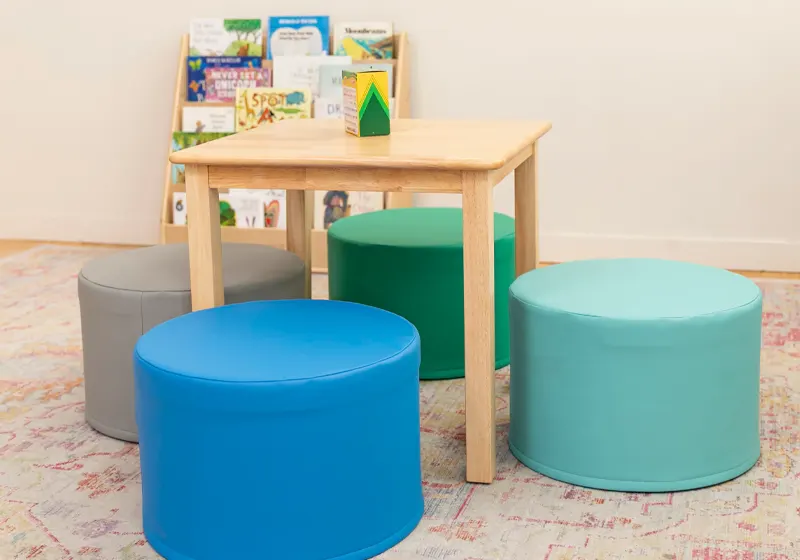
Soft Ottomans are low, cushioned seats with a firm internal structure that allows children to sit upright while still feeling relaxed. If your goal is to keep the room visually open, encourage independence, and allow seating to change as quickly as the activity does, Soft Ottomans offer that balance between comfort and control.
16. Donut Chair
Best for: Reading corners, calm-down areas, and children who benefit from gentle sensory boundaries
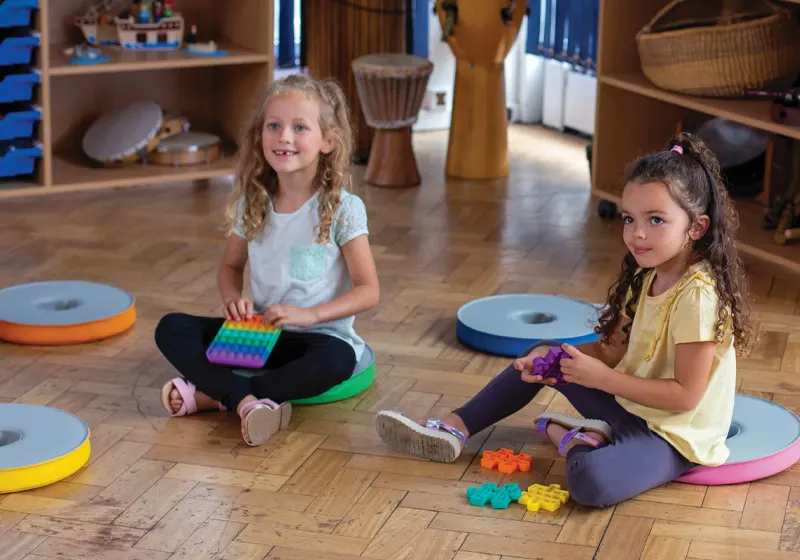
Donut Chairs provide a semi-enclosed seating experience that offers light physical containment without isolating the child from the classroom. The wraparound design can help children feel secure during independent reading or quiet activities, especially in open classroom layouts.
For preschool environments, choose commercial-grade models with high-density foam that maintains shape and wipeable upholstery for easy sanitation. To maximize effectiveness, place Donut Chairs near low bookshelves or within defined literacy zones. Pair them with soft rugs or Floor Mats to create a structured yet comfortable quiet area.
17. Crate Seats
Best for: Small classrooms, activity stations, and spaces that require integrated storage
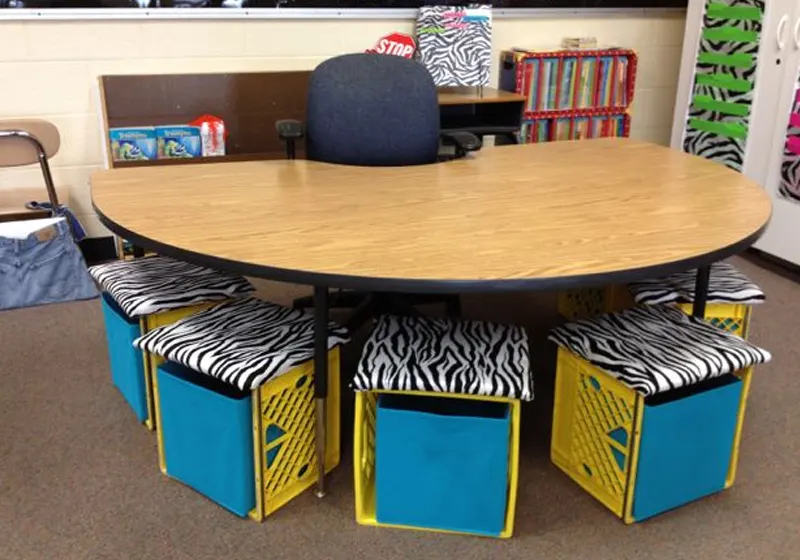
Crate Seats combine seating and storage in one compact unit, making them especially useful in preschool classrooms where space is limited. They provide defined individual seating while helping keep learning materials organized and easily accessible. This dual function supports smoother transitions and reduces classroom clutter.
When selecting Crate Seats for preschool use, stability matters more than aesthetics. Choose models with reinforced construction, smooth edges, and securely fixed cushions that will not slide during movement. Lightweight units are helpful for reconfiguration, but they should still be durable enough for daily commercial use.
18. Inflatable Chairs
Best for: Temporary setups and adaptable classroom themes
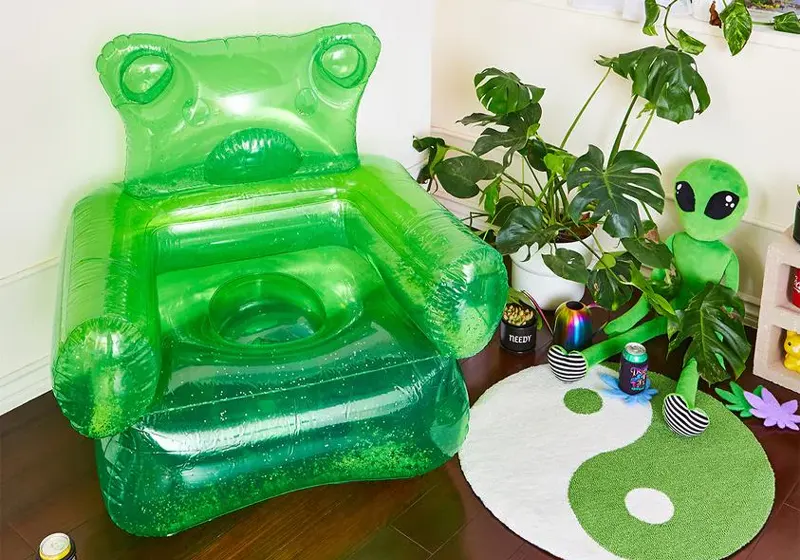
Inflatable Chairs introduce lightweight, movable seating that can be repositioned quickly as classroom needs shift throughout the day. In preschool environments, they work best as temporary or rotational seating rather than permanent primary chairs. Their soft structure can be appealing to children who benefit from flexible posture and light sensory input.
When selecting Inflatable Chairs for preschool environments, choose reinforced, puncture-resistant materials designed for commercial use. Ensure the size is developmentally appropriate and avoid placing them on slippery flooring. Regular air pressure checks and visual inspections are also important to maintain safety and consistency.
19. Laundry Basket
Best for: Creative, low-cost, flexible seating solutions
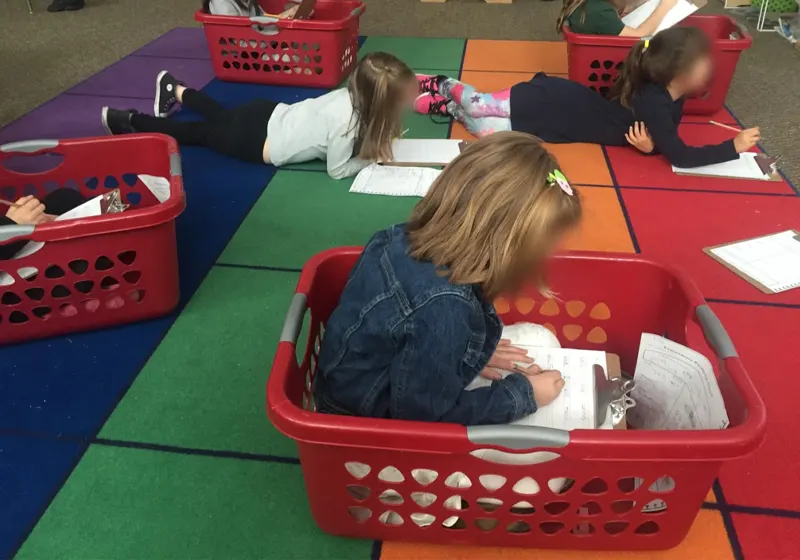
Using a Laundry Basket as seating is typically considered a low-cost, temporary solution rather than a long-term preschool furniture option. When flipped upside down and paired with a secured cushion, it can create a lightweight, movable seat for reading corners or short, small-group activities. Some educators appreciate the flexibility and affordability, especially in pilot classrooms or home-based programs.
20. Modular Foam Blocks Seating
Best for: Classrooms that frequently redesign learning zones
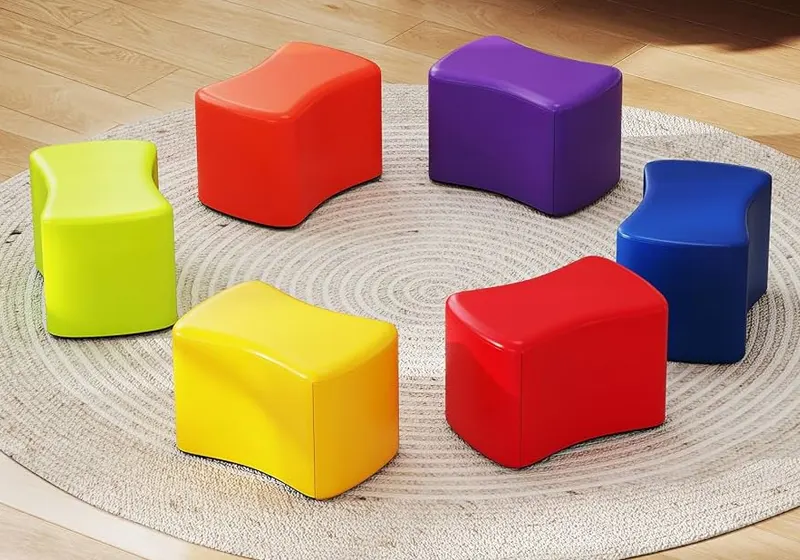
Modular Foam Blocks function as both seating and spatial design elements in preschool classrooms. Unlike fixed chairs, these soft units can be rearranged into benches, semicircles, clusters, or quiet corners depending on the activity. Because they sit close to the floor, foam blocks support grounded posture and encourage natural interaction among children. Teachers can quickly reconfigure them to define zones without moving heavy furniture, which improves classroom flow and transition efficiency.
21. Net Chair
Best for: Sensory regulation and defined quiet spaces
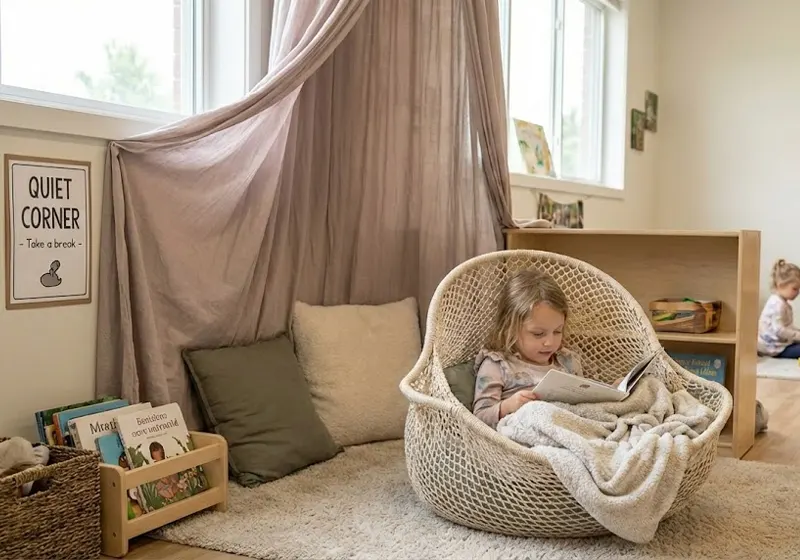
A Net Chair offers a gently suspended seating experience that cradles the body while allowing subtle movement. Its open, breathable structure creates a feeling of enclosure without complete isolation, which many young children find calming. The light sway provides sensory input that can help children reset after overstimulation or intense activity.
In preschool classrooms, this type of seating is most effective when used intentionally as part of a quiet corner or emotional regulation area. It signals a shift in energy, inviting children to slow down.
22. Bench
Best for: Group seating, transition areas, and social interaction
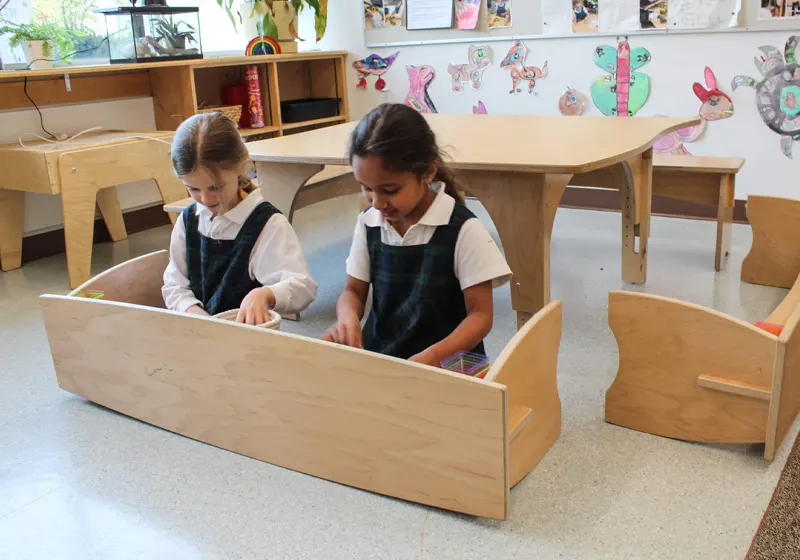
A Bench provides shared seating without locking children into individual, fixed positions. In preschool classrooms, this can support small-group collaboration, storytelling, or art activities where children benefit from sitting side by side. Unlike single chairs, benches encourage social interaction and make it easier for teachers to adjust group sizes quickly.
Because seating is continuous rather than separated, benches can also reduce the “territory” effect that sometimes leads to minor conflicts over personal space. At the same time, they maintain more structure than soft floor seating, which helps during guided instruction or teacher-led discussion.
23. Tree Stump Seats
Best for: Nature-inspired classrooms and informal gathering spaces
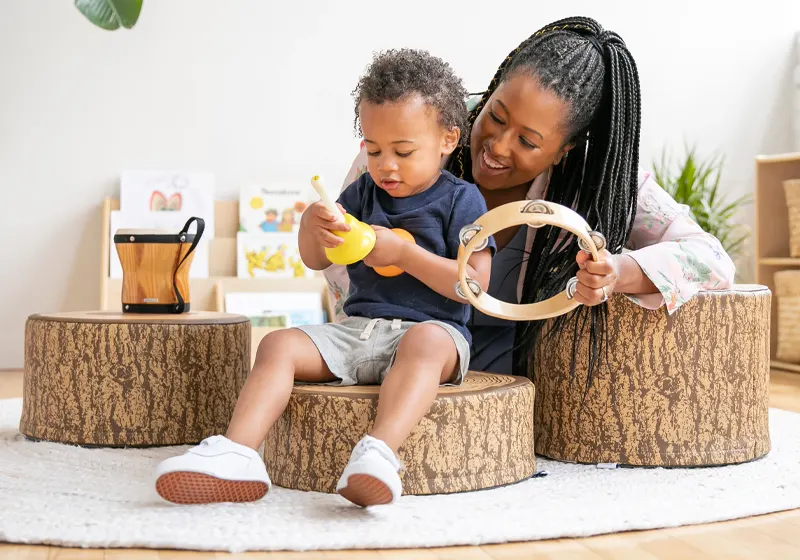
Tree Stump Seats are solid, low-profile seats designed to resemble natural wood stumps. Their key feature is stability combined with a grounded, organic aesthetic. In classrooms that emphasize nature-inspired or Reggio-influenced environments, stump seating can visually soften the space while still maintaining structure.
How to Choose the Right Flexible Seating for Your Center?
Introducing flexible seating should never mean replacing every chair in your classroom. The goal is balance. The best seating solutions should align with your children’s age group, classroom size, educational philosophy, and daily routines. Before purchasing anything, step back and evaluate how your center actually functions throughout the day.
1. Prioritize Safety and Durability
Flexible seating in early learning environments must meet commercial safety standards. Look for rounded edges, non-slip bases, reinforced stitching, non-toxic finishes, and durable construction that withstands daily use. Commercial-grade materials are especially important for high-traffic classrooms.
- Non-Slip Design: All wobble stools or floor cushions must be equipped with non-slip bases to prevent sliding on smooth floors.
- ความปลอดภัยของวัสดุ: Ensure materials are non-toxic and flame-retardant. It is highly recommended to choose products with indoor air quality certifications like GREENGUARD to avoid harmful emissions such as formaldehyde.
- No Sharp Edges & Pinch-Free: Check that product edges are rounded off. Seating with hinges or folding mechanisms must have anti-pinch designs.
- Appropriate Height: Different age groups (infants, toddlers, preschoolers) have drastically different height requirements. Ensure the seating height allows the child’s feet to rest flat on the floor (or comfortably dangle) with their knees at a 90-degree angle.
2. Consider the Age Group and Developmental Stage
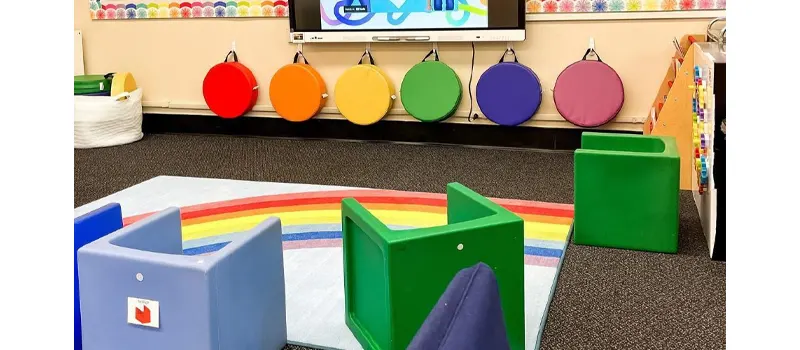
Children ages three to five vary significantly in balance, coordination, and self-regulation skills. Seating that works for kindergarten may not be developmentally appropriate for younger preschoolers. Stability should always come before novelty.
Ask yourself:
- Can this seat safely support shifting weight?
- Is the height appropriate for existing tables?
- Does it promote healthy posture?
If the answer is unclear, it likely does not belong in a preschool classroom.
3. Check Cleaning and Maintenance Requirements
In early learning environments, easy cleaning is non-negotiable. Seating that looks attractive but cannot withstand regular cleaning quickly becomes a liability.
- Surface Materials: Prioritize vinyl, high-quality PU leather, or water-resistant coated fabrics. These materials can be wiped clean instantly with disinfectant wipes.
- Removable & Washable Design: If you opt for fabric bean bags or soft cushions, they must feature durable zippers and covers that can withstand frequent machine washing.
4. Matching Seating to Different Activity Areas
Flexible seating works best when it matches the purpose of each classroom zone rather than being distributed randomly.
- Literacy Areas
Choose soft, calming options such as Donut Chairs, Floor Cushions, or small Sofas. These support longer engagement and help maintain a relaxed atmosphere. Avoid highly dynamic seating in this space. - Art and Fine Motor Stations
Stability is essential. Low Tables paired with structured stools or Scoop Chairs provide better posture support for drawing and writing. Limit movement-based seating in areas that require precision. - Circle Time and Group Instruction
Defined Floor Mats, Tree Stump Seats, or Modular Foam Blocks help create clear boundaries while allowing quick reconfiguration. Individual seats often work better than long benches for maintaining personal space. - Dramatic Play Center and Open Exploration
Use lightweight, movable options such as small stools or Crate Seats. Keep the floor area open and avoid bulky pieces that restrict movement. - Calm-Down Spaces
Select seating that feels secure and low stimulation. Soft, semi-enclosed options are most effective here.
5. Balancing Traditional and Flexible Seating (The Right Mix)
While flexible seating offers numerous benefits, it should not completely replace traditional options.
- Scenario Needs: Activities requiring strict posture or fine motor stability (like eating meals, intensive handwriting practice, or certain tabletop crafts) still highly benefit from standard, stable โต๊ะและเก้าอี้.
- Maintaining a Healthy Ratio: Keeping a balanced mix (e.g., 60% flexible, 40% traditional) ensures all functional needs of the curriculum are met while giving children the option to choose what works best for them in a given moment.
Do not replace every chair with flexible seating. A balanced approach works best. Many centers begin by introducing a few movement-based options or soft seating pieces and observing how children respond.
6. Durability and ROI
A daycare environment is a “high-intensity use” scenario. The hidden costs of a seemingly cheap piece of furniture that breaks in three months are far higher than a slightly more expensive, high-quality piece that lasts for five years. Check if the seams are double-stitched and whether the internal filling (like high-density foam or EPP beads) is resistant to sagging or flattening over time.
Practical Implementation Advice for Managers
Purchasing is only the first step; maximizing the value of flexible seating in your center is the ultimate key:
1. Adopt a “Small-Scale Trial” Strategy
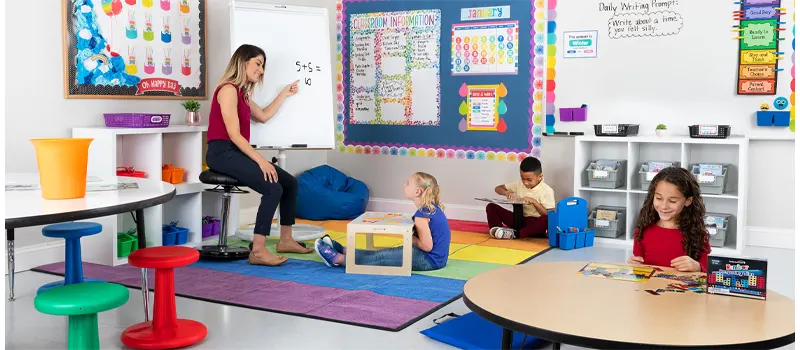
Do not replace all traditional desks and chairs in a classroom at once. It is recommended to introduce a few different types of flexible seating into one classroom or a specific area (like the reading nook) first. Observe the children’s reactions, track usage frequency, and collect feedback from frontline teachers before deciding on a bulk purchase.
2. Listen to Frontline Teachers’ Feedback
Teachers are the direct users and managers of the furniture. Before buying, understand their pain points (e.g., “The current mats are too heavy, my back hurts from storing them every day,” or “That fabric sofa is too hard to wash”). This will help you avoid many purchasing pitfalls.
3. Establish and Teach “Seating Rules”
Flexibility does not mean chaos. Managers need to guide teachers to establish a “Flexible Seating Agreement” with the children. For example:
- “The base of the wobble stool must stay flat on the floor.”
- “If you fall asleep on the bean bag, the teacher might ask you to move to your cot.”
- “You are responsible for putting the seat you chose back where it belongs.”
When children learn how to correctly use these tools, flexible seating truly becomes an excellent aid in supporting their development.
บทสรุป
Flexible seating is becoming an essential part of modern preschool design in 2026. When thoughtfully planned, it supports children’s natural need for movement, strengthens engagement, and creates learning environments that are both structured and adaptable.
The most effective flexible seating setups are not built around individual products, but around intentional planning. Age group considerations, classroom layout, safety standards, daily routines, and long-term durability all play a role in creating a balanced environment.
If you are unsure where to begin, working with Xiha Kidz can make the process far more efficient. From space layout design and seating selection to customization, production, and delivery coordination, a structured service process helps ensure that your flexible seating plan is practical, safe, and aligned with your center’s educational goals. Thoughtful planning today can shape a more engaging and responsive learning environment for years to come.
คำถามที่พบบ่อย
ตัวเลือกที่นั่งที่ยืดหยุ่นคืออะไร
ตัวเลือกการจัดที่นั่งแบบยืดหยุ่นหมายถึงทางเลือกที่หลากหลายนอกเหนือจากเก้าอี้แบบเดิม ซึ่งช่วยให้เด็กๆ สามารถเคลื่อนไหว ปรับเปลี่ยนอิริยาบถ และเลือกรูปแบบการนั่งของตนเองได้ในระหว่างกิจกรรมการเรียนรู้ แทนที่จะจัดเก้าอี้และโต๊ะประจำสำหรับเด็กทุกคน ห้องเรียนจะจัดเตรียมประเภทของที่นั่งที่แตกต่างกันเพื่อส่งเสริมความสบาย การมีส่วนร่วม และความต้องการในการพัฒนา.
ข้อเสียของการจัดที่นั่งแบบยืดหยุ่น
ข้อเสียของการจัดที่นั่งแบบยืดหยุ่น (flexible seating) ได้แก่ ความท้าทายในการจัดการชั้นเรียนที่เพิ่มขึ้น สิ่งรบกวนที่อาจเกิดขึ้นจากที่นั่งที่เน้นการเคลื่อนไหว และข้อกังวลด้านความปลอดภัยหากเฟอร์นิเจอร์ไม่เหมาะสมกับวัย หากไม่มีกิจวัตรที่ชัดเจนและการวางแผนที่สมดุล การจัดที่นั่งแบบยืดหยุ่นอาจนำไปสู่ความรู้สึกตื่นตัวมากเกินไป ค่าใช้จ่ายและความทนทานก็อาจเป็นข้อกังวลในสภาพแวดล้อมสำหรับเด็กก่อนวัยเรียนที่มีการใช้งานสูงเช่นกัน.
การจัดที่นั่งแบบยืดหยุ่นจะทำให้ห้องเรียนของฉันวุ่นวายเกินไปและทำให้ฉันควบคุมไม่ได้หรือไม่
The reality is that when introduced properly with clear rules, flexible seating actually reduces disruptive behavior. It allows children to burn off excess energy naturally, making them less likely to fidget disruptively or act out during quiet times. The key is establishing a strong “Flexible Seating Agreement” early on.
การเปลี่ยนไปใช้ที่นั่งแบบยืดหยุ่นมีค่าใช้จ่ายสูงมากหรือไม่? ฉันจะทำได้อย่างไรในงบประมาณจำกัด?
It doesn’t have to be. While specialized wobble stools can be pricey, you can start on a budget. Use yoga mats cut into squares, repurpose low coffee tables for kneeling stations, or buy simple floor cushions. You can build your collection gradually over time.
ทางเลือกที่นั่งแบบยืดหยุ่นที่ดีที่สุดสำหรับเด็กที่พลังงานสูงหรือสมาธิสั้นมีอะไรบ้าง
Seating that allows for “micro-movements” works best. Wobble stools, balance ball chairs, or sensory wiggle cushions (which can be placed on traditional chairs) allow children to move their core while keeping their bodies anchored in one spot, significantly improving their ability to focus.


 Thai
Thai  English
  Arabic
  French
  Italian
  German
  Spanish
  Japanese