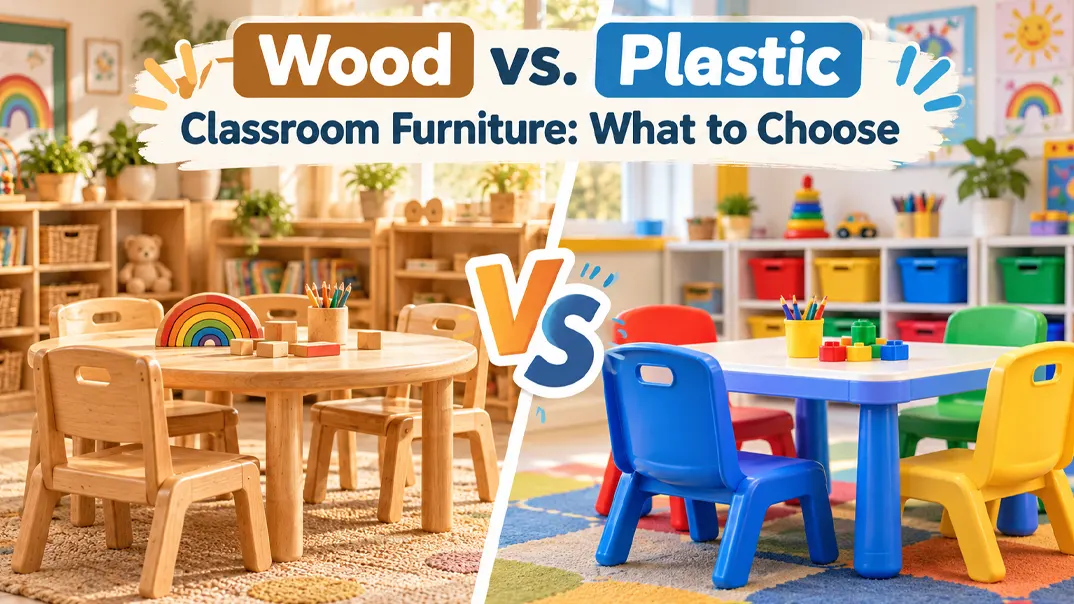
Furnishing a preschool or daycare requires balancing budget, safety, durability, and classroom design. When choosing between wood vs. plastic classroom furniture, each material offers distinct advantages. Wooden furniture is widely recognized for its natural texture, excellent load-bearing capacity, and extended lifecycle. Plastic offers lightweight flexibility, waterproof surfaces for rapid cleaning, and a lower initial cost for dynamic activity zones.
Neither is the right choice for every setting. This guide compares their durability, maintenance, cost, and suitability for different classroom areas to help you make an informed purchasing decision.
Know What You Are Comparing
“Wood” and “plastic” cover a range of materials and constructions. Understanding these differences helps you compare أثاث الفصول الدراسية more accurately.
Wood Includes More Than Solid Timber
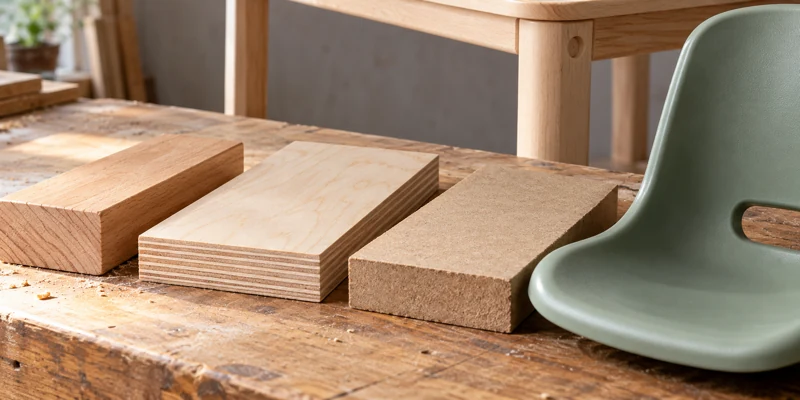
Wooden classroom furniture can be made from solid wood, plywood, MDF, or particleboard. Each has different properties.
Solid wood can offer good durability and may allow minor repairs, depending on the damage and construction. Plywood is made from layered wood veneers and is commonly used for tables, shelves, and cabinets. MDF and particleboard are often used in cabinet panels, but their exposed or damaged edges are more vulnerable to moisture.
The material alone does not determine quality. Panel thickness, edge sealing, surface finish, and the way parts are joined all affect how well the furniture holds up to daily classroom use.
Plastic Furniture Varies by Material and Construction
Plastic classroom furniture may use materials such as polypropylene or polyethylene. It can also vary in construction, from one-piece molded chairs to products with separate seats, legs, or frames.
One-piece molded furniture has fewer joints and can be easier to wipe clean. However, its strength and stability still depend on the plastic grade, wall thickness, shape, and overall design. Furniture assembled from separate components has additional joints that may loosen or wear with repeated use.
When comparing plastic products, consider their intended use, weight capacity, stability, and resistance to everyday wear. These details matter more than the material name alone.
Wood vs. Plastic Classroom Furniture: 8 Factors to Compare
When evaluating furniture for a commercial daycare or preschool, the decision goes beyond just price. Facility directors and procurement teams must weigh these six critical factors to determine which material aligns with their operational bandwidth and curriculum goals.
Quick Comparison: Wood vs. Plastic
| ميزة | Wood Furniture | Plastic Furniture |
|---|---|---|
| متانة | Generally more durable and repairable | Can crack or become brittle over time |
| Stability | Heavier and often more stable | Lightweight and may shift more easily |
| Water Resistance | Vulnerable to moisture damage | Highly water-resistant |
| Cleaning | Requires finish and edge maintenance | Easy to wipe clean |
| Initial Cost | Generally higher for quality products | Usually more affordable |
| التنقل | Heavy and harder to move | Lightweight and easy to rearrange |
| Appearance | Natural, warm, and timeless | Colorful, versatile, and playful |
| الأفضل لـ | Long-term use, learning areas, and storage | Flexible activity spaces and spill-prone areas |
Durability and Lifespan
In general, well-constructed wooden classroom furniture lasts longer than basic plastic furniture, especially when made from quality solid wood or plywood. Its strong structure can withstand years of daily classroom use, and scratches, surface wear, or some loose joints can often be repaired.
Plastic furniture is resistant to moisture but is generally more vulnerable to cracking under repeated stress, particularly when made with thin or lower-quality materials. Prolonged sunlight exposure can also cause some plastics to fade or become brittle.
Overall, wood is generally the better choice for long-term durability, particularly for tables, shelves, and other furniture used heavily every day. However, the advantage applies most clearly to well-made wood products, not low-quality MDF or particleboard furniture.
Safety and Stability
Wooden classroom furniture is generally heavier and more rigid than comparable plastic furniture. This weight can help tables and chairs remain in place during everyday activities, while sturdy wooden shelves can provide a solid storage structure.
Plastic furniture is lighter and easier to handle, but lightweight chairs may slide more easily, and poorly designed plastic furniture may flex under pressure. However, weight alone does not guarantee safety. Both materials need stable designs, smooth edges, secure connections, and appropriate dimensions for children’s ages.
Moisture Resistance
Plastic has a clear advantage in areas where furniture frequently encounters water, spills, or damp materials. It does not absorb water, swell, or warp in the way wood-based materials can.
Wooden furniture is more sensitive to moisture. Solid wood can expand or warp as humidity changes, while plywood generally maintains its shape better because its veneers are layered in alternating directions. MDF and particleboard are particularly vulnerable when water penetrates exposed or damaged edges.
Protective coatings can improve wood’s resistance to moisture, but they cannot make every wooden product waterproof. Plastic is generally the better choice for wet or spill-prone activities, such as water play and messy art sessions.
Cleaning and Maintenance
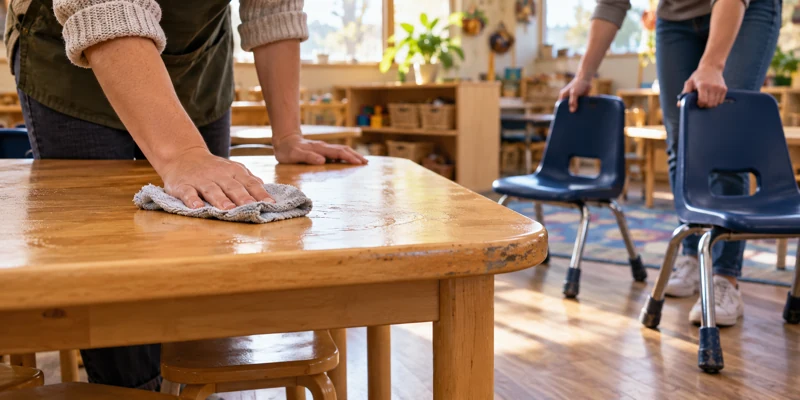
Plastic furniture is generally easier to wipe clean because it has a non-absorbent surface. This makes it convenient for areas where children regularly handle paint, food, or other messy materials. Scratches and unsuitable cleaning chemicals can still affect its surface over time.
Wooden furniture is also straightforward to clean when its finish is smooth and intact. However, damaged coatings, open joints, and exposed edges require more attention to prevent moisture from reaching the underlying material. The type of finish also determines which cleaning products are appropriate.
Cost and Long-Term Value
Basic plastic classroom furniture generally costs less to purchase than comparable wooden furniture. This makes it attractive for schools and daycare centers furnishing multiple rooms on a limited budget.
Wooden furniture often requires a higher initial investment, particularly when made from solid wood or quality plywood with durable finishes and strong connections. However, its longer potential service life and repairability can help offset the higher upfront cost.
Weight and Flexibility
Plastic furniture is generally much lighter than wooden furniture of a similar size. Teachers can move plastic chairs and small tables more easily when switching between group activities, meals, and individual work.
The inherent heaviness of wood provides a distinct safety advantage for early years environments: it is highly resistant to tipping over. This makes wooden storage cabinets and low tables incredibly safe for infants and toddlers who use furniture to pull themselves up. However, this weight means educators cannot quickly or easily reconfigure the room layout.
Appearance and Design
Wooden furniture provides natural grain patterns, warm tones, and a consistent appearance across tables, shelves, cubbies, and other classroom furnishings. It works particularly well in Montessori-inspired classrooms and spaces designed around natural materials.
Plastic furniture offers a wider variety of bright colors, molded shapes, and playful designs. This makes it easier to coordinate furniture with classroom themes or use different colors to distinguish activity areas.
Wood is generally better for a natural, understated classroom appearance, while plastic offers greater flexibility in color and shape. The right choice depends on the atmosphere you want to create and how the furniture fits into the overall room design.
Environmental Impact
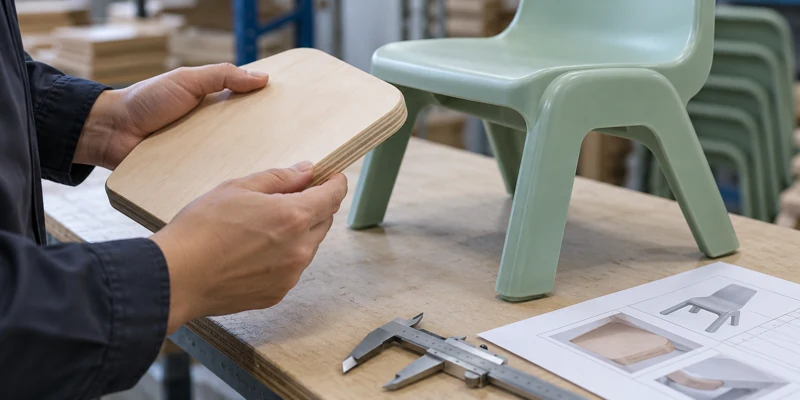
Wood comes from a renewable resource when forests are responsibly managed. Wooden furniture can also be repaired and kept in service for many years, reducing the need for replacement. For procurement teams aiming to meet green-building standards or appeal to eco-conscious parents, sourcing FSC-certified wooden furniture provides a strong, sustainable brand narrative.
Because plastic is generally petroleum-based and synthetic, its environmental footprint is larger. Although recycled plastics are available, not every plastic product can be easily recycled, and recycling depends on the material type and local facilities.
Choose by Furniture Type
The right material can change within the same classroom. Start with the activity and the furniture’s job, then choose a construction that staff can maintain.
الكراسي: Balance Durability, Comfort, and Mobility
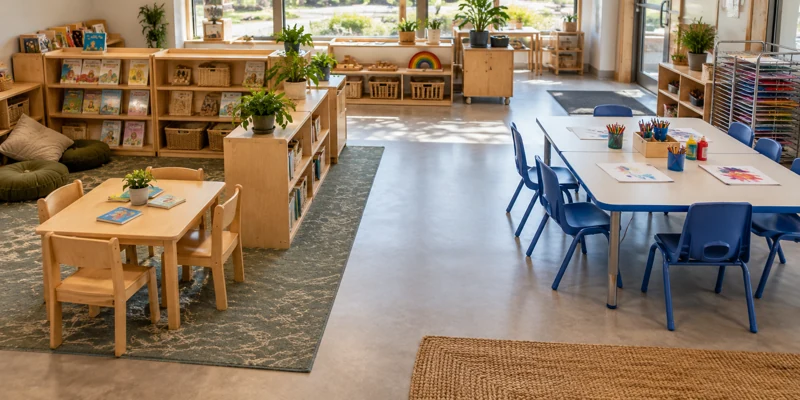
Wooden chairs are generally a good choice for long-term classroom use because well-constructed wood frames and plywood seats can provide a sturdy structure and may be easier to repair. Plastic chairs are usually lighter, easier to move, and available in a wider range of colors, making them practical for multipurpose classrooms where seating arrangements change frequently.
However, material alone does not determine chair quality. Commercial preschool chairs commonly use 18 mm birch plywood with a varnish finish, solid birch or maple frames, or molded plastic. Each construction has different strengths. A wooden chair with weak joints or a poorly attached back can fail prematurely, while a plastic chair can develop cracks or broken feet if its material or fastening points are inadequate.
Tables: Match the Construction to the Activity
Wooden tables are generally well suited to everyday learning, group work, and arts and crafts because they provide a sturdy work surface. Plastic tables are often more convenient for water play and messy activities because their surfaces are easy to wipe clean and do not absorb water.
However, classroom tables are not always made entirely from one material. A common design combines a wooden or wood-based top with metal or adjustable legs. The tabletop, frame, legs, and connections all contribute to the table’s performance, so the material of the top alone does not tell you how durable or stable the complete product will be.
For frequent spills and cleaning, a sealed wood-based top can work well if its finish and edges resist moisture. Plastic-faced surfaces may also be practical, but laminate and melamine finishes are not the same as solid plastic. Their resistance to scratches, moisture, and cleaning products depends on the surface and edge construction.
Storage: Choose Wood for Fixed Storage and Plastic for Lightweight Organization
Wood-based shelving is generally better suited to permanent classroom storage because it offers a rigid structure and flexible options for shelf width, depth, and cubby layout. Plastic storage units are more convenient for lightweight toys, movable bins, and materials that need frequent washing.
The panel material matters even when two shelves look similar. Plywood, MDF, and particleboard differ in their construction and response to moisture. Edge treatment also affects durability, particularly where spills or repeated cleaning are likely. Buyers who specifically require plywood should confirm the actual panel material rather than relying on a product description that simply says “wood.”
Wet and Outdoor Areas: Choose Materials for the Actual Conditions
Plastic furniture is generally more convenient for water play and other wet activities because it does not absorb water and is easy to clean. Wooden furniture can also work in these areas with a suitable protective finish.
Outdoor furniture requires a different level of protection from indoor furniture. Treated pine is one option for outdoor wooden furniture, while plastic and metal products may also be suitable when specifically designed for outdoor exposure. Ordinary indoor furniture should not be assumed to withstand prolonged sunlight, rain, or seasonal temperatures.
الأسئلة الشائعة
Can Wood and Plastic Classroom Furniture Be Used Together?
Yes. Combining both materials can provide greater flexibility. For example, you can use wooden tables and shelves for everyday learning while choosing plastic chairs that are easy to move. The key is to match each piece to the activity, classroom layout, and children’s needs.
Is Plywood Better Than Solid Wood for Classroom Furniture?
Not necessarily. Solid wood can be strong and repairable, while quality plywood offers dimensional stability and can be well suited to tables, shelves, and cabinets. The better option depends on the product’s construction, intended use, finish, and price.
Does Classroom Furniture Material Affect Children’s Learning?
The material itself does not determine learning outcomes. What matters more is whether the furniture supports children’s activities, independence, comfort, and access to learning materials. For example, low shelves can help children reach materials independently, regardless of whether they are made from wood or plastic.
Is Wooden or Plastic Furniture Better for Infants and Toddlers?
Both can work well when designed for the appropriate age group. For infants and toddlers, prioritize age-appropriate dimensions, stability, smooth edges, and compliance with applicable safety requirements.
Which material is better for Montessori or Reggio Emilia classrooms?
Wooden furniture is strictly preferred for Montessori and Reggio Emilia frameworks. These philosophies emphasize nature-based, sensory-friendly environments that reduce visual overstimulation. The neutral, organic textures of wood align perfectly with their requirement for a calming, focused educational space.
Which material is easier to sanitize during cold and flu season?
Plastic is significantly easier to sanitize. Because it is non-porous, it can withstand frequent applications of heavy-duty industrial disinfectants and bleach solutions without surface degradation. Wood requires specialized, wood-safe cleaners to maintain its protective seal over time.
خاتمة
Choosing between wood and plastic classroom furniture comes down to your classroom’s needs. At شيها كيدز, we can help you select suitable furniture materials, sizes, and configurations based on your classroom layout, children’s ages, and daily activities.



 Arabic
 English
 French
 Italian
 German
 Spanish
 Thai
 Japanese