
The correct table and chair height for children is a moving target that must be adjusted as the child grows to maintain proper spinal alignment. According to industry standards, the seat of a child’s chair should allow feet to rest flat with knees bent at 90 degrees, while the table surface should be roughly 20–30 cm higher than the seat.
Getting the right table and chair height is more than just a comfort issue. It supports healthy posture, helps children focus during meals or classroom activities, and reduces strain on developing muscles and joints.
This post is your go-to guide for understanding ideal table and chair heights by age and height group. We’ll include visuals, sizing tables, and expert tips to help you make informed decisions. Let us help you create a space where your child can thrive comfortably.
Why Table and Chair Height Matters for Children?
Table and chair height directly affects children’s physical development, comfort, and ability to concentrate. When furniture is properly sized, children can sit with good posture, stay focused on activities, and move freely and safely within their space. On the other hand, mismatched furniture can lead to poor sitting habits, muscle strain, and reduced engagement in learning or play.

Promoting Healthy Spinal Development
Enhancing Concentration and Academic Performance
Protecting Vision and Eye Health
Table and Chair Height Guidelines by Age
While age is often used as a starting point, the correct table and chair height should always reflect a child’s physical development rather than age alone. Children of the same age can vary significantly in height, leg length, and sitting posture, which means age-based guidelines should be treated as flexible references.
Early Childhood (Infants to 3 Years)
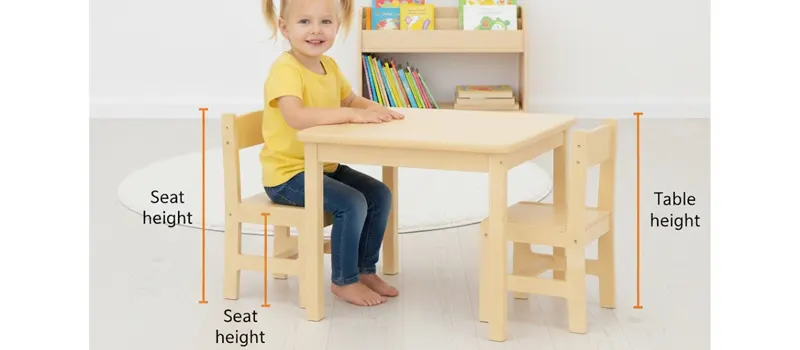
During these formative years, children typically grow from roughly 65 cm to 95 cm. For infants aged 6–12 months, a seat height of 13–15 cm (5″–6″) and a table height of 30–33 cm (12″–13″) is recommended to provide a stable base for early play. As they transition into their toddler years (2–3 years), their stature increases to between 85–95 cm, requiring a seat height of 20 cm (8″) and a table height of 40 cm (16″). At this stage, furniture should prioritize stability to help children move in and out of their seats safely.
Preschool to Middle Childhood (Ages 4 to 9)
As children enter the preschool and early school years (heights of 100 cm to 130 cm), their furniture needs shift toward supporting longer periods of focused activity. For a child aged 4–6, a 28 cm (11″) seat height is ideal. By the time they reach 6–9 years, they typically stand between 115–130 cm tall, requiring a seat height of 33 cm (13″) and a table height of 53 cm (21″). This progression ensures that as their legs lengthen, they maintain a comfortable gap between their thighs and the underside of the table.
Pre-Teen to Adolescence (Ages 10 to 13+)
For adolescents standing 130 cm to over 160 cm, furniture dimensions begin to approach adult standards. Children aged 10–11 require a seat height of 41 cm (16″) and a table height of 61–66 cm (24″–26″). Upon reaching 13 years and older, with a height range of 145–160 cm, a seat height of 46 cm (18″) and a table height of 66–76 cm (26″–30″) provides the necessary space for comfortable, ergonomic sitting during intense study sessions.
| الفئة العمرية | Child Height | Seat Height | ارتفاع الطاولة |
|---|---|---|---|
| 6–12 months | 65–75 cm (25.5–29.5 in) | 13–15 cm (5″–6″) | 30–33 cm (12″–13″) |
| 1-2 سنة | 75–85 cm (29.5–33.5 in) | 15–18 cm (6″–7″) | 33–35 cm (13″–14″) |
| 2 years | 80–90 cm (31.5–35.5 in) | 18 cm (7″) | 35 cm (14″) |
| 2-3 سنوات | 85–95 cm (33.5–37.5 in) | 20 cm (8″) | 40 cm (16″) |
| 2–4 years | 90–100 cm (35.5–39.5 in) | 23 cm (9″) | 43 cm (17″) |
| 3–5 years | 95–110 cm (37.5–43.5 in) | 25 cm (10″) | 46 cm (18″) |
| 4–6 years | 100–115 cm (39.5–45.5 in) | 28 cm (11″) | 48 cm (19″) |
| 6–8 years | 110–125 cm (43.5–49.5 in) | 30 cm (12″) | 50 cm (20″) |
| 6–9 years | 115–130 cm (45.5–51 in) | 33 cm (13″) | 53 cm (21″) |
| 9–10 years | 120–135 cm (47–53 in) | 34 cm (13.5″) | 56 cm (22″) |
| 9–11 years | 125–140 cm (49–55 in) | 38 cm (15″) | 58–63 cm (23″–25″) |
| 10–11 years | 130–145 cm (51–57 in) | 41 cm (16″) | 61–66 cm (24″–26″) |
| 12–13 years | 135–150 cm (53–59 in) | 43 cm (17″) | 61–74 cm (24″–29″) |
| 13+ years | 145–160 cm (57–63 in) | 46 cm (18″) | 66–76 cm (26″–30″) |
Tips: The height ranges listed above are general guidelines based on typical child growth patterns. Individual body proportions may vary, so measuring the child’s actual height and observing sitting posture is always recommended. The ideal position ensures feet flat on the floor, knees at a 90° angle, and arms resting comfortably on the table surface.
For infants and younger toddlers, standard tables and chairs may not provide adequate stability or safety. In these cases, a properly designed high chair or age-specific seating solution with safety features should be used instead.
How to Check If a Table and Chair Height Is Right for a Child?
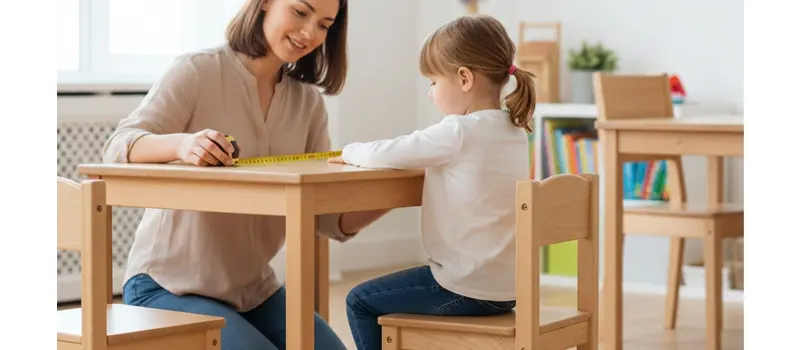
The easiest way to check if a table and chair height is right for a child is to observe how their body aligns when seated. Proper furniture fit allows a child to sit with their feet flat on the floor, knees bent at a 90-degree angle, and elbows comfortably resting on the table surface. This ergonomic positioning supports healthy posture, reduces physical strain, and improves focus during learning or play.
The 90-90-90 Rule: The Gold Standard for Alignment
The 90-90-90 rule refers to the three key angles your child’s body should form while seated. To verify if a chair and table are the correct height, check for these three markers:
- The Ankles: Your child’s feet should rest flat on the floor with the ankles bent at a 90-degree angle. If their feet are dangling, the chair is too high.
- The Knees: The knees should be bent at a 90-degree angle, with a small gap (about two fingers wide) between the back of the knees and the edge of the seat to prevent pressure on the joints.
- The Hips: The hips should be tucked back into the chair, creating a 90-degree angle between the thighs and the torso. The backrest should support the natural curve of the spine.
Evaluating the Elbow and Table Relationship
Once the lower body is properly aligned, you must check the relationship between the child’s arms and the tabletop. Ask your child to rest their hands on the desk as if they were writing.
- Elbow Angle: The elbows should be bent at approximately 90 degrees, with the forearms resting parallel to the floor.
- Shoulder Position: If the table is too high, you will notice the child shrugging their shoulders upward. If it is too low, they will begin to hunch forward. In a correct setup, the shoulders remain relaxed and “dropped.”
The “Eye-to-Surface” Test
Finally, check the visual distance between your child’s eyes and their work. When the table height is correct, the child should be able to read or write without leaning their head forward significantly. The distance from their eyes to the page should be roughly equal to the length of their forearm (from elbow to knuckles). If they are leaning in too close, the table may be too low, or the chair may be too far from the desk.
How to Choose the Right Table and Chair for Children?
Choosing the right table and chair for a child requires a balance between professional measurements and real-time observation. The right furniture allows children to sit comfortably, maintain good posture, and fully engage in learning, play, and daily activities.
1. Match Furniture Height to Child Height
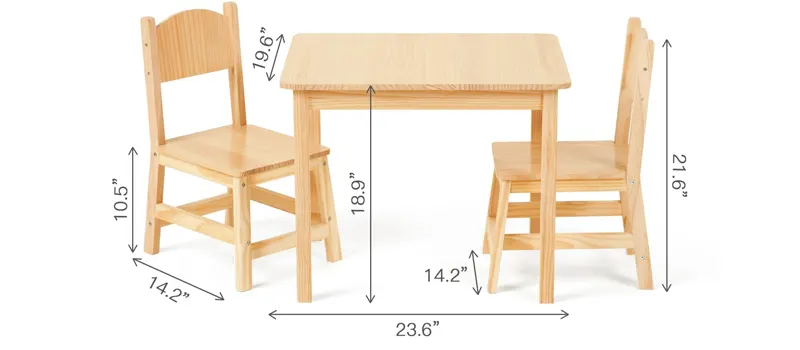
Always prioritize the child’s actual height over their age. Use a height reference chart to select the appropriate seat and table height, ensuring the child can sit with feet flat, knees bent at 90 degrees, and elbows resting naturally on the table.
2. Consider the Purpose of Use
Tables and chairs should fit the intended activities. For example, art tables may benefit from a washable surface and slightly higher stance, while reading corners may require cozy, lower seating for relaxation.
3. Check for Stability and Safety
Look for rounded corners, sturdy legs, anti-tip design, and non-toxic finishes. For toddlers and infants, avoid chairs that are too light or easy to topple. Safety should always come before aesthetics.
4. Prioritize Comfort and Ergonomics
The seat depth, backrest angle, and table clearance all affect comfort. Chairs with slight back support and a flat seat allow children to sit upright and move naturally. Avoid seats that force children to lean forward or slump.
5. Choose Durable, Easy-to-Clean Materials
Children’s furniture should be able to withstand spills, scratches, and frequent cleaning. Materials like birch plywood, molded plastic, or laminated surfaces offer both durability and hygiene.
6. Consider Adjustable or Modular Options
If you’re furnishing a mixed-age classroom or want long-term value, adjustable-height tables and chairs are a smart investment. Some modular designs can also adapt to multiple configurations and group sizes.
Popular Table and Chair Types for Children
As a professional manufacturer and supplier of daycare furniture, we’ve worked with thousands of early childhood centers, preschools, and childcare providers across different countries. Over the years, we’ve learned that choosing the right type of table and chair is not just about style; it’s about matching the right design to the child’s developmental needs, the intended activity, and the environment in which it will be used.
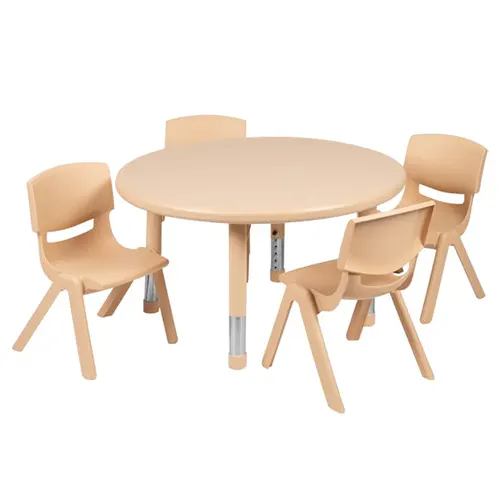
Adjustable Height Tables and Chairs
Designed for flexibility, adjustable-height furniture allows educators to adapt to different age groups or activities without changing the entire setup. Ideal for shared spaces or fast-growing children, these tables and chairs offer long-term usability and are widely used in mixed-age classrooms.
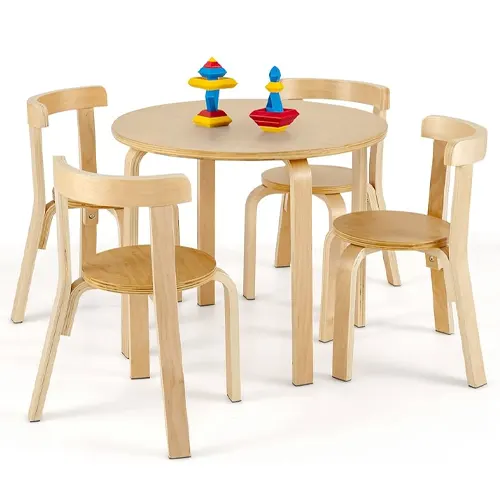
Preschool Bentwood Chairs
Bentwood chairs are widely used in daycare and preschool environments due to their smooth curves, lightweight structure, and natural wood appearance. Made by shaping solid wood or laminated wood through heat and pressure, these chairs offer gentle contours that support a child’s body without sharp edges.
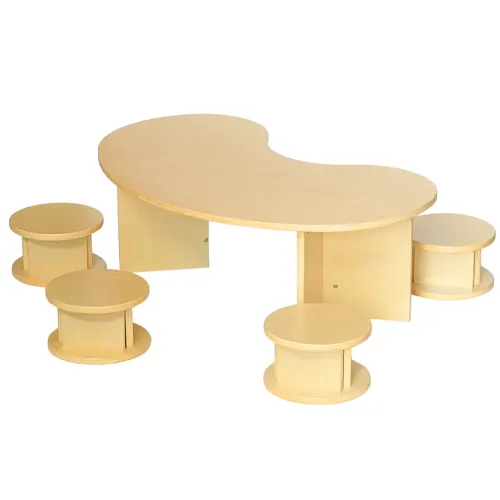
Kidney Table
Popular in teaching and interactive settings, this configuration allows an educator to sit at the center while engaging directly with multiple children around the curve. It’s especially effective for guided reading, small-group instruction, and mealtime supervision.
For more table and chair types commonly used in childcare settings, feel free to browse our full product collection or speak with our team for personalized assistance.
Common Mistakes When Choosing Table and Chair Height
Choosing the right table and chair height for children is essential, but it’s also easy to get wrong. Many well-intentioned decisions are made based on convenience, assumptions, or general age ranges, rather than the child’s actual size and ergonomic needs. These common mistakes can lead to discomfort, poor posture, and reduced engagement during learning or play.

Buying Too Large to “Grow Into”
The most common mistake is purchasing oversized furniture, hoping it will last for years. While it seems economical, if a child can’t reach the ground, they will sit on the edge of the chair, resulting in a complete lack of back support and putting immense pressure on their developing spine.
Choosing Furniture Based on Age Alone
Age is often used as the main reference when selecting table and chair height, but children of the same age can differ greatly in height and body proportions. A better approach is to use age only as a starting point and then check how the child sits, making adjustments based on foot placement, knee position, and arm comfort at the table.
Neglecting Foot Support
Using an adult-sized chair with a cushion is a common shortcut, but it often leaves a child’s legs dangling. When feet are not flat, gravity pulls on the lower back, causing restlessness and slouching. If the chair is too tall, you must provide a footrest to maintain the “90-90-90” alignment and keep the pelvis in a neutral, comfortable position.
Mixing Tables and Chairs That Do Not Match
Tables and chairs are sometimes chosen separately without considering how their heights work together, which can lead to awkward sitting positions. To avoid this, table and chair height should always be evaluated as a pair, ensuring that the child’s arms can rest comfortably on the tabletop without lifting the shoulders.
Using Adult or Multi-Purpose Furniture
Adult or general-purpose furniture is rarely designed for children’s body proportions and often places the tabletop too high. Choosing furniture specifically designed for children helps ensure that table and chair height support natural posture and daily comfort.
Ignoring the Activity and Environment
Furniture is sometimes selected without considering how it will be used, which can affect comfort during longer activities. Matching table and chair height to the primary activity, such as learning, eating, or creative work, helps create a more supportive setup.
Assuming Children Will Adjust on Their Own
Children may adapt to furniture that does not fit, but this often results in poor posture and unnecessary strain. Observing how a child sits and making simple adjustments early can prevent long-term discomfort and encourage healthier sitting habits.
الأسئلة الشائعة
Is it okay for children to use furniture that is slightly too big?
Occasional use is usually fine, but daily use of furniture that is too large can lead to poor posture. Children may shrug their shoulders, lean forward, or dangle their feet, which increases strain on the neck, back, and legs over time.
How often should children’s furniture be adjusted or replaced?
Children grow quickly, especially in early childhood. It is a good idea to review furniture height at least once a year or whenever you notice changes in posture, leg positioning, or comfort during seated activities.
Are adjustable tables and chairs better for children?
Adjustable furniture can be very helpful, especially in classrooms or homes with multiple children. It allows the furniture to grow with the child and ensures proper posture over a longer period of use.
Should I choose furniture based on age or height?
Height is more accurate than age. Children of the same age can vary greatly in size. Choosing furniture based on height helps ensure proper seating posture and reduces the risk of discomfort or long-term postural issues.
خاتمة
The correct table and chair height for children supports healthy posture, protects developing spines and eyes, and helps children stay focused during daily learning activities. When furniture is properly sized, children can sit naturally with their feet supported, shoulders relaxed, and attention directed toward learning rather than physical discomfort.
في شيها كيدز, we see this every day through real classroom projects and long-term use feedback. That is why our tables and chairs are designed based on children’s height ranges, movement needs, and daily classroom routines, rather than age alone. By focusing on proportion, stability, and adjustability where needed, we aim to support healthier sitting habits as children grow.


 Arabic
  English
  French
  Italian
  German
  Spanish
  Thai
Thai  Japanese