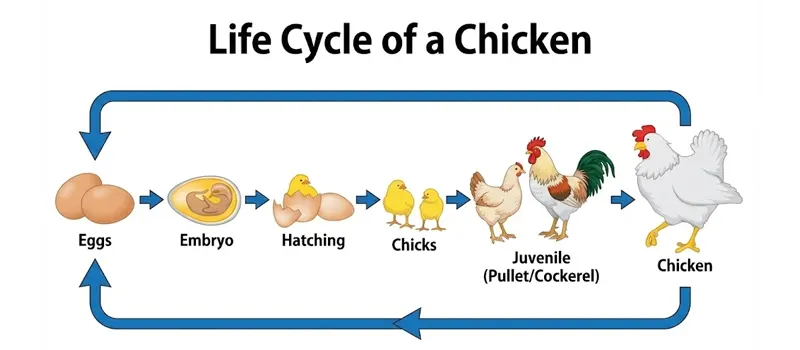
The life cycle of a chicken describes how a chicken grows from an egg into a fully grown adult. It includes the stages of egg, embryo, chick, young chicken, and mature hen or rooster. Understanding these steps helps children see how living things develop and change over time.
Teaching the life cycle of a chicken is an excellent way to introduce early science concepts. Children can observe real examples, ask questions, and compare the growth of chickens to other animals they already know. This topic gives them a clear model of how life begins, grows, and reaches maturity.
This article walks through each stage of the chicken life cycle and provides easy ways to teach it to children. With clear explanations and practical ideas, you will be able to guide young learners through the topic with confidence.
What Happens in Each Stage of the Chicken Life Cycle?
The life cycle of a chicken moves through several clear stages that show how a chicken grows from an egg into a fully developed adult. These stages help children understand how living things change gradually rather than all at once. Each step reveals something new about growth, protection, and the needs of a developing animal.
1. Egg
The chicken life cycle begins with an egg laid by a healthy hen. If the egg is fertilized by a rooster, it contains a tiny developing chick. The egg’s shell is hard and protects the life growing inside. Inside, there is not only the yolk, which provides nutrition, but also several membranes and fluid layers that cushion and support the embryo. The egg needs warmth to develop properly, which is usually provided by the mother hen sitting on it during incubation or by a machine incubator. This warmth keeps the temperature steady so the chick can grow inside.
2. Embryo
After the egg is laid and incubation begins, the embryo stage starts. This is the hidden but crucial period of development. Around day 3, the eyes start to form. By the end of the first week, wings, legs, and organs begin to take shape. Veins become visible through the inner membrane, and the embryo slowly begins to move. Over 21 days, the embryo uses the yolk as food to grow. This stage teaches children about growth inside a closed environment and the wonders of unseen life forming step by step.
3. Hatching
When the chick is fully developed and ready to leave the egg, it begins the hatching process. This stage is physically demanding and can take many hours. The chick uses a small, hard bump on its beak called an egg tooth to crack open the shell. It first makes a small hole, called a pip, then slowly chips away to create a circle around the shell. The chick pushes with its body and finally breaks free. When it hatches, it looks wet, weak, and a little sleepy. After resting for a while, it dries off and begins to fluff up. Hatching is one of the most exciting stages for children to witness.
4. Chick
After hatching, the chick enters the next stage of its life. At first, it is small, fluffy, and fragile. It needs warmth, often provided by a brooder lamp, and soft starter food and water. Chicks begin to peep, walk, and explore very quickly. They are curious and social, often moving in groups and responding to gentle sounds. This is a great stage for children to observe early behavior, such as pecking, following light, and even recognizing voices. Chicks grow rapidly and begin to show early signs of their feathers changing.
5. Juvenile (Pullet or Cockerel)
Around 4 to 8 weeks of age, the chick becomes a juvenile. This stage is sometimes called the “teenager stage.” The downy fluff is replaced with real feathers. The bird gets larger and stronger, and it becomes easier to tell males and females apart. A young female chicken is called a pullet, and a young male is called a cockerel. Their voices may change slightly, and their behavior becomes more confident. They start scratching more, exploring new foods, and socializing in more complex ways. They look like small adults but are not ready to reproduce yet.
6. Adult Chicken
At around 5 to 6 months old, a chicken is considered an adult. Hens begin to lay eggs regularly, and roosters may start to crow loudly and show protective behaviors. Adult chickens have fully developed plumage, stronger legs, and distinct personalities. They often form social hierarchies in the flock, known as a “pecking order.” The life cycle of a chicken has now come full circle, and adult chickens can mate and produce new fertilized eggs, starting the cycle again. This final stage offers opportunities to talk about responsibility, care, and the importance of life cycles in nature.
Tips: For younger children, it’s helpful to use a simplified version of the life cycle of a chicken. Instead of covering all six scientific stages, many educators focus on just four: egg, chick, young chicken, and adult chicken. This approach makes it easier for kids to understand and remember the process without being overwhelmed by complex terms. As they grow older, more detailed stages like embryo or juvenile can be introduced gradually.
Fun Facts About Chickens
Chickens are more fascinating than they seem. Once children learn about chicken life cycle, they often enjoy discovering extra facts that are surprising, silly, or just plain cool. These fun facts are a great way to spark curiosity and make learning more enjoyable.
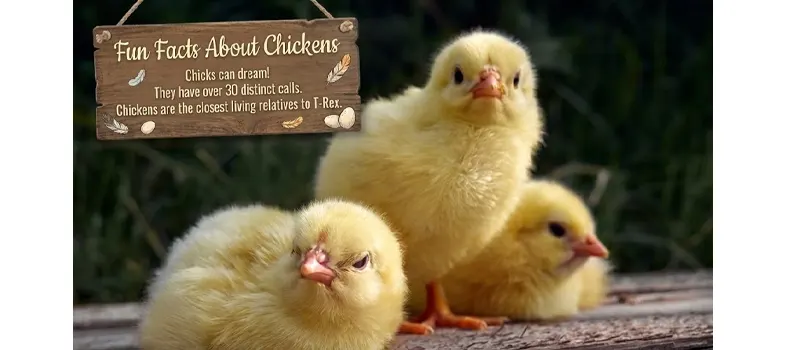
- Chickens Can Remember Over 100 Faces
Chickens have excellent memories. They can recognize and remember the faces of other chickens and even people. That means a chicken might actually recognize its owner. - Baby Chicks Start Communicating Before They Hatch
Inside the egg, baby chicks can start making soft chirping sounds. Sometimes they even respond to nearby chicks in other eggs, almost like having a conversation before meeting each other. - Chickens Are Related to Dinosaurs
Believe it or not, chickens are the closest living relatives of the mighty Tyrannosaurus rex. So, every time you see a hen, you’re looking at a tiny, feathered descendant of a dinosaur. - Hens Talk to Their Eggs
Mother hens often make soft clucking sounds while keeping their eggs warm. The chicks inside can hear those sounds and may even chirp back. It helps them bond before hatching. - Roosters Don’t Only Crow in the Morning
Roosters are known for crowing at sunrise, but they actually crow at many times during the day. They do it to show they’re in charge or simply because they feel alert and active. - Chickens Bathe in Dust
Instead of using water, chickens roll around in dry dirt to stay clean. Dust bathing helps remove bugs from their feathers and keeps their skin healthy.
What Will Children Gain from The Life Cycle of A Chicken?
The life cycle of a chicken offers a wide range of learning opportunities that support their curiosity, thinking skills, and emotional development. By observing how a chicken grows from an egg into an adult, children gain a better understanding of life, change, and responsibility.
1. Understanding That Living Things Grow and Change
Children learn that all living things begin small and change over time. Seeing how a chicken starts as an egg and gradually becomes an adult helps them notice the steps of growth. They understand that development happens slowly and that each stage has a purpose.
2. Learning That Some Changes Are Hidden
The growth that takes place inside the egg helps children see that important changes can happen even when they are not visible. This idea encourages them to think beyond what they can see and recognize that many natural processes take place quietly in the background.
3. Exploring Cause and Effect in Nature
Observing the life cycle of a chicken introduces simple cause and effect relationships. Children discover that warmth helps the chick grow, that the shell keeps the embryo safe, and that the chick must work to hatch. These examples help them see how living things depend on the right conditions.
4. Building Early Scientific Thinking
Children naturally begin to observe, compare, and ask questions when learning about the life cycle of a chicken. They notice patterns such as feather growth or changes in size. These observations support early scientific skills and help them express ideas clearly.
5. Developing Care and Respect for Living Things
Learning how a chick grows encourages empathy and responsibility. Children understand that animals need protection, warmth, and proper care to survive. This knowledge helps build respect for nature and helps them see their role in caring for living things.
6. Connecting Learning Across Subjects
The life cycle of a chicken can be used across different subjects: drawing the stages for art, writing stories about a chick for language, or counting eggs for basic math. It’s a topic that opens the door to creative and cross-subject learning.
Key Terms in the Life Cycle of a Chicken Explained for Children
Understanding the life cycle of a chicken becomes much easier when children learn the basic terms they will hear during the lesson. These words describe important parts of the process and help young learners understand how a chick forms, grows, and becomes an adult. Each term can be explained in simple language so that children can follow the stages with confidence and curiosity.
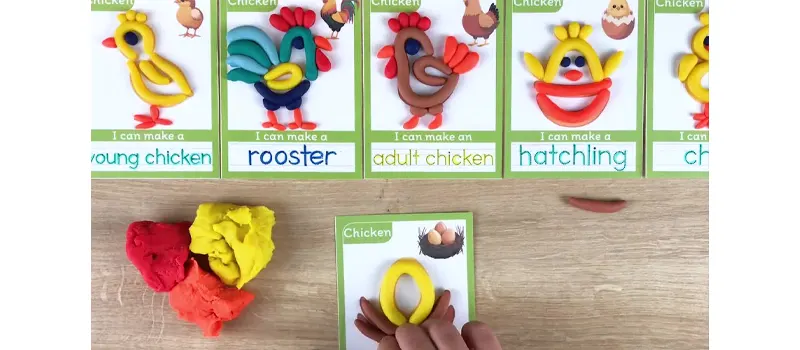
- Egg: An egg is the hard-shelled shape that a hen lays. Inside the shell is everything a tiny chick needs to begin growing. Children often see eggs in the kitchen, which makes this a familiar starting point.
- Shell: The shell is the hard outer layer of the egg. It protects the chick while it grows. Even though it feels solid, it has tiny holes that allow air to pass through so the chick can breathe.
- Yolk: The yolk is the yellow part inside the egg. It works like food for the growing chick and gives it the energy it needs to develop. Children can understand this by comparing the yolk to a lunchbox filled with food.
- Embryo: The embryo is the tiny beginning of the chick inside the egg. It starts very small and gradually forms wings, legs, a beak, and feathers. For children, it can be described as “the baby chick before it hatches.”
- Incubation: Incubation means keeping the egg warm so the chick can grow. A hen does this by sitting on her eggs, and an incubator does the same job with controlled heat. Children quickly understand that warmth is one of the most important things the chick needs.
- Hatching: Hatching is the moment when the chick breaks out of the egg. It uses a small, temporary tip on its beak to crack the shell. Children usually find this stage exciting because they can imagine the chick pecking its way out.
- Chick: A chick is the small, fluffy baby chicken that comes out after hatching. It learns to walk, eat, and drink. Children easily relate to chicks because they are soft, active, and curious.
- Hen: A hen is an adult female chicken. She can lay eggs and often protects her chicks. Children can understand a hen as “the mother chicken.”
- Rooster: A rooster is an adult male chicken. Roosters have louder voices and larger combs on their heads. Children may recognize roosters from stories or morning farm sounds.
How to Teach the Life Cycle of a Chicken in the Classroom?
Teaching the life cycle of a chicken in the classroom works best when children have chances to see, touch, listen, and imagine. With the right activities and explanations, children can connect scientific ideas to real-life examples they already understand. The steps below offer simple methods teachers can use to help young learners explore the process with confidence and excitement.
1. Start with Simple Visuals
Begin by showing clear pictures of each stage in the chicken life cycle. Visual aids help children build basic understanding before moving to deeper explanations. You can use posters, cards, or a slideshow to guide them through the process.
2. Use Storytelling to Explain Each Stage
Children learn well through stories, so turning the life cycle of a chicken into a short narrative helps them remember the sequence. You can describe how the egg protects the growing chick and how the chick slowly prepares to hatch. A simple story keeps the lesson engaging and easy to follow.
3. Include Hands On Learning Materials
Models, plastic eggs, or simple craft activities help children connect what they learn to something they can touch. Hands on tools make abstract ideas more concrete and support different learning styles. Even a paper cutout of the stages can make the lesson more interactive.
4. Encourage Observation and Questions
Invite children to look closely at the pictures or models and ask what they notice. Questions like “What might be happening inside the egg?” or “How do you think the chick gets out?” help children think like young scientists. This strengthens curiosity and early reasoning skills.
5. Set Up an Incubation Project
If possible, bring fertilized eggs into the classroom and use an incubator. Children can watch the eggs develop over 21 days and witness the hatching process. This real experience is unforgettable and teaches responsibility.
6. Connect the Lesson to Real Life Examples
Many children are familiar with eggs from the kitchen or chickens from stories. Making these connections helps them understand that science relates to everyday life. This also helps them remember the stages more easily.
7. Reinforce Learning Through Simple Activities
Drawing the stages, placing picture cards in order, or completing a matching activity allows children to review what they learned in a fun way. These activities give them chances to check their understanding and build confidence.
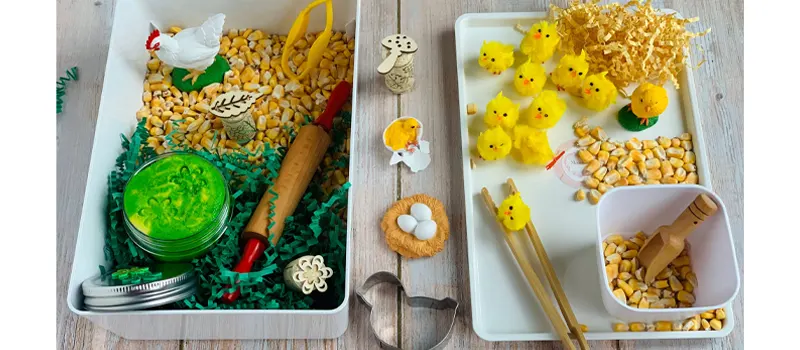
- Chicken Life Cycle Wheel Craft
Children cut out and assemble a spinning wheel showing each stage of the chicken’s life. It helps them remember the correct order and visualize the cycle. - Egg to Chicken Sequencing Cards
Use cards with images of each life stage. Children arrange them in the correct order and explain what happens at each step. - Chick Hatching Observation Journal
If using real eggs and an incubator, students can draw daily changes and write what they observe. This builds observation and recording skills. - Yolk and Eggshell Science Station
Set up a table where kids can safely explore a real egg (raw and boiled) to learn about the yolk, shell, and what’s inside. - Storytime with Chicken-Themed Books
Read books like “Where Do Chicks Come From?” and ask students to retell the story using their own drawings or puppets.
Helpful Materials and Educational Toys for the Chicken Life Cycle
Using the right educational materials helps children understand the life cycle of a chicken in a hands on and engaging way. When children can see, touch, and interact with learning tools, the process becomes easier to remember and more enjoyable. These resources support different learning styles and help teachers present each stage in a clear and meaningful way.
Chicken Life Cycle Storybooks About Chickens and HatchingFigurines (3D Models)
These are small, realistic three-dimensional models that represent each stage of a chicken’s life cycle, including the egg, embryo, chick, and adult chicken. Children can hold and explore each piece with their hands, making the learning experience more interactive. This tool is especially helpful for visual and tactile learners, as it transforms a scientific concept into something they can physically engage with.
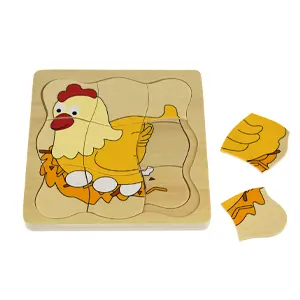
Chicken Life Cycle Sequencing Puzzle
This puzzle features pieces that show each life stage of a chicken. Children put the pieces together in the correct order to complete the cycle. It helps reinforce the idea that living things go through a sequence of changes. Solving the puzzle also improves critical thinking and sequencing skills, while offering a fun and rewarding challenge.
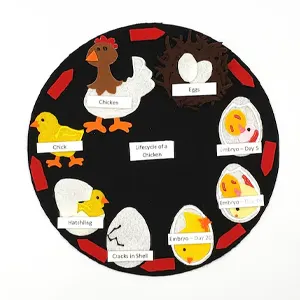
Felt Storyboard Life Cycle Set
This set includes a felt board along with movable pieces shaped like eggs, chicks, and adult chickens. Children can retell the life cycle of a chicken by arranging the pieces on the board. It is perfect for group learning, storytelling, and reinforcing science vocabulary. The soft texture and visual appeal make it ideal for young learners.
Chicken Life Cycle Stamp and Stencil Kit
This creative set includes stamps or stencils representing the different stages of a chicken’s life. Children can use them to decorate journals or complete activity sheets. The process of stamping or tracing helps build fine motor skills while reinforcing scientific knowledge through hands-on creativity.
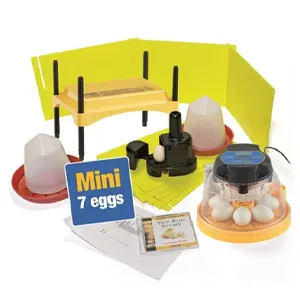
Pretend Play Incubator and Hatching Set
This toy kit allows children to act out the process of incubation and hatching using plastic eggs and chicks. It offers an imaginative way to explore how chicks develop and emerge from eggs. Pretend play adds emotional connection and personal engagement, which can deepen understanding and interest in science topics.
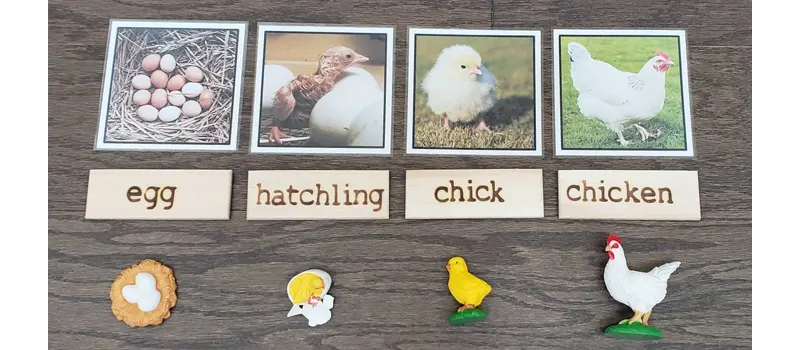
Montessori Life Cycle Three-Part Cards (Matching Cards)
This Montessori material includes picture cards, word labels, and combined control cards for each life stage. Children match the images with the correct words, check their work, and repeat the process independently. It supports vocabulary development, reading skills, and independent learning, all while reinforcing science concepts in a simple and effective way.
Storybooks About Chickens and Hatching
Child-friendly books offer gentle explanations about how chicks grow and hatch. Stories make the scientific process easier to understand and help young learners relate to the stages emotionally. These books work well for circle time or read-aloud sessions.
Preguntas frecuentes
- At What Age Do Hens Start Laying Eggs?
Most hens begin to lay eggs when they are about 5 to 6 months old. This can vary slightly depending on the breed and environment. - Can You Tell If an Egg Has a Chick Inside Without Cracking It?
Yes, it’s called candling. By shining a light through the egg in a dark room, you can sometimes see veins, movement, or a growing embryo, especially after a few days of incubation. - Is It Safe to Hatch Chicks in the Classroom?
Yes, with proper supervision and care, many schools safely hatch chicks using incubators. It’s a great hands-on learning experience, but always check school policies and plan for chick care afterward. - What Is the Best Age to Teach Children About the Chicken Life Cycle?
Children as young as 3 to 4 years old can begin learning basic concepts using pictures and toys. Ages 5 to 8 are ideal for more detailed lessons, real observations, and hands-on activities. - Why is the chicken life cycle a good topic for science lessons?
It shows clear, observable stages of growth and change. Children can learn about biology, animal care, sequencing, and responsibility, all in one topic. It also connects well with broader discussions about life cycles and nature.
Conclusión
Understanding the life cycle of a chicken offers children a fascinating look into how living things grow and change. From the moment an egg is laid to the time a chick becomes an adult chicken, each stage teaches important lessons about biology, patience, care, and observation.
With the help of engaging activities, hands-on materials, and thoughtful teaching strategies, educators and parents can turn this simple life process into a powerful learning experience. By exploring this topic, children not only build science knowledge but also develop curiosity, empathy, and a deeper connection to the natural world around them.
 Spanish
  English
  Arabic
  French
  Italian
  German
  Thai
Thai  Japanese