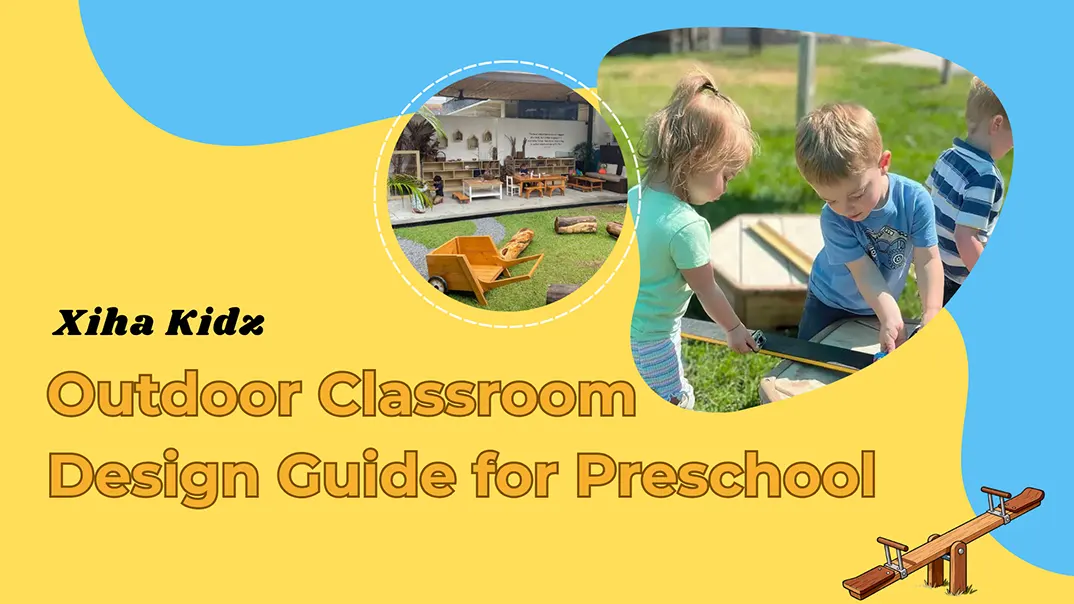
Investing in a professional outdoor classroom design can help differentiate your daycare, strengthen your brand image, and support student enrollment. Research from the Natural Learning Initiative suggests that natural learning environments are linked to improved attention, social interaction, and physical development.
Below, we will show you how to create an outdoor classroom that is safe, inspiring, and built to last.
What Are the Benefits of the Outdoor Classroom?
The evidence from early childhood education and public health fields points in one direction: well-designed outdoor learning environments directly support child development, classroom management, and program quality. Outdoor space is not an “extra.” It is an extension of the learning environment.
Supports Whole Child Physical Development
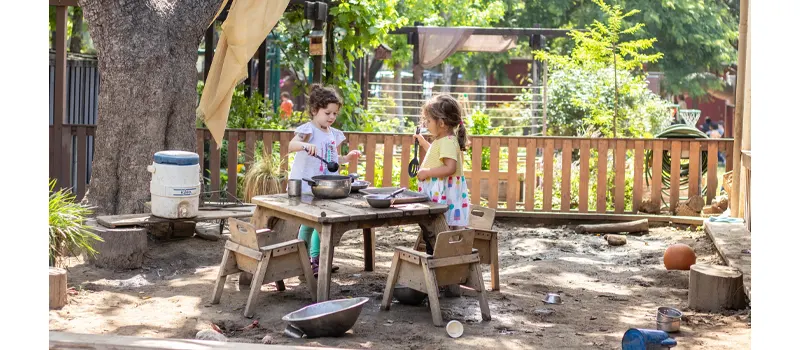
According to the Centers for Disease Control and Prevention, young children benefit from regular physical activity to support healthy growth, coordination, and long-term health. Outdoor classrooms naturally encourage running, climbing, balancing, lifting, and large body movement that indoor spaces often restrict.
Improved Attention and Engagement
Natural environments offer varied sensory input, open space, and fewer rigid physical constraints than traditional classrooms. Many educators observe that children who struggle to remain focused indoors are more engaged outdoors. The combination of fresh air, natural light, and opportunities for movement can help children regulate energy levels and sustain attention during learning activities.
Stronger Social and Emotional Development
Outdoor learning often involves collaborative tasks such as gardening, building with loose materials, or group observation projects. These shared experiences naturally encourage communication, cooperation, and problem-solving. Children also benefit emotionally from being in open, less confined environments, which can reduce stress and support self-regulation.
Meaningful, Real-World Learning Experiences
An outdoor classroom turns abstract concepts into direct experiences. Children can measure plant growth, observe insects, track weather changes, or experiment with natural materials. These activities connect science, language, and math to real situations, helping knowledge feel relevant and easier to understand.
Support for Gross Motor and Physical Development
Unlike indoor spaces that often limit movement, outdoor classrooms provide room for climbing, carrying, balancing, digging, and other gross motor activities. These experiences build coordination, strength, balance, and body awareness, all of which are closely linked to overall cognitive and emotional development.
Sensory Development and Self-Regulation
Outdoor environments naturally provide rich sensory experiences through textures, sounds, smells, and changing conditions. Sand, water, leaves, soil, and wind all offer opportunities for sensory exploration. These experiences support brain development and help children learn to manage their emotions and responses to stimulation.
Increases Program Appeal and Parent Trust
From an operational perspective, outdoor classrooms are also a strong differentiator. A well-designed outdoor learning space signals that the school prioritizes health, development, and modern early education practices. This can improve enrollment appeal and strengthen your program’s reputation.
Core Principles of an Outdoor Learning Space
A successful outdoor classroom design is not defined by how much equipment is installed, but by how well the space supports children’s development, safety, independence, and daily teaching practice.
1. Purposeful Zoning
Every outdoor learning space should be organized into clear functional zones. Quiet areas, such as reading or small group discussion spaces, should be separated from high movement zones like construction or sensory play. Defined zones help children understand how to use the space and allow teachers to guide different types of activities without constant disruption.
2. Safety Integrated into Design
Safety should be embedded into the layout from the beginning, not added later. This includes stable surfaces, clear pathways, appropriate fall protection where needed, and unobstructed sightlines for supervision. Boundaries should be well defined without making the space feel restrictive, allowing children to explore while remaining secure.
3. Flexibility and Adaptability
Outdoor learning environments should be able to support different age groups, class sizes, and types of activities. Movable furniture, portable materials, and open areas allow teachers to adjust the space for reading sessions, science projects, group discussions, or active exploration. Flexibility increases long-term usability and reduces the need for frequent redesign.
4. Use of Natural and Durable Materials
Natural materials such as wood, stone, soil, and plants create a sensory-rich environment that supports exploration and connection with nature. At the same time, materials must be durable enough to withstand frequent use and changing weather conditions. Choosing weather-resistant finishes and sturdy construction ensures that the space remains safe and functional over time.
5. Balance Between Structure and Exploration
A well-designed outdoor classroom provides structure without over-controlling how children use the space. Clearly defined areas and accessible materials give guidance, while open-ended elements encourage creativity and independent exploration. This balance helps children develop both self-direction and responsibility.
6. Accessibility and Inclusivity
Outdoor learning spaces should be accessible to all children, including those with different physical abilities and sensory needs. Smooth pathways, varied seating options, and multiple types of activity zones help ensure that every child can participate meaningfully in outdoor learning experiences.
7. Connection to Curriculum
The outdoor environment should support planned learning goals, not function separately from the educational program. Garden beds can support science lessons, outdoor art areas encourage creative expression, and observation zones support language and inquiry skills. When the space is aligned with the curriculum, it becomes a consistent teaching tool rather than an occasional activity area.
How to Plan the Outdoor Classroom Layout?
Planning an outdoor classroom layout should involve thinking in terms of functional zones, clear circulation paths, visibility for teachers, and protection from weather conditions. A well-planned layout organizes the environment so that different types of learning can happen at the same time without conflict, while still allowing flexibility for changing lessons and group sizes.
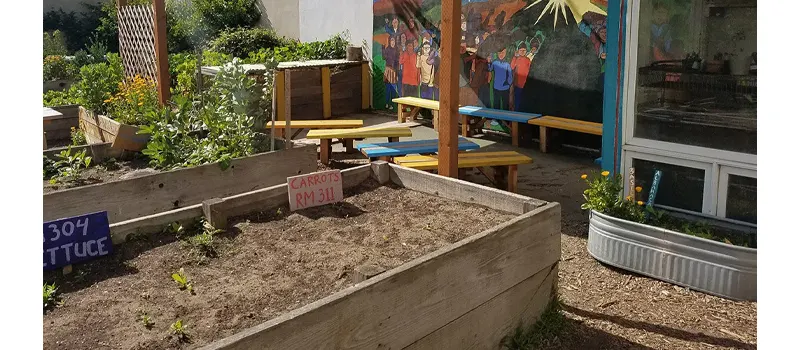
1. Site Analysis and Environmental Assessment
Before selecting furniture, you must understand the “canvas.”
- Sun & Shade Patterns: Identify where the natural shade falls at 10:00 AM and 2:00 PM. In Australia’s high-UV climate or North America’s peak summer, active zones must be strategically placed under tree canopies or professional-grade shade sails.
- Topography & Drainage: Utilize natural slopes for “climbing challenges” or water-play gravity systems. Ensure that the “Messy Play” zone is located near a water source and has proper drainage to avoid standing water—a key health and safety requirement for licensing.
2. Select “Anchor” Equipment and Modular Elements
Start with your largest pieces (the anchors) and build around them. This could be a large multi-functional wooden climbing frame or a centralized sand and water station. Opt for modular wooden furniture that can be reconfigured as the curriculum changes. This ensures the space evolves with the children’s needs without requiring a full renovation.
3. Separate Active and Quiet Zone
One of the most important layout principles is keeping high-movement areas away from calm learning spaces. Zones for construction, water or sand play, and gross motor activities should not be directly next to reading corners or small group discussion areas. This separation reduces noise conflict and helps children stay focused.
4. Plan Storage Near Activity Zones
Outdoor materials should be stored close to where they are used. For example, gardening tools near planting areas or art materials near creative spaces. Convenient storage reduces transition time and encourages children to take responsibility for materials.
5. Create Clear Pathways and Flow
Children and teachers should be able to move between zones without crossing through busy or messy areas. Clear circulation paths improve safety, reduce congestion, and make it easier for educators to guide transitions between activities. Pathways also help children understand how to navigate the space independently.
6. Maintain Good Visibility for Supervision
The layout should allow teachers to see most or all zones from key standing points. Avoid tall structures, dense plantings, or storage units that block sightlines. Good visibility supports safety and allows educators to observe learning without constantly moving around the space.
Essential Zones for a Functional Outdoor Classroom
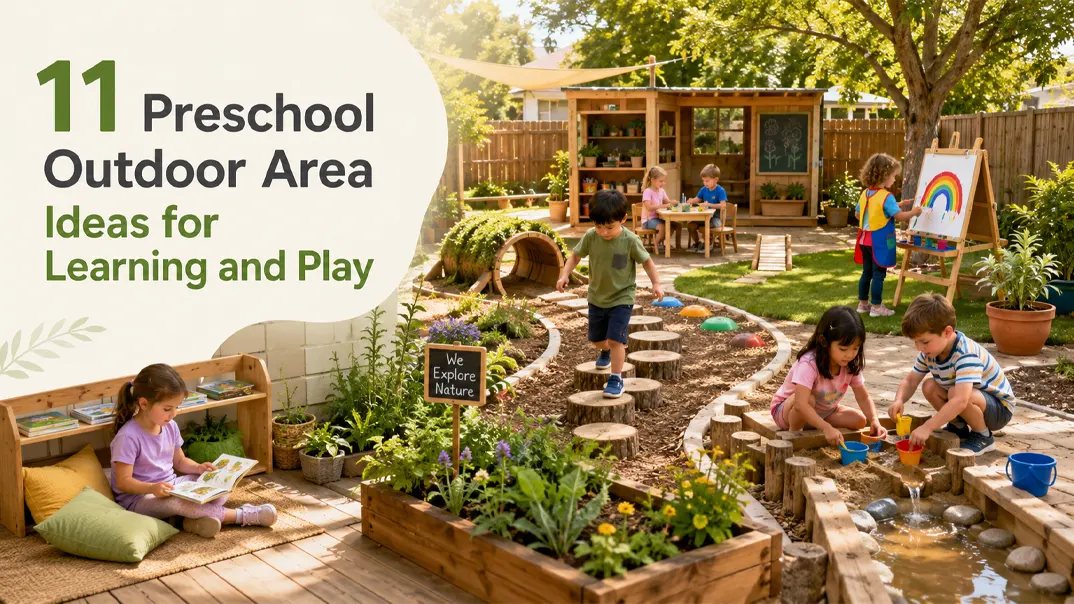
Designing a functional outdoor classroom begins with spatial organization. Zoning helps manage noise levels, improve supervision, guide children’s behavior, and ensure that active and quiet activities can happen at the same time without conflict. When the layout reflects how children learn and move, the outdoor classroom becomes an efficient, manageable learning environment.
Gross Motor Movement Zone
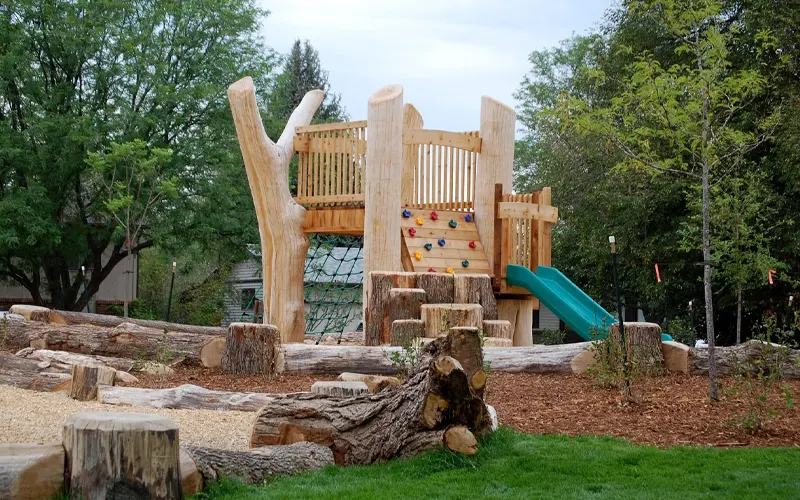
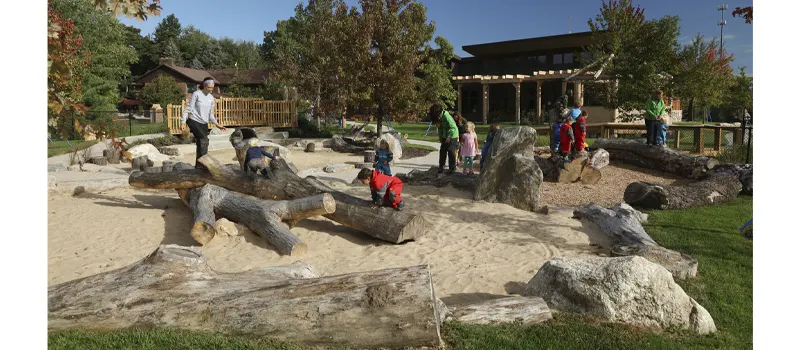
This zone supports whole-body movement and physical development. It should be placed in an open area with enough space for active play and positioned away from quiet zones. The design should encourage balance, coordination, strength, and spatial awareness while maintaining safe supervision and appropriate surfaces.
- Wooden balance beams or logs
- Climbing frames or low structures
- Movable crates and planks for building
- Push carts or large loose materials
- Soft landing surfaces or impact-absorbing ground cover
Nature and Gardening Zone
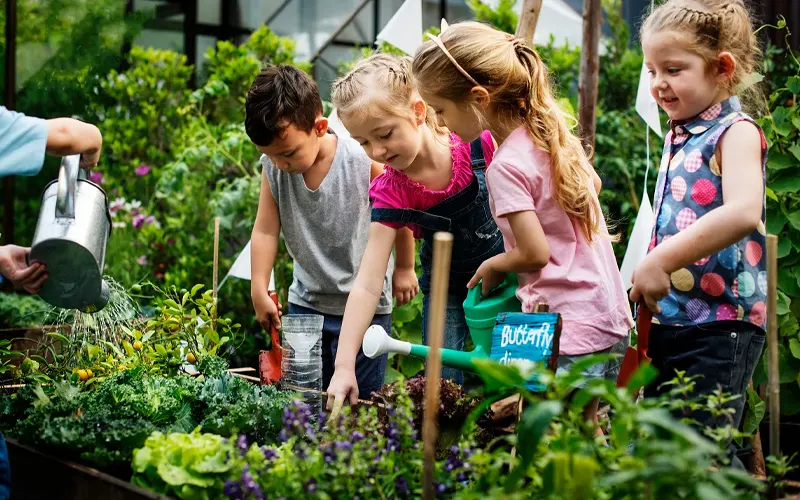
The nature and gardening zone helps children connect with living systems and seasonal changes. It should be located near water access and designed for small-group interaction. This zone encourages responsibility, observation, and environmental awareness.
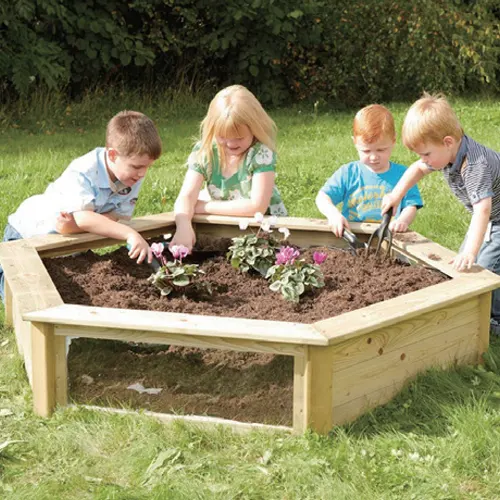
- Raised garden beds or planters
- Soil areas or digging patches
- Child-sized gardening tools
- Watering cans and storage for tools
- Observation tables for plants, leaves, and natural objects
Outdoor Reading and Quiet Zone
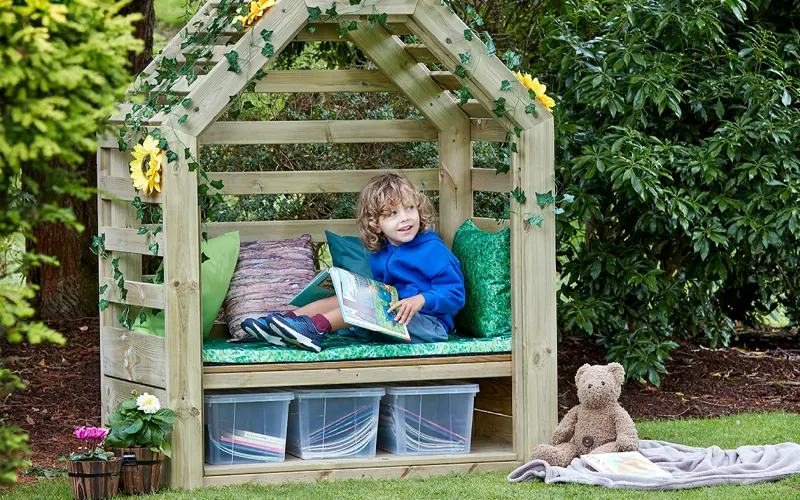
This zone provides a calm, low-stimulation area that balances the more active parts of the outdoor classroom. It should be shaded and slightly separated from high-movement areas. The design supports language development, small-group learning, and emotional regulation.
- Weather-resistant benches or low seating
- Outdoor cushions or mats
- Shade structures or natural tree cover
- Book storage or waterproof containers
- Small tables for quiet activities
Outdoor Art and Creativity Zone
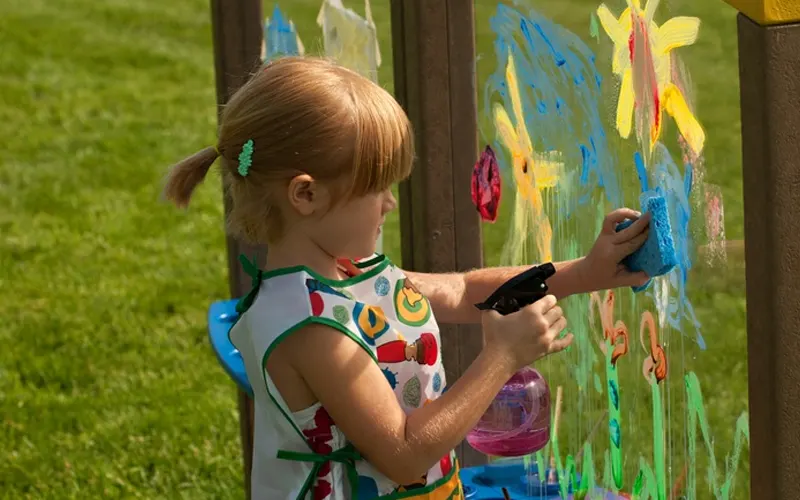
The art zone encourages creative expression and open-ended exploration. It should allow easy cleaning and be located where mess can be managed without affecting other zones. Access to storage and display areas improves organization and pride in work.
- Outdoor easels
- Weather-resistant art tables
- Storage units for materials
- Containers for natural art materials
- Drying racks or display boards
Sensory and Messy Play Zone
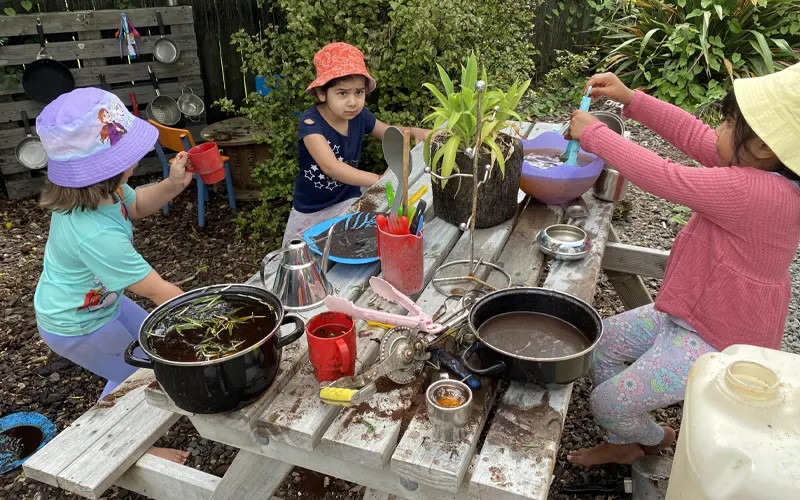
This zone supports hands-on exploration through touch, movement, and material interaction. It should be designed with proper drainage and surfaces that tolerate water and natural materials. Clear boundaries help keep sensory activities contained.
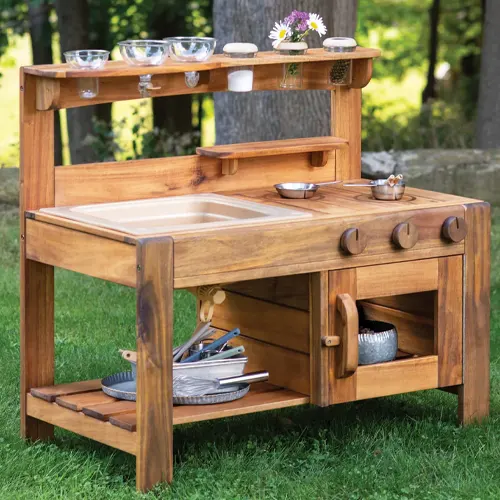
- Sand or water tables
- Mud kitchen structures
- Buckets, scoops, and containers
- Natural loose materials such as stones or bark
- Low work surfaces for sensory play
Choosing the Right Outdoor Furniture and Materials
Outdoor furniture and materials directly affect safety, durability, maintenance workload, and how often teachers actually use the space for learning. In preschool environments, outdoor furniture must withstand heavy daily use, changing weather conditions, and frequent cleaning while remaining developmentally appropriate for young children.
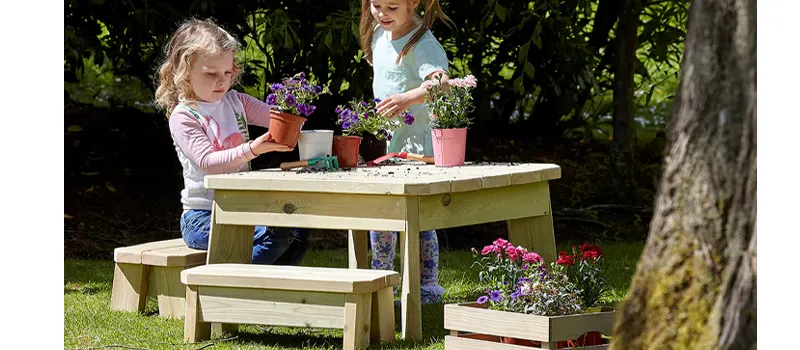
1. Prioritize Weather Resistance
Outdoor classroom furniture is exposed to sun, rain, humidity, and temperature changes. Materials should maintain structural integrity and appearance over time. Furniture that resists cracking, fading, and warping reduces replacement costs and long-term maintenance.
- Treated solid wood or weather-resistant engineered wood
- Powder-coated metal components
- UV-resistant plastics
- Waterproof or quick-drying fabrics
2. Choose Non-Toxic and Child-Safe Materials
Preschool children explore through touch and contact. Surfaces must be safe for daily use. Safety should be built into the material selection, not added as an afterthought.
- Non-toxic finishes and paints
- Smooth edges and rounded corners
- Splinter-free wood surfaces
- Stable construction that prevents tipping
- Appropriate height and scale for age groups
3. Balance Natural and Durable Materials
Natural materials create a warm, sensory-rich environment, while modern materials provide durability and low maintenance. A balanced approach works best. This approach supports both aesthetics and long-term functionality.
- Wooden tables paired with metal frames
- Natural loose parts combined with durable storage
- Wood seating with weather-resistant coatings
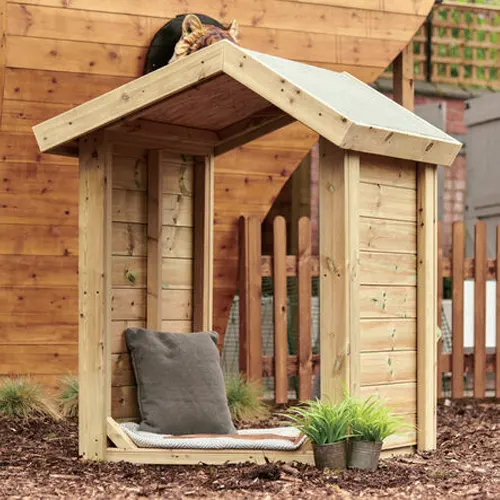
4. Incorporate Practical Storage Solutions
Outdoor materials must be stored safely when not in use. Poor storage leads to faster wear, clutter, and safety hazards. Storage should be located near activity zones and designed to protect materials from weather exposure.
- Weather-resistant cabinets
- Covered bins or containers
- Lockable storage units
- Shelving designed for outdoor conditions
5. Consider Maintenance and Long-Term Use
Even durable materials require upkeep. Choosing finishes and structures that are easy to clean and maintain reduces the workload for school staff and keeps the space safe and attractive over time.
- Easy-to-clean surfaces
- Replaceable parts
- Simple construction that allows repairs
- Finishes that can be renewed rather than replaced
How Much Does an Outdoor Classroom Cost?
The cost of an outdoor classroom depends less on size alone and more on design complexity, material quality, and how the space is intended to function. An outdoor classroom can be developed gradually, starting with essential zones and basic furniture, then expanding as needs and budgets allow. Understanding cost as a phased investment helps schools create practical learning environments without overwhelming initial budgets.
Major cost variables include:
- Material durability and weather resistance
- Degree of customization
- Ground preparation requirements
- Climate considerations
- Quantity of furniture and storage
- Whether the project is phased or completed at once
FAQ
How much space is needed to create an outdoor classroom?
There is no fixed size requirement. Even small outdoor areas can be divided into functional zones such as a movement area, a nature corner, and a quiet space. The key is layout planning, clear zoning, and selecting multi-use furniture and materials that fit the available space.
How do you ensure safety in an outdoor classroom?
Safety is achieved through thoughtful layout, impact-absorbing surfaces where needed, clear supervision sight lines, non-toxic materials, stable equipment, and defined boundaries. The goal is to allow appropriate physical challenge while minimizing hazards.
What is the difference between an outdoor classroom and a playground?
An outdoor classroom is designed to support structured learning activities such as reading, science observation, art, and sensory exploration. A playground focuses mainly on recreation and physical play. Outdoor classrooms include defined learning zones and materials that align with educational goals.
Is an outdoor classroom more expensive to maintain than a traditional playground?
Actually, it often yields a higher ROI. While high-quality wooden educational furniture has a higher upfront cost than domestic plastic toys, its lifespan is significantly longer. A well-designed outdoor classroom reduces “toy turnover” and acts as a powerful marketing tool during school tours, directly contributing to higher enrollment rates and tuition justification.
Who can help schools plan an outdoor classroom?
Schools often work with educational furniture suppliers and environmental design specialists who understand both child development needs and outdoor material performance. Professional planning ensures the space is safe, functional, and aligned with learning goals.
Conclusion
Children benefit from movement, sensory experiences, natural light, and real-world exploration, and these elements cannot be fully replicated indoors.
Xiha Kidz supports schools and early learning centers with practical outdoor classroom planning, suitable furniture solutions, and durable materials designed for real educational use. With the right guidance, your outdoor space can be transformed into a safe, functional, and inspiring learning environment that grows with your program.



 French
  English
  Arabic
  Italian
  German
  Spanish
  Thai
Thai  Japanese