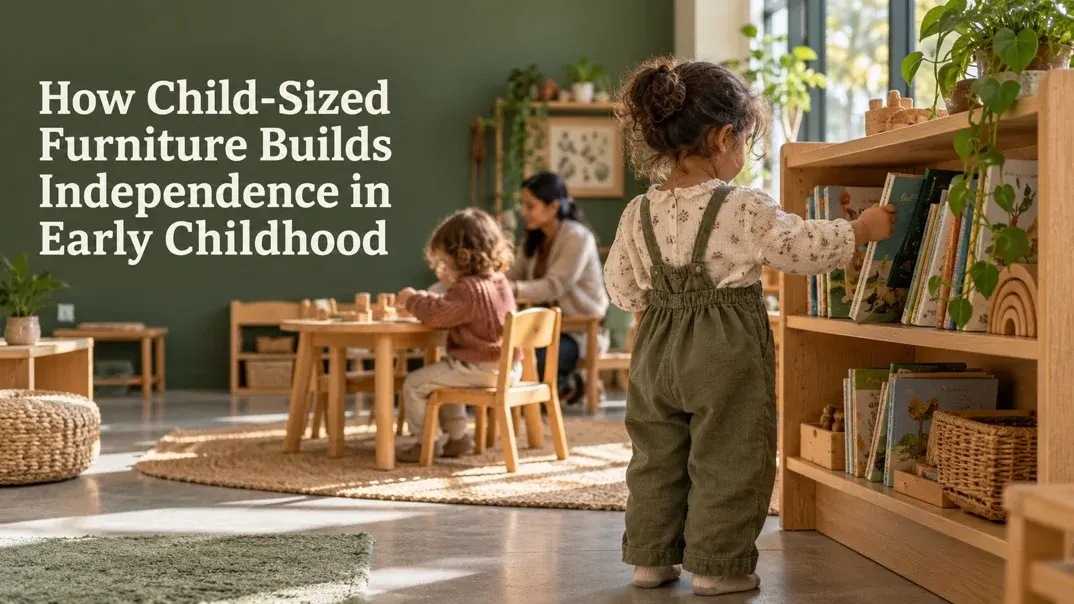
Child-sized furniture helps children do ordinary classroom tasks without waiting for an adult. The benefit comes from usable access, not from furniture being small for its own sake. If you run or equip an early childhood classroom, the guide below will help you understand how furniture size, placement, and accessibility work together to help you create an environment where children have more opportunities to make choices and build independence.
What Is Child-sized Furniture?
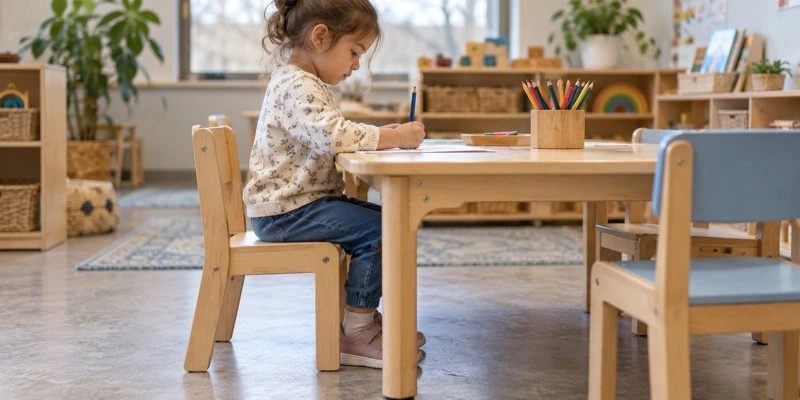
Meubles pour enfants is designed to fit children’s body sizes, physical abilities, and everyday needs. It includes tables and chairs, low shelving, cubbies, and other furniture that children can use comfortably and safely without constant help from adults.
In an early childhood classroom, the right fit means more than choosing smaller furniture. Children should be able to sit down and stand up comfortably, reach the materials they need, and return items to their proper places.
When you choose furniture for your classroom, consider what children need to do each day and whether they can use each piece with minimal assistance. This helps create an environment where children can practice everyday skills, make their own choices, and gradually become more independent.
How Child-Sized Furniture Supports Independence?
Child-sized furniture makes everyday tasks easier for children to manage on their own. When children can reach materials, sit comfortably, and access their belongings without waiting for an adult, they have more opportunities to practice independence throughout the day.
Children Can Access Materials on Their Own
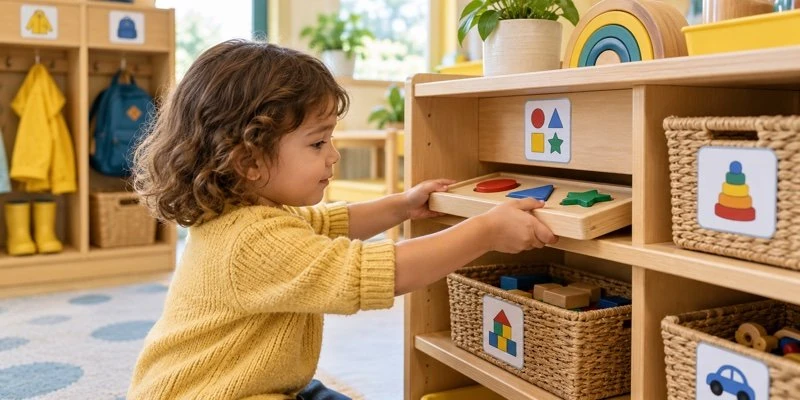
Low, open shelving allows children to see their options and take out the materials they want to use. They can choose a puzzle, pick up a book, or collect art supplies without asking a teacher to reach a high shelf. When materials have clear, consistent places, children can also learn to put them back after use.
Daily Routines Become Easier to Manage
Furniture that fits children’s size helps them take part in everyday routines. A suitable chair makes it easier to sit down and stand up, while accessible cubbies help children find their bags, shoes, and coats. These small tasks give children regular opportunities to practice self-care instead of relying on adults to do everything for them.
Children Can Make More Choices
When children can see and reach different materials, they have more freedom to decide what they want to do. They might choose a book, start building with blocks, or move to an art activity when they finish. This gives children more say in how they spend their time and helps them practice making decisions.
Small Successes Encourage Further Attempts
Children may not complete a task successfully the first time. A chair might be awkward to move, or returning materials to a shelf might take several attempts. When furniture is accessible and manageable, children can keep practicing these tasks with less frustration. Over time, repeated opportunities to do things for themselves can help them develop confidence in their own abilities.
Child-sized furniture does not make children independent overnight. It creates an environment where they can try, make decisions, and practice everyday skills. Teachers still play an important role by offering guidance when needed while allowing children enough time to do what they can independently.
How Do You Choose the Right Furniture for Children’s Independence?
When choosing furniture for an early childhood classroom, consider what children need to do independently throughout the day. Looking at furniture through the lens of daily use helps you make better choices.
Match Furniture to Children’s Size
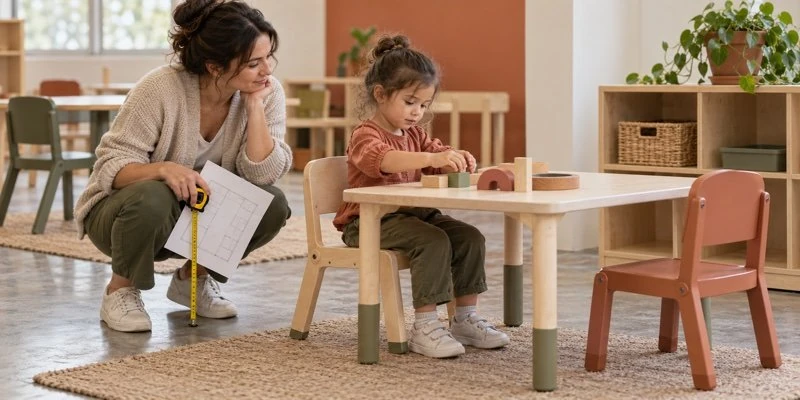
Tables and chairs should fit the children who use them. When seated, children should be able to rest their feet on the floor or an appropriate footrest, with enough room to move their legs comfortably. Chairs should also be easy for them to get in and out of without climbing or struggling to maintain balance.
Make Everyday Materials Easy to Reach
Check whether children can see, reach, and return the items they use most often. Low, open shelves work well for books, blocks, and frequently used learning materials. Personal belongings should also have accessible storage, with clear labels or picture cues where helpful. Avoid placing everyday essentials so high that children must repeatedly ask an adult for help.
Choose Furniture Children Can Use Safely
Independence should not come at the expense of safety. Look for stable tables and chairs, secure shelving, smooth edges, and finishes suitable for early learning environments. Tall storage units should be anchored according to the manufacturer’s instructions. For younger children, assess whether they can use each piece without climbing, tipping it, or creating an avoidable hazard.
Consider Children’s Different Abilities
Children in the same classroom may differ in height, coordination, and physical ability. A toddler may need lower storage and lighter materials, while an older preschooler may manage a wider range of classroom tasks. Choose furniture and arrange materials according to the children who will actually use them, rather than relying on age labels alone.
Think About How Furniture Works in the Room
Even well-sized furniture can limit independence if the classroom is crowded or materials are difficult to find. Leave enough space for children to move between activity areas, pull out chairs, and return materials without disrupting others. Give frequently used items consistent locations so children can learn the classroom’s routines.
How Should You Arrange a Classroom to Encourage Independence?
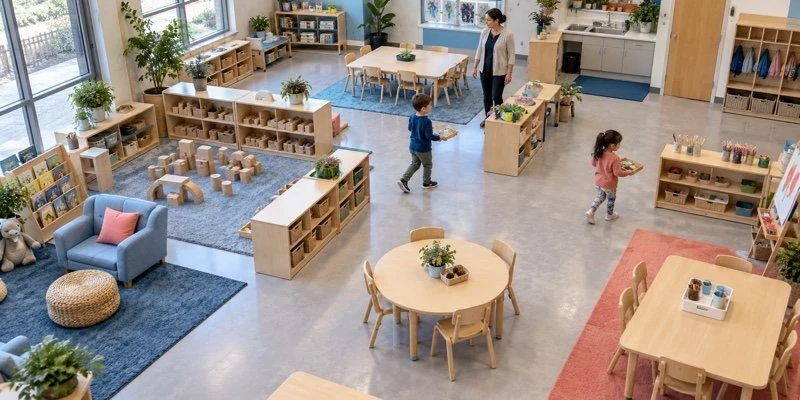
Arrange your classroom around the activities children do every day. Keep related furniture and materials together, make frequently used items accessible, and give children a clear route from choosing an activity to putting materials away. Here is how to put these principles into practice.
Place Furniture According to Activity Zones
Group furniture and materials by purpose so children can complete an activity without moving around the room to find what they need.
- Reading area: Place a low bookshelf beside a rug or comfortable seating, with books displayed cover-out when possible so children can choose one easily.
- Block area: Keep blocks on low, open shelving next to a defined building space. Leave enough floor area for children to build without blocking the main walkway.
- Art area: Position child-sized tables near art storage. Keep frequently used materials, such as crayons and paper, within reach, while teachers manage scissors or other items that require supervision.
- Dramatic play area: Store play food, dress-up items, and props in clearly defined containers close to the play kitchen or pretend shop.
Put Materials Where Children Can Reach Them
Take a look at your shelves from a child’s point of view. Can they reach the puzzles on the upper shelf? Can they pull out a tray without knocking over the materials beside it? If not, try moving frequently used items lower or giving them more space.
You can also use picture labels to show children where things belong. For example, a picture of blocks on a shelf makes it easier for a child to remember where to return them, even before they can read. Keep the arrangement consistent so children don’t have to learn a new system every week.
The same idea applies to personal belongings. Place cubbies and coat hooks at a suitable height, with enough room for children to take out their bags and jackets without getting in one another’s way.
Keep Walkways Clear
Think about the routes children take most often: from the entrance to their cubbies, from the shelves to the tables, and from activity areas to the sink. These paths should be easy to follow, without children having to squeeze between chairs or walk through another group’s play.
When positioning tables, leave enough room for children to pull out their chairs and sit down comfortably. Avoid putting a popular shelf in a narrow passage, where several children may gather and block others from moving through.
If you notice children regularly bumping into one another or waiting for space, watch how they use the room before moving furniture. Sometimes shifting a shelf or turning a table is all it takes to make the layout work better.
Make Daily Routines Easier to Manage
Consider the parts of the day when children most often need your help. Getting ready to go outside, putting away belongings, washing hands, and cleaning up after meals are good places to start.
For example, keep cubbies near the entrance so children can put away their bags as they arrive. Provide an appropriate place to sit while changing shoes, and organize coats and other belongings so each child can find their own. Near the eating area, keep suitable dishes or other routine materials in an accessible place when it is safe to do so.
You don’t need to make every task completely independent. Start with the steps children can manage at their current stage, then adjust the setup as their abilities develop.
Leave Enough Room to Play and Work
It’s tempting to use every bit of available space for another shelf or table, but children need room to move, carry materials, and spread out their work.
Before settling on a layout, think about how many children will use each area at once. A block area that works for one child may feel cramped when four children are building together. Similarly, a table may look spacious when empty but become difficult to move around once chairs are pulled out.
Try the layout during a normal classroom day and see what happens. If children struggle to carry trays, reach materials, or find a place to work, you may need to reduce the furniture or rearrange the area.
Ultimately, a classroom that supports independence is one children can learn to use for themselves. They know where to find materials, have enough room to use them, and can put things away without waiting for you to direct every step. When planning your layout, focus on making those everyday tasks easier, rather than simply fitting more furniture into the room.
FAQ
At What Age Should Children Start Using Child-Sized Furniture?
Children can begin using appropriately sized furniture in infancy and toddlerhood, with suitable support and supervision. As they grow, furniture can be adjusted to match their changing size, movement skills, and daily activities.
Does Child-Sized Furniture Help Children Develop Decision-Making Skills?
Yes. When children can access age-appropriate materials and choose between activities, they have opportunities to make decisions and experience the results. Simple choices, such as selecting a book or deciding which blocks to use, help them practice making decisions independently.
Should Teachers Help Children Who Struggle to Use Furniture Independently?
Yes. Give children a chance to try first, then offer the amount of help they need. You might demonstrate how to return a tray to a shelf or steady a chair while a child sits down. As the child becomes more comfortable, gradually reduce your assistance rather than taking over the task.
Can Child-Sized Furniture Encourage Independence in Mixed-Age Classrooms?
Yes, but a single furniture height may not suit every child. In a mixed-age classroom, provide different seating options where necessary and organize materials so younger children can access appropriate activities without creating difficulties for older children. Review the setup as children’s physical abilities and needs change.
Does Child-Sized Furniture Reduce Teachers’ Workload?
It can reduce the need for repeated assistance with everyday tasks. When children can retrieve materials, manage personal belongings, and participate in cleanup, teachers may spend less time helping with each individual step and more time supporting learning. Children will still need guidance, especially when learning new routines.
How Can Teachers Tell If Furniture Is Truly Designed for Children?
Look at what children can do with the furniture, not just its size. Can they sit down and stand up comfortably, reach the materials they need, and put things away without climbing or stretching? Can they move a chair safely and use storage without knocking over nearby items? If children still need frequent adult help with these everyday tasks, the furniture may not be meeting their needs. Truly child-sized furniture is designed around children’s body proportions, abilities, and daily routines—not simply made smaller than adult furniture.
Conclusion
As you plan or update your classroom, think about what children need to do each day and whether their surroundings make those tasks easier. At Xiha Kidz, we work with early learning centers to provide child-sized furniture and customized classroom solutions that suit different ages, activities, and spaces. We’re here to help you create a classroom where children feel comfortable trying things for themselves, and teachers can support their growth.

 French
 English
 Arabic
 Italian
 German
 Spanish
 Thai
 Japanese