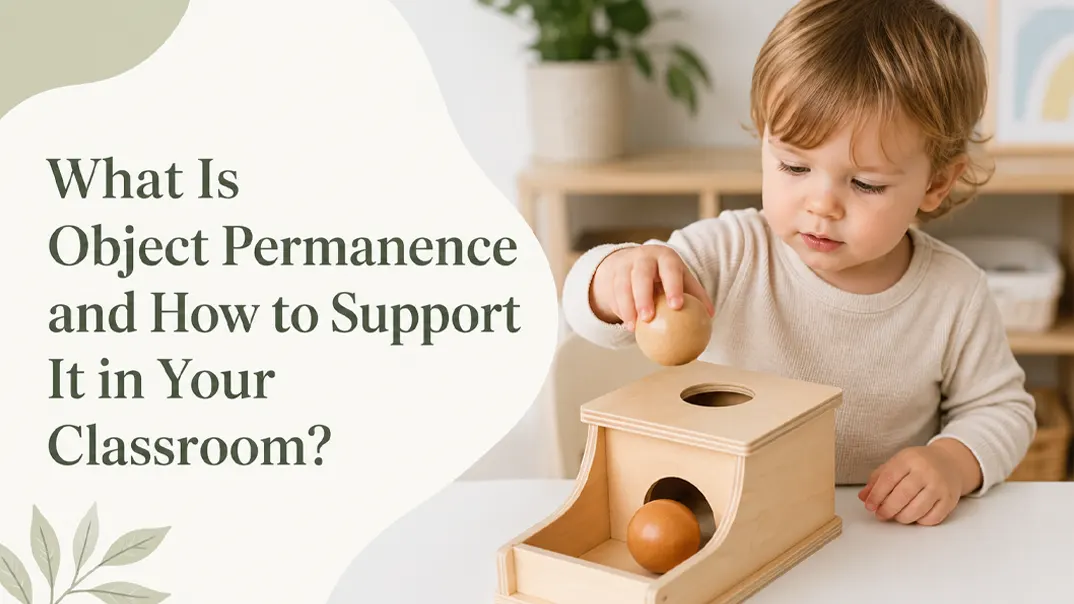
Object permanence is a child’s understanding that people and objects still exist even when they cannot be seen. Understanding this development helps you improve classroom activities and material selection. This article explains what object permanence is and how to support it through practical activities, safe materials, and an age-appropriate learning environment.
What Is Object Permanence?
Object permanence is a child’s understanding that something still exists even when it is out of sight. The concept became widely known through Swiss psychologist Jean Piaget’s theory of cognitive development.
Piaget studied how infants reacted when familiar objects were hidden. He observed that younger babies often stopped searching once an object disappeared, while older infants began lifting covers or looking in the place where it had been hidden. He interpreted this change as evidence that children were beginning to form a mental representation of the object rather than relying solely on what they could see.
In Piaget’s theory, object permanence is an important achievement of the sensorimotor stage. It shows that a child is beginning to understand the world as stable and continuous.
Signs of Object Permanence
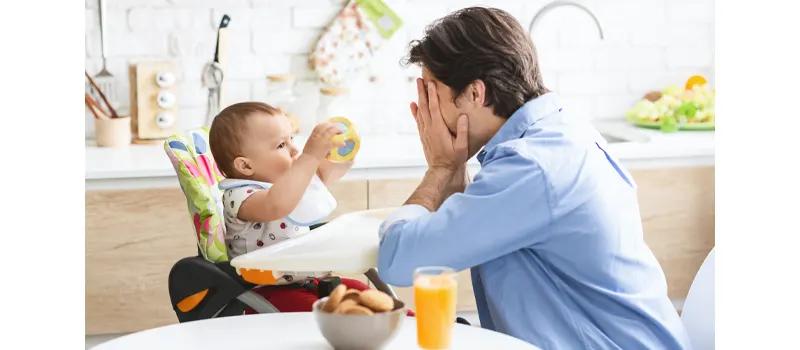
- Searching for a hidden object: The child lifts a cloth, opens a box, or looks behind furniture for a toy that has disappeared.
- Following an object out of sight: The child watches where a ball rolls and moves toward the place where it disappeared.
- Looking for familiar materials: The child goes to the usual shelf or basket to find a favorite toy, even when it is not visible.
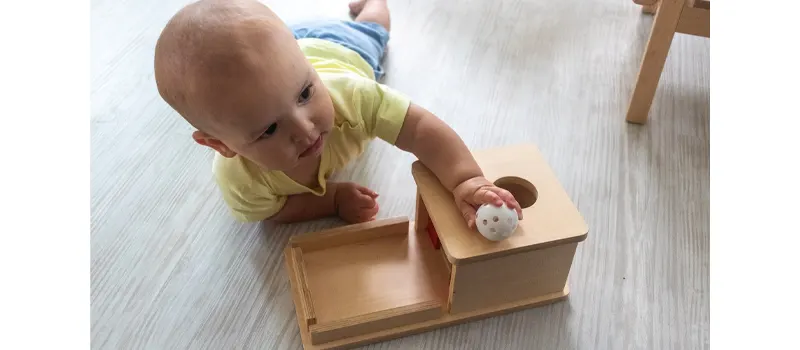
- Expecting an object to return: The child waits near the opening of a tunnel or Object Permanence Box for the ball to reappear.
- Responding to a person who is out of sight: The child looks toward the door, follows a familiar voice, or waits for a teacher or parent to return.
When Does Object Permanence Develop?
Object permanence does not appear all at once. It develops gradually as a child’s attention, memory, and ability to track movement strengthen. The age ranges below can help you understand what you may observe in an infant or toddler classroom, but they should not be treated as strict deadlines.
Early Awareness (4 to 8 Months)
During this stage, a baby may follow a moving toy with their eyes or remain interested when part of it is covered. However, if the object disappears completely, they may quickly turn their attention elsewhere.
In your classroom, this may look like a child watching a ball roll behind a shelf without trying to retrieve it. The child has noticed the movement, but may not yet understand that the ball still exists out of sight.
Active Searching (8 to 12 Months)
Many children now begin to search for objects they have seen you hide. They may pull away a cloth, reach into a container, or crawl toward the place where a toy disappeared.
You may also notice that a child repeatedly looks in a familiar hiding place, even after the object has been moved. This shows that object permanence is developing, although flexible memory is still limited.
More Accurate Memory (12 to 18 Months)
At this stage, children become better at remembering where an object was placed. They can search more accurately and may follow a simple sequence, such as watching you put a toy inside one box and then move it to another.
This growing ability often appears during daily routines. A toddler may remember where a favorite toy is stored, look for a cup that has been moved, or wait for a teacher who has briefly stepped away.
Mental Representation (18 to 24 Months)
By the end of the second year, many children can remember objects and people without seeing the entire movement or hiding process. They can form a mental picture of something absent and use that memory to guide their actions.
You may see a child ask for a toy that is stored in another room or walk directly to a shelf where an item is usually kept. This is a more advanced sign that object permanence is becoming established.
How to Support Object Permanence in Your Classroom?
You do not need a formal lesson to teach object permanence. Children build this understanding through repeated experiences with people and materials. Your main job is to make these experiences clear, safe, and easy to repeat.
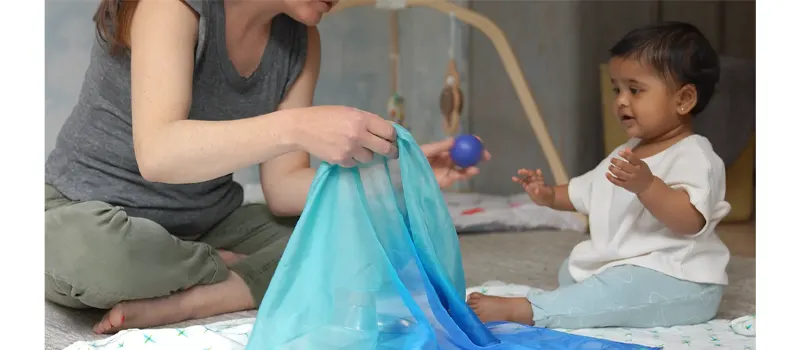
Use Simple Hiding-and-Finding Activities
Start with objects the child already knows and enjoys. Hide part of a toy under a scarf, place a ball inside a box, or cover a familiar object with a small cloth. Give the child enough time to observe and search before you help.
Begin with easy hiding places. Once the child understands the activity, you can make it slightly more challenging by covering the object completely or changing its location.
Add Containers Children Can Explore Independently
Baskets, drawers, boxes, and containers with simple lids allow children to practise finding objects without constant adult direction. They can put items in, close the container, and check whether the objects are still there. You should choose materials that are easy to open and large enough to prevent small parts from becoming a safety risk.
Let Children Follow Moving Objects
Object permanence also develops when children track where something goes. You can roll a ball through a tunnel, move a toy behind a low divider, or push a vehicle under a table. Keep the movement slow and visible at first. This helps children connect the last place they saw an object with where it may appear next.
Keep Classroom Materials in Consistent Places
When toys and learning materials have predictable storage locations, children begin to remember where to find them even when they are not visible. A child who walks to the correct shelf to find a favorite puzzle is using memory and mental representation.
Use low shelves, clear bins, and picture labels. Avoid changing the entire room layout too often, especially in infant and toddler classrooms.
Make Short Separations Predictable
When you leave the room briefly, explain what is happening in simple language: “I am going to get the cups, and I will come back.” Avoid disappearing without saying goodbye. A clear departure and a reliable return help children learn that a person can leave their sight without being gone permanently.
This understanding can make transitions and short separations easier. A predictable environment gives children repeated proof that familiar people, materials, and activities will return.
Follow the Child’s Interest
Some children will repeat the same activity many times, while others may only explore it briefly. Avoid forcing a child to complete the task or treating the activity as a test.
When the child succeeds easily, you can add a second hiding place or introduce a different object. When the activity causes frustration, simplify it and allow the child to return later. Your goal is steady discovery, not a perfect performance.
Language Helps Children Hold Ideas in Mind
As children begin to understand more words, language gives them another way to represent what they cannot see. Simple phrases such as “The ball is under the box” or “Your teacher will come back after lunch” help connect an absent person or object with a clear mental idea.
You do not need to over-explain. Short, consistent language works best because it supports the child’s memory without replacing their own exploration.
The Classroom Environment Shapes the Experience
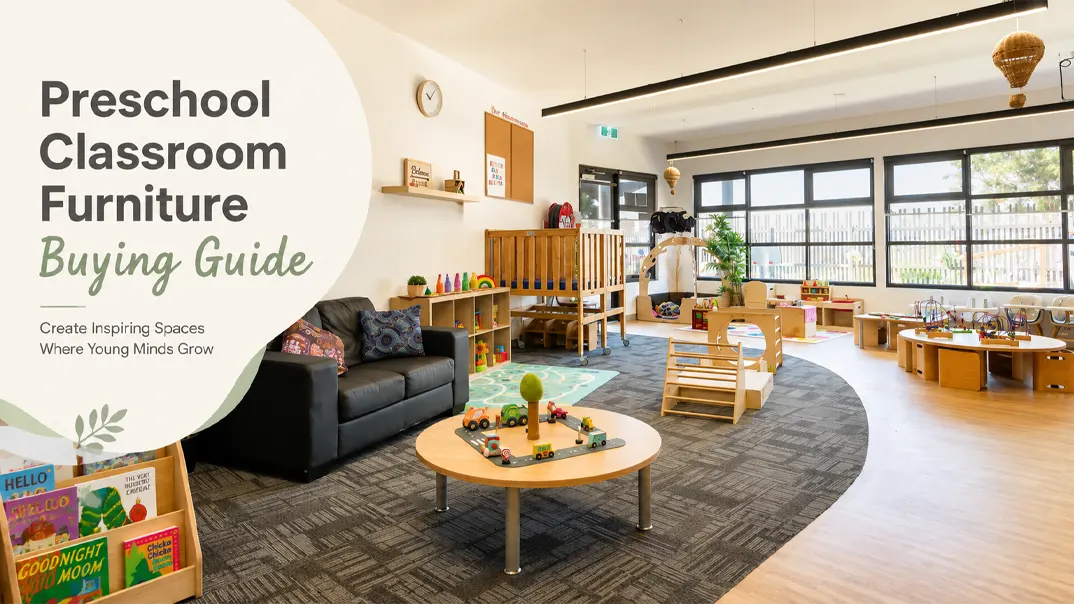
A well-organized room makes it easier for children to practice this skill safely. Low shelves, visible storage, simple containers, tunnels, and toys allow children to explore disappearance and return independently.
Your role is not to test children constantly. It is to create an environment where they can observe, repeat, search, and succeed at their own pace.
Toys That Support Object Permanence
When you choose toys for object permanence, look at whether the toy clearly shows the sequence of an object disappearing, remaining hidden, and reappearing. Choose toys with a simple action, a predictable result, and parts that children can retrieve independently.
If used for classroom teaching, the toys you choose should also have the following characteristics: large, sturdy parts, smooth edges, and a stable base. Avoid toys with too many lights, sounds, or moving parts, as these can distract children and affect their learning objectives. You had better choose toys with adjustable difficulty, starting with partially visible objects and gradually progressing to completely hidden objects.
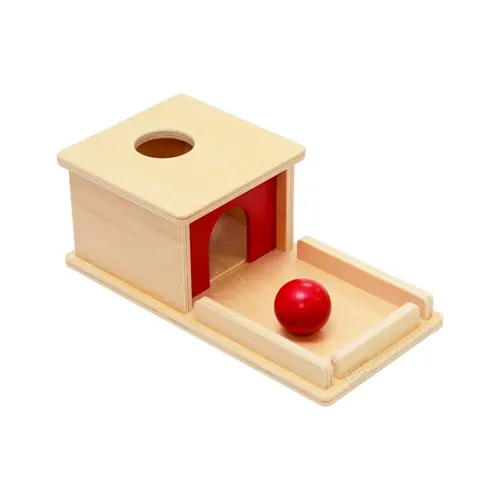
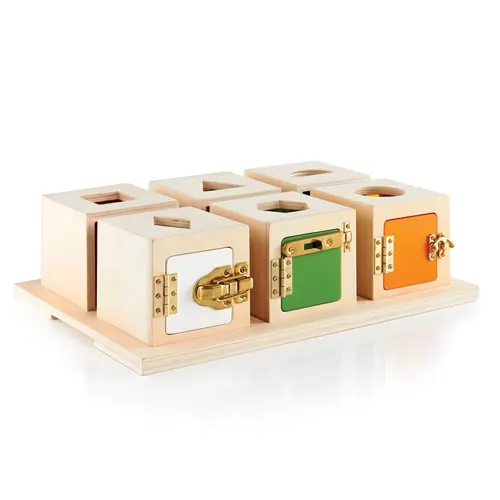
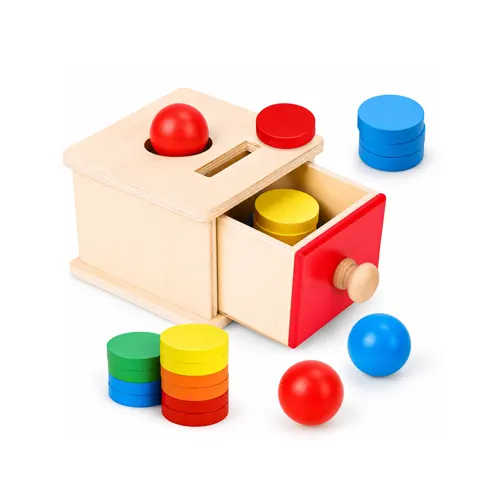
- Object Permanence Box
- Coin Box
- Posting Box
- Nesting Cups
- Peekaboo Box
- Ball Track or Ramp
- Tunnel Toys
Why Is Object Permanence Important?
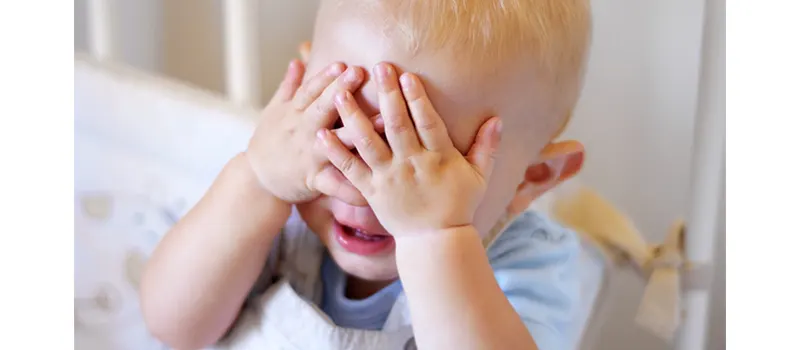
Object permanence is an early cognitive skill. Once they realize that people and objects still exist even when out of sight, they no longer rely solely on what they can see in the moment. This is an early foundation for memory, attention, and mental representation.
It also supports problem-solving and emotional development. When a child searches for a hidden toy, they are using memory to guide an action. When a parent or teacher leaves, they gradually learn that the person has not disappeared permanently. These experiences help children think more independently and feel more secure as they explore their environment.
Object Permanence in ADHD
ADHD does not mean that a child lacks object permanence. Once this developmental ability has formed, the child with ADHD still understands that a person or object continues to exist when it is out of sight. The phrase “ADHD object permanence” is sometimes used online, but it usually describes difficulties with attention and working memory, not the Piagetian concept of object permanence.
For example, a child with ADHD may understand that classroom materials are inside a closed cabinet but forget to use them because they are no longer visible. ADHD commonly affects attention regulation, and working-memory difficulties are also frequently observed in children with the condition.
In your classroom, visual labels, open or transparent storage, picture schedules, and placing frequently used materials where children can see them may help.
Domande frequenti
What does it mean if children lack object permanence?
A child who has not yet developed object permanence may stop looking for a toy or person once they are out of sight. This can be normal during early infancy because the skill develops gradually. In your classroom, you should observe the child over time and make activities easier before concluding. If a child consistently shows difficulty alongside concerns in other developmental areas, discuss your observations with the family and recommend professional developmental screening rather than making a diagnosis.
Should teachers test children’s object permanence?
Formal testing is usually unnecessary in a daycare classroom. I recommend observing children during normal play and recording what they try, how much support they need, and whether their searching skills improve over time.
How many object permanence materials does one classroom need?
Usually, it is sufficient to place two object permanence materials on the shelf and have an extra type for rotation. Only when multiple children frequently use the same material simultaneously should duplicate materials be added.
Is separation anxiety connected to object permanence?
Yes, the two can be related. Once children understand that a parent still exists after leaving, they may actively look for them or become upset. A consistent arrival routine and clear goodbye can help children feel more secure.
What toys should I provide in an infant classroom?
You should choose large, easy-to-handle materials such as object permanence boxes, nesting containers, fabric bags, drop boxes, and toys with simple doors or drawers. Avoid small parts, heavy lids, sharp edges, and openings that could trap a child’s fingers.
Conclusione
Object permanence develops through repeated experiences of hiding, searching, and finding. So you can support this process by providing suitable materials, consistent routines, and safe furniture for children to explore independently. At Xiha Kidz, we can help you plan infant and toddler classrooms and match the space with age-appropriate furniture and developmental toys.


 Italian
  English
  Arabic
  French
  German
  Spanish
  Thai
Thai  Japanese