
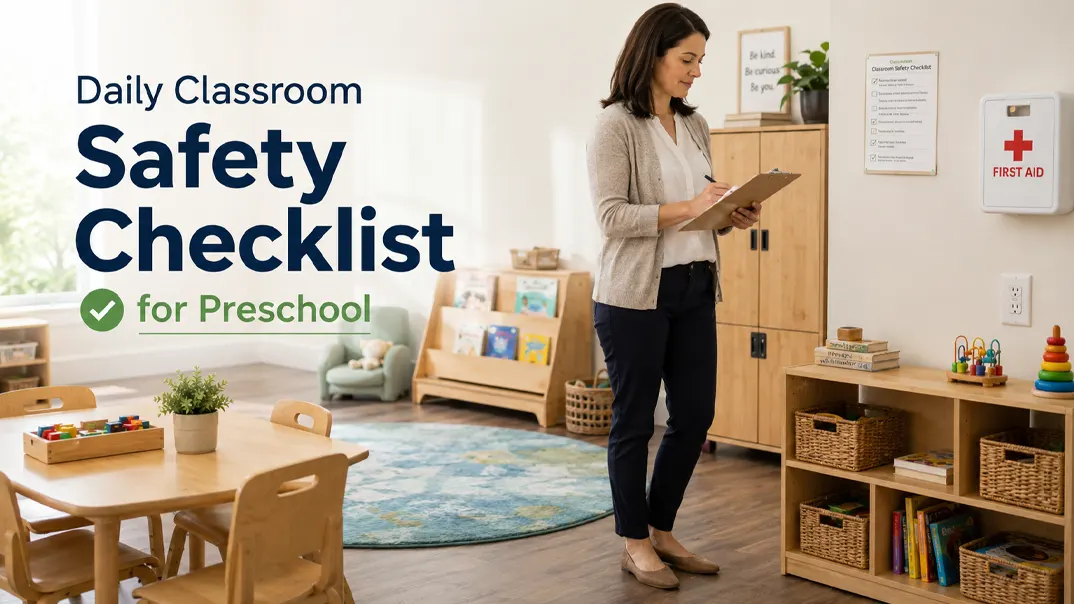
A preschool classroom can change from one day to the next. Even if the classroom was safe yesterday, you may find loose furniture, a wet floor, or a blocked walkway when you arrive today. A daily safety check is not a formality. Its real purpose is to help you identify and address potential hazards before children enter the classroom. In this guide, we will walk you through a practical inspection process that you can use every day.
Daily Classroom Safety Checklist
Each day before your child arrives, you can use this classroom safety checklist to inspect the classroom and ensure no area is missed. If you find any problems, please fix them as soon as possible. Remove any unsafe items and report any issues requiring repair.
Entrances, Exits, and Walkways
- Emergency exits are unlocked and easy to access.
- Walking paths and evacuation routes are clear, with no items blocking the way.
- Walking paths between activity areas are open and wide enough for safe movement.
- Rugs lie flat without curling, sliding, or bunching at the edges.
- The floor is dry and free of water, food, paint, or cleaning liquids.
Doors, Windows, and Glass
- Door hinges, handles, and safety guards function properly.
- There are no broken windows or glass.
Classroom Furniture and Layout
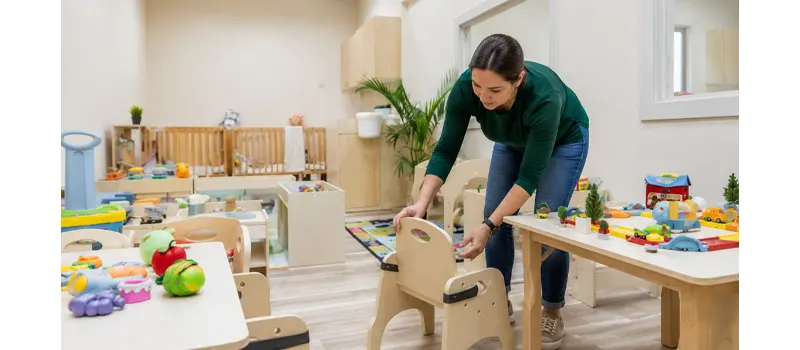
- Furniture is stable and does not wobble during use.
- Wall anchors and anti-tip devices are securely attached.
- Furniture casters are locked
- Screws, hinges, handles, and connectors are tight and secure.
- Furniture surfaces are smooth, free of splinters, cracks, peeling, or sharp edges.
- Heavy items are stored on lower shelves rather than high cabinets.
- Furniture placement allows full visibility of children at all times.
Toys and Learning Materials
- Broken toys, cracked items, and missing parts are removed from use.
- Small components such as beads, wheels, buttons, and magnets remain firmly attached.
- Infant and toddler areas contain no detachable small parts.
- Materials match the developmental age of the children using them.
- Scissors, cutting tools, and sharp art materials are stored in locked or supervised areas.
- All materials are clean, dry, and free from mold or expiration.
A Checklist Cannot Fix Poor Furniture or Unsafe Materials
Daily inspections help you identify new hazards, but long-term classroom safety also depends on the furniture and toys you choose. Stable construction, child-safe details, and age-appropriate materials reduce the number of risks your staff must manage each day.
Electrical Safety
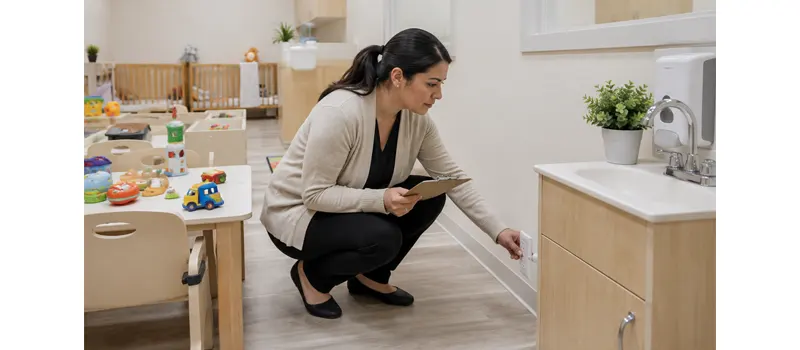
- Outlets not in use are covered with safety plugs.
- Plugs, wires, and outlet plates show no damage or looseness.
- Electrical cords are kept off the floor and out of children’s reach.
- Cords do not cross walkways or create tripping hazards.
- Electrical devices are kept away from sinks, water tables, and wet areas.
Cleaning Supplies, Medicines, and Staff Items
- Cleaning products are stored in locked cabinets.
- Medicines are clearly labeled and completely inaccessible to children.
- All chemicals remain in original labeled containers.
- Hazardous items such as batteries, plastic bags, staplers, and sharp tools are secured.
- Staff bags, drinks, and personal items are stored out of children’s reach.
- The first aid kit is fully stocked and immediately accessible to staff.
Handwashing, Toileting, and Diapering Areas
- Floors are clean, dry, and free of standing water.
- Soap, paper towels, and gloves are fully stocked and accessible to staff.
- Water temperature is safe for children and not excessively hot.
- Changing tables are stable, clean, and in good repair.
- Disinfectants and diapering supplies are stored out of children’s reach.
- Trash bins are covered and emptied before overflow occurs.
- Sinks, toilets, and changing surfaces are cleaned and disinfected.
Sleep and Rest Areas
- Crib rails, latches, and locking systems function securely.
- Each child’s bedding is clean, labeled, and used only by that child.
- Cribs and cots are arranged so all children remain visible at all times.
- Soft toys, pillows, loose blankets, and crib bumpers are not present in sleep areas. (Adhere to the Safe to Sleep® environment standards to prevent the risk of suffocation)
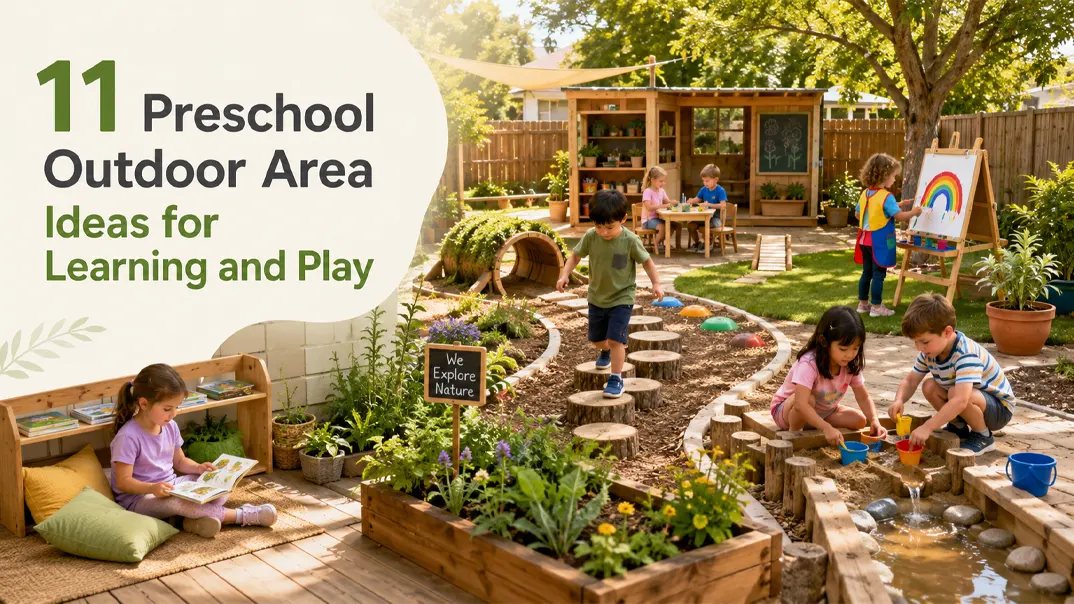
Outdoor Access
- Entry and exit areas are free of water, mud, ice, or slipping hazards.
- Outdoor spaces are free of broken equipment, sharp objects, and debris.
- Play surfaces and equipment are safe, dry, and not excessively hot or slippery.
- Weather conditions are reviewed before outdoor activities begin.
Who Should Complete the Classroom Safety Checklist?
I recommend assigning the checklist to one specific staff member in each classroom, usually the opening teacher or lead teacher. When responsibility is shared by everyone, it is easy for each person to assume that someone else has already completed the check.
The person completing the checklist should know the classroom well and have enough time to inspect it before children arrive. You should also assign a backup staff member for days when the usual teacher is absent.
As a center director, you do not need to inspect every classroom personally each morning. Your role is to make sure the checklist is completed, reported problems are followed up, and unsafe furniture or equipment is not returned to use before it has been repaired.
A practical responsibility structure is:
- Opening teacher: Completes the daily check before children enter.
- Lead teacher: Confirms that problems are recorded and immediate hazards are removed.
- Director or manager: Reviews serious or repeated issues and arranges repair or replacement.
- Maintenance staff: Completes repairs and confirms when the item is safe to use again.
You should record the staff member’s name or initials on each checklist. This is not about blaming someone when a problem appears. It creates clear responsibility and helps you confirm that each classroom has actually been checked.
What Should You Do When You Find a Safety Hazard?
When you discover a safety hazard, don’t just mark it on a checklist and move on. I recommend using the response process every time to effectively control risks and prevent problems from being forgotten.
Remove the Immediate Risk
Deal with anything that can be corrected safely at once. You may need to:
- Wipe up a spill.
- Clear a blocked walkway.
- Move a dangerous item out of children’s reach.
- Lock an unlocked caster.
- Remove a broken toy from the classroom.
If the problem cannot be fixed immediately, keep children away from the area or item.
Take the Item Out of Use
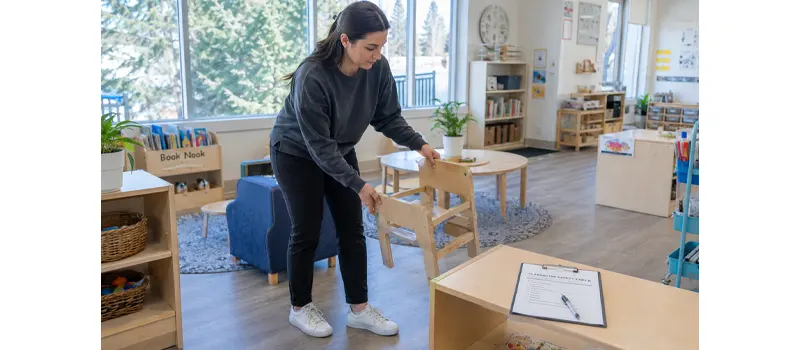
Unstable mobilia and items should not remain in use while you wait for a repair. Label the item clearly and move it to a secure location where another staff member cannot return it to the classroom by mistake.
Report and Record the Problem
You should record:
- What the problem is
- Where it was found
- When it was found
- What immediate action you took
- Who is responsible for the next step
Photographs can also help your director, maintenance team, or supplier understand the problem more quickly. If you are unsure whether an item is still safe, stop using it until it has been inspected by a qualified person.
Check the Repair Before Reuse
Do not return an item to the classroom simply because the repair has been marked as complete. You or the responsible staff member should inspect it again and confirm that it is stable, secure, and safe for children to use.
How to Make a Daily Safety Checklist Easier to Follow?
To make daily safety checklists easier to implement, you should design them based on teachers’ actual work habits. A good checklist should be quick to fill out, easy to understand, and focus on practicality rather than paperwork.
Follow the Same Inspection Route
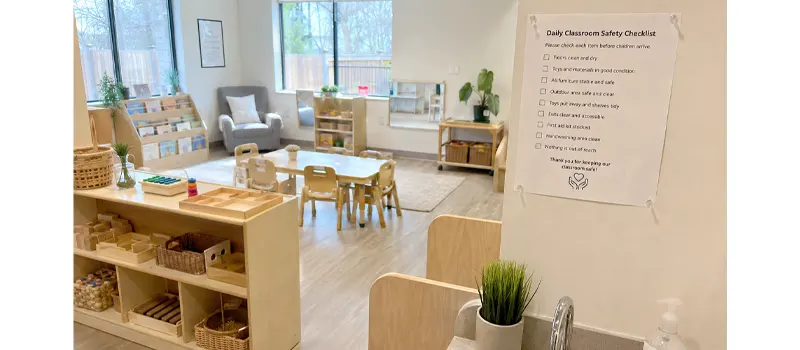
Arrange the checklist in the same order that you walk through the classroom. You might begin at the entrance, move through the activity areas, check the bathroom and sleep area, and finish at the outdoor exit. This makes it easier to remember each section and reduces missed items
Use Clear, Specific Statements
Avoid vague items such as “Check that the furniture is safe.” Write exactly what staff should look for, such as:
- Furniture does not wobble.
- Casters are locked.
- Rugs lie flat.
- Emergency exits are clear.
Your staff should be able to answer each item without guessing what “safe” means.
Keep the Daily Checklist to One Page
Do not include every maintenance task in the daily checklist, as this will unnecessarily burden inspectors. Detailed checks for hardware wear, structural damage, equipment servicing, and inventory can be handled weekly or monthly. The daily checklist should focus on hazards that require attention before children use the room.
Provide Simple Response Options
Use clear options such as:
- Safe
- Needs attention
- Removed from use
- Repair reported
This gives you more useful information than a simple check mark and shows what action has already been taken.

Place the Checklist Where the Inspection Happens
You can place the laminated checklists at the designated checkpoints. This consistent placement also helps substitute teachers and new employees follow the same workflow. This way, employees don’t have to search for forms every time they start work.
Division of Responsibilities by Area
In large childcare centers, one staff member may not have enough time to check all areas before opening. Therefore, you can assign responsibilities to specific teachers based on their area. However, you should still designate a supervisor to ensure all areas are ready. The purpose of division of responsibilities is to reduce workload, not to create confusion about who is in charge.
Test the Checklist with Your Staff
Before using a new checklist across the center, ask one or two teachers to complete it during a normal opening shift. Watch where they hesitate, skip which items, or repeat the same inspection.
I recommend asking three practical questions:
- Does every line clearly explain what to look for?
- Can the checklist be completed before children arrive?
- Does it help staff act, or does it only create a record?
Adapt the Checklist to Each Classroom
The same checklist should not be used for classrooms with children of different age groups. You should add corresponding items based on the characteristics of each age group and the activity space. For example, the safety of cribs and changing tables should be checked in the nursery, while cutting tools should be checked in the preschool classroom.
Review Repeated Problems
I recommend reviewing completed checklists regularly. If staff repeatedly report the same blocked walkway, leaking sink, loose caster, or unstable cabinet, the problem is no longer a daily housekeeping issue. It may mean you need to change the classroom layout, repair the equipment properly, or replace furniture that is no longer suitable for daily daycare use.
Printable Daily Classroom Safety Checklist
You can download and print this classroom safety checklist for your daily classroom inspection. It follows a practical walk-through order and covers entrances, furniture, toys, electrical safety, hygiene areas, sleep spaces, and outdoor access.
Domande frequenti
Is a daily classroom safety checklist required for every daycare center?
Requirements vary by location and licensing authority. You should review your local childcare regulations to confirm what must be documented. Even when a specific daily form is not required, keeping one can help you show how your center identifies and manages hazards.
Can a daily checklist replace a formal safety inspection?
No. Your daily checklist is designed to catch immediate problems, while formal inspections examine building systems, playground equipment, fire safety, furniture condition, and maintenance needs in greater detail. You need both processes for different purposes.
How often should I update the checklist?
Review it whenever you change the classroom layout, introduce new furniture or equipment, open a new activity area, or experience an incident. You should also update it when staff repeatedly report a hazard that the current checklist does not cover clearly.
How long should I keep completed safety checklists?
In many regions, completed safety checklists are kept for at least 1–3 years so the center can show inspection history and safety practices during licensing reviews. If you are unsure, check your local childcare licensing rules or ask your licensing inspector, as requirements vary by location.
Can children take part in classroom safety checks?
Older preschoolers can help with simple routines, such as putting toys away or noticing objects on the floor. However, you should never rely on children to inspect furniture, electrical equipment, chemicals, gates, or other high-risk areas. An adult must remain responsible for the final check.
What should I do if children arrive before the checklist is complete?
Assign one staff member to supervise the children in an area that has already been checked while another finishes the inspection. You should never divide your attention between supervising children and inspecting several parts of the room at the same time.
Should near misses be recorded even when no child is injured?
Yes. A near miss can reveal a problem before it causes an injury. Record what happened, where it occurred, and what you changed afterward, especially when the issue involves furniture tipping, blocked exits, falling objects, or supervision blind spots.
Conclusione
A daily classroom safety checklist can help you identify problems early, but its effectiveness is limited if the classroom layout has blind spots or the furniture is of poor quality and difficult to maintain.
A Xiha Kidz, we help you plan a safer classroom layout and select preschool furniture designed for high-frequency daily use. From space planning and furniture matching to customization and production, we can help you create an easy-to-supervise, maintain, and safer classroom where children can play with peace of mind every day.



 Italian
  English
  Arabic
  French
  German
  Spanish
  Thai
Thai  Japanese