When choosing furniture for a daycare center, safety involves more than rounded edges and sturdy construction. You also need to know which safety standards apply to each product. In the United States, daycare furniture safety standards vary depending on the type of furniture, its intended use, and the age of the children using it.
This guide explains the key US safety regulations, what to look for in different types of daycare furniture, and how to check compliance before making a purchase.
What Safety Standards Must Daycare Furniture Meet in the US?
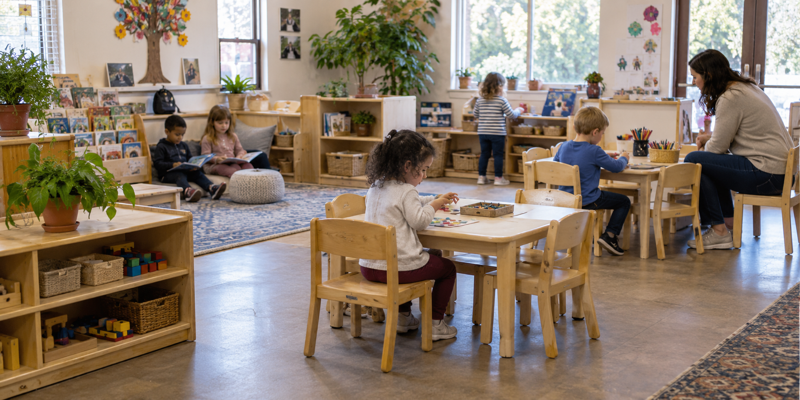
There is no single safety standard that applies to all 保育用家具 in the United States. Daycare furniture safety is governed by several types of requirements, including federal product safety regulations, state childcare licensing rules, and local building and fire codes. Voluntary standards, such as ASTM and ANSI/BIFMA, may also help evaluate product safety and performance.
These requirements serve different purposes. A product that meets federal safety regulations must still be suitable for the daycare’s age groups and comply with applicable facility requirements.
Here are the main standards and requirements daycare operators should understand:
| Standard or Regulation | What It Covers | When It Applies |
|---|---|---|
| CPSIA (Consumer Product Safety Improvement Act) | Lead limits, applicable children’s product safety rules, testing, and certification | Furniture classified as a children’s product |
| ASTM Standards | Product-specific requirements for stability, construction, and other safety risks | Depending on furniture type; mandatory when incorporated into federal regulations |
| CPC (Children’s Product Certificate) | Documents compliance with applicable children’s product safety rules | Children’s products subject to those rules |
| TSCA Title VI | Formaldehyde emissions from hardwood plywood, MDF, and particleboard | Furniture containing regulated composite wood products |
| GREENGUARD Gold | Certification for low chemical emissions from finished products | Voluntary; not a federal legal requirement |
1. CPSIA and CPSC Requirements
The Consumer Product Safety Improvement Act (CPSIA) establishes federal safety requirements for children’s products, which are regulated by the Consumer Product Safety Commission (CPSC).
For furniture primarily intended for children aged 12 or younger, important requirements include:
- Lead in accessible materials: Generally limited to 100 parts per million (ppm).
- Lead in paint and surface coatings: Limited to 90 ppm.
- Testing and certification: Applicable children’s product safety rules require third-party testing and certification.
Child-sized tables and chairs may fall under these requirements. However, not every piece of furniture used in a daycare is legally classified as a children’s product.
2. ASTM Safety Standards
ASTM International develops technical standards that help manufacturers evaluate product safety and performance. Depending on the product, these standards may address structural strength, stability, openings that could trap body parts, and other potential hazards.
For example, ASTM F2388 addresses baby changing products, while ASTM F963 applies to toys rather than ordinary classroom furniture.
ASTM standards are generally voluntary unless incorporated into regulations or required by a contract. The applicable ASTM standard depends on the product category, so furniture should not be described as simply “ASTM certified” without identifying the specific standard.
3. Children’s Product Certificate (CPC)
A Children’s Product Certificate (CPC) is a document confirming that a children’s product complies with applicable CPSC-enforced safety rules.
For covered products, the manufacturer or importer issues the CPC based on testing performed by a CPSC-accepted third-party laboratory. The certificate identifies the product, relevant regulations, and testing information.
A CPC is not a separate safety standard or a government-issued product approval. It documents compliance with the requirements that apply to the specific product.
4. TSCA Title VI
TSCA Title VI is a federal regulation administered by the Environmental Protection Agency (EPA). It limits formaldehyde emissions from certain composite wood products, including medium-density fiberboard (MDF), particleboard, and hardwood plywood.
These materials are commonly used in daycare cabinets, shelving, and other wooden furniture. Products containing regulated composite wood materials must meet the applicable emission and labeling requirements.
TSCA Title VI addresses formaldehyde emissions from composite wood materials. It does not establish requirements for furniture stability or overall structural safety.
5. GREENGUARD Gold Certification
GREENGUARD Gold is a voluntary third-party certification that evaluates chemical emissions from finished products, including furniture.
It applies stricter chemical emission limits than the standard GREENGUARD certification and is commonly considered when selecting furniture for schools, daycare centers, and other indoor environments where children spend significant time.
Unlike mandatory federal regulations, GREENGUARD Gold is not legally required for all daycare furniture. It provides additional information about a product’s chemical emissions but does not replace applicable safety testing or legal compliance.
Do Different Types of Daycare Furniture Have Different Safety Requirements?
Yes. Different types of daycare furniture can be subject to different safety requirements. While some furniture must comply with specific federal product safety standards, other items are covered by general children’s product rules or applicable childcare licensing requirements.
For example, a standard preschool chair does not necessarily follow the same regulations as a folding chair, and an infant crib has different requirements from a toddler rest mat. Understanding these distinctions helps daycare operators avoid applying the wrong standard when purchasing furniture.

1. Daycare Tables and Chairs
Child-sized tables and chairs primarily designed for children aged 12 or younger may be classified as children’s products under CPSC rules. They must comply with applicable children’s product safety requirements, including restrictions on lead content and surface coatings.
For everyday classroom tables and chairs, start with stability, age and stage fit, structural strength, smooth edges, accessible hardware, cleanability, and the way the item behaves when children push, lean, carry, or climb on it. State licensing rules may use language such as safe, sanitary, age-appropriate, or sufficient rather than naming one furniture standard.
Certain seating products have additional requirements:
- Standard classroom chairs: Generally subject to applicable children’s product rules, but not a universal federal chair-specific performance standard.
- Children’s folding chairs and stools: Subject to 16 CFR Part 1232, which incorporates ASTM F2613. This includes requirements addressing stability, strength, and folding mechanisms.
- High chairs: Covered by 16 CFR Part 1231, incorporating ASTM F404, with specific requirements for stability, restraint systems, and structural integrity.
A useful distinction when buying classroom seating is whether the chair is fixed, folding, or designed to elevate a young child for feeding. Its design and intended use determine which product-specific rules may apply.
2. Storage Cabinets and Shelving
Daycare classrooms commonly use 低い棚, locker cubbies, bookcases, and storage cabinets. These products do not all fall under the same federal furniture standard.
For example, 16 CFR Part 1261, which incorporates ASTM F2057, establishes mandatory stability requirements for certain clothing storage units, such as qualifying dressers. It does not automatically apply to ordinary classroom bookcases, open shelves, or cubbies.
For classroom storage, daycare operators should pay particular attention to:
- Whether tall or heavy units require wall anchoring.
- Whether drawers and doors could increase tip-over risks.
- Whether shelves can safely support their intended loads.
- Whether the furniture is stable during normal classroom use.
These are important purchasing and installation considerations, even when a specific federal tip-over standard does not apply to the product.
3. Cribs and Sleeping Furniture
Infant cribs have specific mandatory federal safety standards:
- Full-size baby cribs: 16 CFR Part 1219.
- Non-full-size baby cribs: 16 CFR Part 1220.
These requirements address hazards such as entrapment, falls, structural failures, and unsafe crib components.
However, not all daycare sleeping equipment is classified as a crib. Toddler cots, nap mats, bassinets, and play yards are different product categories and may have different applicable requirements.
Before selecting sleeping equipment, confirm the product category and the ages for which it is intended. Daycare operators must also follow applicable state licensing rules for sleep equipment and safe sleep practices.
4. Changing Tables and Feeding Furniture
Baby changing products are covered by 16 CFR Part 1235, which incorporates ASTM F2388. This regulation addresses hazards such as falls, instability, structural failure, and entrapment.
It applies to defined baby changing products, including 交換台 and certain changing pads or add-on changing units. Not every countertop or storage cabinet used near a diaper-changing area automatically falls within this category.
Feeding furniture also varies by design. A freestanding high chair that meets the federal product definition is covered by the high chair standard, while an ordinary child-sized dining chair is not automatically subject to that same rule.
When selecting changing or feeding furniture, make sure the product is intended for the activity and age group in question rather than assuming that all childcare furniture meets the same requirements.
What Material Safety Requirements Apply to Daycare Furniture?
Daycare furniture is made from a variety of materials, including solid wood, engineered wood, metal, plastic, and upholstered fabrics. Each material presents different safety considerations, particularly when it comes to chemical exposure.
In the United States, material safety requirements primarily address hazardous substances such as lead, formaldehyde, and certain phthalates. The applicable limits depend on the material and how the furniture is classified.

1. Wood and Composite Wood Materials
Wooden tables, shelves, and cabinets may be made from solid wood, plywood, MDF, or particleboard. The main chemical concern with certain engineered wood products is formaldehyde, which can be released from adhesives used in manufacturing.
Under TSCA Title VI, regulated composite wood products must meet the following formaldehyde emission limits:
| 材料 | Maximum Formaldehyde Emission |
|---|---|
| Hardwood plywood | 0.05 ppm |
| 主配線盤 | 0.11 ppm |
| Thin MDF | 0.13 ppm |
| Particleboard | 0.09 ppm |
These limits also affect finished furniture containing regulated composite wood materials.
Solid wood generally does not fall under these composite wood emission limits. However, choosing solid wood does not automatically guarantee that the finished furniture is free from chemical hazards, since adhesives, coatings, and other components may still be present.
2. Paints and Surface Finishes
Paints, varnishes, and other surface coatings must meet applicable lead restrictions.
For children’s products, federal regulations establish two important limits:
- Lead in accessible components: No more than 100 parts per million (ppm).
- Lead in paint and similar surface coatings: No more than 90 ppm.
The 90 ppm coating limit also applies to certain painted furniture that may not otherwise be classified as a children’s product.
These limits apply to the finished materials, not simply to how a paint is marketed. Labels such as “non-toxic,” “eco-friendly,” or “water-based” do not, by themselves, demonstrate compliance with federal lead requirements.
For daycare furniture, also consider whether the finish can withstand routine cleaning without peeling, cracking, or exposing the underlying material.
3. Plastics and Synthetic Materials
Plastic chairs, storage bins, furniture edging, and cushioned components may contain additives that affect flexibility, color, or durability.
One group of chemicals to understand is phthalates, which are sometimes used as plasticizers.
Federal rules restrict specified phthalates to no more than 0.1% (1,000 ppm) in accessible components of children’s toys and defined child care articles. However, these restrictions do not automatically apply to every plastic chair, cabinet, or storage container used in a daycare.
When evaluating plastic furniture, buyers should distinguish between legally applicable chemical limits and additional material specifications offered by the manufacturer. A product described as “BPA-free” or “phthalate-free” is not necessarily compliant with every relevant safety requirement.
4. Foam, Fabric, and Upholstered Materials
Soft seating, padded benches, and other upholstered furniture introduce additional considerations involving fabric, foam, and cushioning materials.
Certain upholstered furniture products must comply with federal flammability requirements under 16 CFR Part 1640, which incorporates California Technical Bulletin 117-2013. These requirements address resistance to smoldering ignition and include applicable labeling provisions.
Chemical emissions are another consideration. Voluntary certifications such as GREENGUARD Gold can provide additional information about emissions from finished furniture, although they do not replace mandatory product safety requirements.
For furniture used in daily childcare activities, buyers should also consider whether fabrics and cushions are easy to clean, resistant to moisture, and suitable for repeated use.
What Physical Safety Features Should Daycare Furniture Have?
Beyond meeting applicable safety standards, daycare furniture should be designed to reduce injuries during everyday activities.
When selecting furniture, pay particular attention to the following physical safety features.

1. Stability and Tip-Over Prevention
Furniture should remain stable during normal use, including when children lean against it or access stored materials. Tall cabinets, bookcases, and heavy storage units can pose serious tip-over risks if children climb or pull on them.
To reduce these risks:
- Secure furniture that could tip over using appropriate wall or floor anchors.
- Choose storage units with a stable base and suitable weight capacity.
- Store heavy materials on lower shelves.
- Keep frequently used materials within children’s reach to discourage climbing.
The CPSC’s Anchor It guidance is useful for the basic principle: use sturdy furniture, follow the installation instructions, secure top-heavy pieces, and remove objects that invite children to climb. It is a safety campaign, not a daycare furniture certification, but it provides a practical control for storage planning.
2. Rounded Edges and Smooth Surfaces
Children frequently move between tables, chairs, and activity areas, making collisions with furniture a common concern.
Tables, cabinets, and other frequently used furniture should have smooth, accessible edges without hazardous sharp points, splinters, or exposed metal.
Pay particular attention to tabletop corners, shelf edges, chair frames, and exposed hardware. Rounded corners can help reduce injury risks, but the overall construction and condition of the furniture are equally important.
3. Secure Hardware and Pinch-Point Protection
Loose screws, exposed fasteners, and moving furniture components can create injury hazards.
Before purchasing, check that:
- Screws, bolts, and connectors are securely fitted and do not leave hazardous projections.
- Hinges, drawers, and folding mechanisms do not expose children to unsafe pinch or shear points.
- Protective caps and other accessible components cannot detach easily and create hazards.
- Doors and drawers operate smoothly without unexpected movement.
Folding furniture requires particular attention because moving frames and hinges can trap fingers. Where applicable, products should have appropriate locking mechanisms to prevent accidental folding.
4. Age-Appropriate Size and Safe Access
Furniture dimensions should allow children to use tables, chairs, and storage areas without unnecessary reaching, climbing, or unstable positioning.
For classroom chairs, children should be able to sit securely, with appropriate seat height and support. Tables should allow comfortable access to learning materials without requiring children to stretch excessively.
Storage furniture should also reflect children’s abilities. Frequently used items belong at accessible heights, while heavy or potentially hazardous supplies should remain in appropriately secured storage.
The correct dimensions depend on the children’s ages and physical development rather than one universal daycare furniture size.
5. Safe Casters and Moving Components
Check that furniture with wheels has locking mechanisms suitable for its intended use. Locks should hold the furniture securely when stationary, and the unit should remain stable when loaded as intended.
Also inspect sliding trays, adjustable parts, and movable panels for unexpected movement or exposed pinch points.
Furniture that is frequently repositioned should be checked regularly for loose connections, damaged wheels, and worn locking mechanisms.
Do Daycare Furniture Safety Requirements Vary by State?
Yes. While federal product safety regulations apply nationwide, daycare licensing requirements vary by state and territory. Furniture that meets federal safety standards may still need to satisfy additional requirements before it can be used in a licensed childcare facility.

State childcare regulations may establish requirements for:
- Age-appropriate furniture: Equipment and furnishings suitable for the ages and developmental stages of children in care.
- Sleeping equipment: Rules for cribs, cots, mats, and their use in infant and toddler programs.
- Furniture condition and sanitation: Requirements for maintaining furnishings in a safe, clean, and sanitary condition.
- Classroom space and accessibility: Requirements that may affect how much furniture can be accommodated and how rooms are used.
Local building and fire codes may also govern furniture installation, required exit routes, and access to fire safety equipment. These rules concern the facility and its layout rather than the product’s manufacturing standards.
The exact requirements depend on the state, type of childcare program, and ages of children served. Some programs may also be exempt from certain licensing requirements.
How to check your state’s requirements: Visit ChildCare.gov’s Child Care Licensing Guide, select your state or territory, and follow the links to the responsible licensing agency. Review the current rules for your facility type and confirm any applicable local building or fire requirements before installing furniture.
How Can You Verify That Daycare Furniture Meets Safety Standards?

Not every daycare furniture product requires the same documentation. Depending on the product, relevant evidence may include a Children’s Product Certificate (CPC), laboratory test reports, or records demonstrating compliance with material-specific regulations.
1. Ask for Relevant Compliance Documents
For children’s furniture subject to applicable CPSC safety rules, ask for a Children’s Product Certificate (CPC). This document identifies the product and the federal safety requirements it complies with.
For other furniture, relevant documentation may include test reports, composite wood compliance information, or other product-specific records.
Remember that not every piece of daycare furniture requires a CPC, and voluntary certifications are not substitutes for mandatory compliance.
2. Check What the Documents Actually Cover
A certificate or test report should clearly identify the product and the regulations or standards covered.
Check whether the documents apply to the furniture you are purchasing. For example, a test report for a standard classroom chair may not cover a different folding-chair design.
You don’t need to interpret every technical test result, but you should be able to identify the product, the applicable standard, and whether it met the tested requirements.
3. Confirm Any Unclear Information With Your Supplier
If a certificate is missing, the product information does not match, or the applicable standard is unclear, ask your supplier for clarification.
A reliable supplier should be able to explain which safety requirements apply to its products and provide the relevant supporting documents when required.
For additional guidance, the U.S. Consumer Product Safety Commission (CPSC) explains the information included in a Children’s Product Certificate.
4. Check the Supplier’s Experience in Your Region
A supplier with experience serving daycare centers in your state or country may be more familiar with local safety requirements and the documentation commonly requested for childcare projects.
Ask whether the supplier has completed similar projects in your region and whether they can share relevant project examples or references. You can also ask how they handled product compliance requirements for those projects. It can help you assess whether the supplier understands your project’s requirements.
Daycare Furniture Safety Standards Checklist
Before purchasing daycare furniture, use this checklist to confirm that the products meet applicable US safety requirements. Not every standard applies to every product, so focus on the requirements relevant to your furniture and childcare facility.
| Safety Check | What to Confirm |
|---|---|
| Federal product regulations | Identify whether the furniture is classified as a children’s product and which CPSC rules apply. |
| Product-specific standards | Check whether the furniture is subject to mandatory standards for cribs, high chairs, folding chairs, changing tables, or other regulated products. |
| Material safety | Confirm compliance with applicable lead limits, TSCA Title VI formaldehyde requirements, and other relevant chemical restrictions. |
| Compliance documents | Request a CPC or other required certification and supporting test information, as applicable. |
| Product identification | Make sure the compliance documents cover the furniture model and relevant configuration being purchased. |
| State and local requirements | Check childcare licensing rules and any applicable building or fire safety requirements. |
| Supplier experience | Ask whether the supplier has completed similar childcare projects in your state or region and understands the applicable requirements. |
For the most reliable information, refer to the U.S. Consumer Product Safety Commission for federal product rules and ChildCare.gov for state licensing information.
This checklist provides a starting point for reviewing compliance. The exact requirements will depend on the products being purchased and where the daycare operates.
よくある質問
Do Daycare Furniture Safety Standards Change Over Time?
Yes. Federal regulations and incorporated technical standards can be updated as new safety concerns emerge. A product tested against an older standard may not necessarily meet the requirements applicable to newly manufactured products. Check the current requirements and relevant effective dates when reviewing older furniture or documentation.
Does Imported Daycare Furniture Have to Meet US Safety Standards?
Yes. Furniture imported into the United States must comply with applicable US product safety regulations, regardless of where it was manufactured. For regulated children’s products, the importer is responsible for issuing the required Children’s Product Certificate (CPC). Compliance with foreign standards alone does not automatically establish US compliance.
What Is the Difference Between a CPC and a GCC?
A Children’s Product Certificate (CPC) applies to children’s products subject to applicable CPSC safety rules. A General Certificate of Conformity (GCC) is used for certain regulated general-use products. Both document compliance, but they apply to different product categories and have different testing requirements.
Does Daycare Furniture Need to Be Retested After Design or Material Changes?
Sometimes. For children’s products subject to CPSC testing requirements, material changes that could affect compliance generally require additional testing and an updated certification. Changes to construction, components, or finishes may trigger these obligations. Not every minor change requires complete retesting.
How Can I Check Whether Daycare Furniture Has Been Recalled?
Visit the CPSC Recalls Database and search by manufacturer, brand, or model number. Recall notices identify affected products, associated hazards, and recommended actions. If your furniture is subject to a recall, follow the official instructions and stop using it when directed.
Can You Use Secondhand Furniture in a Licensed Daycare?
Yes, secondhand furniture may be used if it complies with applicable safety requirements and is permitted under local childcare licensing rules. However, older furniture may not meet current standards. Check the product’s age, condition, and recall history, particularly for cribs and other infant equipment.
結論
Understanding daycare furniture safety standards helps you make informed decisions and avoid potential compliance issues. An experienced supplier can make this process easier. At シーハ・キッズ, we help daycare centers and preschools plan and furnish their learning spaces, offering furniture solutions tailored to different project needs. If you’re preparing a new daycare center or upgrading an existing facility, our team can help you review your furniture requirements and discuss suitable options.


 Japanese
 English
 Arabic
 French
 Italian
 German
 Spanish
 Thai