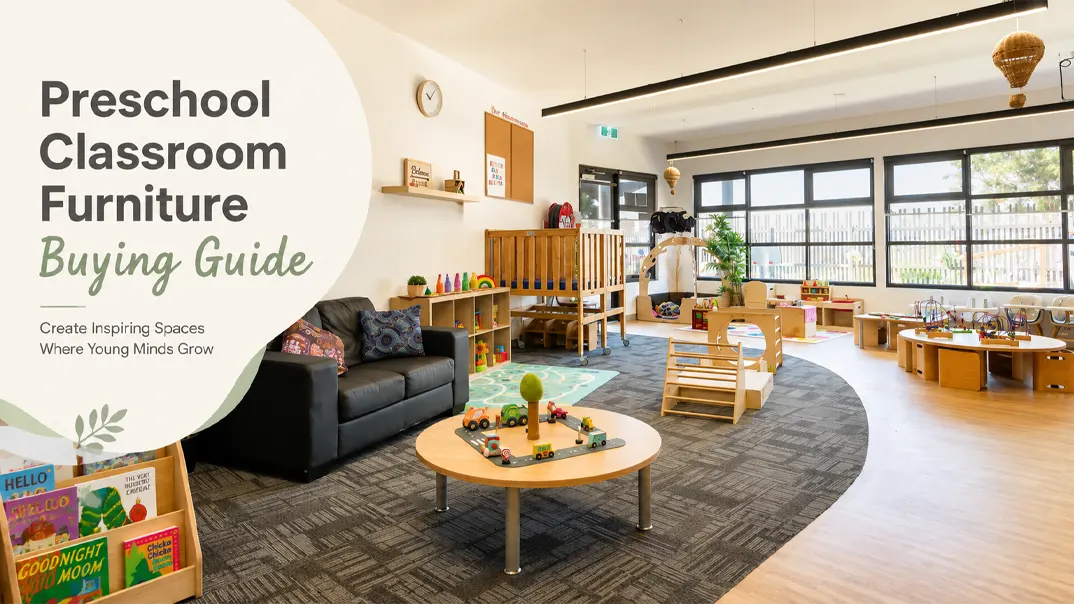
Outfitting a preschool or daycare center is a big investment. You are likely managing complex floor plans, strict safety requirements, and a tight opening schedule at the same time. Successful furniture procurement is about more than choosing attractive tables and chairs from a catalog. You also need to plan your budget carefully, match the furniture to your space, and make sure your supplier can deliver what your project requires.
But relax. In this preschool classroom furniture buying guide, you will learn what to consider before placing an order and how to make smarter purchasing decisions for your preschool project.
Finalize Your Preschool Classroom Furniture List
Finalizing your furniture list is crucial before making a purchase. Many clients now ask suppliers to create a تخطيط الفصل الدراسي first and then build the furniture list around that plan. This is a practical approach, and Xiha Kidz also provides classroom layout support.
However, a supplier-created layout should not replace your own planning. Even a simple preliminary list helps you understand what furniture you need, set priorities, control your budget, and avoid being guided toward unnecessary products. The following steps will help you finalize a practical furniture list before placing your order.
Start With Your Classroom Needs
Before browsing various suppliers’ product catalogs, you must have a clear understanding of your classroom needs; otherwise, the overwhelming array of products in the catalogs will confuse you. You should first know:
- Number of classrooms
- Children per classroom
- Age groups
- Classroom size and available classroom space
- Educational Philosophy / Program Type
- Learning areas/ activities
- Any special care needs
Notice: Furniture should support your activities and curriculum, aligning with professional Early Childhood Program Standards rather than simply filling an empty room.
Divide Your Furniture Into Three Groups
To avoid over-purchasing or missing critical configurations, you can precisely divide your requirement list into three tiers:
1. Essential Furniture
The basic configurations that must be prepared to maintain the daily operation of the classroom, meeting the most fundamental seating, storage, and care needs. This level should occupy the core of your budget.
For younger age groups, essential furniture should include items such as changing tables, cribs, or other age-specific care furniture.
2. Activity-Based Furniture
Once essential needs are met, direct your budget toward supporting your specific curriculum. Activity-based furniture is not about “filling space with themed products.” Instead, it should be based on what children actually do every day in the classroom. For example, if your daily program includes art activities, children need a defined space where they can paint, draw, and create. In this case, art tables, easels, and drying racks are essential.
3. Optional Furniture
These are useful additions when you have enough space and budget, but they are usually not the first items you need to purchase.
Examples may include:
- Soft play
- Reading nooks
- Decorative furniture
- Additional dramatic play units
- Outdoor furniture
Quantity Assessment and Flexibility Strategies
The quantity of furniture should be based on your actual enrollment, classroom activities, and how each area will be used, rather than copied from standard templates. If your procurement budget is limited, you can prioritize multi-functional furniture and flexible furniture. This not only reduces the cost of controlling the number of pieces of furniture but also improves space utilization.
على سبيل المثال:
- Stackable chairs are easier to store when they are not in use, so the same classroom can quickly create more open floor space for group activities.
- Tables with built-in storage can combine a work surface and material storage in one unit, reducing the need for additional cabinets in some areas.
- Adjustable tables and chairs can support different age groups or changing classroom needs, which is especially useful in mixed-age classrooms.
- Mobile storage units can be shared between different learning areas instead of purchasing a separate storage unit for every activity zone.
- Multi-purpose tables can be used for art, puzzles, or meals at different times of the day.
If you are unsure which products are right for your project, send us your floor plan. Our design team can provide a free classroom layout within 48 hours, so you can review the space and adjust your furniture list before ordering. We can also recommend suitable furniture sets based on your educational approach, teaching style, and classroom needs.
How to Choose the Right Preschool Classroom Furniture?
Once you have finalized your furniture list, the next step is to make sure each item is actually suitable for your classroom. A table, chair, shelf, or cabinet may look right in a catalogue, but that does not mean it will perform well in daily preschool use. Here is a breakdown of the core specifications you must evaluate:
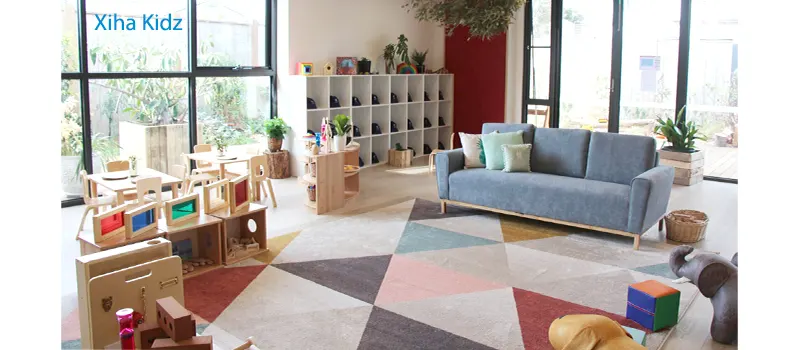
1. Check the Material
Wooden preschool furniture is too broad a description to help you judge quality. You should confirm exactly what material the furniture is made from.
Common materials include:
- Birch plywood
- لوح متوسط الكثافة
- Particle board
- Solid wood
- بلاستيك
- معدن
Different materials are suitable for different products. For example, plywood is often a practical choice for classroom cabinets, bookshelves, and storage because it provides good structural strength and screw-holding performance. Metal is often used for adjustable table legs or frames, while plastic may be suitable for lightweight chairs that need to be moved frequently.
We also recommend asking about:
- Board thickness
- Back panel thickness
- Internal reinforcement
- Joint construction
- Shelf load capacity
This is especially important when comparing quotations. Two cabinets may look almost identical in photos, but a thinner board, weaker back panel, or simpler connection structure can make a significant difference in long-term use.
2. Match Dimensions to Your Age Group
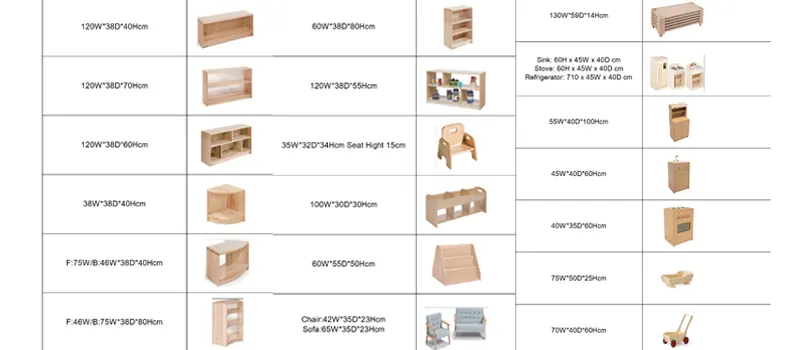
The right preschool furniture size should allow children to use it comfortably and independently. For tables and chairs, you should check both pieces together. Important dimensions include:
- Chair seat height
- Table height
- Seat-to-table height difference
- Table size
For storage and bookshelves, consider:
- Overall height
- Shelf height
- Access height
- Depth
Never buy oversized furniture with the mindset that children will use it for a few more years. Oversized furniture can cause physical discomfort to children, making them irritable, leading to classroom management problems, and even posing safety hazards.
3. Make Sure the Furniture Works in Your Classroom Space
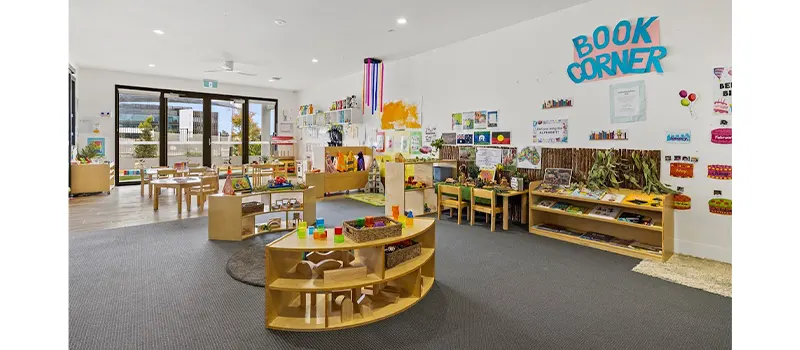
Child-appropriate dimensions are only one part of the decision. You also need to make sure the daycare furniture works within the actual classroom. Do not only ask whether one item can physically fit into the room. The more important question is whether all the furniture can work together without reducing circulation space, blocking doors, or interfering with learning areas
If you already have a layout drawing, use it to check furniture footprints before confirming the order. If you do not have one, even a simple floor plan with room dimensions can help prevent costly mistakes.
4. Choose Safe and Durable Surface Finishes
Because أثاث ما قبل المدرسة comes into direct contact with children every day, the finish must be 100% non-toxic and certified safe for early childhood environments. In daily use, paint, food, water, and other spills are unavoidable, so the surface also needs to resist scratches and withstand frequent cleaning and disinfecting without peeling, clouding, or fading.
You should also check the workmanship beneath the finish. All surfaces should be properly sanded and completely smooth, with rounded edges and corners to reduce the risk of injury from bumps or falls. For wooden preschool furniture, low-VOC, child-safe water-based finishes are generally a practical choice because they combine safety, durability, and easier daily maintenance.
5. Pay Attention to Hardware and Moving Parts
When evaluating preschool furniture, hardware is often where corners get cut, yet it is exactly where daily wear and tear hits the hardest. You need to scrutinize every hinge, screw, track, and caster before making a purchasing decision.
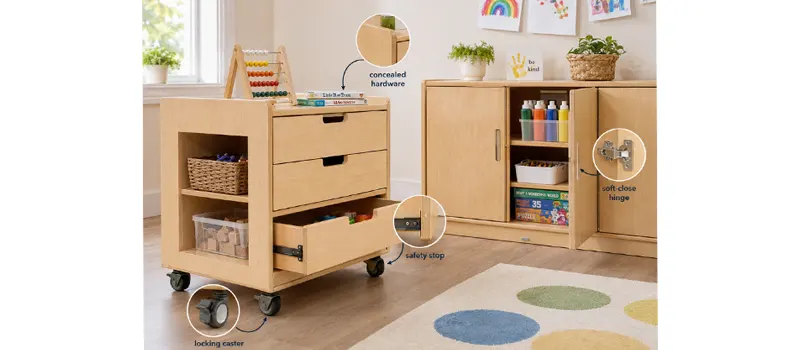
First, insist on fully concealed or recessed hardware. There should be zero exposed screw heads, sharp metal brackets, or protruding bolts that could catch on a child’s clothing or cause an accidental scratch during active play.
Second, look closely at the moving parts. If a classroom storage cabinet features doors, the hinges must be commercial-duty and equipped with soft-close mechanisms. This is a non-negotiable safety feature to eliminate the risk of pinched fingers. Similarly, if a piece includes drawers or pull-out bins, the glides must operate smoothly and include built-in safety stops so a child cannot pull the drawer entirely out of its housing.
Third, never overlook the casters (wheels). Modern, flexible classrooms rely heavily on mobile storage units. If a piece of furniture is on wheels, those casters must be heavy-duty and non-marring (meaning they won’t leave scuff marks or scratch your floors). Most importantly, they must feature robust locking mechanisms. The wheel locks need to be easily engaged by a teacher’s foot, but secure enough that children cannot accidentally unlock them, ensuring the heavy cabinet remains completely stationary and safe during activities.
Finally, consider the treatment of the metal itself. In a commercial daycare environment, surfaces are wiped down constantly. Your hardware must be rust-resistant and properly treated to withstand the frequent cleaning without corroding or degrading over time.
6. Test for Structural Stability and Anti-Tip Design
Toddlers will inevitably lean, pull, and attempt to climb on your classroom furniture. Cabinets and open shelving units must feature a wide, heavy base that naturally lowers the center of gravity. Any tall shelving unit, bookcase, or locker placed against a wall must include reliable anti-tip hardware (wall anchors). Securing these heavy items safely to the wall is a non-negotiable safety standard to eliminate any risk of tipping from climbing.
Standard vs. Custom: Which is Better for You?
Many clients think that outfitting a premium early learning center requires fully custom furniture. In reality, this is a common misconception that can unnecessarily drain your budget and delay your opening schedule. Customization can be useful, but it should not automatically be applied to every product in your project.
For 80% of classroom layouts, standard commercial-grade furniture is the smartest and safest choice. Why? Because standard pieces have already gone through years of rigorous safety testing, structural engineering, and international compliance certifications. They are highly cost-effective, readily available for faster shipping, and designed to be modular—meaning you can easily reconfigure your classroom layout year after year.
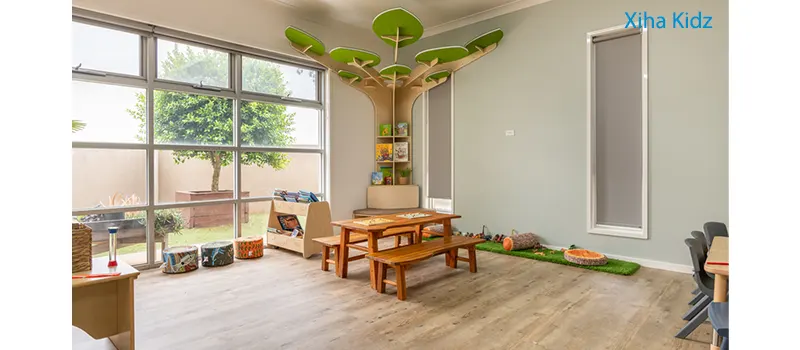
When do you really need customization?
- Your room has unusual dimensions: A cabinet or shelf must perfectly fit a specific wall, corner, alcove, or narrow area.
- The furniture must fit around fixed structures: You have to work around immovable columns, windows, sinks, radiators, or built-in cabinets.
- Standard sizes do not suit your age group: You need to adjust table, chair, or shelf access heights specifically for younger or mixed-age children.
- You have specific storage needs: Your teaching materials require different compartment sizes, tray quantities, shelf spacing, or internal layouts.
- You need to match an existing classroom design: You must coordinate colors, finishes, hardware, or style with your school’s established visual identity.
- Several pieces need to work together as one solution: You need a continuous, seamless layout (like a complete wall of storage and cubbies) rather than separate standard units.
- You are purchasing for a larger project: High-volume orders spread the initial design costs across more units, making customization a financially smart business decision.
In most projects, we recommend keeping standard products wherever possible and customizing only the specifications that genuinely affect classroom use. This gives you the flexibility you need without unnecessarily increasing cost, complexity, or production time.
What to Consider When Choosing Your Furniture Supplier?
Even the most perfect furniture procurement list can be ruined if the manufacturer cannot guarantee quality, safety, or delivery time. The final step in the procurement process is verifying suppliers. Before placing a purchase order, you need to evaluate the following points to ensure you choose a reliable production partner:

Verify Safety and Compliance Documents
Safety and compliance are non-negotiable. You must confirm exactly what compliance documents your supplier can provide. Never take a salesperson’s word for it—ask for hard proof of international safety certifications (such as ASTM, CPSIA, or eco-friendly finish testing reports). You need to confirm that the documentation is relevant to your order and acceptable for your project.
Certification Support for Your Local Market
In addition to common international safety certifications, شيها كيدز can also support certification and testing requirements for different countries and regions. If your project has specific compliance standards, we can review them before production and help prepare the relevant documents to reduce issues during approval, inspection, or final acceptance.
Look for Suppliers with Daycare Project Experience
Some manufacturers may not understand how kindergarten projects actually work; they may only be able to produce furniture. Before placing an order, ask them to provide case studies of similar-sized international projects that they have successfully manufactured and delivered in the past, so that you can assess their capabilities. A supplier experienced in outfitting a 10-classroom daycare will understand how to optimize container loading and pack goods securely for rough ocean transit.
Check Manufacturing and Customization Capability
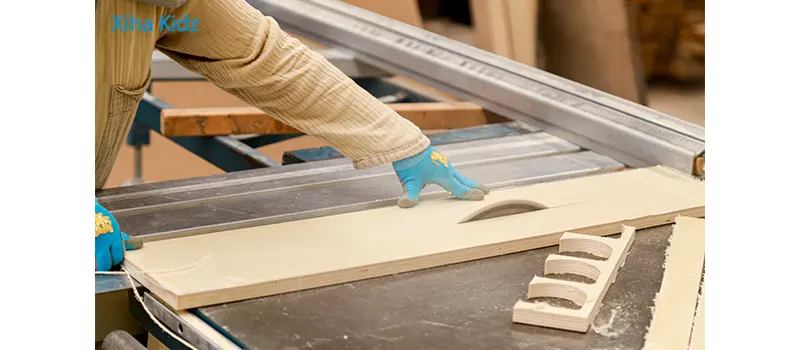
You should understand the supplier’s actual manufacturing capability, including which products are made in-house and which are outsourced. This helps you judge how much control the supplier has over product quality, production schedules, and specification changes.
Customization capability is also a useful indicator. A supplier with its own production lines and internal design team can usually handle changes more efficiently than a company that mainly sources finished products from other factories. For example, if you need to change the dimensions of a cabinet to fit a wall, or modify the number of storage compartments, an experienced manufacturer can tweak the design effortlessly.
This becomes especially important once production planning begins, because small changes are common in real preschool projects. A supplier that can manage these adjustments in-house usually gives you more flexibility, faster communication, and better control over the final result.
Value-Added Services
A premium manufacturing partner provides more than just the product; they provide solutions. Before placing an order, we recommend checking exactly what support is available and whether these services are included in the quotation.
- Layout support: Professional 3D renderings help you visualize the space and prevent the risk of overcrowding and blocked circulation
- Installation guidance: For large or customized orders, choose a supplier that can provide clear installation instructions, drawings, or remote support when needed. Makes assembly and installation easier for your local team and reduces delays caused by unclear instructions.
- After-sales support: Choosing a supplier that can provide clear after-sales solutions, such as for damaged products upon arrival, missing parts, or problems after installation, can reduce the risks and pressures of overseas procurement.
Dedicated Support Throughout Your Project
في شيها كيدز, we offer one-on-one professional consultation services with a rapid response to help you achieve a smooth international sourcing experience.
Quality Control
Ask how products are inspected before shipment. A reliable supplier should check dimensions, stability, hardware, surfaces, finishes, assembly, and packaging before the products leave the factory. For larger orders, clear QC procedures can greatly reduce damaged, incorrect, or inconsistent products.
100% Transparent Pricing
For international preschool furniture purchases, a low unit price does not always mean a lower total cost. Before comparing quotations, make sure you understand exactly what is included in the price and what will be charged separately.
First, confirm the trade term. For example:
- DDP: The supplier usually manages shipping, customs clearance, duties, and delivery to the agreed destination.
- EXW: You arrange pickup, export, shipping, customs clearance, and final delivery.
- FOB: The supplier delivers the goods to the agreed port, while you handle the main international shipping and destination costs.
Ask the supplier to itemize sample fees (and whether they are deducted from the final bulk order), design fees, freight shipping costs, and customs clearance fees, etc. This allows you to compare suppliers based on the total project cost, rather than choosing a low unit price and discovering additional expenses later.
Evaluate Bulk Pricing vs. Long-Term Value
Look past the initial sticker price. You need to weigh the bulk purchase price against the warranty period and overall lifespan. A slightly higher upfront cost protected by a solid 3-to-5-year commercial warranty is an infinitely smarter business decision than cheap, low-density furniture you have to replace next year.
Check Communication and Response Efficiency
Communication is easily overlooked when comparing suppliers. International kindergarten projects often require repeated confirmation of details, and suppliers with slow responses or vague answers may delay the entire project. Before placing an order, pay close attention to the supplier’s communication style during the quotation stage. Good communication doesn’t mean replying to every message immediately. It means providing clear, accurate, and responsible answers when important decisions need to be made.
Consider Production and Shipping Times
A professional international supplier will not just quote you a “production lead time”—they will help you plan your complete project lead time. For example, if manufacturing takes 30 to 45 days, an experienced supplier will advise you to build a 60-to-90-day buffer into your schedule for container bookings, ocean transit, customs clearance, and final delivery. Therefore, when choosing a supplier, you need to ensure that the delivery time meets your opening schedule.
Common Mistakes You Must Avoid
To protect your investment and ensure your preschool runs smoothly, make sure you avoid these common procurement mistakes:
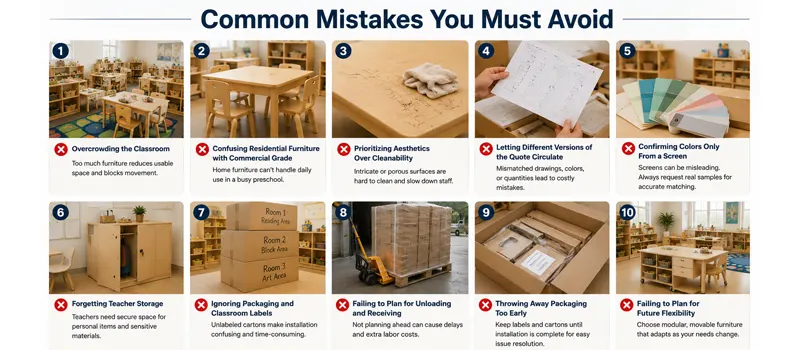
Overcrowding the Classroom
Don’t try to fit too much furniture into one room. Licensing agencies in many regions have strict regulations regarding the amount of accessible space required for each child. More shelves and activity units can quickly reduce usable floor space and block normal movement. Before ordering, make sure you leave enough open space for children to play and clear paths for teachers to move between different areas.
Confusing Residential Furniture with Commercial Grade
Do not treat a commercial daycare procurement project like shopping for a home playroom. Buying retail-grade children’s furniture because it looks “cute” or is cheaper upfront is a massive liability. Residential furniture uses lighter hardware and standard paints that will chip, wobble, and fail within months in a high-traffic preschool.
Prioritizing Aesthetics Over Cleanability
In an early learning environment, sanitation is a daily, hourly task. A mistake is purchasing furniture with intricate carvings, deep grooves, or porous materials that easily trap dirt and food crumbs. If a tabletop or cabinet takes more than five minutes to wipe down and disinfect, it will severely impact your staff’s daily efficiency. Always prioritize smooth, continuous surfaces and water-resistant finishes.
Letting Different Versions of the Quote Circulate
Furniture quantities and specifications often change during a project, but problems happen when the suppliers and buyer are working from different versions. Before production begins, make sure the final quotation, BOQ, drawings, colors, quantities, and custom requirements all match one approved version. Marking the final files clearly can prevent an old drawing or outdated quantity from being used by mistake.
Confirming Colors Only From a Screen
The same color can look very different on a phone, computer, PDF, and actual furniture surface. If color consistency is important, especially if you need to match an existing classroom design, always request physical color swatches, laminate samples, paint swatches, or approved production samples, rather than relying solely on digital images.
Forgetting Teacher Storage
Teachers also need secure space for personal items and materials that children should not reach. Include adult-height or lockable cabinets in your furniture plan instead of trying to solve this problem after installation.
Ignoring Packaging and Classroom Labels
For a full-center project, receiving hundreds of unmarked cartons can make installation unnecessarily difficult. Ask whether cartons can be labeled by product, classroom, floor, or installation area. Clear labeling allows your team to move the correct furniture directly to the right room and reduces the chance of products or hardware being mixed during installation.
Failing to Plan for Unloading and Receiving
Large preschool furniture orders may arrive as pallets, wooden crates, or a full container rather than individual courier parcels. Before delivery, make sure you know who will unload the shipment, where the cartons will be stored, whether a forklift is required, and how the furniture will be moved into the classrooms. Poor receiving planning can create additional labor costs and unnecessary delays even when the furniture itself arrives on time.
Throwing Away Packaging Too Early
Keep the cartons, product labels, and packaging information until you have completed the initial inspection and installation. If you later find a damaged part, missing component, or incorrect product, carton labels can help the supplier quickly identify the model, shipment, and packing information needed to solve the problem.
Failing to Plan for Future Flexibility
Your enrollment numbers and curriculum needs will change. Buying heavy, built-in, or single-purpose furniture locks you into one specific layout. You can invest in modular, freestanding, and mobile units (such as cabinets on lockable casters). This allows you to effortlessly reconfigure a room from a toddler space into a Pre-K classroom as your business grows.
الأسئلة الشائعة
How far in advance should I start planning a preschool furniture order?
For a new center or renovation project, it is better to start planning at least 3 months before your opening date. You need time for layout review, product confirmation, production, shipping, installation, and final adjustments.
Should I buy all classroom furniture at the same time?
Not always. For a large project, you can first confirm the essential furniture for each classroom, then add secondary items based on your budget and actual needs. However, ordering the main furniture together can make colors, materials, and overall classroom style easier to keep consistent.
Is custom preschool furniture much more expensive than standard furniture?
Not necessarily. Simple changes such as size, color, shelf configuration, or logo may only add a limited cost. The final price depends on how much the product needs to be changed, the material, quantity, and production method.
How can I reduce shipping costs for a large furniture order?
Good container planning can make a big difference. Combining products efficiently and using suitable packaging can reduce the shipping cost per item. This is why it is helpful to plan the whole project instead of shipping small orders separately. But don’t worry. Xiha Kidz will help you.
What is the best way to clean and maintain commercial preschool furniture daily?
Commercial environments require constant sanitation. Use a damp cloth with a mild soap solution for daily wipe-downs. Avoid using harsh industrial abrasives or soaking the furniture, as this can degrade the surface over time. Always dry the surfaces immediately to prevent moisture from seeping into the wood seams.
خاتمة
The physical environment you create will directly influence how children learn, how educators teach, and how smoothly your daily business operations run. By shifting your focus from short-term aesthetics to long-term commercial durability, and by treating your manufacturer as a strategic partner, you can better protect your project budget.
في شيها كيدز, we support early education projects from space planning and furniture selection to production and delivery. If you already have a floor plan, furniture list, or even an early project idea, feel free to send it to our team. We can help you review the space, confirm the right products and quantities, and turn your requirements into a practical classroom solution.



 Arabic
  English
  French
  Italian
  German
  Spanish
  Thai
Thai  Japanese