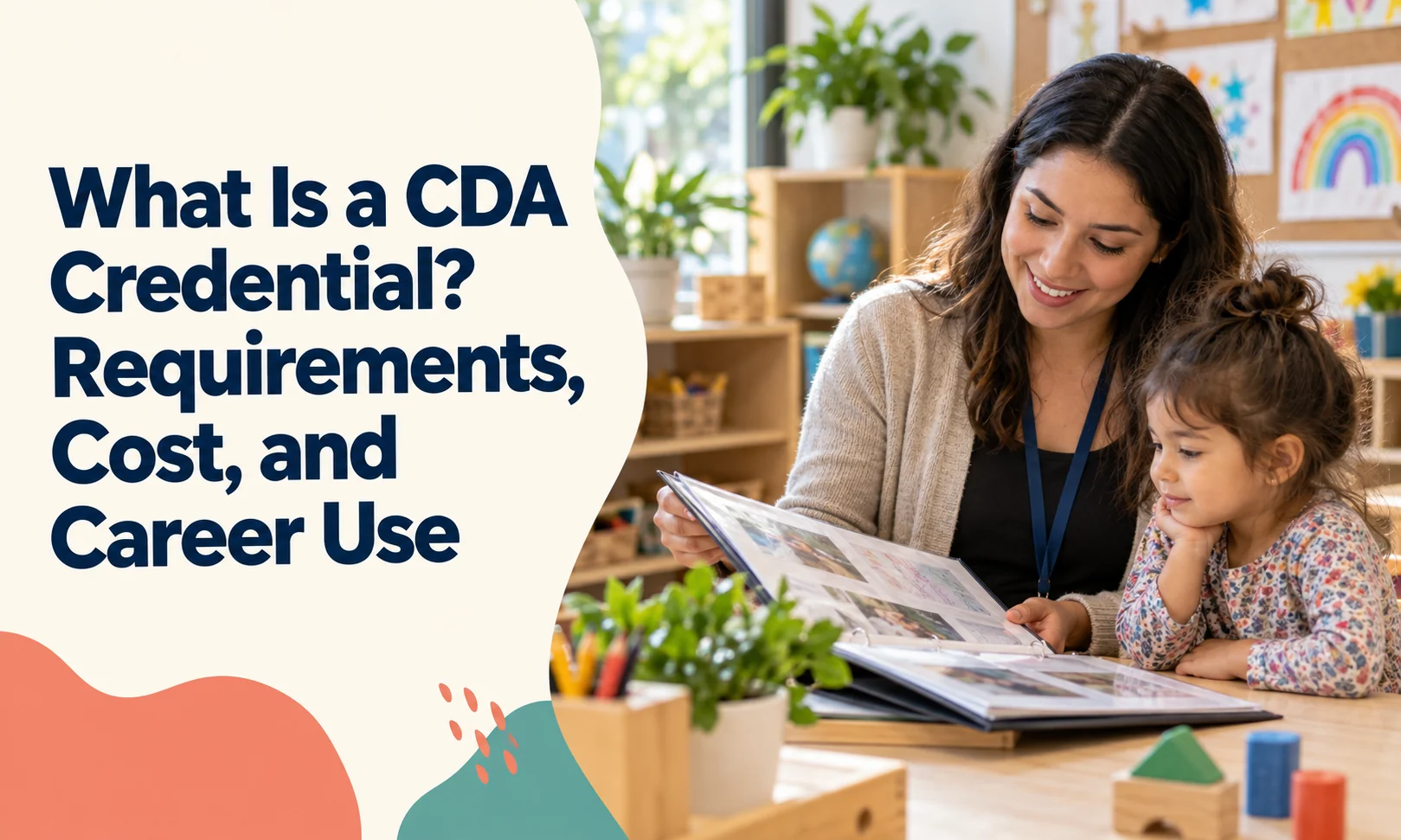
If you are starting or developing a career in early childhood education, you may come across job postings that mention a CDA Certificate. But before spending time and money on the process, you need to know what it actually is, whether you need one, and what it can do for your career.
A CDA Credential is a professional credential for early childhood educators in the United States. It is designed to show that you have the knowledge and practical skills needed to work effectively with young children.
In this guide, you will learn what a CDA Credential is, who can apply, what the requirements and costs involve, how the process works, and where the credential may be useful in your early childhood education career.
What Is a CDA Credential?

The CDA, or Child Development Associate® Credential, is a professional credential for people who work with young children or families with young children. It is based on competency standards that focus on what early childhood educators need to know and be able to do in their daily work.
Candidates show what they know through formal early childhood education, work experience, a professional portfolio, an exam, and a verification visit. The Council for Professional Recognition administers the credentialing program and awards the credential when a candidate meets its assessment requirements.
People often say “CDA certificate” because recipients can access a digital certificate and badge after earning the credential. The Council’s official term, however, is CDA Credential. The credential confirms preparation and competence for a defined setting; it does not, by itself, authorize someone to open a child-care program or satisfy every state’s staffing rules.
Which CDA Credential Setting Should You Choose?
Choose the setting that matches the work you actually do and the environment where you can complete your experience and assessment. The Council currently offers five options:

- Center-Based Infant-Toddler: educators working with children from birth through 36 months.
- Center-Based Preschool: educators working with children ages 3 through 5.
- Center-Based Birth to Five: educators in a center-based setting who demonstrate experience across infants, toddlers, and preschoolers.
- Family Child Care: providers working with children from birth through age 5 in a family child-care home.
- Home Visitor: professionals whose established program primarily serves families with young children through regular home visits.
These are not interchangeable labels. Your setting affects the experience hours, observation environment, and applicable standards. For example, the Birth to Five pathway requires experience across three sub-age groups, while the Home Visitor pathway uses a different assessment context. Check the Council’s setting-specific information before you register for training or buy materials.
What Are the CDA Requirements?
For the common initial CDA pathways, candidates generally need a qualifying high-school education, 120 hours of formal early childhood education, 480 hours of relevant professional experience, and a setting-specific portfolio. Confirm the exact rules for your selected setting before applying.

High-school Education
The Council’s eligibility guidance accepts a high-school diploma or GED. High-school juniors or seniors enrolled in an early childhood education or child-development career and technical program may also qualify. Verify the details on the current Council application page for your setting.
120 Hours of Early Childhood Education
Complete 120 clock hours of formal professional education, with at least 10 hours in each of the eight CDA Subject Areas:
- Planning a safe and healthy learning environment
- Advancing children’s physical and intellectual development
- Supporting children’s social and emotional development
- Building productive relationships with families
- Managing an effective program operation
- Maintaining a commitment to professionalism
- Observing and recording children’s behavior
- Understanding principles of child development and learning
Training may be credit or noncredit, but the provider must have expertise in early childhood teacher preparation and issue verifiable documentation. Before enrolling, confirm that your transcript, certificate, or official training letter will identify the provider, course, dates, hours, and applicable subject areas. This simple check can prevent a course from leaving you short of documented hours.
480 Hours of Relevant Work Experience
You need 480 hours of professional experience within the three years before applying, working with children in the age group and setting for the credential you want. Paid and volunteer experience may count when it meets the Council’s setting requirements. Informal babysitting, drop-in care, and some other settings do not qualify as CDA professional experience, so do not assume every hour spent caring for children can be counted.
The Birth to Five credential has an additional distribution requirement: its 480 hours must include at least 160 hours with infants, 160 with toddlers, and 160 with preschoolers in a center-based setting. If your schedule does not give you exposure to all three groups, discuss a rotation plan with your director early rather than discovering the gap at application time.
Professional Portfolio
Prepare the portfolio using the Competency Standards book for your setting and within the Council’s application window. Depending on the pathway, it may include training records, reflective statements, classroom resources, a professional philosophy, and questionnaires or feedback from families. Treat it as evidence of how you apply knowledge—not just a folder of certificates. Keep documents organized as you go, and remove children’s identifying information from any work samples you are permitted to use.
How Do You Earn a CDA Credential?
The most reliable order is to confirm your setting first, complete and document the eligibility requirements, then submit the application and complete the assessment.
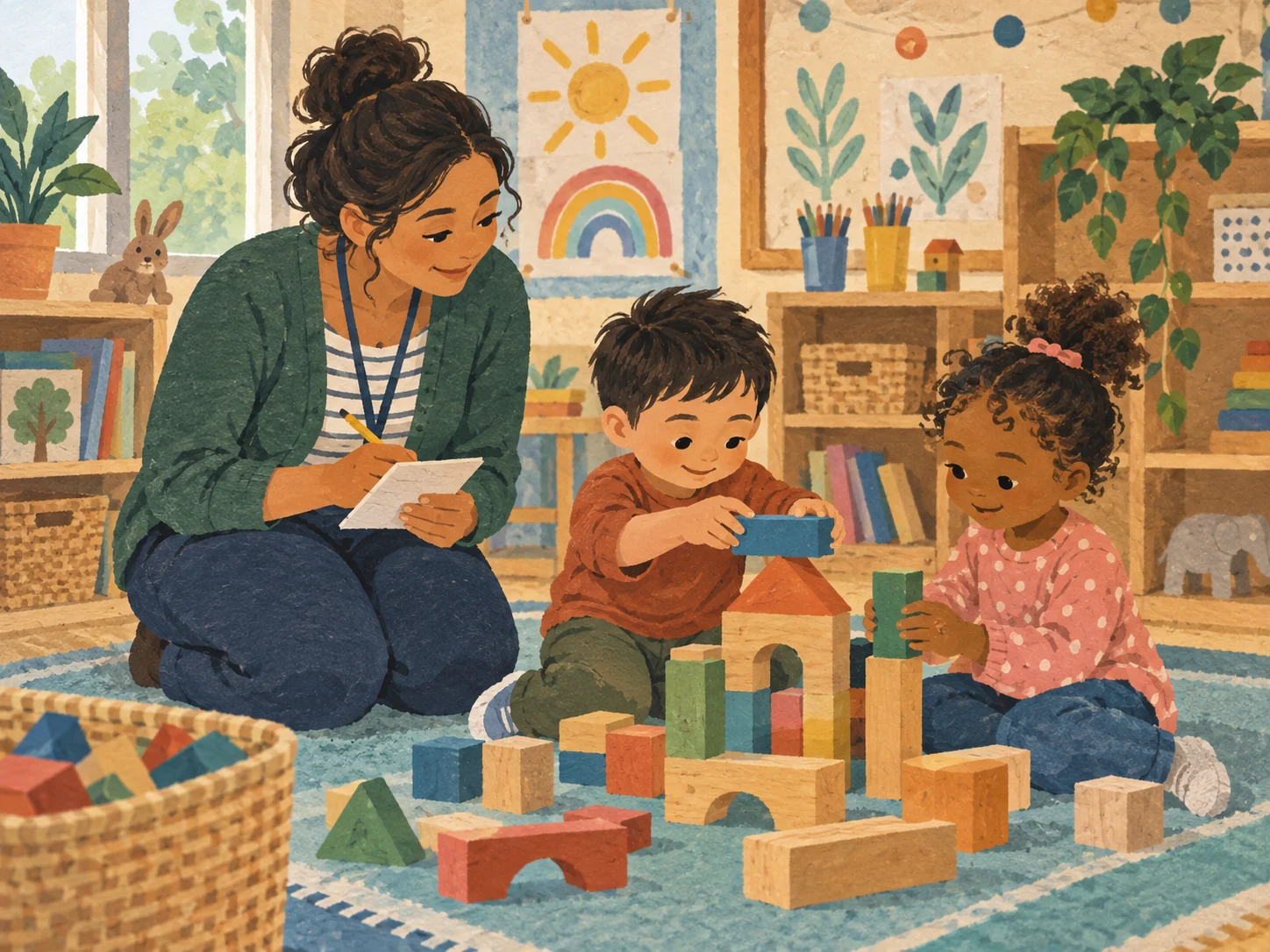
1. Match the credential to your current role
Use the age group and program setting where you can realistically complete the required experience and be observed. If you are unsure whether your room or family child-care home qualifies, ask the Council before paying for training or materials.
2. Complete your education and experience requirements
Finish the 120 hours through an eligible training organization and keep official proof. At the same time, track your 480 experience hours by date, age group, and setting, and ask your supervisor how the program will verify them. Candidates pursuing Birth to Five should separately track infant, toddler, and preschool hours.
3. Assemble your portfolio and arrange the verification visit
Use the current Competency Standards book for your setting. Prepare family questionnaires or other required evidence early, and identify a CDA Professional Development (PD) Specialist who can conduct your verification visit. Your PD Specialist reviews your portfolio, observes your work, and holds a reflective dialogue with you.
4. Apply, take the exam, and complete the verification visit
Once all prerequisites are met, submit the application and assessment fee through the Council’s process. After your application is approved, follow the Council’s Ready-to-Schedule notices for the exam and verification visit. The sequence can be setting-specific; for the Birth to Five pathway, the Council directs candidates to complete the exam before scheduling the verification visit. The Council reviews the assessment results before awarding the credential.
How Much Does a CDA Credential Cost?
As of September 2026, the Council lists an initial application assessment fee of $525 for an online application et $600 for a paper application. That is the Council’s application fee, not necessarily the total amount you will spend: training, books, and other preparation costs may be separate. Ask your employer or state early-childhood office whether scholarships or workforce funds are available before paying out of pocket. The Council’s current FAQ and application information should be checked again before you submit, since fees can change.
What Can a CDA Credential Help You Do?

A CDA can help demonstrate that you have completed structured professional learning and can apply early-childhood knowledge in a particular setting. It may support applications for educator roles, professional development plans, or employer qualification pathways. Whether it is required, preferred, or associated with a pay increase depends on the employer, program, and location—earning the credential does not guarantee a job, promotion, or higher wage.
If you manage a center, use the credential as one part of a staff-development plan. Match each candidate’s credential setting to their assigned age group, verify training and experience records, and schedule classroom coverage for coursework and the observation visit. The CDA process also gives directors a practical reason to coach staff on family communication, observation, safe environments, and program operations—not only on completing an exam.
Is a CDA Credential the Same as a State Child-Care License?
No. The CDA is a professional credential awarded by the Council for Professional Recognition. Child-care licensing is administered by state and territory governments, and staff qualifications and training rules vary by location and role. A CDA may be accepted for some requirements in some programs, but it does not automatically replace a license, background check, CPR/first-aid training, or other local requirements. Check your state or territory’s rules for staff qualifications and required training before relying on the credential for compliance.
How Long Does a CDA Credential Last?
A CDA credential is valid for three years. Renewal must be completed before it expires, and the Council allows candidates to submit a renewal application up to six months before the expiration date. Renewal requirements are tied to the original setting, so keep your training and work records organized and review the Council’s current renewal guidance well ahead of the deadline.
Questions fréquemment posées
Can You Complete CDA Training Online?
Yes. CDA training can be completed online as long as it meets the Council’s education requirements and covers the required CDA subject areas.
Can I Get a CDA Without Working in Child Care?
You do not need to have a paid child care job, but you do need 480 hours of qualifying experience working with young children in the appropriate CDA setting. Eligible volunteer experience may also count.
How long does it take to earn a CDA?
There is no single timeline for every candidate. The pace depends on how quickly you complete 120 training hours, accumulate the required work experience, prepare the portfolio, and schedule the exam and verification visit. The 480-hour experience requirement is often the main planning constraint for candidates who are new to the field.
Does a CDA qualify me to be a lead teacher?
It may meet or support a qualification pathway in some programs, but lead-teacher rules are not uniform nationwide. Confirm the requirements with your state licensing agency and the specific employer before accepting a role on the assumption that a CDA is sufficient.
Can You Change to a Different CDA Setting When You Renew?
No. The Council requires you to renew in the same setting in which your CDA was originally awarded. If you want a CDA in a different setting, you generally need to apply for a new initial credential in that setting.
Do You Need First Aid and CPR to Renew a CDA?
Not under the Council’s current renewal requirements. The First Aid and CPR requirement for CDA renewal was removed on August 1, 2025. However, your employer or state licensing rules may still require these certifications for your job.
Conclusion
A CDA Credential can be a practical next step if you want to build a stronger professional foundation in early childhood education. Before you begin, take time to compare the requirements with your current role, experience, and future plans so you can choose a pathway that genuinely fits your work.
Xiha Kidz sincerely hopes to see more skilled, thoughtful, and professional people enter and grow within the early childhood education field. Together, we can support children’s development from different perspectives and help create better early learning experiences.


 French
  English
  Arabic
  Italian
  German
  Spanish
  Thai
Thai  Japanese