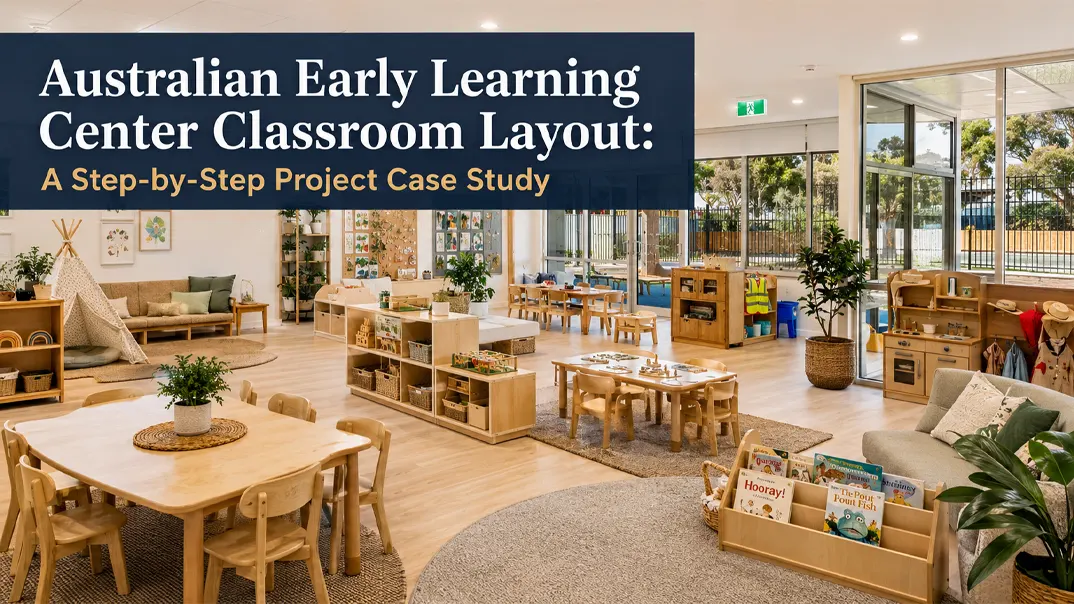
Over the past few years, we have worked with many clients in Australia on early learning centre and preschool classroom projects. Some of them were opening a childcare centre for the first time. Some already had experience in the industry, but still had many other things to handle at the same time, from licensing to staff preparation, and daily operation planning.
So they are eager to find a company that helps them plan the layout, adjust the details, and make the purchasing process clearer and easier. This is also why we have always focused on providing customized one-stop solutions for early learning projects.
In this article, I will use one of our recent Australian early learning center classroom layout projects as an example to show how we supported the client step by step.
Understanding the Client’s Project Needs First
Before we start any classroom layout, we first try to understand the client’s project clearly. Since this client already operates another daycare centre in Australia and has an existing website, we also checked their website to better understand their centre style, educational values, and preferred classroom atmosphere.
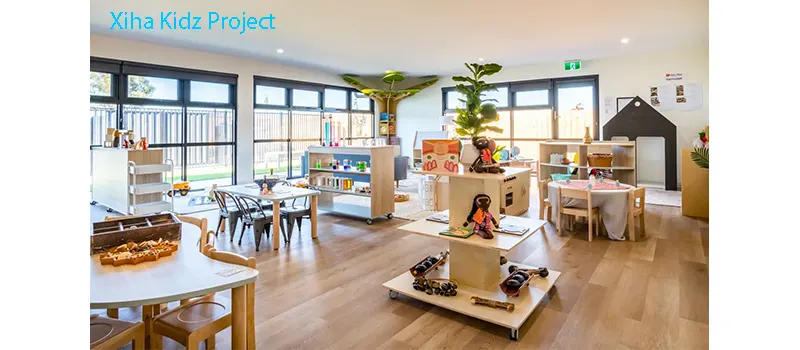
Project Basic Information
For privacy reasons, the centre name, address, and some detailed information are hidden in this case study. However, the following project background is based on our real communication with the client, and it helped us prepare a more suitable 幼稚園の教室レイアウト and furniture solution.
Enrollment Age Groups:
From infants to preschool children aged 0–5, divided into Nursery, 0–2 years old; Toddler, 1–2 years old; Pre-Kindy, 2–3 years old; and Kindy, 3–5 years old.
Educational Philosophy:
Operated by a family, the school is committed to creating a safe, sustainable, and caring learning environment. They attach great importance to children’s connection with the community and respect for the local culture in Australia. Through stimulating curiosity and seeking knowledge, they help children build strong identities and a sense of belonging.
Curriculum:
Follows national standards: the curriculum is strictly based on Australia’s Early Years Learning Framework, EYLF.
- Play-Based Learning: Emphasizes that children are at the centre, developing children’s independence, self-confidence, and desire to explore through practice and games.
- Diversified Teaching Content: Daily teaching activities cover STEM, science, technology, engineering, art, and mathematics, social skills development, fine motor skills, and literacy training.
- Transition to School Program: Provides a specialized, personalized school readiness program for children who are about to enter primary school, helping them transition smoothly. In addition, eligible families can receive a free three-year-old preschool program funded by the ACT Government.
Project Scale:
- Indoor area: 877 m²
- Outdoor play area: 900 m²+
- Total licensed capacity: 119 children
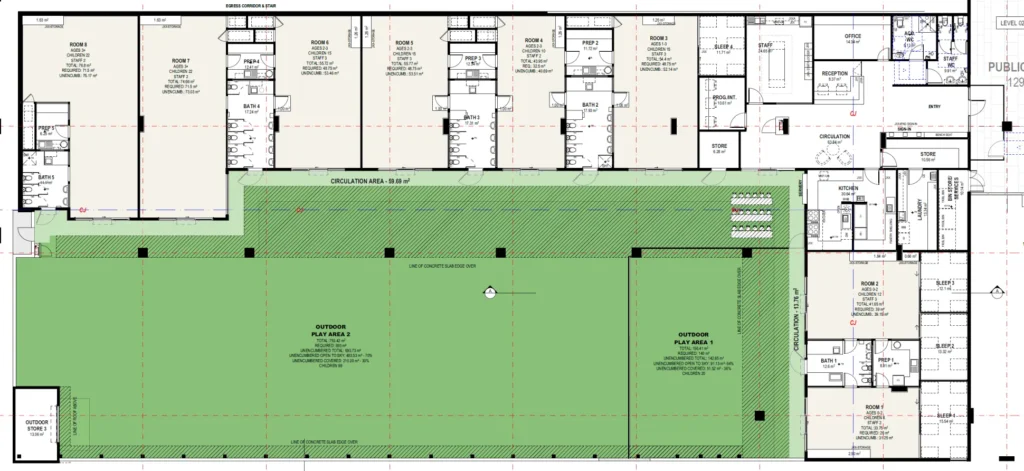
Client Needs Analysis (Based on the Floor Plan)
Based on the client’s floor plan and the discussion during our video meeting, we identified the following key requirements. This analysis also includes suggestions from our professional classroom planning consultant.
| Room | 年齢層 | Children | Staff | Area |
|---|---|---|---|---|
| Room 1 | Ages 0–2 | 12 | 3 | 33㎡ |
| Room 2 | Ages 0–2 | 12 | 3 | 42㎡ |
| Room 3 | Ages 1–3 | 15 | 3 | 54㎡ |
| Room 4 | Ages 2–3 | 10 | 2 | 44㎡ |
| Room 5 | Ages 2–3 | 10 | 2 | 55㎡ |
| Room 6 | Ages 2–3 | 10 | 2 | 55㎡ |
| Room 7 | Ages 3+ | 22 | 2 | 77㎡ |
| Room 8 | Ages 3+ | 22 | 2 | 75㎡ |
Indoor Area
The floor plan shows that the “Childcare (INT)” area is approximately 1,800 square meters. The project includes both indoor learning spaces and outdoor play areas, so the classroom layout needs to consider how these two areas connect and support daily activities.
Space Planning Requirements
The indoor area includes 8 independent rooms plus a children’s sleeping area. These rooms are arranged in a linear or L-shaped layout, and each classroom has one side connected to the outdoor play area.
This means the furniture configuration and 3D layout design should provide a flexible classroom solution with clear circulation. The design should avoid blocking exits, keep movement routes smooth, allow indoor activities to naturally extend outdoors, and help teachers maintain good visibility across the classroom.
Educational Philosophy Requirements
In line with the core values of the EYLF (Early Years Learning Framework) — “Belonging · Being · Becoming”, we believe the classroom should have the following characteristics:
- Child-led
- Exploratory environment
- Openness and blank space
- Flexible space
- Strong sense of daily life
- Experience-focused
The learning environment should support children’s independent exploration and reduce the feeling of a traditional, teacher-centered classroom. The space should feel open, relaxed, and child-friendly, with less visual pressure and more opportunities for hands-on learning.
The layout should also create more scenario-based learning areas, support project-based activities, and encourage interaction between children. This helps build a more flexible, engaging, and developmentally appropriate learning environment.
Australian Early Learning Center Classroom Layout
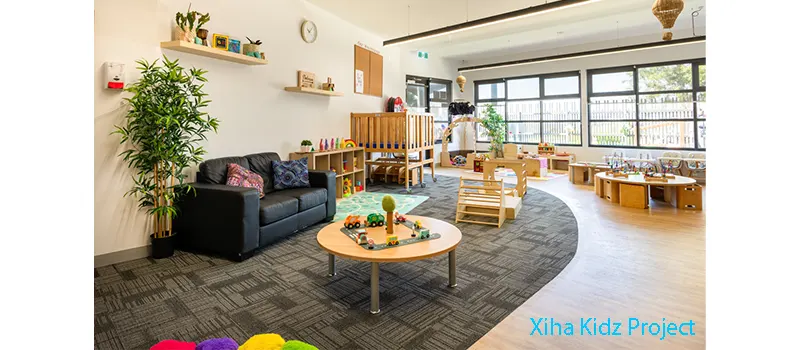
In many projects, especially for clients who are opening a new centre or preparing several classrooms at the same time, they may not have a clear furniture list at the beginning. They may only know the style they like, the age group of each room, and the type of learning environment they want to create. That is completely normal.
Our first step is to use the 保育園のフロアプラン to create an initial classroom layout. If the client already has a preferred style, such as natural, Montessori-inspired, Reggio-inspired, or a more modern childcare environment, we will follow that direction when planning the space. If the client is not sure what to choose yet, we can also provide layout ideas based on their teaching philosophy, room size, and children’s age group.
Once the first layout is ready, the client can review the room arrangement together with our product catalogue. This makes product selection much easier because the client is no longer choosing furniture separately. They are choosing products with the actual classroom space in mind.
After the client selects the products they like, we can place those products back into the layout and adjust the furniture arrangement again. This helps the client preview how the selected furniture may look inside the real classroom before confirming the order.
Room 1,2: Ages 0-2 CHILDREN 12
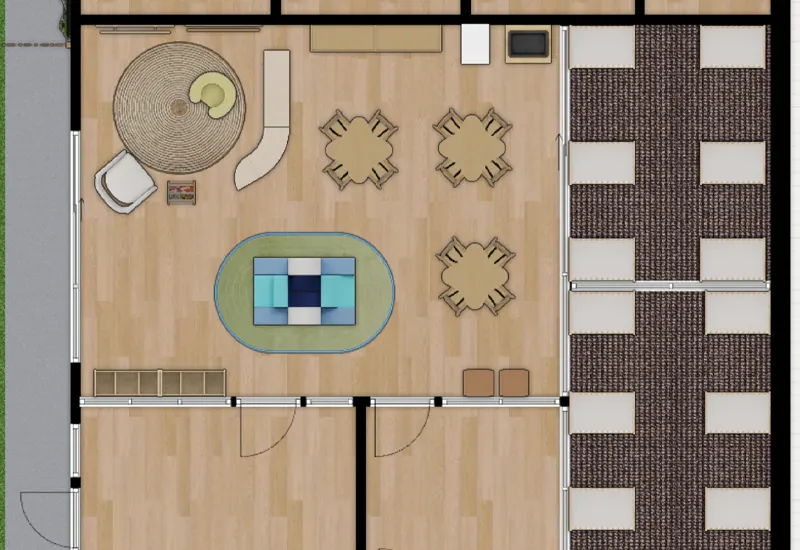
We planned the layout with Australian childcare safety requirements in mind. Regular circulation aisles are kept at approximately 50cm–100cm, allowing enough space for young children to move while reducing collision risks. The main evacuation route is kept wider than 1 metre to ensure safe access during daily transitions and emergency movement.
1. Quiet Area
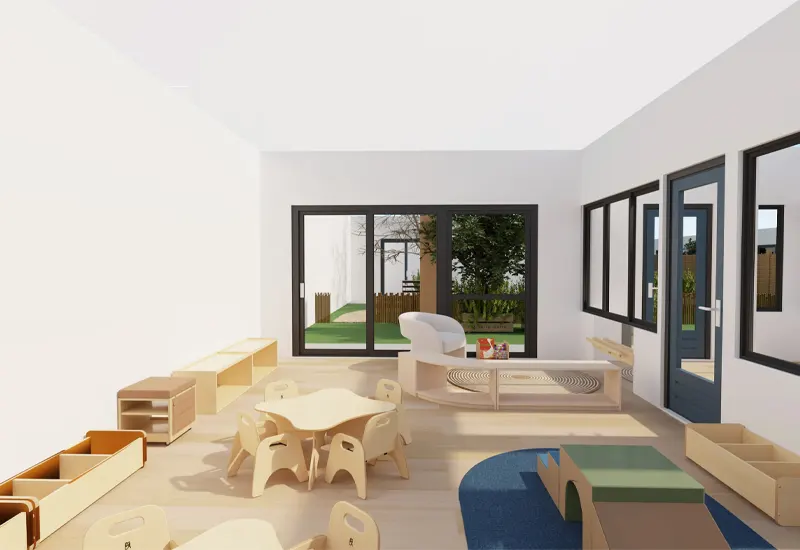
The upper-left area is designed as a quiet and secure reading corner. A large round rug, a single teacher sofa, a bookshelf, and curved low cabinets are arranged together to form a soft, semi-enclosed space. This gives infants and toddlers a calm area for picture book reading, quiet interaction, and emotional comfort.
2. Gross Motor Exploration Area
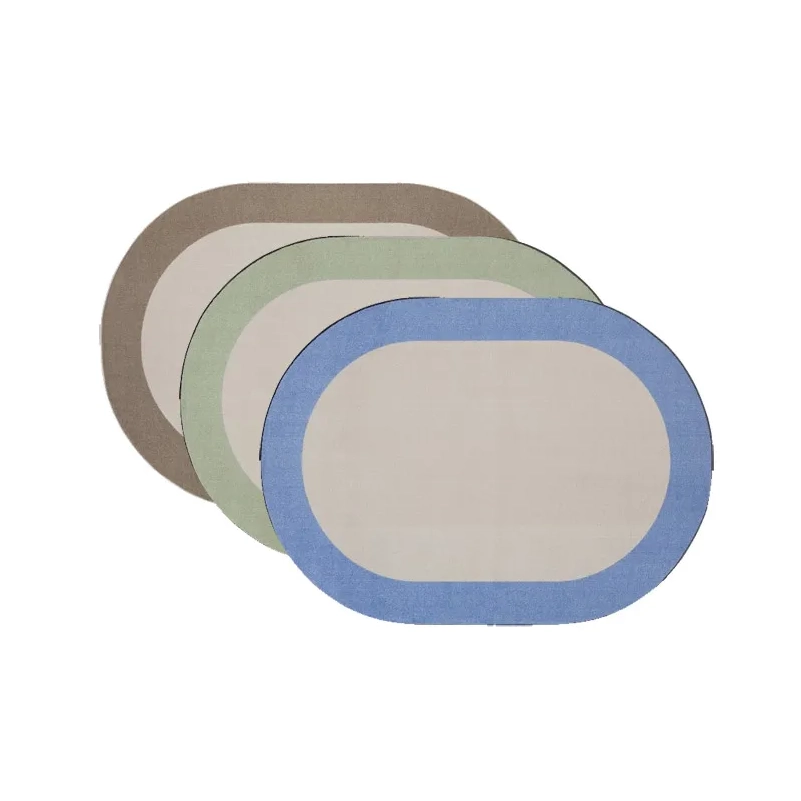
The main activity area uses an oval rug with a low climbing and sensory slide combination. This area is placed away from the main pathway to keep crawling and moving infants safer during active play.
For different developmental stages, this area can support:
- 0–6 months:
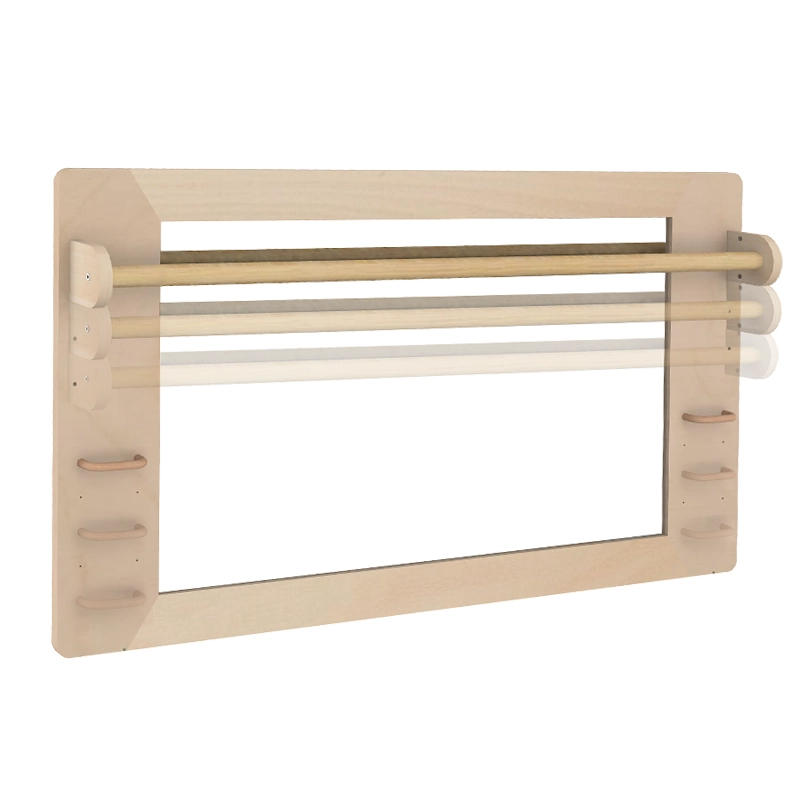
Mainly supports tummy time, head lifting, rolling, prone support, and safe resting. The space focuses on large soft floor areas, mirror interaction, gentle sensory experience, and secure floor-based movement. - 6–12 months:
Supports crawling, sitting balance, kneeling, early standing practice, and assisted climbing. Soft cube combinations and low climbing ramps help children practise movement while keeping the activity level safe and controlled. - 12–24 months:
Supports independent walking, short walking routes, early climbing, and stronger gross motor practice. Low and enclosed soft play structures help reduce the risk of falling, bumping, and unsafe collisions during active movement.
3. Fine Motor and Meal Area
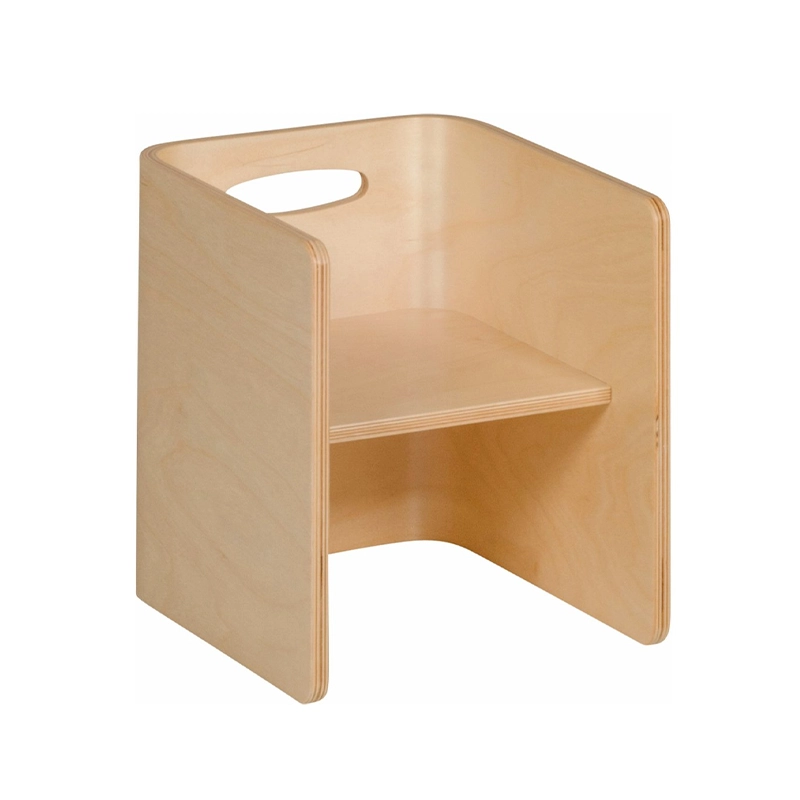
Three small child-sized tables are arranged in the room. This area can support daily fine motor activities, focused table play, and mealtime routines. It also gives teachers a convenient place for group care, feeding, and short seated activities.
Room 3: Ages 1-3 CHILDREN 15 STAFF 3 Area 54㎡
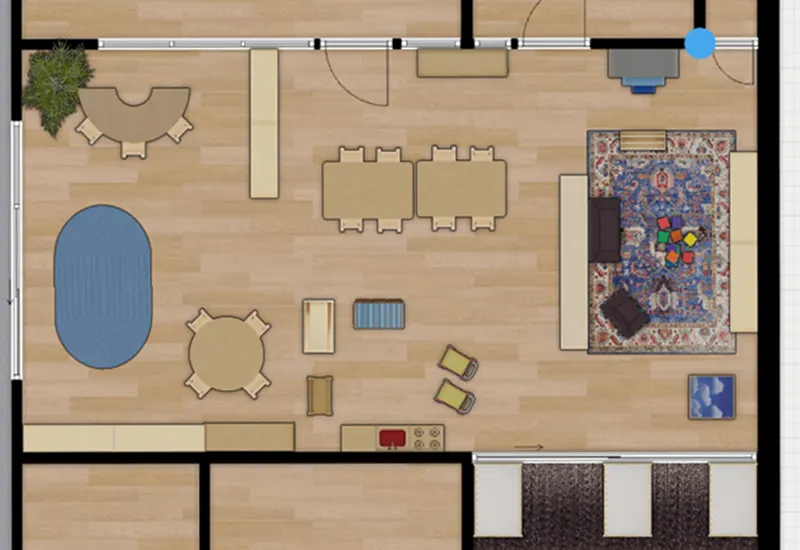
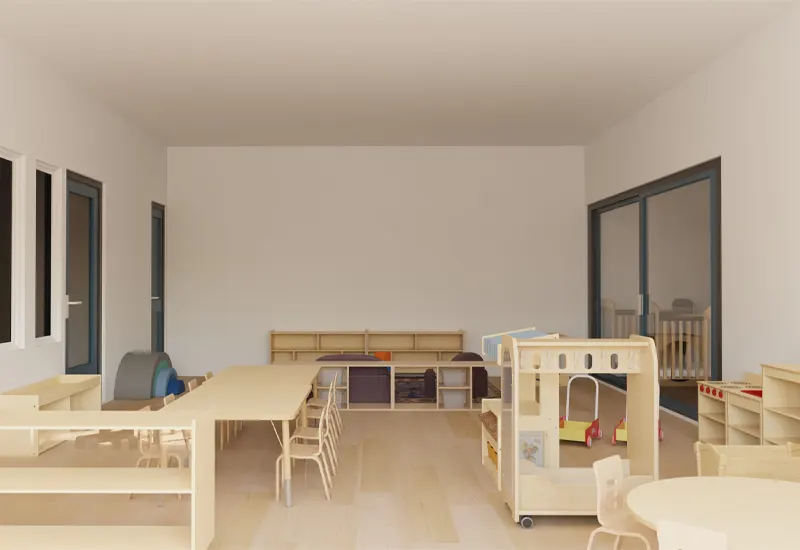
Between ages 1 and 3, children’s physical mobility increases significantly, necessitating a more spacious environment. They also enter a sensitive period for social development and experience rapid language growth. Therefore, a large space needs to be divided into multiple small interactive zones that have boundaries yet are interconnected. By breaking down a large space into small interactive areas, the space evolves from “safety and care” to “social exploration.”
1. Reading Corner (Community Core and Emotional Support Area)
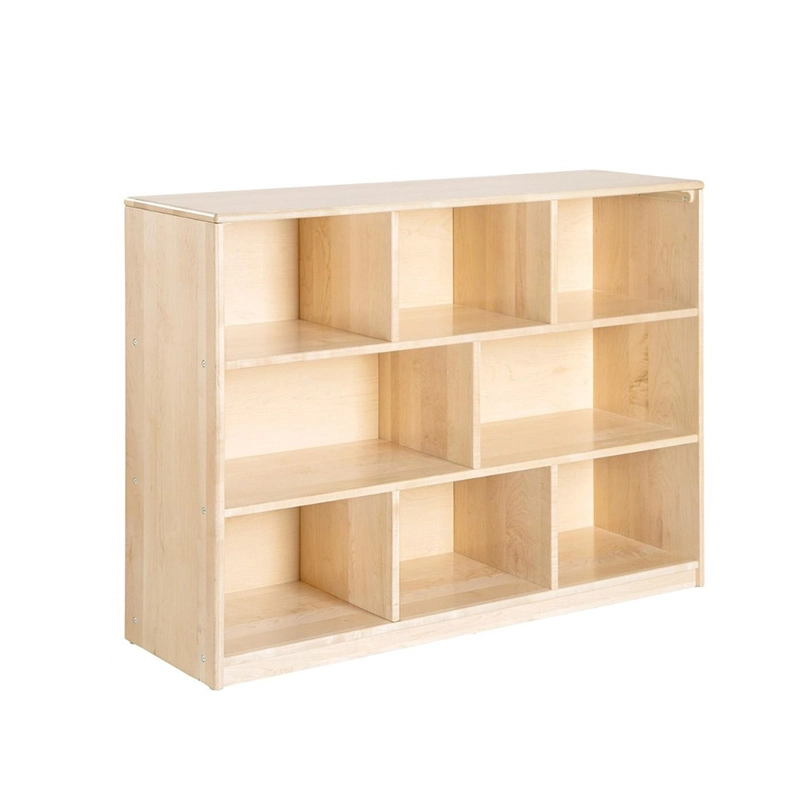
Children aged 1–3 can easily experience separation anxiety, so this area is designed with a strong home-like atmosphere. The learning material cabinets are placed against the wall, leaving a very generous open space in the centre. This supports whole-group story time, circle time, and calm group interaction.
At the same time, this open area also works as a buffer for movement flow. Since it is close to the sleep room on the right side, children who have just woken up can move naturally into a quiet reading or comforting space without being placed directly into a busy activity zone.

2. Project Discussion Area (Social and Fine Motor Activity Area )
The long tables are arranged side by side to make the space efficient and easy to manage. Children can sit next to each other or face each other, learning through observation, imitation, and interaction with peers.
This area supports early social development, hand-eye coordination, fine motor activities, and small project-based tasks. It also works as a highly practical central dining area, allowing teachers to manage mealtimes more smoothly.
3. ドラマチックプレイエリア
In both the Australian EYLF and Reggio Emilia-inspired educational approaches, dramatic play is regarded as one of the most important ways young children learn.
Through role play, children naturally use language, which supports language development. During cooperative play, they also begin to practise waiting, turn-taking, negotiation, collaboration, and sharing with others. These are important foundations for social development.
Dramatic play also helps children express emotions, build a sense of safety, develop imagination and creativity, understand real-life social roles, and strengthen cognitive and problem-solving skills.
This is closely connected with the EYLF view that children learn through experience, not simply through direct instruction. Therefore, dramatic play is not just a corner in the classroom. It is an important educational space where children build language, social, emotional, and cognitive abilities.
4. Art Workshop
On the left side of the room, the teacher can sit near the centre of the curved recess, creating a semi-enclosed teaching position. This allows the teacher to stay close to the children while they explore clay, drawing, mark-making, or sensory trays.
The arrangement gives the teacher a strong sense of control and visibility while still allowing children to explore materials freely. It is especially suitable for messy play, sensory exploration, and early creative activities.
5. Free Construction Area (Building Block Area)
The carpeted area on the right side is left flexible for open-ended play. Children can sit on the floor to build with blocks, practise walking, explore materials, or create their own play scenarios.
This area intentionally keeps some open space, giving the classroom more flexibility. It allows the room to adapt to children’s changing interests, movement needs, and spontaneous play throughout the day.
Room4-6: Ages 2-3 CHILDREN 10 STAFF2 Area 44㎡ 55㎡ 55㎡
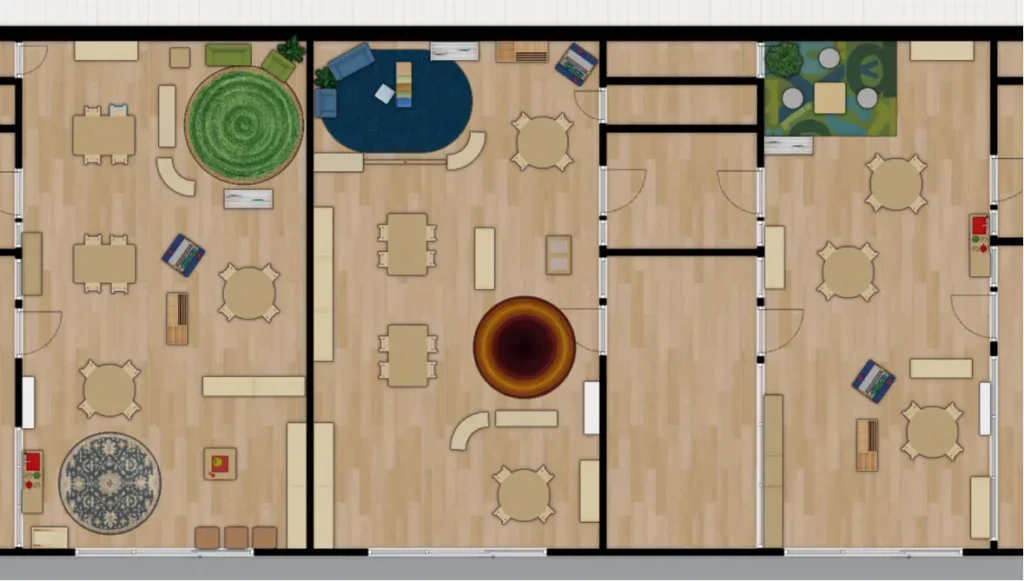
Children aged 2–3 are entering a stage of rapid physical development. They run, climb, and explore energetically, while social skills and independent language are also emerging. At this stage, classroom design focuses on “energy management”, helping children safely channel their high activity levels, practise self-regulation, and develop emotional control.
Key Design Considerations
- Avoid long, straight pathways that encourage continuous running or collisions.
- Break the space into smaller interactive zones to prevent overexcited movement and reduce risk.
- Provide enough open space for active play while maintaining safety and teacher supervision.
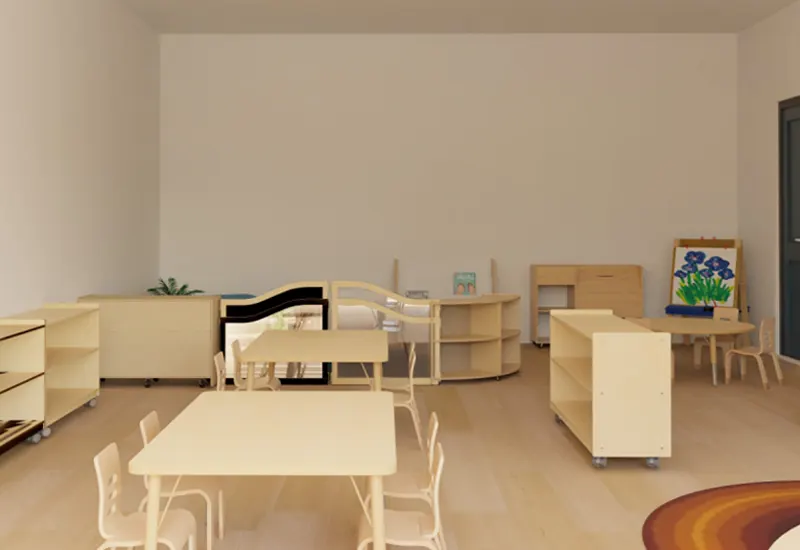
Table Arrangement
The room uses a non-symmetrical layout to support varied activities:
- Rectangular tables placed at the edges allow focused fine motor activities like block building or clay modeling.
- Round tables are decentralized, which is more conducive to unstructured social sharing, thereby promoting social interaction.
This mix provides children with diverse physical platforms for hands-on activities.
Functional Zones
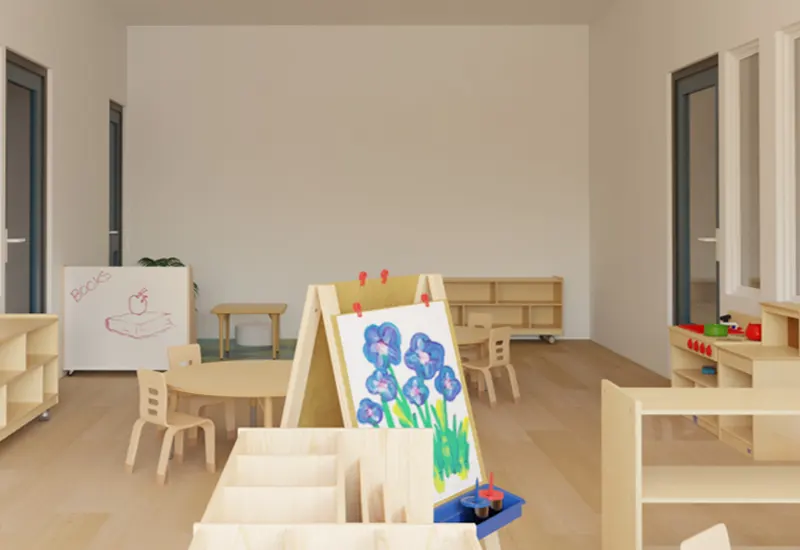
In addition to the table areas, the room continues the five core functional zones:
- 読書エリア: A calm, safe corner for story time, quiet reading, and emotional regulation.
- Dramatic Play / Role Play Area: Supports imaginative play, cooperative interaction, language development, and safe social experimentation.
- Project / Discussion Area: Tables arranged for group work and guided activities, supporting focused learning while maintaining a manageable energy level.
- Art Workshop: A semi-enclosed space where teachers can guide creative and sensory activities, allowing children to explore materials while keeping energy under control.
- Construction / Building Zone: Flexible area for open-ended block building, movement practice, and physical exploration, giving children room to release energy safely.
By designing the space around energy management, children can actively explore, practise self-control, and engage in a range of activities safely, while the layout naturally supports transitions between high- and low-energy zones.
Layout Value for the Client
For this group of rooms, the layout helped the client understand that a 2–3-year-old classroom should not simply be “more open” or “more filled with furniture.” The key is to control the rhythm of the space.
A good layout for this age group should allow children to:
- release energy safely
- move without creating chaos
- shift between active and calm activities
- practise early social interaction
- build independence through accessible materials
- stay within clear but gentle boundaries
For the teachers, this kind of layout also makes daily supervision easier. Instead of constantly stopping children from running or moving furniture around later, the classroom itself already helps guide behaviour.
Room 7-8: Ages 3+ CHILDREN 10 STAFF2 Area 77㎡ 75㎡
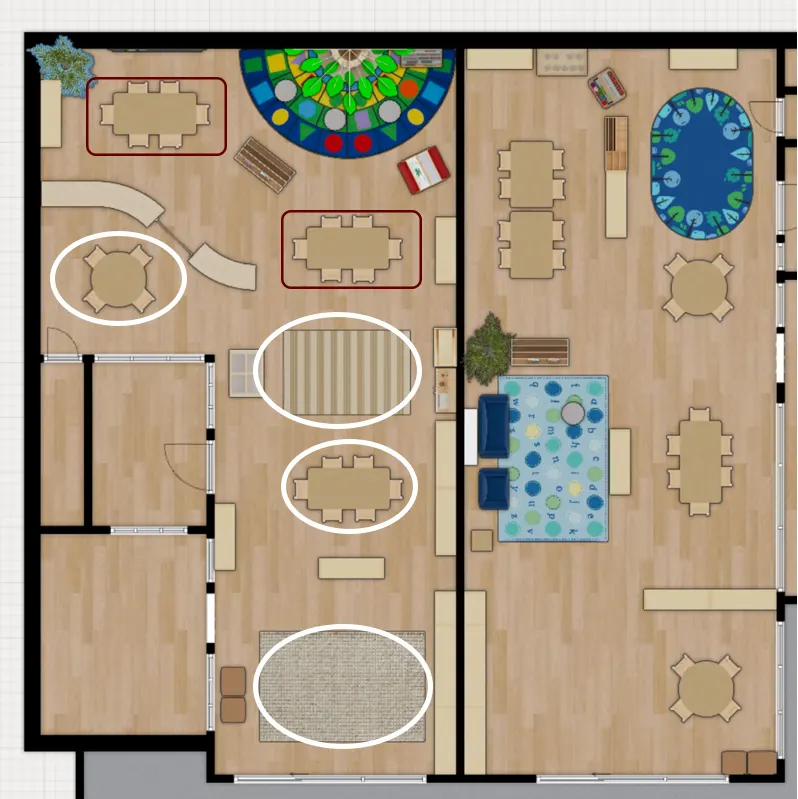
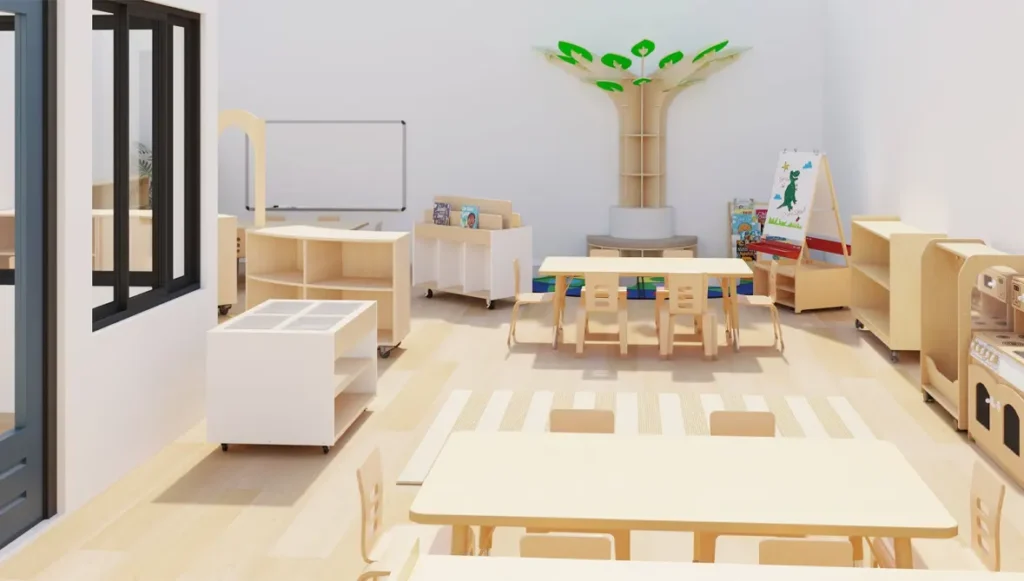
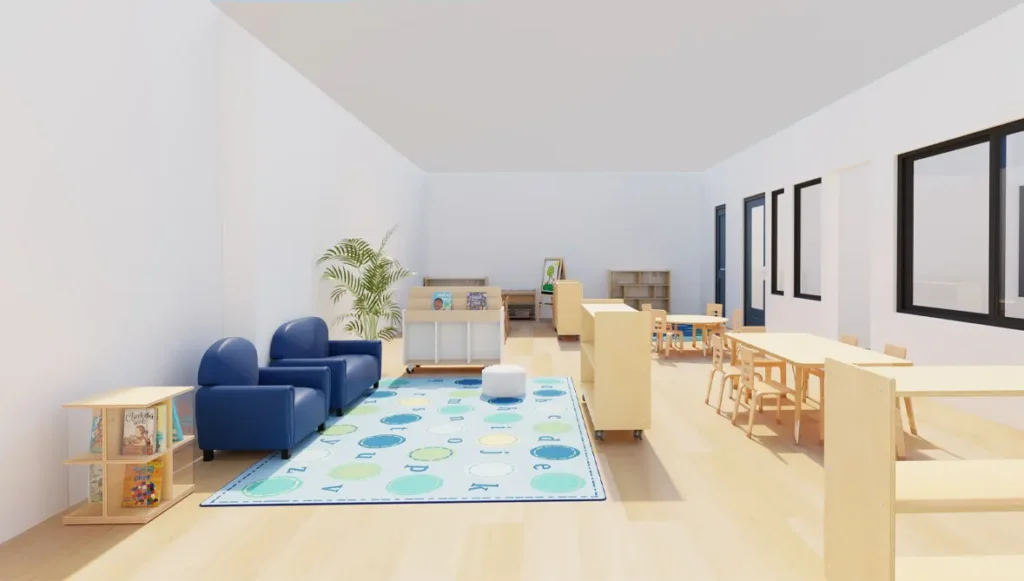
Compared with the 0–2 and 2–3 age groups, children aged 3 and above have relatively more mature gross motor development. Their core needs shift toward high-frequency peer cooperation, collaboration between different areas, smooth transitions, and longer, deeper project-based exploration. Therefore, the layout is more inclined toward a “project atelier” small-group structure.
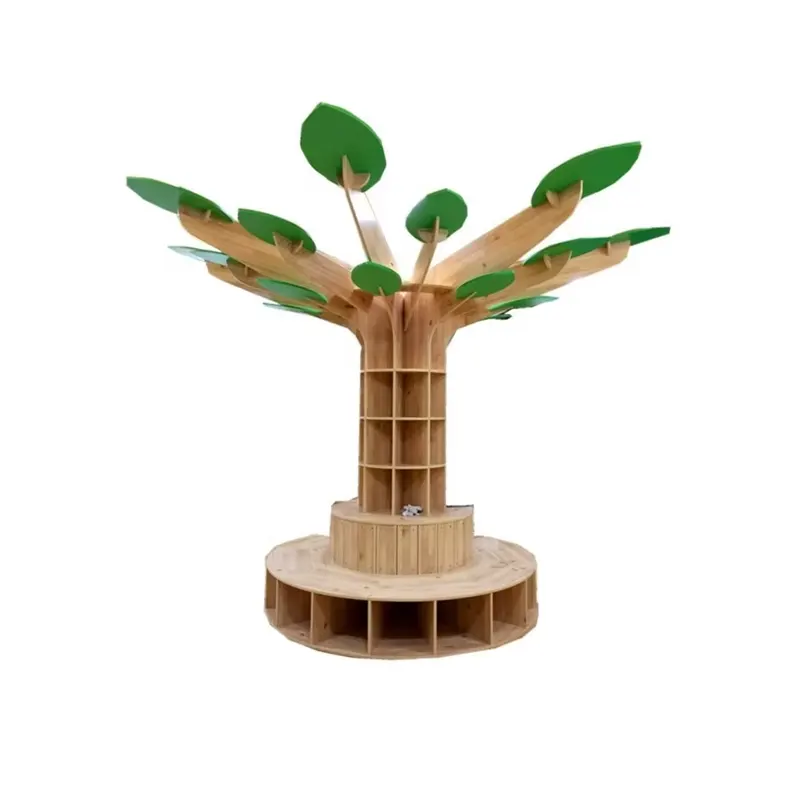
1. Reading Tree Area
This area is designed as a Reggio-inspired “narrative plaza”. Children can use this space for more complex dramatic performances, group sharing, Show and Tell, daily morning meetings, or simply as a quiet reading corner.
2. Two Semi-Independent Areas
The left side is divided into two relatively independent areas to meet children’s need for “private social interaction.” These areas also provide a strong sense of inclusion and belonging.
3. Project Atelier Flow
The right side follows a flow of: Table Area → Carpet Area → Table Area → Carpet Area
This creates a Reggio-style large project atelier flow.
For example, after children discuss ideas on the upper carpet area, they can move smoothly to the large long table to start dividing tasks, drawing sketches, working with clay, or creating detailed tabletop models. This becomes an efficient and energetic collaboration centre.
The carpet area can also be used as a home corner, dramatic play area, or role-play space.
4. Free Construction / Movement Zone
The lower-right carpet area is left flexible for free exploration. Children can sit on the floor to build with blocks, practise walking, or use the open space in their own way.
This intentional blank space gives the classroom more flexibility.
Outdoor Classroom Layout
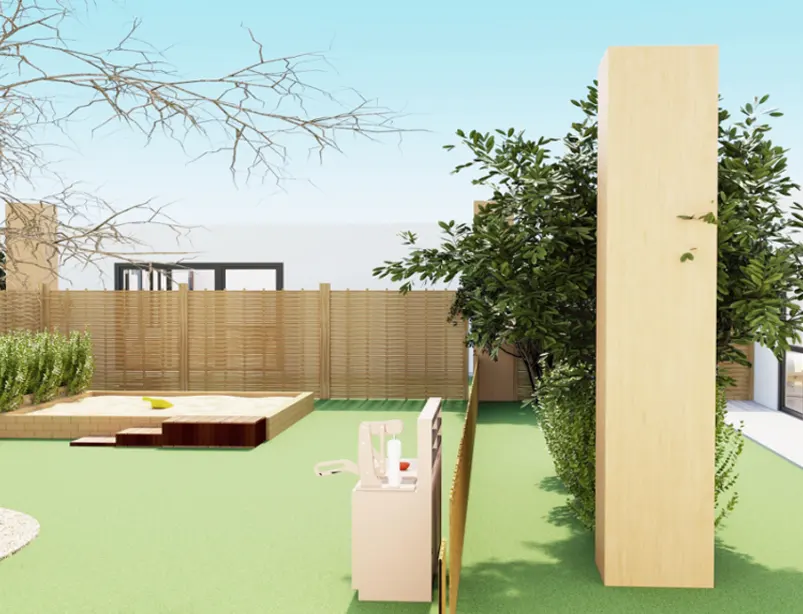
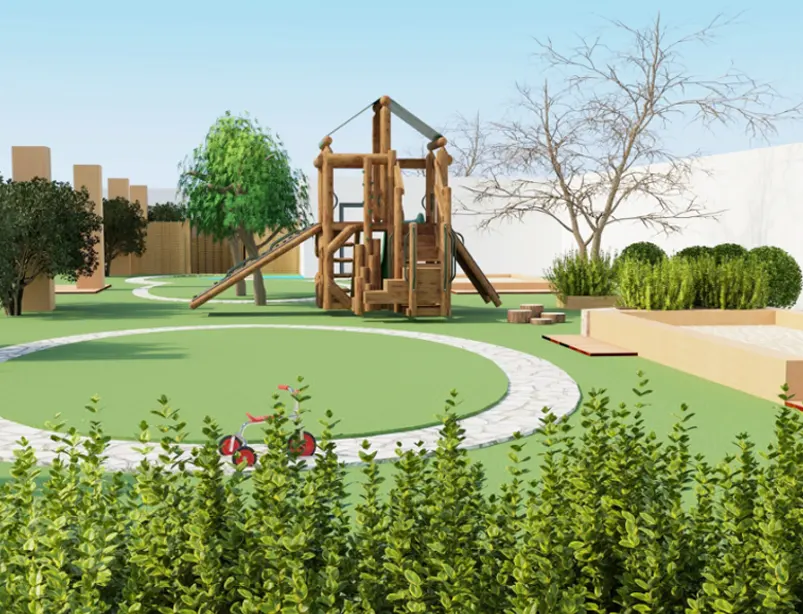
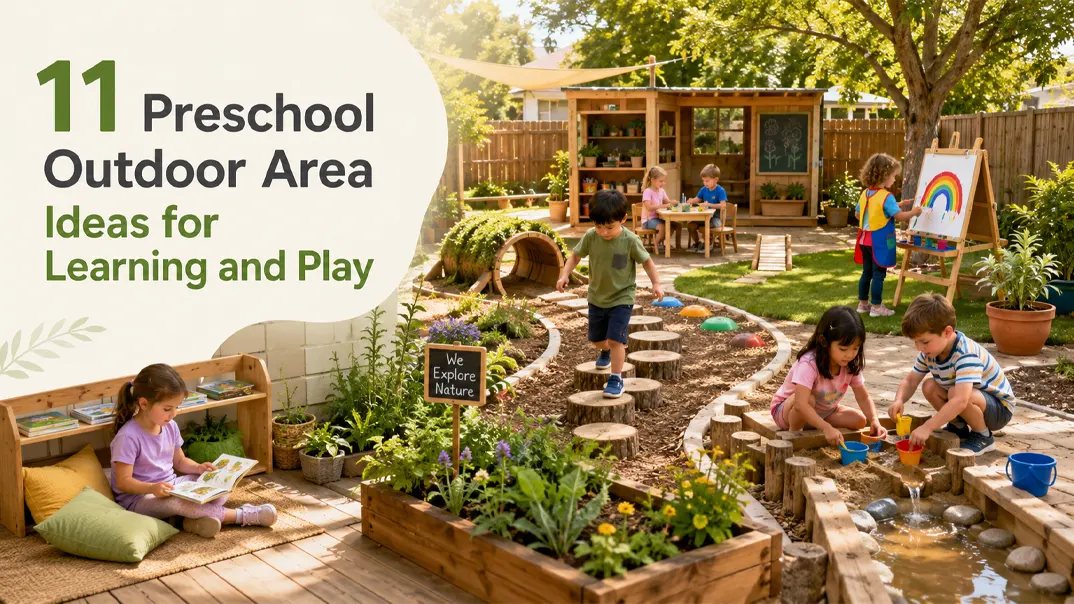
The outdoor area is designed as a nature-based exploration playground that supports children’s physical activity, social interaction, and sensory development.
Design Philosophy
Following EYLF principles, the outdoor environment is considered a “third teacher,” allowing children to engage with nature, practise independence, and develop social and cognitive skills through exploration.
The layout encourages children to explore freely while respecting natural boundaries. Zones are arranged to balance high-energy activity with quieter exploration areas, helping children manage physical activity and learning simultaneously.
Planning the Low-Age Zone
For the youngest children, we designed a semi-enclosed, low-exposure zone that prioritizes safety and accessibility.
- We positioned soft boundaries and low fencing to create a secure social area, allowing infants and toddlers to move freely without risk.
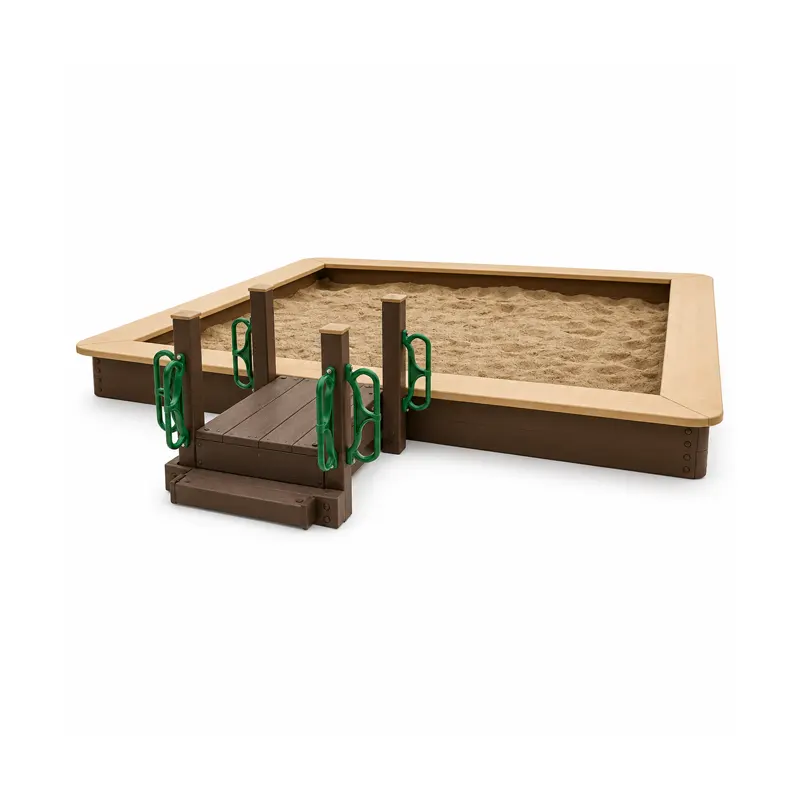
- The sandpit and miniature play kitchen were intentionally placed near the entry paths with gentle slopes, so children could practise grasping, pouring, and early climbing in a controlled environment.
- Low climbing and sensory structures were arranged to avoid the main circulation paths, minimizing collisions while enabling children to explore independently.
Every element in this area was thoughtfully scaled, oriented, and spaced to balance safety, accessibility, and developmental opportunities, giving young children a calm yet stimulating environment to develop fine motor skills, coordination, and early social interactions.

Integrating Movement and Project Areas for Older Children
Beyond the low-age zone, we designed the central outdoor space to support higher-energy play and exploratory learning for older children. This includes climbing structures, open grassy areas, and modular activity zones where children can engage in collaborative or individual projects. We arranged pathways, activity stations, and open areas to guide movement safely, prevent bottlenecks, and encourage transitions between active and calm play.
Incorporating Nature and Sensory Learning
Throughout the outdoor environment, we incorporated vegetable gardens, water features, and natural materials to give children hands-on experiences with growth and ecology. Wooden bridges and platforms connect different areas while maintaining a safe, continuous flow. Artificial turf, low climbing platforms, and sensory sand areas were carefully positioned to encourage exploration. The design ensures children can engage deeply with nature, practice independence, and develop social, cognitive, and emotional skills while moving safely through the playground.
最終判断
Through this Australian preschool classroom layout project, one clear lesson is that each room needs to be planned according to its real users. This is why we do not suggest choosing furniture only from a catalogue.
The better process is to start from the floor plan, understand the age group and capacity of each room, plan the functional zones first, and then match the right products into the layout. When the furniture is selected after the layout direction is clear, the final classroom becomes easier to use and manage.
In our view, a successful classroom layout should answer three practical questions:
- Can children use the space safely and independently?
- Can teachers manage the room effectively?
- Can the furniture and zones support the centre’s educational approach every day?
If the answer is yes, then the layout is doing more than filling a room. It is helping the classroom become a real learning environment.
よくある質問
How do you determine the best layout for different age groups?
We consider each age group’s developmental needs, daily routines, and the number of children in the room. For infants, safety and calm zones are prioritized; toddlers need clear activity zones with energy management; preschoolers benefit from collaborative project areas and flexible learning spaces. Each layout is customized to the specific room dimensions and teaching philosophy.
Can you create a layout if we don’t know what furniture to choose?
Yes. If the client provides only the floor plan, we can design the layout based on established educational approaches like Montessori or Reggio Emilia. The layout serves as inspiration and helps clients see which furniture and materials will fit best, even before selecting specific products.
Does the layout account for safety and supervision?
Absolutely. Every layout considers safe circulation paths, evacuation routes, sightlines for teachers, and appropriate spacing between activity zones. Furniture and rugs are positioned to reduce collision risks while maintaining natural movement flow for children.
What is the difference between a Montessori-style layout and a Reggio-inspired layout?
A Montessori-style layout usually focuses on order, independence, low open shelves, defined work areas, and child-accessible materials. A Reggio-inspired layout often places more emphasis on open-ended exploration, natural materials, project work, display areas, light, and flexible creative spaces. In real projects, many centres combine elements from both approaches.
How can furniture placement affect children’s behaviour?
Furniture placement can guide how children move and interact. Long empty pathways may encourage running, while well-placed shelves, rugs, and activity tables can slow movement and create more focused play areas. A thoughtful layout can reduce classroom chaos without making the space feel restricted.


 Japanese
  English
  Arabic
  French
  Italian
  German
  Spanish
  Thai
Thai