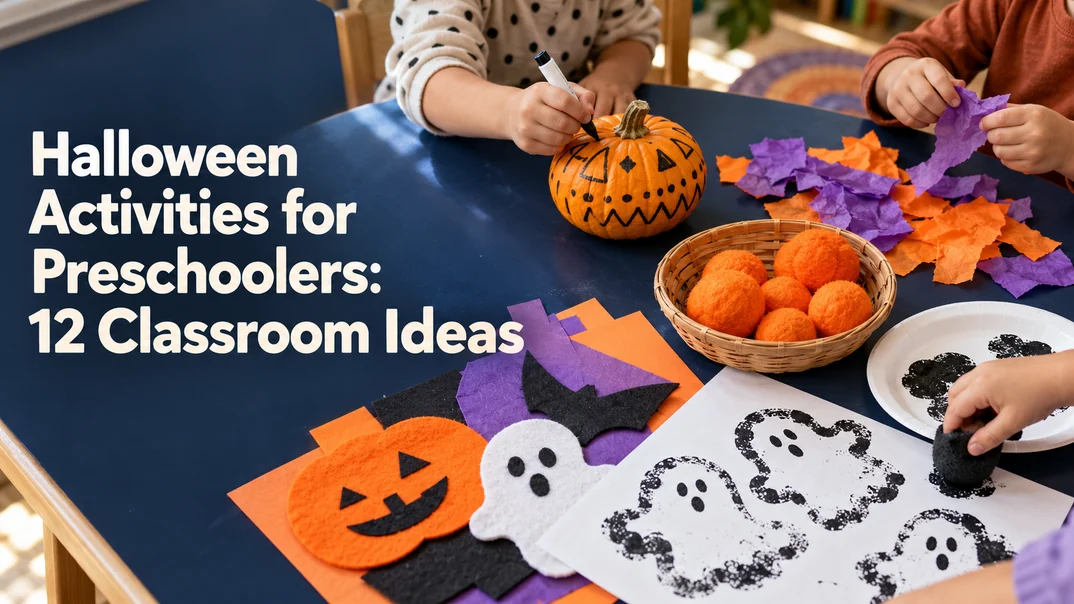
Halloween activities for preschoolers can turn familiar classroom materials into opportunities to create, explore, and play together. A pumpkin becomes something to investigate, a cardboard box becomes a friendly monster, and a few paper shapes can inspire a new story. This guide shares 12 easy activity ideas, with materials, clear instructions, and practical tips to help you choose what works for your classroom.
Sensory and Fine-Motor Activities
These activities work well at a table where you can sit alongside the children and talk about what they notice. Use shallow trays to keep materials within reach and make it easier to prepare the station for another group.
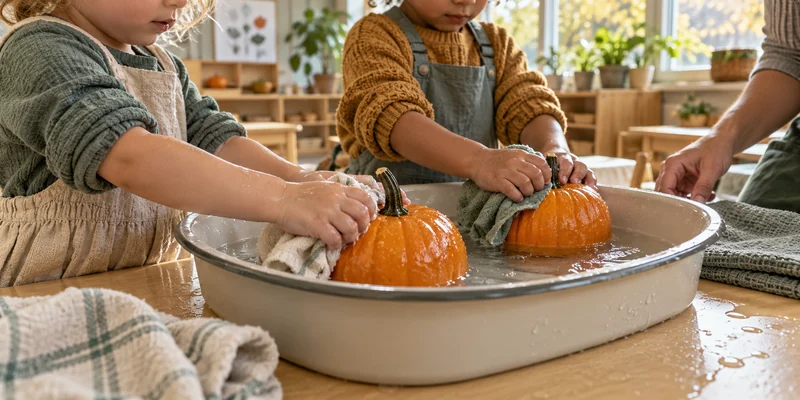
1. Pumpkin Wash and Compare
You need: Two or three small, intact pumpkins, a shallow basin, cloths, a little water, and towels.
Place the pumpkins in the basin and invite children to wash them with damp cloths. As they turn and wipe each pumpkin, encourage them to look closely at its bumps, grooves, colours, and shape. You might say, “This one feels quite smooth. What does yours feel like?” Give them time to explore rather than asking a series of questions.
After washing, place the pumpkins side by side. Children can find the tallest one, compare which feels heavier, or describe how they would recognise their pumpkin again. Keep a tray beside the basin for the clean pumpkins and wipe up splashes as you go.
2. Spiderweb Tape Rescue
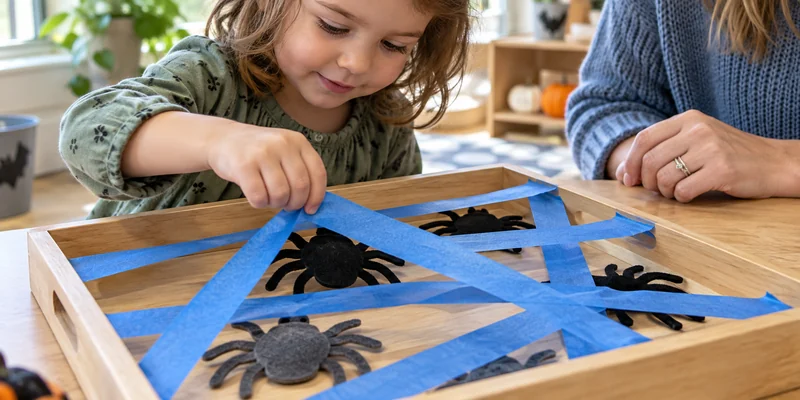
You need: A shallow tray, short strips of low-tack painter’s tape, and several large felt or cardboard spider shapes.
Place the spiders inside the tray, then stretch a few strips of tape across the rim to make a loose web above them. Fold over one end of each strip to create a small tab children can grasp. Start with just a few strips so they can see how to reach the spiders.
Invite children to rescue a spider by lifting and peeling away the tape. You can ask, “Which strip could you move first?” and let them test their ideas. Once they understand the task, overlap a few strips to make the next rescue more challenging. Keep a small basket nearby for the rescued spiders and replace tape that has become tangled or lost its stickiness.t player.
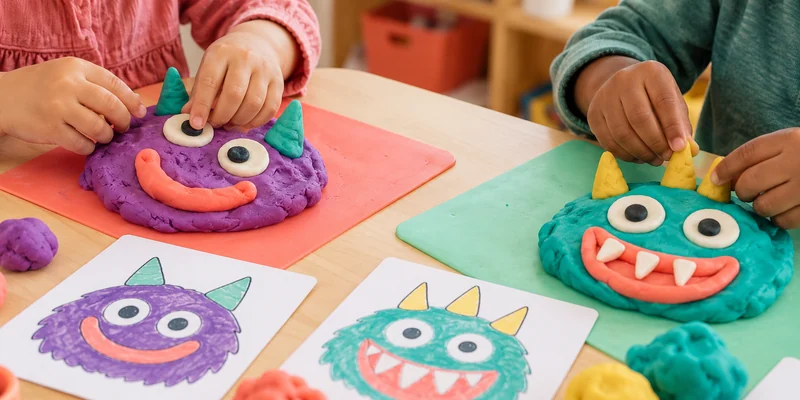
3. Silly Monster Dough Faces
You need: Child-appropriate modeling dough, reusable mats, and a few simple face cards.
Give each child a piece of dough and invite them to make a friendly monster face. You can demonstrate how to roll a ball, flatten a piece, or press a curved mouth into the dough, then let them decide what their monster will look like. The face cards can offer ideas if someone needs help getting started.
As children work, follow their ideas with questions such as, “What sort of sound would your monster make?” They can change its expression, add another eye, or flatten it and begin again. Offer a tool for anyone who prefers less direct contact with the dough, and check the ingredients against your class allergy plan before the activity.
Art Activities Children Can Make Their Own
These projects use Halloween images without asking every child to produce an identical craft. Put out only the materials you can supervise and clean easily.
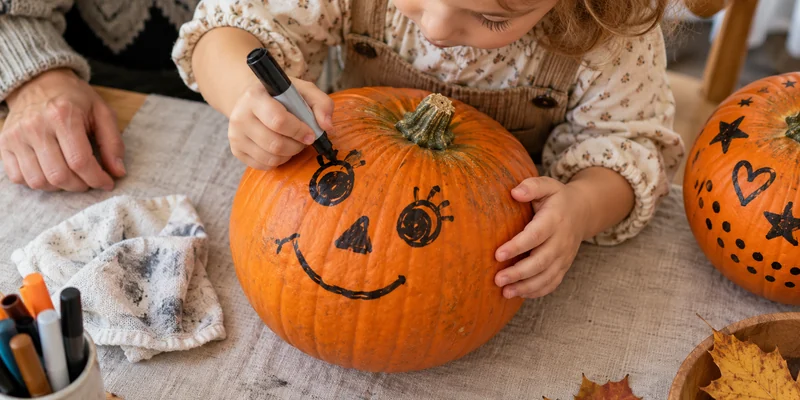
4. No-Carve Pumpkin Faces
You need: Intact pumpkins, washable markers, and damp cloths.
Invite children to turn a pumpkin into a character using faces, patterns, or their own drawings. Show them how to steady it with one hand while drawing with the other. A folded towel beneath the pumpkin can help keep it from rolling.
If you have already tried the pumpkin wash activity, reuse those pumpkins once they are completely dry. Test the markers beforehand if you want children to wipe off their drawings and try again, since some colours may leave marks on the skin. When they finish, invite them to name their pumpkin or tell you something about its character.
5. Ghost Sponge Prints
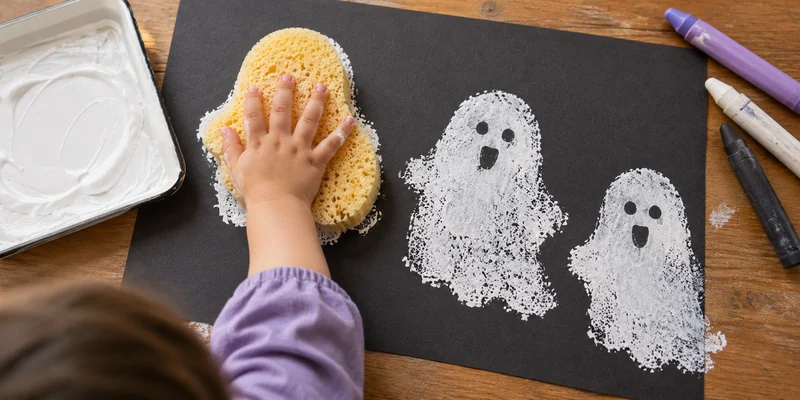
You need: Large paper, white washable paint, wide sponge shapes cut by an adult, and crayons.
Show children how to lightly dip a sponge into the paint, press it onto the paper, and lift it straight up. Try a practice print together so they can see how much paint they need. Then let them choose where to place their ghosts and how many to make.
Once the paint dries, children can add faces, houses, stars, or other details with crayons. If a print comes out unevenly, you can ask what it reminds them of and build on that shape. Prepare a drying space before you begin so finished pictures can be moved without smudging.
6. Torn-Paper Night Sky
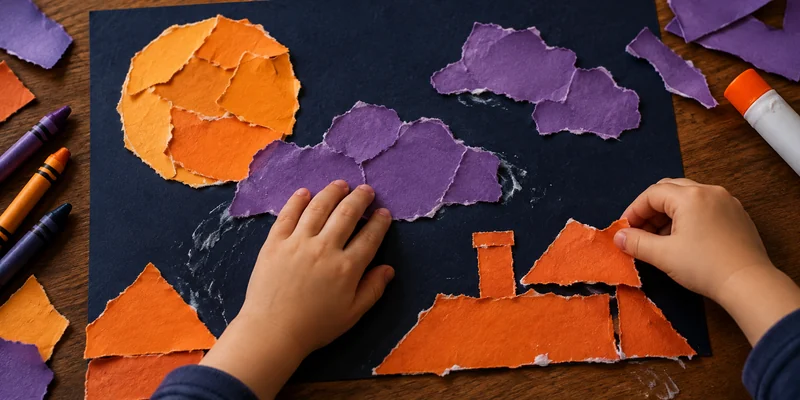
You need: Dark paper, larger pieces of orange and purple paper, glue sticks, and crayons.
Set out the coloured paper and show children how to hold it with both hands and pull gently to make a tear. Let them create pieces in different sizes, then move them around on the dark paper before gluing. They do not need to tear recognisable shapes straight away.
As the picture develops, invite children to decide what the pieces could become. A long strip might be a rooftop, while a rounded piece could be a moon or pumpkin. Crayons can add windows, stars, or a friendly bat. You can also offer a few starter tears along the edge of the paper if a child finds tearing difficult.
Movement Games for a Busy Classroom
Use a clear route and leave enough space for children to stop and turn. The aim is controlled movement and turn-taking, not speed or a winner.
7. Pumpkin Patch Delivery
You need: Soft orange balls or large fabric pumpkins, two baskets, and floor markers.
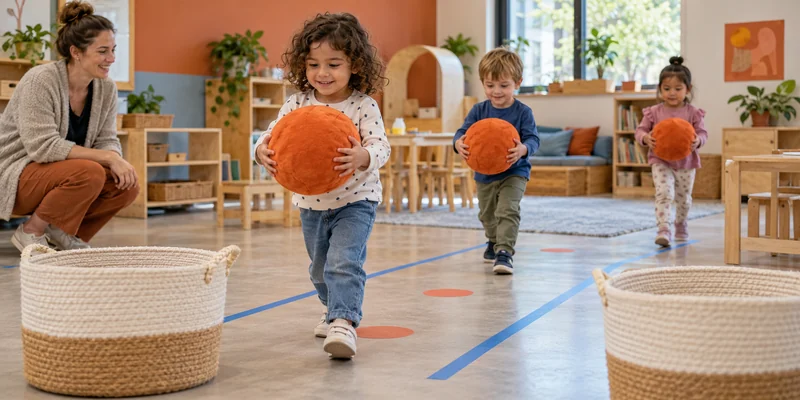
Create a pumpkin collection point and place a few baskets a short distance away to represent the pumpkin patch. Invite children to carry one pumpkin at a time to a basket, put it down, and return for another. Set up enough delivery routes for several children to participate without crowding each other.
Once they know the route, add a simple variation. They could walk around a marker, carry a pumpkin on a tray, or work with a partner to move a larger fabric pumpkin. Adjust the distance and carrying method to suit your group, keeping the focus on completing the delivery rather than finishing first.
8. Spiderweb Floor Trail
You need: Flat floor tape and large paper spider pictures.
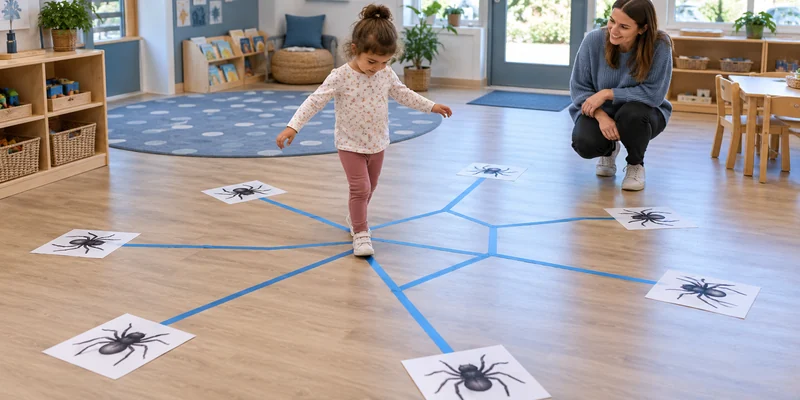
Make a simple web using a few intersecting taped lines, with spider pictures placed at different endpoints. Show children where to begin and invite them to follow a line until they reach a spider. Keep the first route short and easy to see.
You can then name a destination, such as “Can you reach the spider beside the window?” and let children choose which connected lines to follow. Add a junction where they must decide which way to turn, or let them suggest a route for you to try. Check that the tape stays flat and leave enough space between children so each can move at a comfortable pace.
9. Friendly Ghost Freeze and Float
You need: Music and a large paper ghost picture held by the teacher.
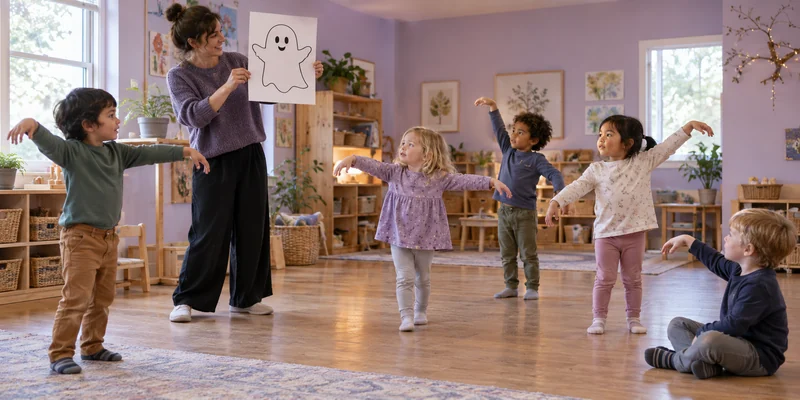
Explain that when you hold up the ghost, everyone can float around the space. When you lower it, everyone freezes. Practise the signal without music first, then play a song and join in so children can follow your movements.
Between rounds, invite a child to suggest how the ghost could move. It might drift on tiptoes, stretch up tall, or sway its arms while seated. Keep everyone in the game if they miss a signal; simply show the picture again and continue. After a few rounds, invite the ghosts to float slowly back to their seats.
Stories, Counting, and Pretend Play
End the day with activities that let children talk, count, and cooperate without everyone having to perform in front of the group.
10. Build-a-Story Basket
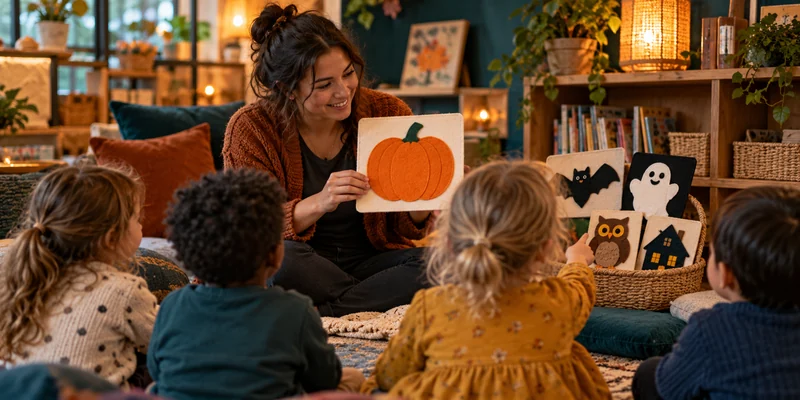
You need: Large paper or felt pictures of a pumpkin, bat, ghost, and house, plus a basket.
Gather a small group and begin with one picture and a simple opening: “One evening, a little pumpkin found a house with a purple door.” Invite a child to draw the next picture from the basket, then ask how it could become part of the story. Allow time for an answer, and offer two possible ideas if they need help getting started.
Children can contribute by speaking, choosing a picture, or moving a character into place. Repeat their ideas as part of the story so everyone can follow what is happening. Leave the pictures in the reading area afterward so children can retell the story or invent another one together.
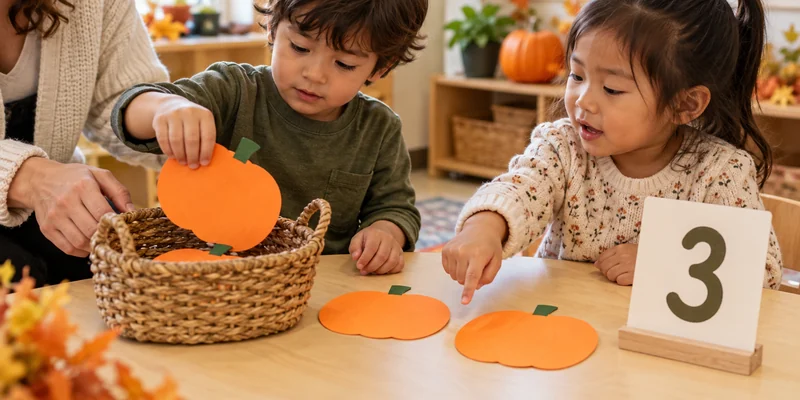
11. Pumpkin Patch Count and Collect
You need: Large paper pumpkins, baskets, and number cards that match the counting range your children already use.
Spread the pumpkins around a defined play area and invite each child to choose a number card. They collect that many pumpkins in a basket, then bring them back to check. You might say, “Your card says three. Let’s take them out one at a time and see what you found.”
For children still learning to count objects, begin with a small number and help them move one pumpkin for each number they say. Children who are ready for more can compare two baskets or work out how many more pumpkins they need to match a card. Return the pumpkins to the patch between turns so the activity is ready to repeat.
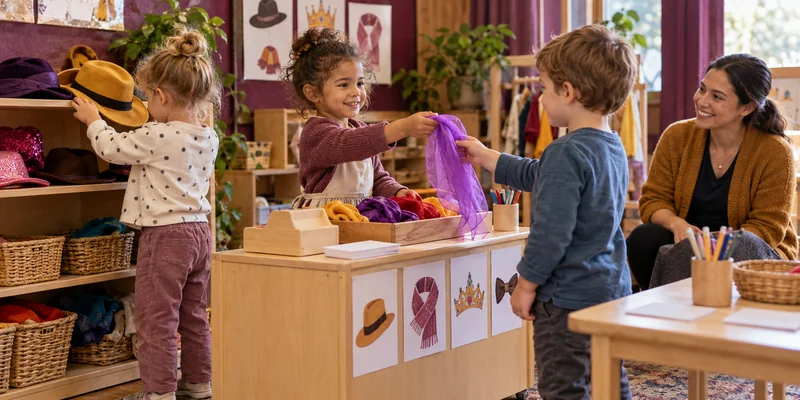
12. Costume Shop Pretend Play
You need: あ low shelf or table, clean dress-up fabrics or hats, large picture labels, and paper “order” cards.
Arrange the items so children can see what the shop has available. Add picture labels to the baskets and prepare a few simple order cards, such as a drawing of a hat. You can begin as the first customer: “I’m looking for a hat for a pumpkin party. What do you have?”
Once play gets going, follow the roles children create. They may want to serve customers, organise stock, draw new orders, or deliver items. A child can join in without wearing a costume. Keep wearable fabrics short enough to stay off the floor, and check that hats fit without slipping over children’s eyes.
How to Choose Halloween Activities for Preschoolers?
When choosing Halloween activities for preschoolers, think about how each idea would work with the children you teach. Can they get started with a little guidance? Will they have enough to do, or spend much of the time waiting for help? A few practical checks can help you turn an appealing idea into an activity your group will enjoy.
Match Activities to Children’s Abilities
Think about what your children can already do and where they may need support. If using scissors still takes a lot of effort, you can prepare paper shapes in advance and let them focus on arranging and sticking. For pumpkin decorating, offer stickers, sponges, and brushes so children can choose tools they feel comfortable using. This lets you include different abilities in one activity without having to plan a separate task for everyone.
Keep Instructions Simple and Children Involved
You should be able to explain the activity briefly, demonstrate how to begin, and let children try. If you find yourself giving instructions at every step, look for a way to simplify it. Notice how many children can participate at once, too. A pumpkin bowling game might sound ideal, but one lane for a whole class means long waits. You could set up a second lane or offer it to a small group while other children explore nearby activities.
Choose a Friendly Halloween Theme
You do not need spooky surprises to make Halloween feel special. Funny monsters, colourful pumpkins, and familiar dress-up characters give you plenty to work with. Before introducing a mask or an unusual prop, show it to the children and let them take a closer look. If someone feels unsure, give them time to watch or offer a different role, such as helping you hand out materials.
Leave Room for Children’s Own Ideas
When you choose a craft, ask yourself how much of it the children get to decide. Can they choose the colours, arrange the pieces, or change the design? You can show a sample to explain a technique without expecting everyone to copy it. If a child gives their monster six eyes or turns a pumpkin into a spaceship, invite them to tell you about it. Their ideas can become part of the activity.
Plan for Setup and Cleanup
Picture yourself running the activity on a normal classroom day. Where will you put the materials? Can you supervise it while keeping the rest of the group in view? Where will wet paintings dry? Thinking through these details helps you spot extra work before you commit. If your time or space is limited, choose one activity that needs more preparation and keep the others simple. Leave yourself enough time to help children finish and tidy up without rushing into the next part of the day.
Safety Tips for Preschool Halloween Activities
Check your activity setup before children arrive, including any seasonal materials that are not normally available in the classroom. Use this checklist to catch common risks:
- Check materials for choking hazards. Avoid loose beads, small googly eyes, and other small decorations, especially in groups where children still put objects in their mouths. Check that attached pieces cannot easily come loose.
- Leave carving and sharp tools to teachers. Let children decorate pumpkins with washable paint, stickers, or paper shapes. Complete any carving away from the activity area and remove tools immediately afterward.
- Make sure costumes allow normal movement. Shorten trailing hems, secure loose accessories, and avoid masks that block vision or breathing. Children should be able to walk, sit, and use the bathroom comfortably.
- Keep routes and exits clear. Secure floor tape flat, move cords out of reach, and clean up spills promptly. Leave enough room around throwing, dancing, and obstacle activities.
- Review food allergies and eating arrangements. Follow your setting’s food policy, check ingredient labels, and prevent children from sharing treats. Children should sit down and be supervised while eating.
- Check sensory materials and lighting. Use age-appropriate, non-toxic supplies, keep pretend potions separate from drinks, and choose battery-operated lights with secured battery compartments instead of candles.
During activities, keep teachers close to areas involving water, tools, or active movement. Watch for children who seem frightened or overwhelmed, and offer a familiar activity or quiet space without pressure to rejoin.
よくある質問
How Long Should a Preschool Halloween Activity Last?
Plan around 10–15 minutes for a teacher-led activity, but treat that as a flexible starting point. If children are still exploring and enjoying themselves, you can give them longer. If they begin drifting away, bring the activity to a natural close rather than stretching it to fill the time.
What If Some Families Do Not Celebrate Halloween?
Ask families about your program’s approach before planning a shared celebration. Keep participation optional and offer a parallel autumn or nighttime version of the same station—pumpkins, leaves, owls, and moon shapes work without costumes or spooky characters.
What Can You Give Preschoolers Instead of Halloween Candy?
You could offer an age-appropriate picture book, a small colouring booklet, or a set of chunky crayons. You can also skip individual gifts and let children choose a favourite classroom story or song to finish the celebration. There is no need for every Halloween event to include a treat bag.
Can We Use Candy or Tiny Decorations in the Activities?
You do not need them. Large reusable pieces are easier to count, handle, and clean up, and they avoid the food-allergy issues that can complicate classroom celebrations. If you choose any food activity, follow your program’s allergy and food-handling policies. For mixed-age groups, review small-piece risks before materials go out.
Should Preschool Halloween Activities Be Competitive?
For most classroom activities, you can skip winners and elimination. Let children keep playing after a missed signal or an unsuccessful attempt. If your group enjoys a challenge, give them a shared goal, such as delivering all the pumpkins to the patch together.
Can You Repeat the Same Halloween Activity Throughout the Week?
Yes. You do not need a new activity every day. Repeating a favourite gives children time to become familiar with the materials and try different ideas. You can make a small change, such as adding new story pictures or changing the delivery route, if they are ready for something more.
結論
Long after Halloween, you may hear children retelling the story they invented or bringing a favourite character into their play. Let those ideas continue for as long as they remain interesting. The celebration can end without putting away everything it inspired, and what children choose to revisit can give you a starting point for your next classroom activity.
 Japanese
 English
 Arabic
 French
 Italian
 German
 Spanish
 Thai