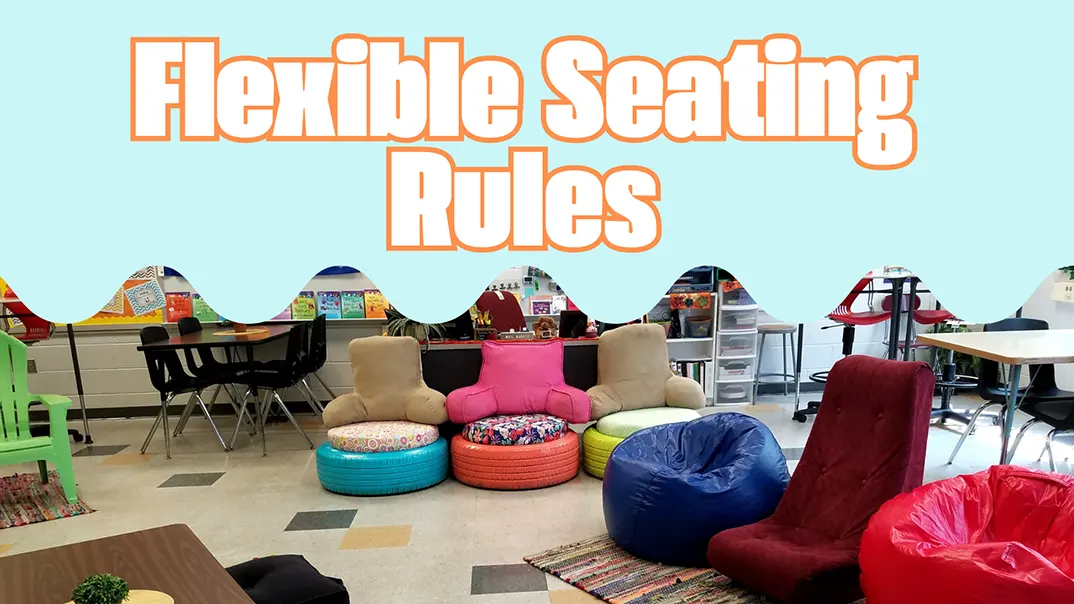
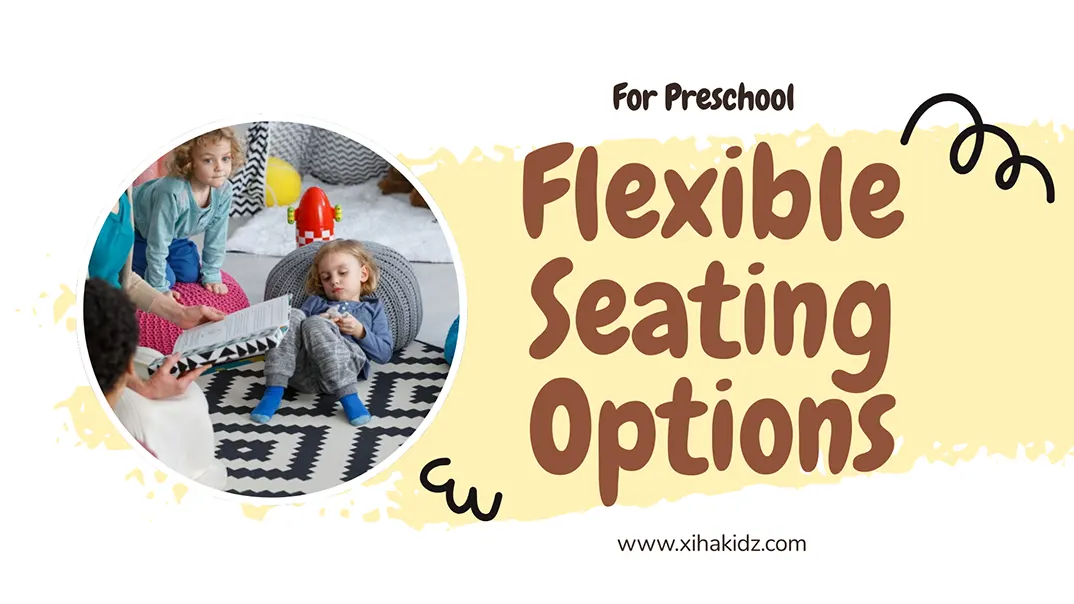
Flexible seating rules for preschool should be clear, simple, and easy for young children to follow. The most effective rules usually focus on four things: choosing a seat for the right purpose, using it safely, respecting other children’s space, and knowing when to stay or switch.
In a safe and successful preschool classroom, flexible seating should give children choice without removing structure. When teachers set a few consistent rules, model them clearly, and connect them to daily routines, flexible seating can support focus, independence, and classroom order.
The goal isn’t to take away the fun, but to shift a toddler’s mindset from “I want that chair because it’s cool” to “Which seat helps my brain and body work best right now?” In this guide, we will break down exactly how to roll out these expectations without overwhelming your little learners.
Why Flexible Seating Rules Are Important for Preschool?
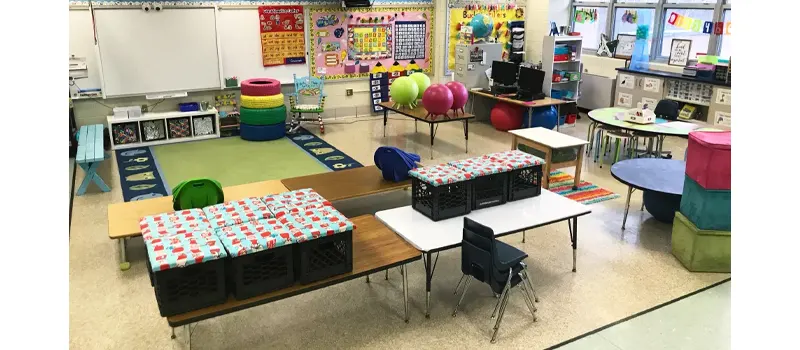
Preschool children are still learning how to manage their bodies, share space with others, and follow group routines. Without simple rules, flexible seating can quickly lead to unsafe movement, arguments over favorite spots, or constant seat switching. When teachers set clear and consistent rules, flexible seating becomes easier to manage and more effective in supporting focus, independence, and daily classroom routines.
Clear Learning Boundaries
Preschool children are still learning the difference between choice and freedom. If expectations are unclear, they may treat flexible seating as part of play instead of part of learning. Some children will keep moving, test different seats for fun, or focus more on the seating than on the activity itself. Clear flexible seating rules help define the purpose of flexible seating, so children understand that it is there to support participation, not distract from it.
Classroom Safety
Flexible seating adds variety to the classroom, but it also adds safety risks if children are not taught how to use it properly. Young children may stand on seats, drag them across the room, lean too far, or crowd into the same area. These are common preschool behaviors, especially during active parts of the day. Simple safety rules help reduce accidents and make the classroom easier to supervise.
Smoother Routines
Many seating problems happen during transitions rather than during the lesson itself. Children may take too long to choose a seat, refuse to leave a preferred spot, or switch places in the middle of group time. These small interruptions can quickly make the classroom feel disorganized. Clear rules make routines more predictable by showing children when they can choose, when they need to stay, and how to move from one activity to the next.
Better Seating Choices
Flexible seating is most effective when children learn how to choose a seat that fits the task. In preschool, that skill needs to be taught. Children do not automatically know which seating option helps them focus, sit safely, or stay engaged. Flexible seating rules give them a simple structure for making better decisions. With practice, children begin to choose more appropriately and rely less on adult reminders.
Less Conflict, Less Correction
Without clear expectations, teachers often spend extra time managing preventable problems. Children may argue over popular seats, use furniture the wrong way, or need repeated reminders to stay in place. This increases correction and takes attention away from teaching. Clear rules reduce these daily issues by giving everyone the same understanding of how flexible seating should work.
What to Consider Before Setting Flexible Seating Rules?
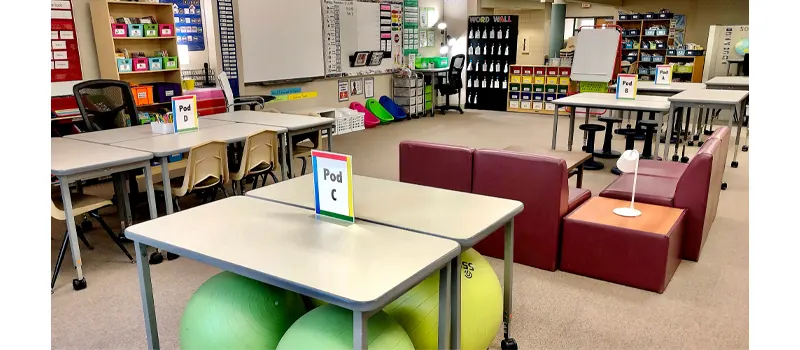
Before setting flexible seating rules, preschool teachers need to look at how the classroom actually works. Good rules are not made in isolation. They should reflect the children’s age, the types of seating available, the daily routine, and the physical space of the room. Clear and practical rules usually come from observing what children need most and where problems are most likely to happen.
- Children’s Age and Development
Preschool children need simple expectations that match their age, attention span, and ability to follow routines. Rules should be easy to understand and realistic for the group. - Seating Options
Different seating types need different expectations. Teachers should think about which options support learning well and which ones may cause distraction or unsafe behavior. - Daily Use
Flexible seating may work differently during circle time, small-group learning, and free choice periods. Rules should match how seating is actually used across the day. - Space and Safety
The classroom layout matters. Teachers need to consider movement paths, supervision, shared areas, and how to prevent crowding or unsafe use. - Consistency
Rules only work when adults apply them in a clear and consistent way. If a rule is too complicated to teach and repeat, it is probably not the right rule for preschool.
Steps to Set Flexible Seating Rules in Preschool Classrooms
Setting flexible seating rules begins with deciding what children need clear expectations for. Strong rules are usually based on the biggest classroom needs, the seating options available, and the routines in which those seats will be used. When the rules are clearly set from the start, they are easier to apply consistently later.
Step 1: Identify the Main Problem Areas
The first step is to decide which seating-related behaviors need the clearest boundaries. In most preschool classrooms, the main issues are usually safety, unnecessary movement, distraction, and sharing. Identifying these problem areas helps teachers avoid writing vague rules and keeps the focus on the behaviors that affect classroom order the most.
Step 2: Define When Choice Is Allowed
Flexible seating works better when the level of choice is clearly defined. Teachers should decide during which parts of the day children may choose their own seat, and during which routines, seating should be more structured. This step helps prevent confusion and makes the rule system more realistic for daily classroom use.
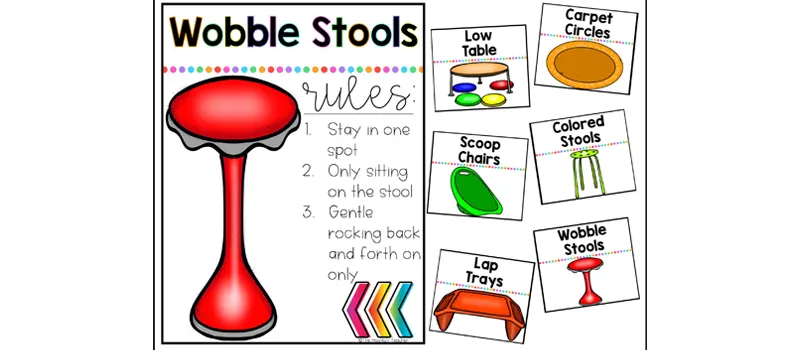
Step 3: Match Rules to Seating Types
Different flexible seating options often need different expectations. A floor cushion, a stool, or a bean bag may not all be used in the same way or for the same activity. Before setting the rules, teachers should decide which seating types are appropriate for which classroom tasks and what boundaries each one requires.
Step 4: Limit the Number of Rules
Preschool rule systems are more effective when they stay small and focused. Instead of creating a long list, teachers should narrow the rules down to the few expectations that matter most. This makes the rules set clearer, easier to organize, and more practical for a preschool classroom.
Step 5: Use Clear and Concrete Wording
Once the main expectations are identified, the rules should be written in language that is direct and specific. Good preschool rules describe observable behavior rather than broad ideas. The wording should make it clear what children are expected to do when using flexible seating, so the rules are easy to understand and apply consistently.
Step 6: Check Whether the Rules Fit the Classroom Routine
Before finalizing the rules, teachers should review whether they actually match the classroom schedule, space, and transitions. A rule may sound good on paper, but create difficulty during real classroom routines. This final step helps ensure that the rule system is practical, realistic, and closely connected to how the classroom actually runs.
The “C.A.R.E.” Framework for Flexible Seating Rules
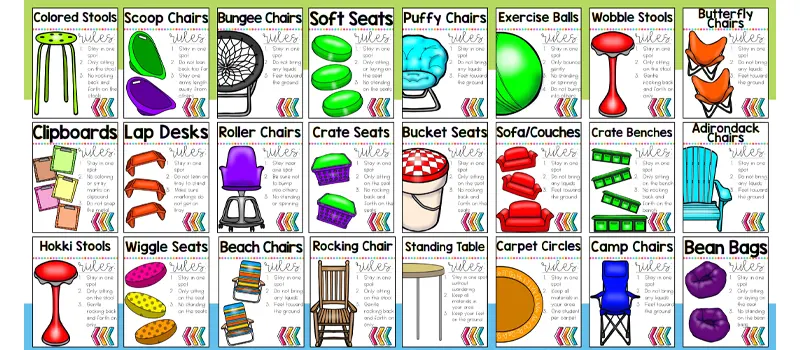
One of the easiest ways to set flexible seating rules in preschool is to group them into a simple framework that teachers can use consistently, and children can gradually remember. The C.A.R.E. framework helps organize flexible seating expectations around four essential areas. Instead of creating scattered rules for every situation, this framework gives preschool teachers a clearer way to build practical classroom expectations.
C — Choose with Purpose
Flexible seating should help children participate better, not just give them more options to explore. In preschool classrooms, children need direct guidance to understand that seating choices should match the activity and support their learning. This means choosing a seat for a reason, staying with that choice for an appropriate amount of time, and learning that not every seat fits every task.
Real classroom rules:
- Choose a seat that helps you learn.
- Pick one seat for one activity.
- Choose your seat before the activity begins.
- Use the right seat for the right job.
- Stay in your chosen seat until it is time to switch.
A — Act Safely
Safety is one of the most important parts of flexible seating in preschool. Young children may climb, tip, drag, or misuse seating unless expectations are taught clearly and repeatedly. Safe seating rules should focus on body control, correct use of classroom furniture, and safe movement within the classroom.
Real classroom rules:
- Sit safely with your body on the seat.
- Keep your feet in a safe place.
- Use chairs, stools, and cushions the right way.
- Move seating items slowly and carefully.
- Do not stand, jump, or climb on seats.
R — Respect the Space and Others
Flexible seating works best when children understand that their choices affect the people around them. In a preschool classroom, this means respecting personal space, sharing popular seating fairly, and taking care of classroom materials. These rules also support social development by helping children practice awareness, patience, and responsibility.
Real classroom rules:
- Keep your hands, feet, and seat in your own space.
- Give others room to work and move.
- Use one seat at a time.
- Wait for your turn for a favorite seat.
- Put the seating back neatly when you are finished.
E — Evaluate and Switch
“Evaluate and switch” teaches children to think about whether their current seat is helping them stay calm, focused, and involved. If it is not, they can learn to change seats in an appropriate way instead of becoming restless or disruptive. This part of the framework turns flexible seating into a guided learning process rather than a one-time choice.
Real classroom rules:
- Ask yourself if your seat is helping you learn.
- Change seats only when it is the right time.
- Switch seats quietly and safely.
- Ask for help if your seat is not working.
- Choose a calmer seat if you are having trouble focusing.
How to Introduce Flexible Seating Rules in Preschool?
Introducing flexible seating rules in preschool should be gradual and intentional. Young children do not learn new classroom expectations just by hearing them once. They need to see what the rules look like, practice them in real situations, and hear the same language repeated over time. A slow and consistent introduction helps children understand that flexible seating is part of the classroom routine, not a free-choice system without limits.
Start Small
It is usually better to introduce flexible seating in stages instead of offering every option at once. Teachers can begin with one or two seating choices and a few simple expectations, then add more as children become more comfortable with the routine. Starting small gives children time to adjust and makes it easier for teachers to notice what support is still needed.
Model the Right Way
Preschool children learn best when they can see exactly what to do. Teachers should show how to choose a seat, how to sit safely, how to stay in one place during an activity, and how to switch seats appropriately. Clear modeling helps turn abstract rules into visible actions that children can copy and understand more easily.
Practice in Real Situations
Rules become more meaningful when children practice them during actual classroom routines. Instead of only talking about expectations before the day begins, teachers can guide children through seat choice during circle time, center time, reading time, or small-group work. This helps children connect the rule to a real moment instead of treating it as something separate from the classroom experience.
Use Consistent Language
Flexible seating rules are easier to remember when teachers use the same short phrases every day. Repeating simple language during transitions and reminders helps children understand what is expected without long explanations. Consistent wording also makes it easier for all adults in the classroom to respond in the same way.
Support with Visual Cues
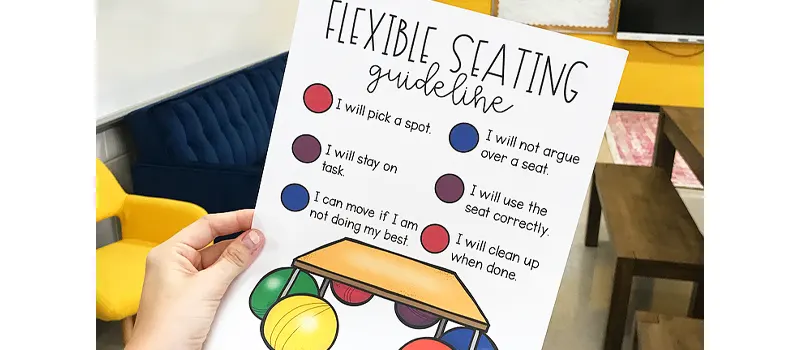
Many preschool children respond well to visual reminders. Picture cards, labeled seating areas, floor markers, and simple classroom posters can reinforce rules without requiring constant verbal correction. Visual supports are especially helpful when children are still learning routines or when they need quick reminders during active parts of the day.
Revisit and Reinforce
Introducing the rules is only the beginning. Preschool children need ongoing reminders, especially when classroom routines change or new seating options are added. Teachers should revisit the expectations regularly, praise appropriate use, and reteach when needed. When rules are reinforced as part of daily practice, children are more likely to use flexible seating successfully and with greater independence over time.
How to Evaluate Flexible Seating Rules in Preschool?
In preschool, effective rules should make the classroom feel calmer, more predictable, and manageable. Children do not need to follow every expectation perfectly, but the overall routine should become smoother with time. If the same problems keep happening, the rules may need to be simplified or adjusted.
How Teachers Can Know If Flexible Seating Rules Are Working?
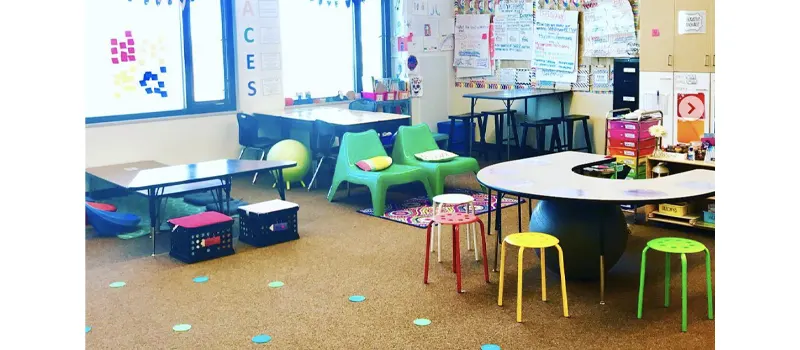
When flexible seating rules are working, the classroom usually feels more organized and less reactive. Children may still need reminders, but they begin to use seating with more control and less confusion. These signs show that children are starting to understand how flexible seating fits into the classroom routine. The goal is steady improvement in how children choose, use, and move between seating options.
- Children choose seats more quickly.
- Children stay in one place for longer periods.
- Unnecessary seat switching happens less often.
- Seating causes fewer distractions during activities.
- Children use the seat more safely.
- Conflicts over popular seats decrease.
- Transitions become smoother.
- Teachers give fewer repeated corrections.
When Flexible Seating Rules Need to Be Adjusted?
If the same issues continue after rules have been taught and practiced, it may be a sign that the current system is not working well enough. In many cases, the problem is not flexible seating itself. It is that the expectations are too broad, too complicated, or not matched closely enough to the class.
Teachers may need to adjust the rules when:
- Children keep changing seats during the same activity.
- Certain seating options repeatedly lead to unsafe behavior.
- The same seats continue to cause conflict.
- Children seem unsure about when they can switch.
- Teachers are repeating the same reminders all day.
- Some rules are too hard for children to remember.
- The rules work in one routine but not in another.
When these patterns appear, small adjustments usually work better than rewriting everything. Teachers can reduce the number of seating choices, simplify the wording of the rules, or limit certain seating options to specific parts of the day. A rule system is effective when children can understand it, teachers can reinforce it consistently, and the classroom runs more smoothly because of it.
Conclusion
Establishing flexible seating rules in a preschool classroom is about much more than preventing children from wobbling too far on a stool or arguing over a floor cushion. It is about fostering a culture of self-awareness, responsibility, and intentionality.
Transitioning to this model takes patience, consistent modeling, and a commitment to seeing classroom management as a collaborative process. By setting clear boundaries today, you are empowering your students to become independent thinkers and focused learners for years to come.
FAQs
How many flexible seating rules should a preschool classroom have?
Most preschool classrooms do best with a small number of flexible seating rules, usually around three to five. Too many rules can be hard for young children to remember and follow consistently. The most effective rules are simple, visual, and focused on the behaviors that matter most, such as safe use, purposeful choice, respect for others, and putting materials back when finished.
What should teachers do if a child misuses flexible seating?
If a child misuses flexible seating, the first step should usually be reteaching rather than immediate removal. Preschool children often misuse seating because they are still learning the routine, not because they are refusing to follow it. Teachers can model the correct use again, give a simple reminder, and guide the child toward a better choice. If misuse continues, the seating option may need to be temporarily limited or used only with closer support.
Are flexible seating rules the same for every preschool classroom?
No, flexible seating rules do not need to look exactly the same in every classroom. The best rules depend on the children’s ages, the number of seating choices available, classroom layout, activity structure, and the teacher supervision. However, most preschool classrooms still need a few common expectations around safety, purposeful use, respect for others, and clean-up.
Can flexible seating rules support self-regulation in preschool?
Yes, clear flexible seating rules can support self-regulation by helping children connect their bodies, their choices, and their learning needs. When children are taught how to choose a seat with purpose, use it safely, and notice whether it is helping them focus, they begin to develop better body awareness and decision-making skills.
What should I do if two students constantly fight over the same “favorite” seat?
Use a visual rotation system or a “Seat Sign-up” chart. For high-demand items like sensory pods or bean bags, you can set a timer or assign specific days for different color groups. If conflict persists, it’s a sign to evaluate if you need more of that specific type of seating or if that student needs a different sensory tool.
 English
  Arabic
  French
  Italian
  German
  Spanish
  Thai
Thai  Japanese