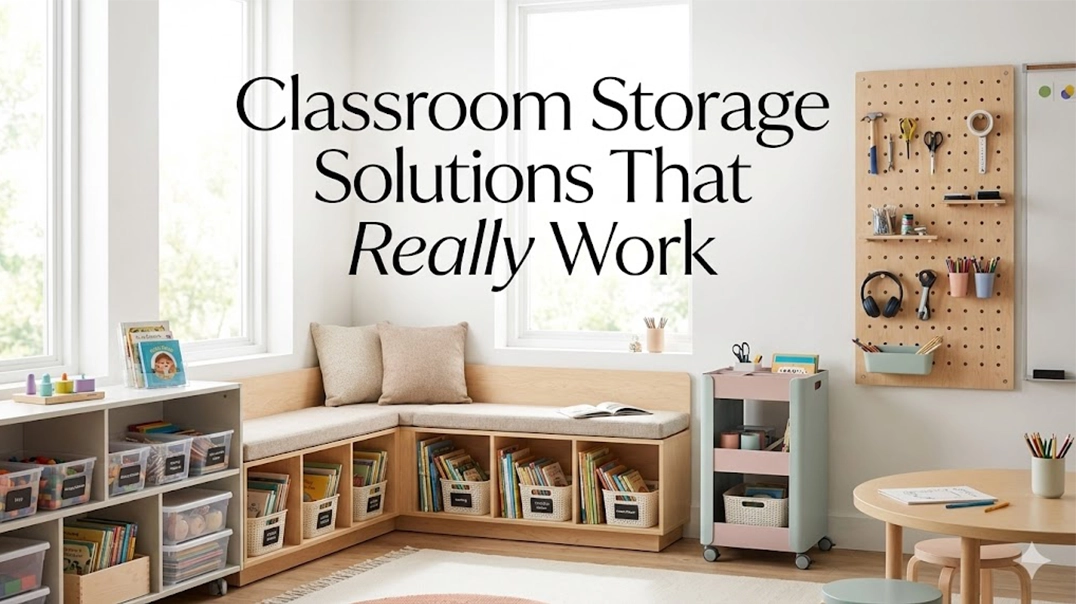
Planning classroom storage space is not as simple as just adding a few storage cabinets. For preschools and early learning centers, uneven room sizes, growing teaching materials, and daily layout changes make clutter eat up your floor space and your teaching time. The answer is smarter storage, not more. This guide shares space-first planning, zone-based layouts, and real classroom storage solutions we have tested in actual preschool projects, so you can organize your space once and manage it for years.
Why Classroom Storage Solutions Matter for Better Early Learning Classrooms
Classroom storage directly affects the three things you care about most in daily management: time, learning, and space.
1. Save Time by Reducing Searching and Organizing
Every item needs a home. In one classroom we observed, a teacher spent 11 minutes searching for a missing counting set while her circle time waited. When every item has a designated location and a clear label, the same search takes seconds.
The biggest beneficiary of labeling is not just the children. It is the substitute teacher and the colleague covering your shift. A storage system that does not depend on one person’s memory keeps your routines running even when your team changes.
2. Support Focus and Learning
A cluttered classroom makes activity areas feel crowded, and children facing too many visible materials find it harder to settle into one activity. In our projects, we treat storage as a tool to control what is visible: keep only the materials for the current activity within reach, and tuck the rest away.
When materials are stored in an orderly way, children focus better on the task in front of them and slowly build the habit of returning things to their proper places.
3. Make Better Use of Limited Classroom Space
Not every classroom has a large footprint, and that is fine — the real question is not how many cabinets you have, but what you place on every square meter. Walls, corners, and the space above eye level are all usable storage areas.
Wall-mounted and corner units make use of vertical space, while modular storage units combine differently in different layouts. The same set of modular cabinets can produce two completely different classroom arrangements; we have done this in many renovation projects.
Classroom Storage Solutions: Space Layout & Organization Ideas
Good classroom storage starts with planning the space, not with picking cabinets. Here are the layout rules we apply in every project.
1. Measure Movement Paths Before Planning Storage
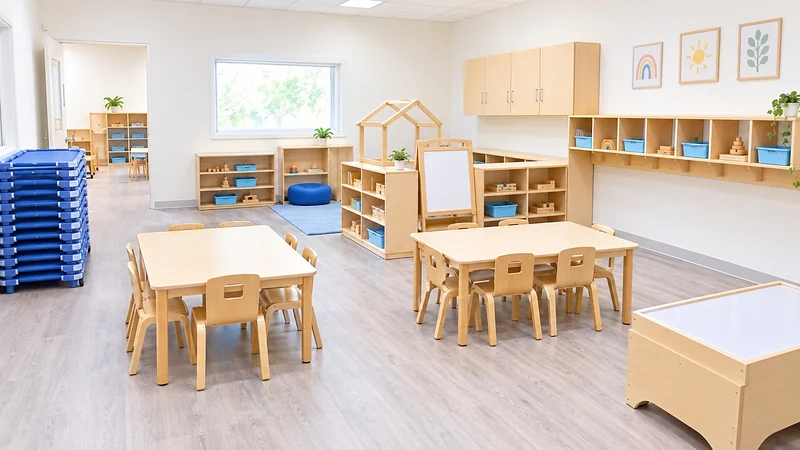
Before placing any furniture, measure two routes: the path used to bring furniture and materials into the classroom, and the paths children use during daily activities.
Movement-path measurement is not a formality. It changes real layout decisions. One daycare client planned a reading tree as the classroom centerpiece until a flow check showed the tree would sit right in the main walkway and count as obstructed space. They swapped it for low bookshelves along the wall and moved the children’s cubbies onto the corridor wall outside the classroom, keeping the entrance and the center of the room open. That ten-minute planning discussion saved a full layout rework.
Once you map the movement first, storage placement stops being guesswork. The walkways tell you where cabinets belong, where shelves fit, and where to leave the floor open.
2. Combine Centralized and Nearby Storage
Not every teaching material belongs in the same place. Use frequency as your rule of thumb:
- Daily-use materials go next to the activity area where they are used.
- Weekly or monthly materials go into a centralized storage zone.
This keeps teachers and children from crossing the room repeatedly and stops clutter from piling up around activity areas.
3. Keep the Center of the Classroom Open
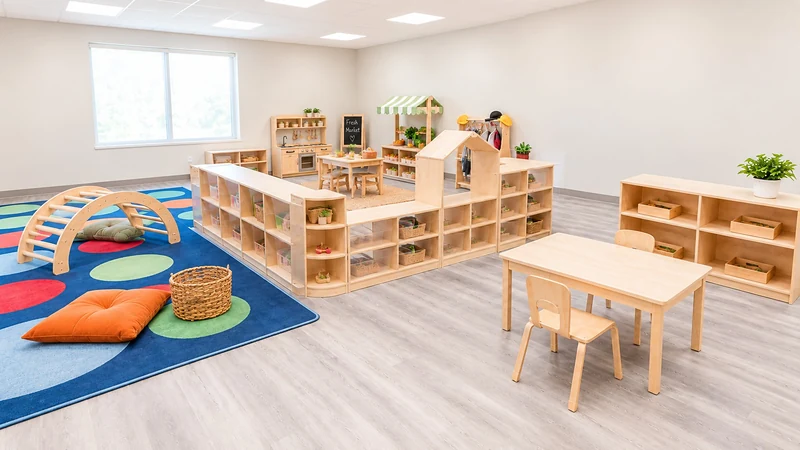
Position most storage along walls and in corners. The center of your classroom is the golden zone for group activities, games, and free exploration, so keep tall solid cabinets out of it. When you need to separate two activity zones, low open shelving works well as a divider between them.
If you must place lockers in the center of the classroom, consider supervision. Full-height solid cabinets block your view, while low open units let you see over and through them.
4. Choose Mobile and Reconfigurable Storage
Early learning environments change several times a day. Storage units with casters let you switch from individual learning to group activities in minutes. The key difference between the two options:
- Fixed cabinets: stable, high capacity, best for zones that rarely change.
- Mobile units with lockable casters: flexible, best for multi-purpose rooms. Lock the brakes whenever the unit is in use.
Our suggestion: even if you plan a fully fixed layout, keep at least one or two mobile units. You will use them far more often than you expect.
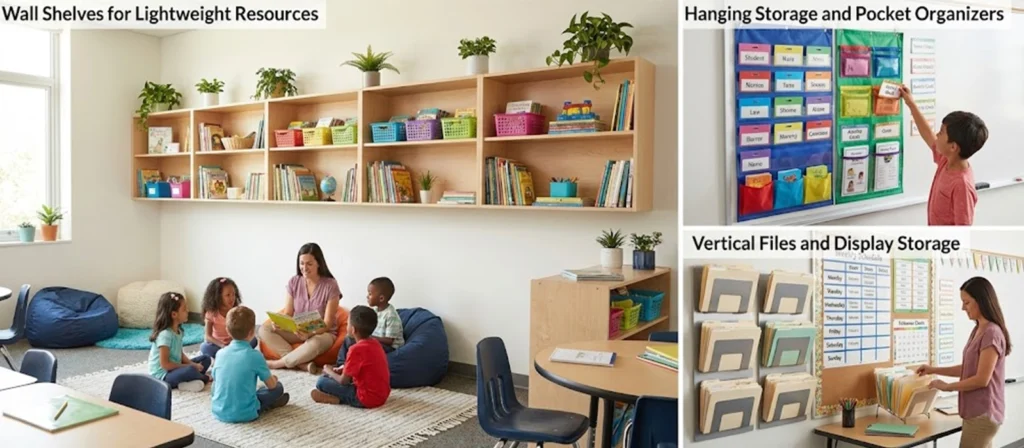
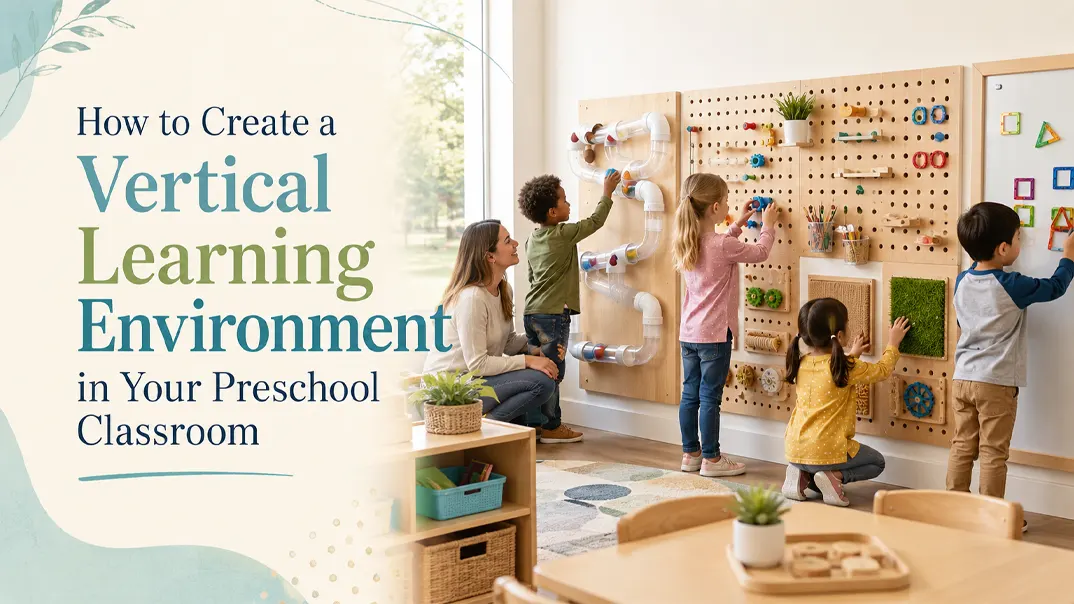
5. Make Use of Vertical Space
One daycare client pushed this further during a layout discussion. They wanted wall storage but knew children could not reach the upper section, so they used the height deliberately: locked wall cabinets above the prep area for first aid and medicine, open child-height storage below. Every height of the wall had a job.
You can also use the height difference in the classroom; the tallest shelf can be used to store teacher-specific items, but you must ensure that the height is convenient for teachers to use. Done this way, the height itself becomes the safety design: children simply cannot reach what they should not touch.
6. Create Clearly Categorized Storage
A storage system becomes easy to manage when materials have clear categories. Case study: one early learning center we worked with adopted color coding, with red for art supplies, blue for building blocks, and green for books. Within two months, children returned materials to the correct places far more consistently, and teachers cut organizing time by roughly half.
Color coding and picture labels work especially well for children who cannot read yet.
Smart Furniture and Multi-Purpose Storage Options
Large storage furniture plays a central role in effective classroom storage solutions because it defines how space is used and how flexible a classroom can be. When storage and furniture functions are combined, classrooms gain organization without sacrificing movement or learning areas.
Mobile Storage Units for Flexible Classrooms
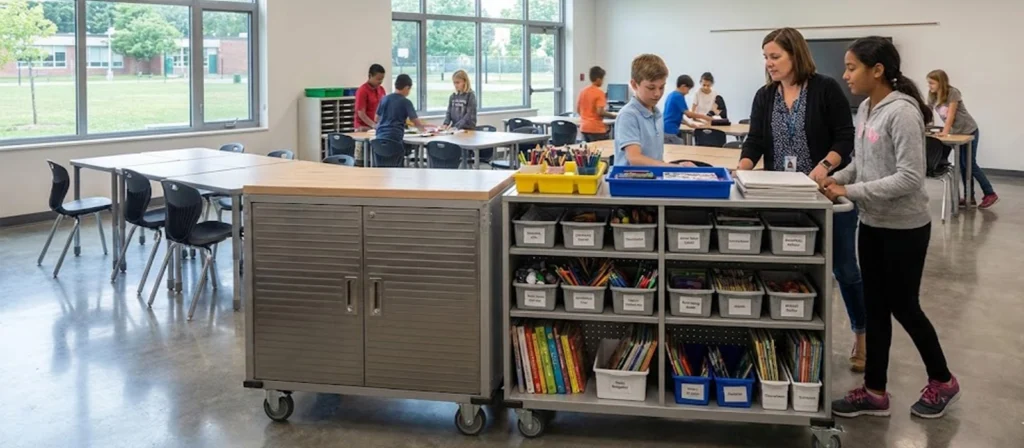
Mobile storage units such as rolling cabinets, carts, and trolleys allow teachers to adapt the classroom layout as activities change. These classroom storage solutions are especially useful in shared or multi-use spaces where furniture needs to move frequently. By keeping materials close to where they are used, mobile storage reduces unnecessary movement and helps lessons flow more smoothly.
Seating with Integrated Storage
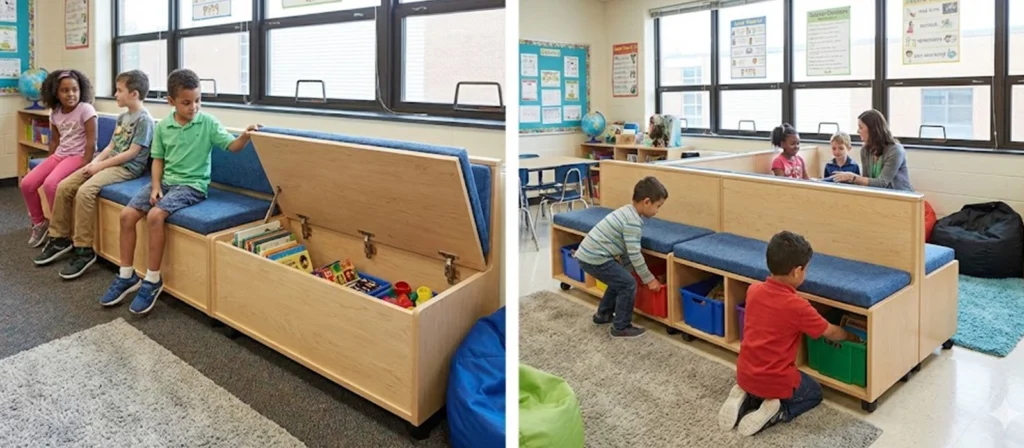
Storage furniture that combines seating and built-in compartments offers a practical way to save space without adding visual clutter. Benches with lift-up lids or cubby seating units can store books, manipulatives, or personal items while also serving as places for students to sit. This type of classroom storage solution works well in reading areas, circle time spaces, and entry zones.
Multi-Functional Shelving Systems
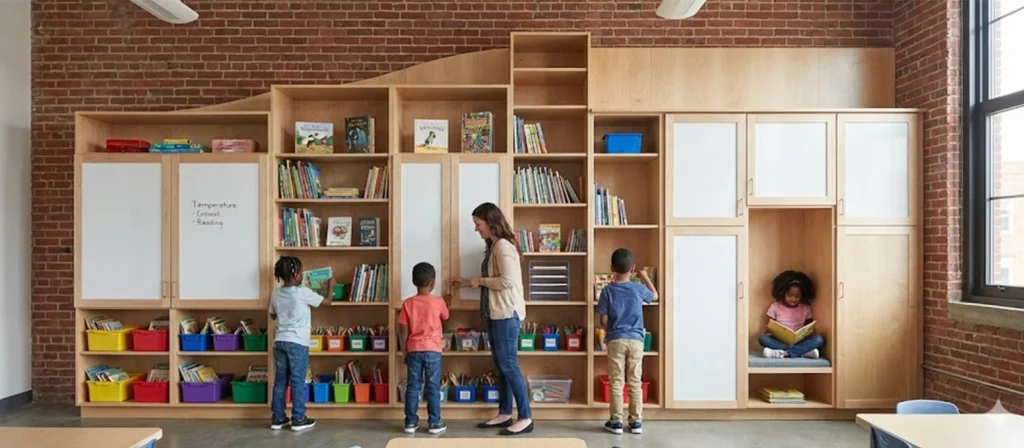
Multi-purpose shelving systems support different materials and activities within a single unit. Adjustable shelves, open and closed sections, and mixed-height designs allow teachers to store a variety of items in one place. These classroom storage solutions help reduce the number of separate furniture pieces while keeping materials organized and easy to access.
Key Benefits of Smart Furniture and Multi-Purpose Storage Options
- Mobile storage units support flexible layouts and allow materials to move with the activity, helping lessons stay smooth and organized.
- Seating with integrated storage combines sitting and storage in one piece, saving space while keeping frequently used items within reach.
- Multi-functional shelving systems reduce the need for multiple furniture pieces by storing different materials in a single, adaptable unit.
When furniture and storage are designed to work together, classrooms become easier to manage and easier to adapt. These smart classroom storage solutions support both organization and flexibility, which are essential for modern learning environments.
Classroom Storage Solutions by Classroom Zone and Activity
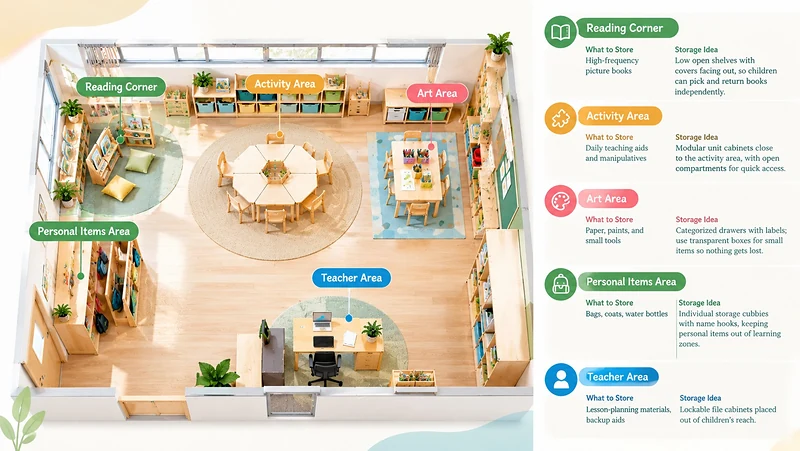
Instead of treating the classroom as one large storage area, divide it into functional zones and design storage around the activities in each zone. This is the zone plan we use most often:
| Zone | What to Store | Storage Idea |
| Reading Corner | High-frequency picture books | Low open shelves with covers facing out, so children can pick and return books independently. |
| Activity Area | Daily teaching aids and manipulatives | Modular unit cabinets close to the activity area, with open compartments for quick access. |
| Art Area | Paper, paints, and small tools | Categorized drawers with labels; use transparent boxes for small items so nothing gets lost. |
| Personal Items Area | Bags, coats, water bottles | Individual storage cubbies with name hooks, keeping personal items out of learning zones. |
| Teacher Area | Lesson-planning materials, backup aids | Lockable file cabinets placed out of children’s reach. |
The biggest benefit of zone-based storage is not tidiness. It is clear rules. Each zone has defined boundaries, children know where things belong, and cleanup becomes part of the daily routine instead of an extra task.
1. Reading and Literacy Area
The reading area benefits from calm, predictable storage that keeps books inviting and easy to return. Storage here should support quiet use and visual order without overwhelming the space.
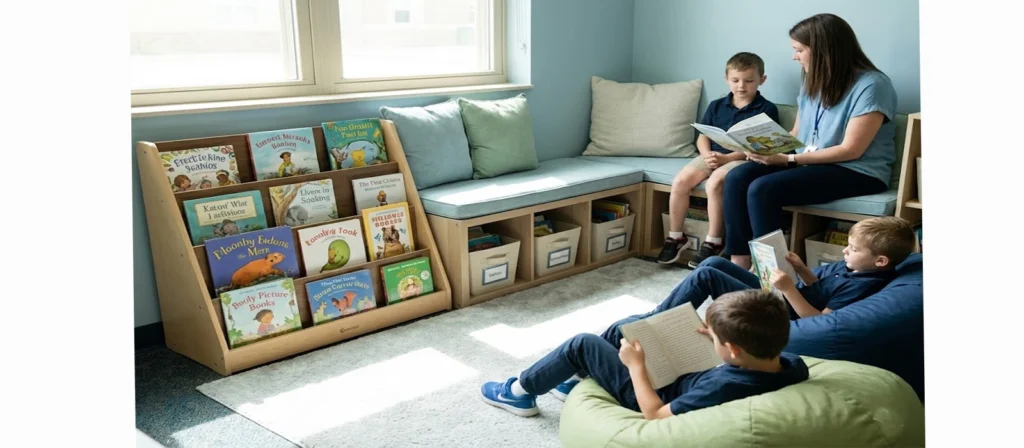
Recommended storage furniture
- Front facing book display shelves to showcase book covers and encourage choice
- Low open bookcases for leveled readers and shared texts
- Small labeled baskets or bins for topic based or guided reading materials
- Soft seating with integrated storage for cushions or reading tools
2. Art and Creative Area
Art spaces require storage that balances accessibility with control. Materials should be easy to reach during activities but simple to organize at the end of a session.
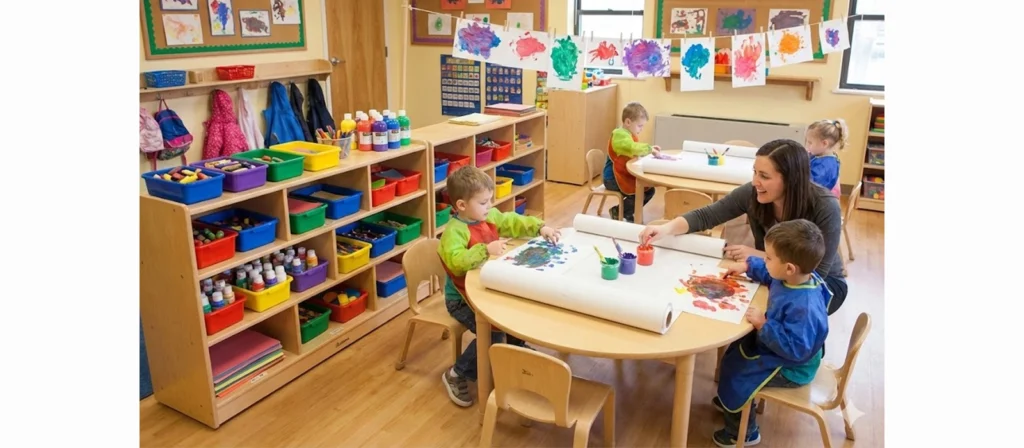
Recommended storage furniture
- Mobile drawer units or rolling carts for art supplies
- Open shelving for paper, trays, and frequently used tools
- Vertical drying racks or flat shelves for artwork in progress
- Clearly labeled bins for paints, brushes, and craft materials
3. STEM and Discovery Area
การ STEM or discovery zone often includes hands-on materials that benefit from clear categorization. Storage should protect materials while still encouraging exploration.
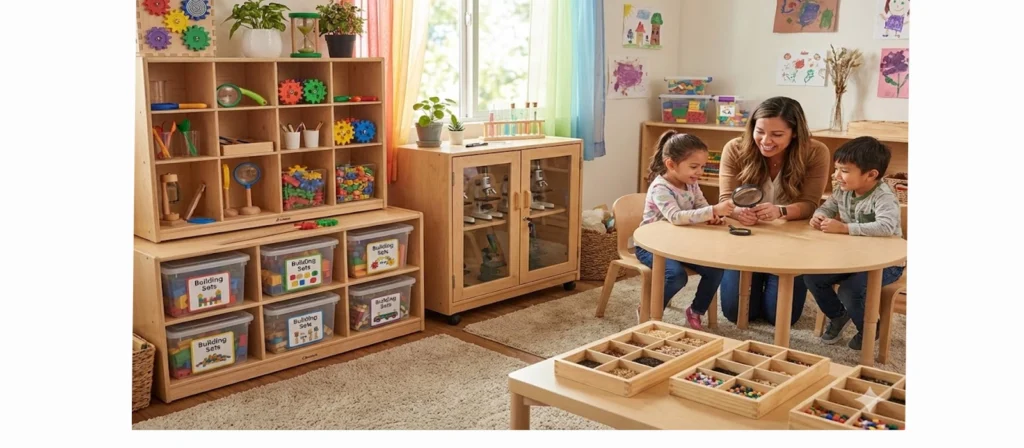
Recommended storage furniture
- Compartmentalized shelving for science tools and manipulatives
- Transparent bins for building sets and experiment kits
- Lockable cabinets for delicate or teacher-guided materials
- Flat trays or shallow drawers for sorting small components
4. Quiet Work and Small Group Area
This area supports focused tasks, intervention work, or independent practice. Storage here should be minimal, calm, and purpose-driven.
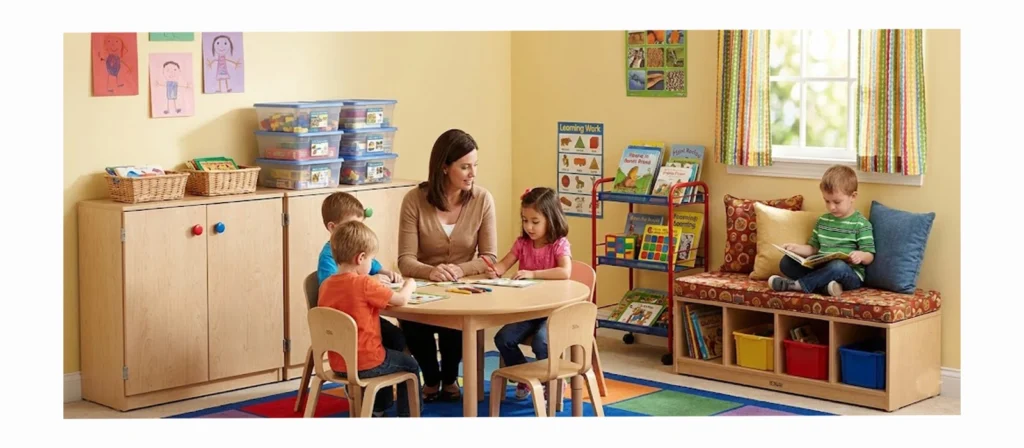
Recommended storage furniture
- Low storage cabinets for work materials and games
- Stackable bins or drawers for small group resources
- Slim shelving units for worksheets and learning aids
- Storage benches or tables with built in compartments
Organizing classroom storage solutions by zone helps students understand both the space and their responsibilities within it. When each area has its own clear system, the classroom feels structured without feeling rigid, and learning flows more smoothly from one activity to the next.
คำถามที่พบบ่อย
How can storage planning achieve flexibility to adapt to changing teaching scenarios?
Choose modular and movable storage units whenever possible. A flexible system lets you rearrange the classroom as teaching activities change, and mobile units with lockable casters are especially useful when furniture moves regularly. Modularity also means you can add new units later instead of replacing the whole system.
What storage-layout methods can help avoid the risk of cabinet tipping?
Safety starts at the planning stage, not after the cabinets arrive. We usually recommend that you avoid placing tall cabinets in high-traffic areas, choose structurally stable furniture, and anchor child-used cabinets to the wall. In most of the projects we handle, we recommend wall anchoring as part of the plan.
As teaching aids keep increasing, how can storage planning reserve space for future expansion?
Do not plan storage based only on today’s inventory. Reserve roughly 10–15% of capacity for future materials, and prefer modular units that accept additional modules as needs grow. Teaching aids only increase. That is the most predictable trend in classroom storage.
When storing teaching aids on high shelves, what storage solutions prevent items from falling?
Reserve high storage for low-frequency items, and use proper compartments and stable placement. For open shelves at height, add front lips or storage boxes. In our experience, contained items fall far less often than bare items. Anything children use frequently should sit at an accessible height.
Should the lockers be placed inside the classroom or in the hallway?
There is no single answer. It depends on classroom size, circulation, the type of items, and how often children or teachers need access. If floor space is tight, moving low-frequency personal storage outside the activity area frees up valuable indoor space, while high-frequency teaching materials should stay close to the activity area. Check local fire codes before placing storage in corridors; when both options are allowed, we generally recommend keeping storage inside the classroom, because children build independent retrieval habits earlier.
Conclusion: Build a Storage System That Works With Your Classroom
Effective classroom storage is not about adding more cabinets. It is a system that connects storage, space, movement, safety, and daily teaching activities:
- Measure movement paths first, then choose furniture.
- Place storage along walls and corners; keep the center open.
- Store daily-use items nearby and low-frequency items centrally.
- Use modular units and mobile cabinets for flexibility.
- Let color and picture labels run the categorization for you.
When storage is planned as part of the classroom environment rather than an afterthought, even a limited space becomes more organized, efficient, flexible, and inspiring.
A Practical Storage Partner for Early Learning Spaces
ที่ ซีฮา คิดส์, we design and manufacture classroom storage solutions for preschools and early learning centers. Our team works with you from the floor plan: measuring your space, matching storage types to each functional zone, and supplying modular units, cabinets, and mobile storage built with FSC-certified birch and water-based finishes.
We have our own design team. Send us photos of your classroom and pick the cabinet styles you like. Our designers will craft a space-saving, beautiful layout for your exact space. When your order arrives, just position it and start using it.



 Thai
Thai  English
  Arabic
  French
  Italian
  German
  Spanish
  Japanese