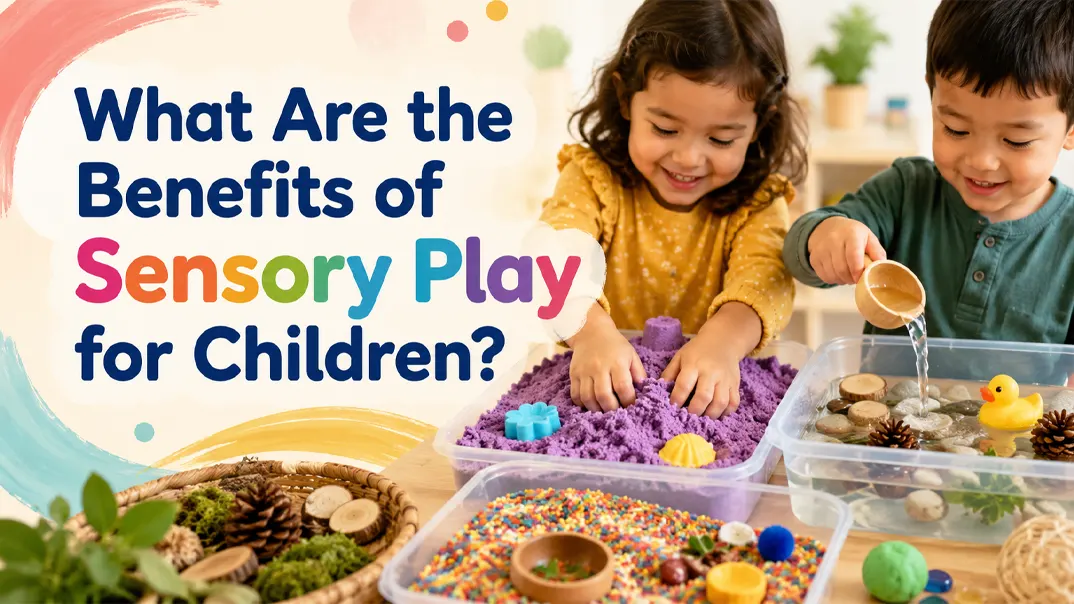
Sensory play helps children develop important skills through hands-on experiences that engage the senses. When children touch, listen, look, move, and explore, their brains actively process information, building stronger neural connections along the way. This type of play also strengthens fine and gross motor skills, encourages language development, supports emotional regulation, and improves focus.
Young children learn best when they can actively engage with their environment. Instead of passively receiving information, they learn and respond to what they experience. In the following sections, we will explore the main benefits of sensory play in detail and explain how each one supports healthy early childhood development.
What is Sensory Play?
Sensory play is any activity that encourages children to explore through their senses. This includes touch, sight, sound, smell, taste, movement, balance, and body awareness. Instead of only listening to instructions or watching an adult demonstrate, children learn by directly interacting with materials, objects, spaces, and their own bodies.
Sensory play is valuable because it matches the way young children naturally learn. They use their hands, eyes, ears, movement, and curiosity to understand the world around them. Through these experiences, children begin to connect what they feel with what they think, say, and do.
Benefits of Sensory Play for Children
When children explore through their senses, they are building physical control, thinking skills, emotional awareness, language ability, and social confidence through real experience.
Brain Development ( Cognitive Skills)
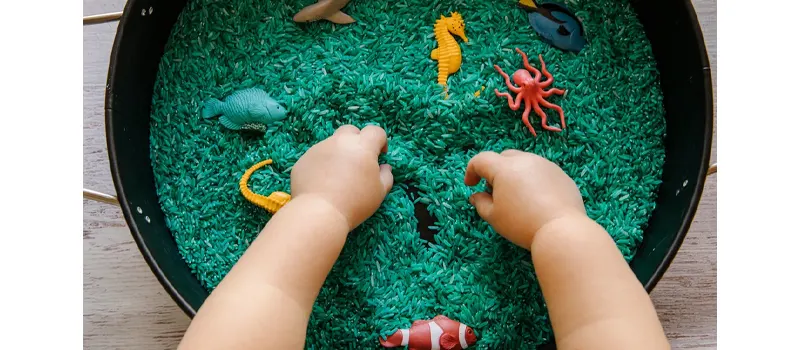
Sensory play gives children rich information for the brain to process. When a child feels texture, watches water move, hears sounds, or notices how materials change, the brain is making connections between senses, movement, memory, and thinking.
Sensory play also helps children develop early cognitive skills. A child pouring water from one container to another is learning about volume, cause and effect, and prediction. A child sorting shells, stones, buttons, or leaves is practicing classification and comparison. A child exploring different textures is learning to notice details and make connections.
Over time, these repeated sensory experiences help children build important thinking skills, such as:
- Observation
- Memory
- Focus
- Problem-solving
- Early math thinking
- Cause and effect understanding
- Decision-making
- Flexible thinking
These skills may look simple during play, but they form the base for later learning. Children are not memorizing facts. They are using their senses to understand how things work.
Physical Development (Gross & Fine Motor Skills)
Sensory play also supports children’s physical development. Sensory play requires children to use their hands, legs, and whole bodies. These repeated movements help children develop better control, strength, balance, and coordination.
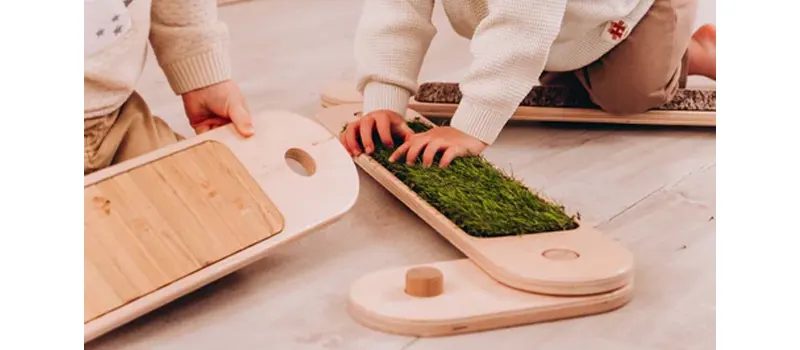
Fine motor skills develop when children squeeze playdough, pick up small objects, scoop sand, pour water, use tongs, roll clay, or transfer materials between containers. These actions strengthen the small muscles in the hands and fingers, which are essential for tasks like writing, buttoning clothes, and using utensils.
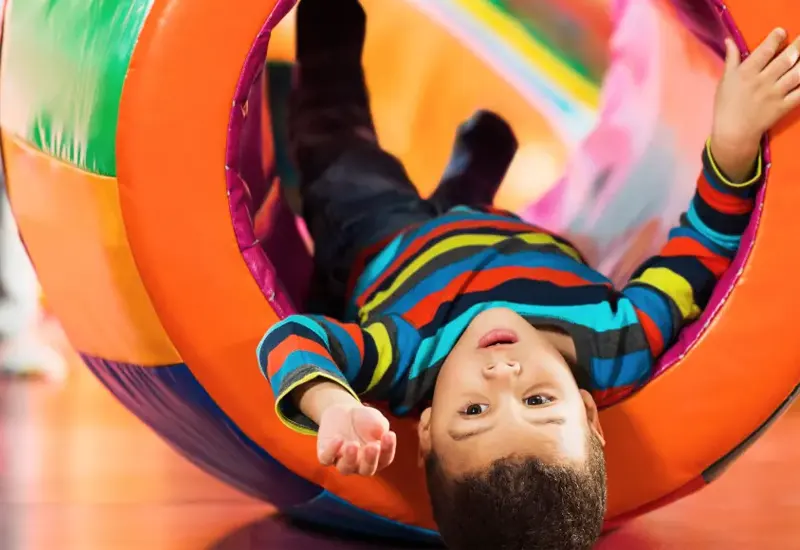
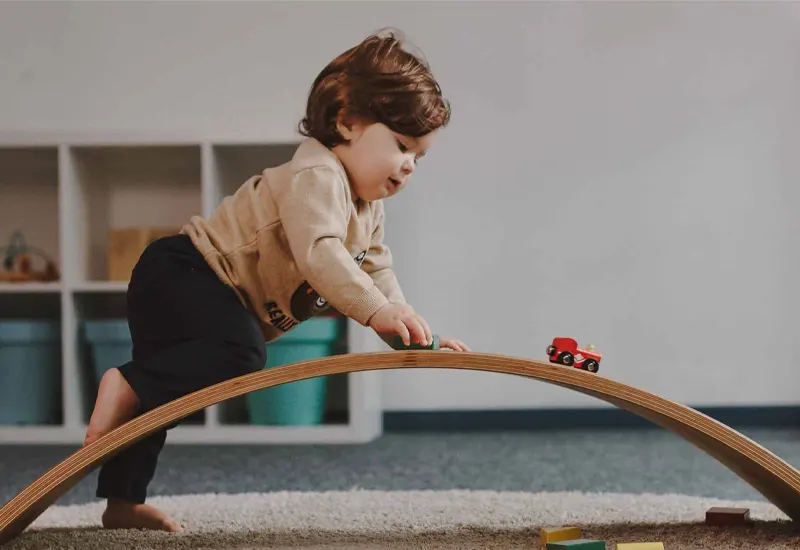
Gross motor skills can also grow through sensory play. Activities that involve carrying, pushing, pulling, climbing, balancing, jumping, or moving through different textures help children understand how their bodies move in space. This supports body awareness, coordination, and confidence in movement. Whole-body activities like jumping, rolling, or navigating an obstacle course build coordination, balance, spatial awareness, and core strength.
For preschool children, this physical practice is not separate from learning. It helps prepare their bodies for writing, self-care, classroom participation, and more independent daily routines.
Emotional Regulation
Young children often feel big emotions before they know how to explain or manage them. Sensory play gives them a safe way to calm the body, release tension, and return to a more balanced state.
Repetitive sensory actions can be especially helpful. Pouring water, squeezing soft materials, sorting objects, running fingers through sand, or watching a sensory bottle can help children slow down and feel more settled. These activities give the body steady input, which can support focus and calmness.
Sensory play can support emotional regulation by helping children:
- Calm down after frustration
- Release nervous energy
- Feel more secure
- Stay focused for longer
- Understand what feels comfortable or uncomfortable
- Build patience through repeated actions
- Return to classroom routines more easily
Sensory play does not remove every difficult feeling, but it gives children a healthy way to process those feelings.
Social Interaction
Sensory play creates natural opportunities for children to interact with others. Because many sensory activities use shared materials, children often need to take turns, share tools, make space for others, copy ideas, and solve small problems together.
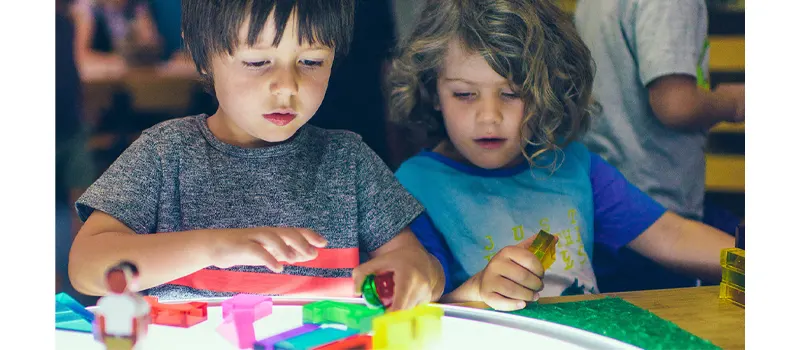
Group sensory play encourages:
- Teamwork
- Turn-taking
- Empathy
- Sharing
- Cooperation
- Respect for personal space
- Shared problem-solving
- Stronger social skills
For example, children may decide who uses the scoop first, how to build a sand structure together, or what materials to mix in a sensory bin. These moments help children learn how to be part of a group.
Children do not need advanced language to join in. A younger child, a shy child, or a child with limited speech can still participate by watching, touching, passing materials, copying actions, or playing beside others. This makes sensory play an easier entry point for social connection.
Language Development
Sensory play supports language development because it gives children something real to talk about. When children are touching, listening, smelling, watching, and moving, they naturally want to describe what they notice. They may talk about how something feels, what changed, what they made, or what they want to try next.
This kind of language grows from direct experience. Words become easier to understand when children can connect them with something they have actually felt or seen. A child who touches sticky glue, cold water, rough bark, smooth stones, or soft fabric understands those words more deeply than a child who only hears them in a lesson.
Sensory play also makes communication feel more natural. Children are not being asked to answer questions formally. They are talking because they are curious and engaged. This is especially helpful for children who are still building confidence with speech, because the activity gives them a comfortable reason to use words, ask questions, and share ideas.
Sensory play supports:
- Receptive and Expressive language
- Questions and answers
- Early literacy foundations
- Communication confidence
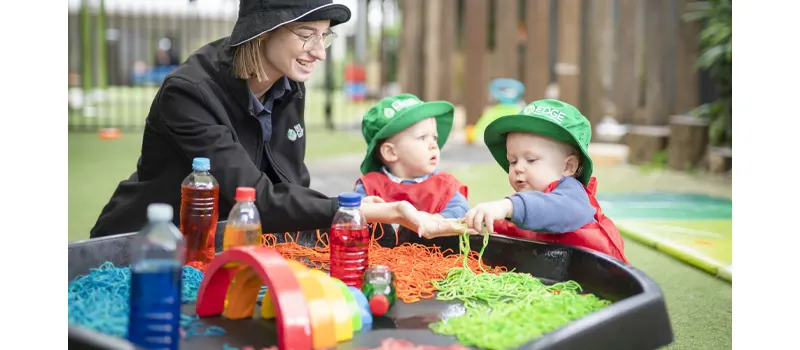
Fosters Creativity and Imagination
Sensory play is usually open-ended. There is no single correct answer and no fixed result. Children can use the same materials in many different ways. This freedom helps children think beyond fixed instructions. They decide what to create, how to use the materials, and how the play should continue. They can change their ideas, try again, and invent new possibilities.
Sensory play encourages children to:
- Express thoughts through action
- Create their own ideas
- Use materials in different ways
- Change plans during play
- Try again after mistakes
- Explore without fear of being wrong
This matters because creativity is not only about making art. It is also about flexible thinking. Children learn to see possibilities, test ideas, and adapt when something changes.
Sensory Play Ideas and Activities
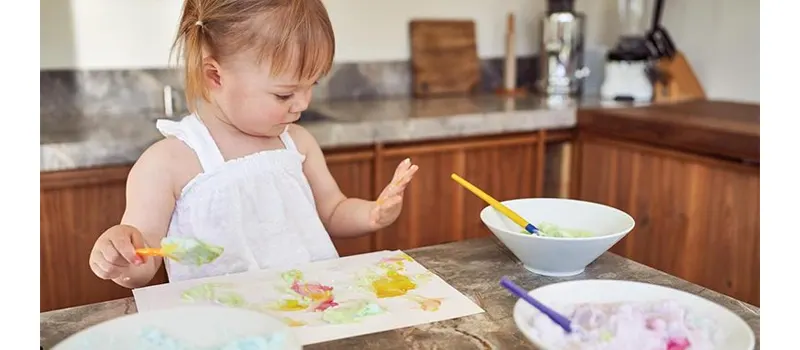
After understanding the benefits of sensory play, the next step is to bring these experiences into daily routines. Sensory play does not need to be complicated. Many effective activities can be created with simple materials, such as water, sand, rice, playdough, natural objects, fabric, and sound bottles.
Good sensory activities should give children room to explore, repeat actions, make choices, and use more than one sense at a time. When planning sensory play, it is helpful to choose activities based on the child’s age, developmental level, available space, and learning goals. Some children enjoy messy play right away, while others need more time to feel comfortable with new textures or materials. The goal is not to force participation, but to offer safe and meaningful sensory experiences that support development.
For more practical examples, you can read our full guide here: Sensory Activities for Preschoolers. It includes a wider range of sensory play ideas that teachers can use in preschool classrooms.
Popular Sensorial Materials
The right sensory play materials can make activities easier to set up, safer to manage, and more valuable for children’s development. For preschools, choose materials that are durable, easy to clean, age-appropriate, and suitable for repeated classroom use.
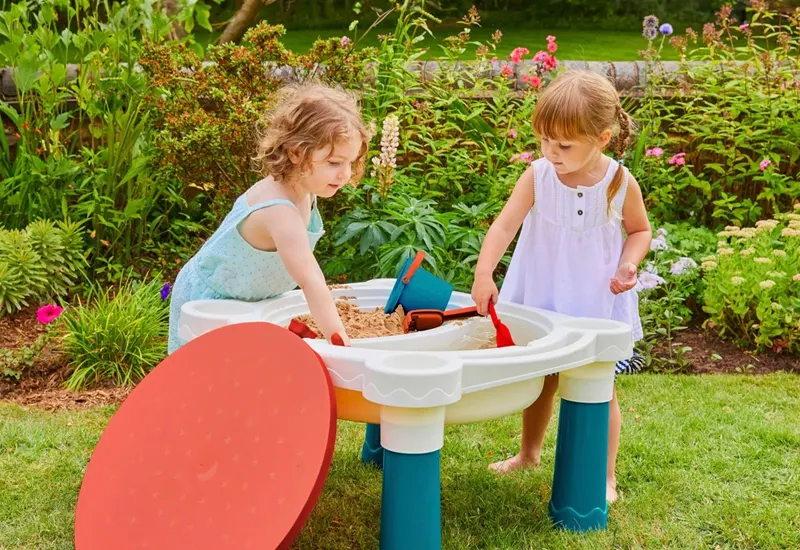
Sand and Water Table
A sand and water table gives children a dedicated space for pouring, scooping, digging, floating, sinking, and experimenting with movement. It supports sensory exploration while also encouraging early science thinking. Children can observe how materials move, change, and respond when mixed with water or handled with different tools.
Pink Tower
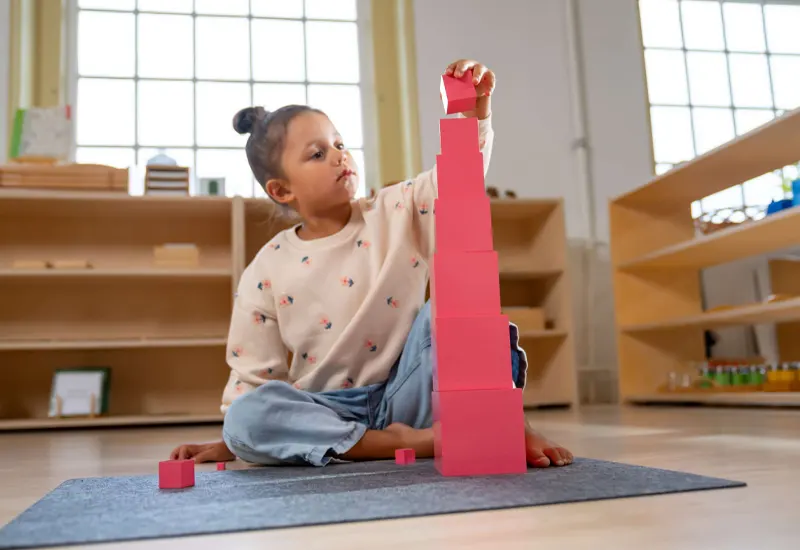
The Pink Tower is a classic Montessori sensory material made of ten wooden cubes in gradually increasing sizes. Children stack, compare, and arrange the cubes to understand visual discrimination, size relationships, order, and dimension through direct hands-on work.
Knobbed Cylinders
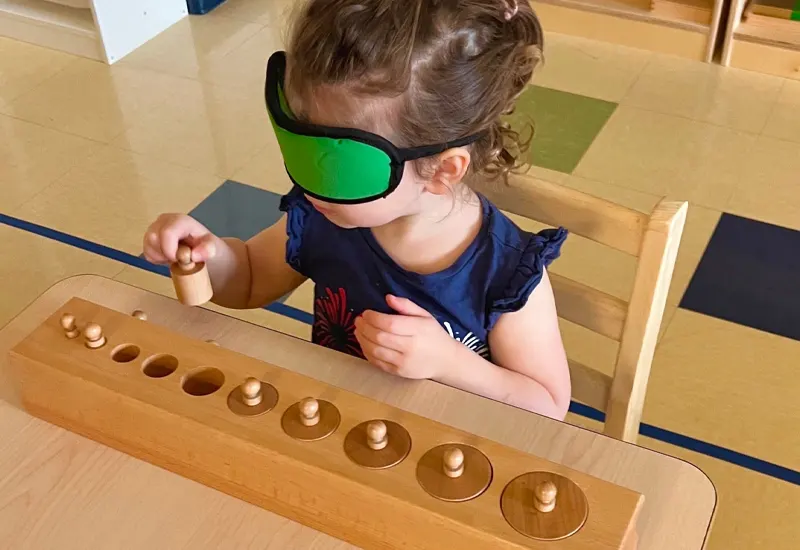
Knobbed Cylinders are wooden blocks with removable cylinders that vary in height, diameter, or both. Children match each cylinder to its correct socket, helping them refine visual perception, hand control, concentration, and preparation for later writing movements.
Light Table
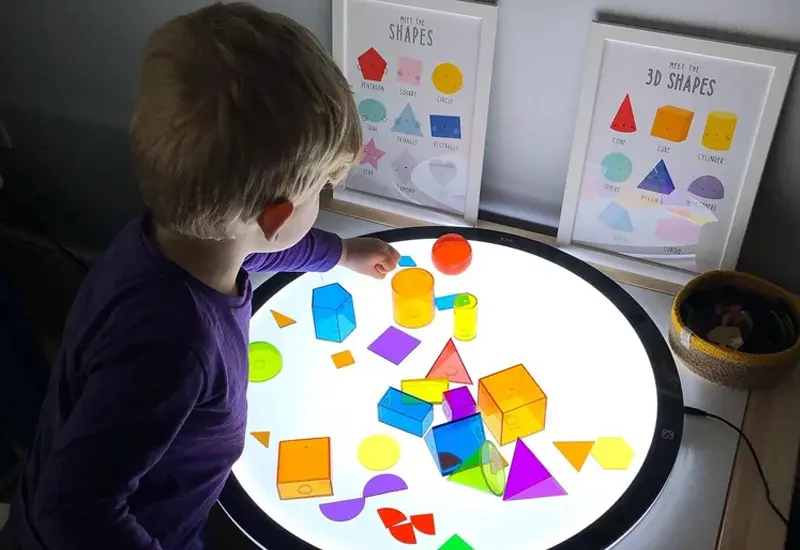
A light table provides a glowing surface for exploring transparent, translucent, and colorful materials. Children can use shapes, blocks, leaves, letters, color paddles, or loose parts on the surface. It supports visual exploration, color recognition, pattern work, observation, and creative construction.
Soft Play Equipment
Soft play equipment includes foam climbers, tunnels, wedges, blocks, mats, and padded shapes. These products create a safer movement area where children can crawl, climb, roll, build, and explore with their bodies. They are especially useful for preschools and indoor playrooms.
Balance Boards
Balance boards are movement tools that challenge children to stand, rock, shift weight, or balance while staying in control. They are available in wood, plastic, or foam designs and are often used in gross motor areas, therapy rooms, and active sensory spaces.
Conclusion
Understanding the benefits of sensory play is only the first step. The bigger question is how to make these benefits part of children’s everyday learning. For preschools, sensory play works best when the environment supports it naturally. Children need safe materials, suitable furniture, easy-to-reach storage, and enough movement space where they can explore without feeling rushed. When these details are planned well, sensory play becomes easier for teachers to manage and more valuable for children to experience.
Xiha Kidz can help schools build sensory corners or complete sensory classrooms with suitable furniture, sensory materials, and layout support. The goal is simple: to make sensory play easier to use in daily learning and more meaningful for every child.
FAQs
Is sensory play only for children with sensory needs?
No. Sensory play is helpful for all children. Some children may need extra sensory support, but every child uses the senses to learn, move, communicate, and understand the world. Sensory play gives children a natural way to build skills through direct experience.
How can teachers manage messy sensory play?
Teachers can manage messy sensory play by using defined play areas, trays, bins, washable mats, aprons, clear classroom rules, and easy-to-clean materials. Storage is also important. When materials are organized and easy to access, sensory play becomes much easier to set up and clean up.
Is sensory play the same as messy play?
No. Messy play is one type of sensory play, but sensory play can also be clean and controlled. Sensory bottles, texture boards, light tables, Montessori sensory materials, sound matching activities, weighted lap pads, and sensory cushions can all provide sensory input without creating a messy environment.
What if a child does not like sensory play?
Some children need time to feel comfortable with new textures, sounds, or movements. They should not be forced to touch materials they dislike. Teachers and parents can start with less messy options, offer tools such as scoops or brushes, and allow the child to watch first. Gradual exposure helps children build confidence at their own pace.

 English
  Arabic
  French
  Italian
  German
  Spanish
  Thai
Thai  Japanese