Starting a daycare means planning a business, meeting childcare regulations, and preparing a safe, functional space for children—all at the same time. Following the actual sequence of preparations, this guide takes you from the initial concept to the official opening, helping you identify issues regarding costs, space, and approvals early on to minimize the need for rework later.
We focus on how to start a daycare in the United States. Requirements vary by state and local jurisdiction, so use the relevant authority as the final source for legal and licensing decisions.
1. Start With Your Budget
Before you search for a building or order classroom furniture, work out how much money you can actually put into the business. A daycare can lose money during the months when rent, payroll, insurance, food and supplies begin before enrollment reaches a stable level. Your opening budget therefore needs to cover both the launch and the ramp-up period.
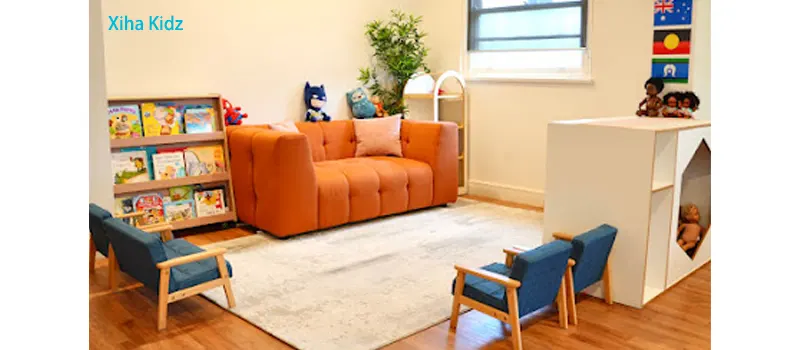
Separate your money into three buckets:
- Pre-opening costs: registration, professional advice, licensing fees, background checks, training, deposits, permits and initial insurance.
- Facility and setup costs: lease or purchase costs, renovation, fire and safety work, outdoor areas, furniture, storage, equipment, learning materials and technology.
- Working capital: rent, payroll, taxes, food, utilities, insurance, cleaning and supplies while enrollment is still growing.
Recent daycare planning references commonly place home-based programs in the low five figures, small or medium commercial programs in the tens of thousands to low six figures, and larger centers at several hundred thousand dollars or more. These are planning ranges rather than quotes; a daycare startup budget reference can help you compare categories, but your local property, wage and licensing costs should determine the actual number.
Do not ask only, “How much does it cost to open?” Ask these more useful questions:
- How much cash can I commit without putting personal finances at risk?
- How many months of operating expenses can I cover before enrollment stabilizes?
- What costs must be paid before the first child can attend?
- What costs will increase when I add infants, longer hours or another classroom?
- What is the maximum monthly property cost the business can safely carry?
If you cannot fund the minimum viable version of the program plus a realistic reserve, reduce the planned scale before you start looking at properties.
2. Choose Your Daycare Model
Before looking for a property or buying equipment, decide what type of daycare you want to operate. Your choice will affect licensing, staffing, space requirements, and startup costs.
Start with the model that fits your budget and expected enrollment.
| Daycare Model | How It Works | Typical Setup | What to Consider |
|---|---|---|---|
| Family Child Care Home | Childcare is provided from the operator’s residence, usually for a relatively small group of children. | Part of the home is adapted for childcare, play, meals, rest and daily routines. | Lower space and startup needs, but capacity and staffing options are more limited. |
| Small Daycare Center | A smaller program operates from a dedicated childcare or commercial space with limited enrollment. | Usually one or a few rooms with defined activity, care and support areas. | Offers more room and capacity than home-based care without the scale of a large center. |
| Center-Based Daycare | A dedicated childcare facility serves larger groups, often with separate classrooms for different ages. | Multiple classrooms plus shared areas such as reception, staff space, food service, storage and outdoor play. | Supports higher enrollment and more age groups, but requires more staff, space and operating resources. |
Then define the service you will sell:
- The age groups you will serve.
- Full-day, part-day, after-school, evening or extended-hour care.
- The opening capacity and the eventual licensed capacity.
- Whether you will accept subsidies or focus on private-pay families.
- Your educational approach, daily schedule and family experience.
- Whether you will begin with one room and expand later.
Infant care, extended hours and multiple age groups can increase revenue opportunities, but they can also increase staffing, equipment and compliance costs. The right first model is the one you can operate safely at a conservative enrollment level.
3. Turn the Model Into a Daycare Business Plan
Once the model and rough cost are clear, write the business plan. This is where you test whether the idea can survive in your target market before you sign a lease or commit to renovation. A small-business planning guide can help structure the document, but the numbers must come from your local research.

Market and customer analysis
Identify the families you want to serve, the area they travel from, the hours they need and what they are willing to pay. Compare nearby programs by age groups, tuition, hours, availability, reviews, outdoor space and parent experience. Look for gaps such as infant spaces, flexible schedules, language programs or care near major employers.
Program and capacity plan
State the ages, hours, opening capacity, target licensed capacity, staffing assumptions and daily schedule. Model a conservative opening level rather than assuming every licensed space will be filled immediately.
Financial plan
Build a monthly forecast that includes:
- Startup costs and the date each cost is due.
- Monthly fixed expenses such as rent, insurance, software and management salaries.
- Variable expenses such as food, supplies and classroom materials.
- Payroll by role and by enrollment level.
- Tuition, fees, subsidies and other revenue.
- Cash flow at different enrollment levels.
- Break-even enrollment and the month you expect to reach it.
- A contingency reserve for delays, repairs or slower enrollment.
Funding plan
Explain how the project will be funded through savings, partners, loans, grants or other sources. Do not count a loan approval that has not been obtained or future enrollment that has not been validated as available cash.
The business plan should produce a clear property limit. If a location works only when the center is full from the first month, the property is too expensive for the opening plan.
4. Research Licensing, Certifications and Required Approvals
After the financial model shows that the project is viable, confirm what you must legally complete before caring for children. Research the rules before choosing a property because space, staff qualifications and inspection requirements can change the budget.
Use the state and territory child care resources to find the correct local authority, then request the current provider checklist. Confirm:

- The type of license or registration required for your program model.
- Owner, director or administrator education requirements.
- Required early-childhood education credentials or experience.
- Background checks, fingerprinting and child-abuse registry checks.
- CPR, pediatric first aid and other required safety training.
- Child-to-staff ratios, group sizes and supervision rules.
- Indoor and outdoor space requirements for each age group.
- Health, sanitation, food, medication and safe-sleep rules.
- Fire, building, accessibility, occupancy and emergency requirements.
- Zoning, business permits and local approvals.
Requirements differ by state, age group and facility type. The licensing guidance for regulated child care explains the common areas that must be checked, but the local authority is the final decision-maker.
Do not pay for a certificate simply because an online course advertises it as universal. First confirm that the course, credential or training provider is accepted for your program and state. Build the required training time and fees into the business plan.
5. Register the Business, Confirm Insurance and Release the Funding
Once the model, budget and requirements are understood, complete the business foundations that allow you to sign contracts, hire people, and receive payments. Depending on your situation and location, this may include:
- Choosing and registering a business name.
- Selecting a legal structure with appropriate professional advice.
- Applying for an EIN and opening a separate business bank account.
- Setting up bookkeeping, payroll and tax procedures.
- Obtaining general liability and professional liability coverage.
- Arranging workers’ compensation if you hire employees.
- Protecting the property, equipment and vehicles used by the business.
- Securing the loan, investment or grant funds required by the budget.
Insurance requirements vary, and a homeowner’s or renter’s policy may not cover a daycare business. The resource guide for starting and operating a child care business explains why providers should confirm business liability coverage with the relevant authority and an insurance professional.
Do not sign a lease or begin a major renovation while the funding plan is still uncertain. The financial commitment should follow the business plan, not replace it.
6. Find a Location That Can Meet Daycare Requirements
Now you can evaluate properties against the budget and licensing checklist. Consider the needs of families, children and staff at the same time.
Compare each candidate for:
- Rent, purchase cost, deposit, common charges and renewal terms.
- Usable childcare space after offices, bathrooms, storage, circulation and required exits.
- Drop-off and pickup flow, parking and public transport access.
- Outdoor play, fencing, shade, drainage and supervision.
- Natural light, ventilation, noise, heating and cooling.
- Renovation, accessibility, fire protection and permit requirements.
- The age groups and capacity the property can realistically support.
Ask the city or county whether daycare use is permitted at the address and whether a conditional-use, building, fire or occupancy approval is needed. Have the licensing authority or an experienced professional review the site requirements before signing. A low-cost property can quickly become expensive if major changes are needed or the required approvals cannot be obtained.
7. Design the Facility and Complete the Licensing Application
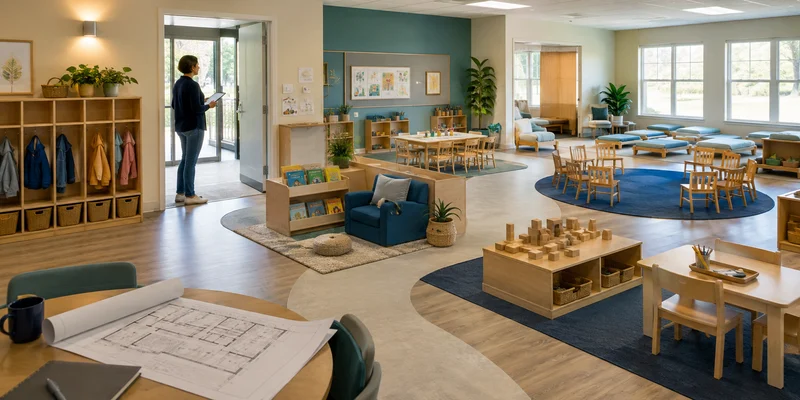
Once the site is confirmed, turn the available space into a practical Grundriss der Kindertagesstätte. The layout should be based on children’s daily routines, staff supervision, and safe movement before furniture and equipment are selected.
A practical daycare floor plan should show how children enter, move, play, eat, rest, and transition throughout the day. Staff should also be able to supervise clearly without furniture, storage or partitions blocking important sightlines.
Plan for:
- Entry, cubbies and parent communication.
- Group meeting and circle-time space.
- Quiet reading and self-regulation.
- Art, messy play and cleaning access.
- Blocks, construction and open-ended play.
- Dramatic play and role-play.
- Rest, nap and personal-care routines.
- Teacher-only storage and secure supplies.
- Clear circulation and emergency routes.
If you already have a floor plan, Xiha Kidz can help turn it into a more practical classroom layout at no additional design cost. The layout can be planned around your age groups, classroom capacity, activity areas, circulation, and furniture needs, helping you identify spacing or product-fit issues before ordering.
Once the layout is established, prepare the facility information required for your licensing application. Depending on the state and local authority, this may include floor plans, proposed capacity, age groups, room use, emergency routes, and other facility documents.
Then coordinate the required building, fire, health, and licensing inspections. Track any corrections carefully, as approval delays can affect your opening date, staff schedule, and furniture delivery.
8. Hire and Train Staff to the Approved Capacity
Hiring should be based on the licensed capacity, age mix, operating hours and budget in your business plan. Do not hire only for the number of children you hope to enroll; hire for the ratios and coverage the program must maintain.
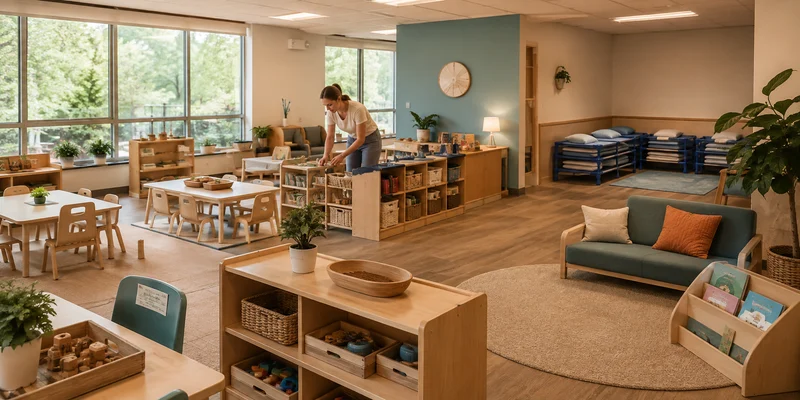
Decide which roles are required at opening:
- Owner-operator or director.
- Lead teachers and assistant teachers.
- Floaters for breaks, arrivals and absences.
- Kitchen, cleaning or administrative support.
- Substitute coverage for illness, vacation and training.
Write clear job descriptions and verify qualifications before making offers. Complete background checks, references, health checks and required certifications on the timeline set by your licensing authority. The staff qualification and training guidance explains why requirements vary by setting, age group and staff role.
Prepare staff training for supervision, child protection, first aid, CPR, safe sleep, allergies, medication, sanitation, emergency response, incident reporting and parent communication. Schedule staff to the actual opening enrollment, and keep enough coverage for breaks and unexpected absences.
9. Choose Furniture, Equipment and Classroom Materials
Once the room plan, age groups, capacity, and licensing requirements are clear, create a room-by-room purchasing list. This helps you buy the right quantities, choose suitable sizes, and avoid furniture that blocks circulation or supervision.
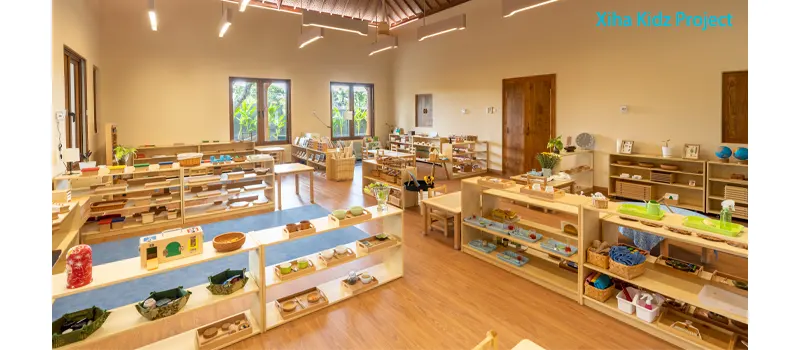
Start with the essentials:
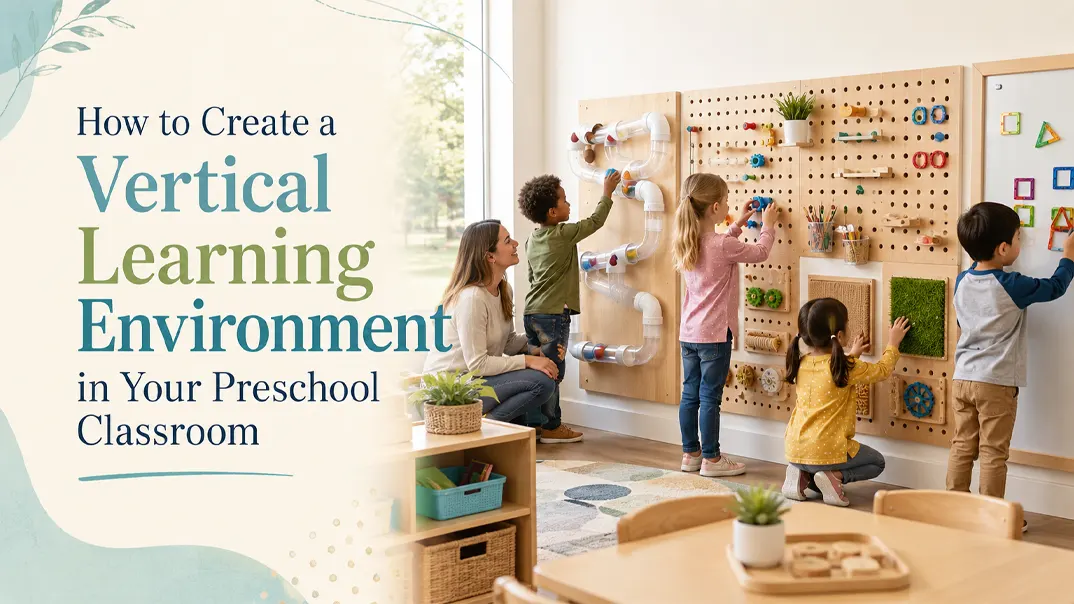
- Classroom furniture: age-appropriate tables and chairs, open storage, bookshelves, cubbies, and teacher storage.
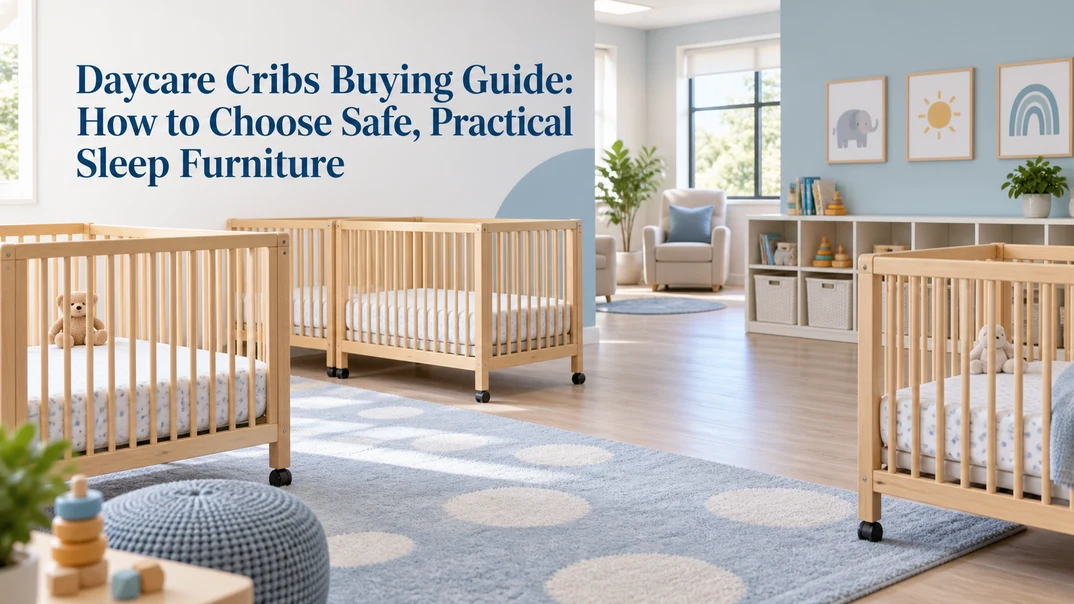
- Infant and toddler care: cribs or cots, changing furniture, feeding equipment, and low-access storage.
- Learning materials: books, blocks, dramatic play, art supplies, sensory materials, puzzles, and age-appropriate toys.
- Daily operations: cleaning supplies, food-service equipment, safety equipment, and other items required for routine care.
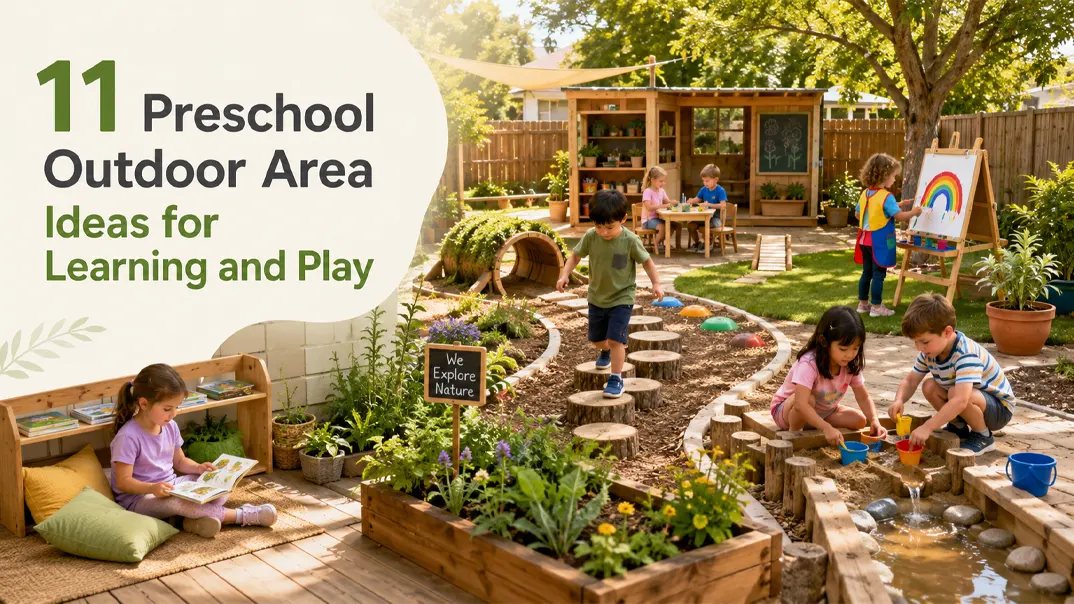
- Outdoor areas: play equipment, riding toys, outdoor storage, and other products that fit the available space and supervision plan.
For furniture and equipment, check more than appearance and price. Look at age suitability, dimensions, stability, cleanability, materials, edges and hardware, applicable safety requirements, warranty, and replacement-part availability.
Order only after quantities and dimensions have been checked against the final layout. For custom or imported products, also allow enough time for production, shipping, installation, and any adjustments before opening.
10. Write Policies, Set Tuition and Prepare Enrollment
Before enrollment opens, turn your business plan into clear policies, forms, and operating procedures that families and staff can follow.
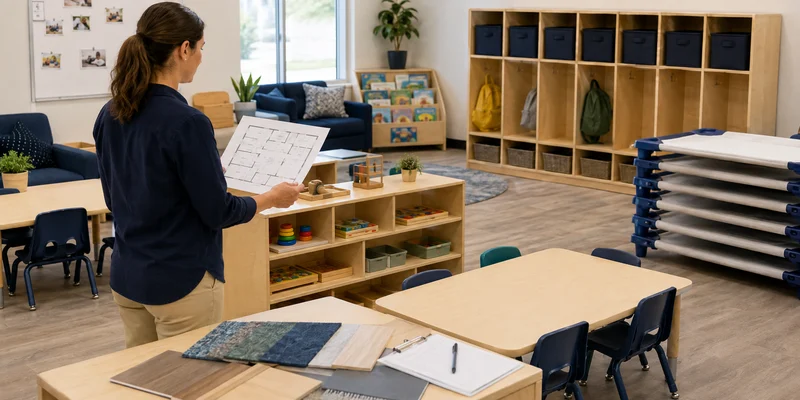
Create a parent handbook and staff manual covering:
- Hours, holidays, closures, and late pickup.
- Tuition, deposits, billing, refunds, and withdrawal notice.
- Enrollment forms, authorized pickup and attendance.
- Illness, medication, allergies and emergency care.
- Meals, food storage, naps, diapering and toileting.
- Positive guidance, incident reporting and complaints.
- Communication, photos, privacy and family updates.
- Emergency evacuation, severe weather and reunification.
Set tuition based on your actual operating costs and realistic enrollment, not on a competitor’s advertised price alone. Your tuition needs to support payroll, property costs, insurance, supplies, administration, taxes, and other ongoing expenses, including periods when enrollment is below capacity.
If approvals are still pending, make the expected opening date clear and avoid guaranteeing care until the required licenses and inspections are complete.
Set up the enrollment process before accepting families. Prepare the forms, agreements, and document checklist that parents will need to complete, such as enrollment information, emergency contacts, authorized pickup, health and allergy details, permissions, and tuition agreements. Make sure everything is complete and signed before the child starts care.
11. Complete the Final Inspection and Open Carefully
Before opening, make sure the daycare is ready for children, staff, and families.
Confirm that:
- All required licenses and approvals are complete.
- Insurance is active.
- Staff checks, certifications, and training are complete.
- Classrooms are fully set up and safe to use.
- First-aid, emergency, and safety supplies are in place.
- Attendance, billing, and child records are ready to use.
- Staff understand daily routines, supervision, emergency procedures, and pickup rules.
- Families have received the handbook, forms, opening date, and first-day information.
Then walk through a normal day with your staff. Check arrival, meals, naps, transitions, outdoor play, pickup, and closing. Fix any problems with timing, supervision, storage, or movement before children arrive.
If possible, start with a smaller group and increase enrollment gradually. This gives staff time to adjust routines before the center reaches full capacity.
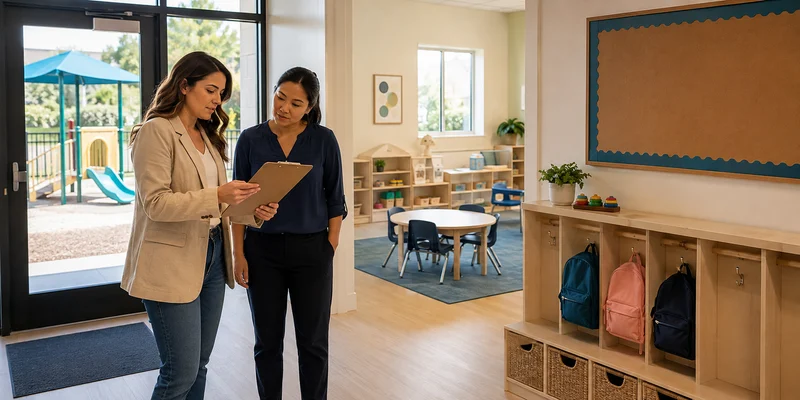
Common Mistakes to Avoid When Starting a Daycare
Many problems during daycare setup come from making decisions too early or planning around ideal conditions. A property may be signed too early, staffing may be planned too tightly, or furniture may be ordered before the layout is final. The examples below show where these problems usually begin and what to check before moving forward.
Choosing a Property Before Setting Your Budget
A property that looks suitable can quickly become unaffordable once rent, renovation, utilities, insurance, permits, and maintenance are added. Before viewing locations, set a realistic property budget based on your expected enrollment and total startup capital.
Planning Revenue Around Full Enrollment
Licensed capacity is only the maximum number of children you may be allowed to serve. It does not mean those spaces will be filled immediately. Build your budget around a slower enrollment period so payroll, rent, and other fixed costs can still be covered during the first few months.
Paying for Training Before Checking Licensing Requirements
Not every childcare course or certificate will satisfy your state or local licensing requirements. Check the required qualifications, approved training providers, and renewal rules before paying for courses for yourself or your staff.
Staffing Only to Meet the Minimum Ratio
Minimum staff-to-child ratios may work on paper, but daily operations also include breaks, absences, training, opening and closing shifts, and staff turnover. Plan enough coverage so one absence does not leave a classroom understaffed or force you to reduce attendance.
Buying Furniture Before the Layout Is Final
Furniture that does not match the room plan can block walkways, reduce usable space, create supervision blind spots, or simply be the wrong size for the children. Finalize the layout, room capacity, and activity areas first, then confirm furniture dimensions and quantities before ordering.
Promising an Opening Date Too Early
Construction, inspections, permits, licensing, and furniture delivery can all change the schedule. Avoid making definite promises to family members or arranging for employees to return to work too early before the main approval process is successfully completed.
FAQs
How much money do I need to start a daycare?
There is no single number. A home-based program may be planned in the low five figures, while a commercial center can require tens of thousands to several hundred thousand dollars depending on property, renovations, capacity, staffing, and working capital. Build a local budget rather than relying on a national average.
When should I start taking deposits from families?
Only after your enrollment terms, refund policy, expected opening date, and licensing status are clear. Families should understand whether a deposit is refundable and what happens if the opening date changes.
What should I do if the opening date is delayed?
Update families and staff as soon as the delay is confirmed. Give a revised timeline, explain what is still pending, and follow the refund or enrollment terms you provided earlier. Avoid giving a new firm date until the remaining approvals are reasonably predictable.
What if my startup budget becomes higher than expected?
Separate the project into essential opening costs and items that can be added later. Licensing, safety, required staffing, and core classroom equipment should come first. Decorative upgrades, additional activity areas, or non-essential equipment can usually wait until enrollment and cash flow are more stable.
What should I do if enrollment is slower than expected after opening?
Review your staffing schedule, operating hours, marketing, and monthly expenses before reducing tuition. First identify whether the problem is low local demand, limited awareness, pricing, program hours, or the age groups you serve. Slow enrollment does not always mean your tuition is too high.
Should I order all daycare furniture at once?
Not necessarily. Order the furniture and equipment required to open the rooms you will use first. If you plan to open additional classrooms later, delaying non-essential purchases can preserve cash and prevent unused furniture from sitting in storage.
Schlussfolgerung
Opening a daycare involves many moving parts, and not every decision needs to be made at once. What matters is knowing which questions need answers before you move to the next stage. When you reach the point of planning the actual space, Xiha Kidz can help turn your floor plan into a workable classroom layout. From there, you can get help with furniture and toy selection, quantities, sizing, customization, production, shipping, and installation guidance, so the space is easier to set up and ready for everyday use.



 German
  English
  Arabic
  French
  Italian
  Spanish
  Thai
Thai  Japanese