Bacteria, dust, and everyday mess can quickly build up in a busy daycare. If cleaning tasks are missed or handled inconsistently, they may affect children’s health and parents’ trust in your center. As a daycare director, you need a clear routine that your team can follow every day. This guide will show you how to clean your daycare and organize your daycare cleaning routine.
The Importance of Daycare Cleaning
Young children are still learning basic hygiene habits. They touch shared toys, crawl on the floor, and often put their hands or objects in their mouths. This makes germs easy to spread in a daycare setting. So you should understand that regular daycare cleaning is an important part of protecting children and running a responsible childcare center.
Protects Children’s Health
Young children share toys and touch the same surfaces throughout the day. They may also put toys or their hands in their mouths. Regular daycare cleaning helps reduce the spread of germs and creates a healthier environment for your children and staff.
Builds Parents’ Trust
Parents notice the condition of your daycare when they arrive. Clean floors, fresh rooms, and well-maintained furniture show that your team takes daily care seriously. This increases parents’ trust in your daycare center, thereby improving your enrollment rate.
Meet Childcare Health and Safety Requirements
Daycare cleaning is part of operating a compliant childcare center. Licensing rules commonly cover general cleaning, handwashing, diapering, toileting, and sanitation. You should check the rules issued by your state or local licensing authority. These requirements are designed to protect children, and your center must comply with them to operate legally.
Cleaning, Sanitizing, and Disinfecting Are Not the Same
Cleaning, sanitizing, and disinfecting are different steps. You need to understand what each one does and how to complete it correctly. This helps you avoid unnecessary chemical use and ensures high-risk areas receive the correct treatment.
Cleaning
Cleaning removes dirt, dust, food, and visible residue. You should use it as the first step because sanitizers and disinfectants work less effectively on a dirty surface.
How to Clean
- Remove loose dirt, crumbs, and visible residue.
- Use soapy water or a cleaning agent suitable for the corresponding material.
- Wipe or rinse the surface as directed.
- Let it dry before children use it again.
- For rugs and fabric items, follow the care label and dry them completely.
Sanitizing
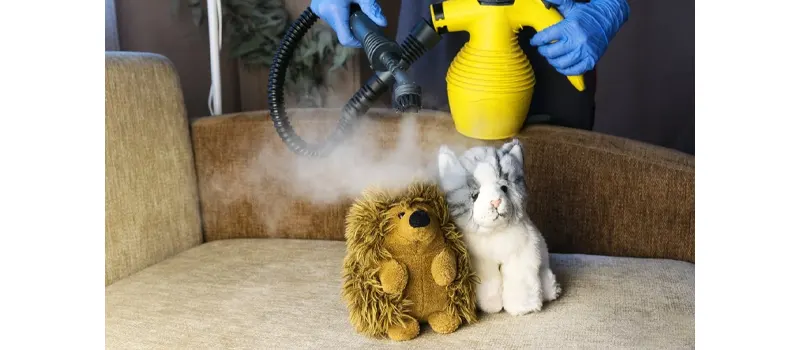
Sanitizing reduces germs to a safer level. You should use it on clean items that come into contact with food or children’s mouths. This includes eating tables, highchair trays, feeding items, and toys that children have mouthed.
How to Sanitize
- Clean the surface or item first.
- Apply a sanitizer approved for that use.
- Keep the surface wet for the contact time on the label.
- Rinse it when the instructions require it.
- Let it air dry before returning it to children.
- Remove mouthed toys from play until the full process is complete.
Disinfecting
Disinfecting kills or deactivates more germs than sanitizing. You should reserve it for higher-risk areas, such as toilets, diaper-changing tables, and places exposed to blood, vomit, or other body fluids. You may also need to disinfect high-touch surfaces more often during an illness outbreak.
How to Disinfect
- Keep children away from the area.
- Put on gloves when handling body fluid contamination.
- Remove visible waste and clean the surface first.
- Apply an appropriate disinfectant across the full area.
- Keep it wet for the required contact time.
- Rinse it if the label says to do so.
- Let the area dry before reopening it.
How to Organize your Daycare Cleaning Routine?
A good daycare cleaning routine should follow the same order every time. This helps your staff avoid missed steps and prevents dirt from being spread from one area to another. You can use the following process as a standard routine, then adjust it to match your local childcare regulations.
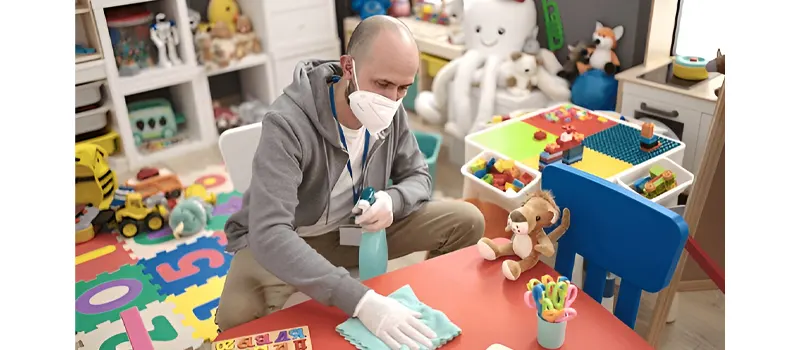
1. Prepare the Area
Move children away from the space before using cleaning products. Remove toys, food, bedding, and other loose items. Open windows or improve ventilation when the product label requires it.
2. Remove Waste and Visible Dirt
Pick up rubbish, crumbs, and loose debris first. A sanitizer or disinfectant will not work properly when dirt or food residue remains on the surface.
3. Clean from Low Risk to High Risk Areas
Start with cleaner areas such as shelves and classroom furniture. Finish with toilets, diapering areas, and body fluid contamination. You should also clean from higher surfaces to lower surfaces so dirt does not fall onto an area you have already finished.
4. Wash the Surface
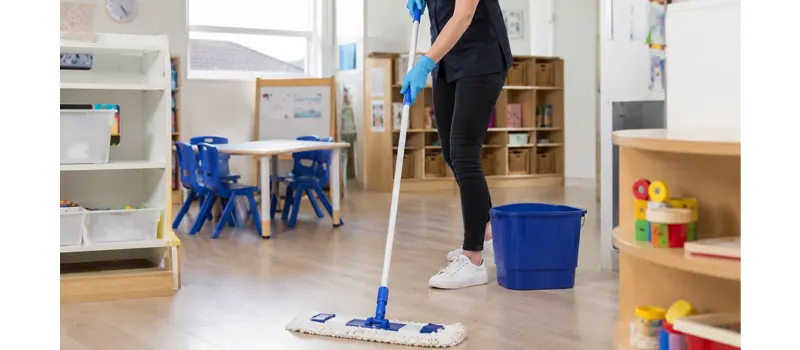
Use soap and water or a cleaner suitable for the material. Wipe the entire surface, including handles, edges, corners, and joints. For furniture and toys, you should check the manufacturer’s care instructions before cleaning.
5. Sanitize or Disinfect When Required
After cleaning, decide whether the surface needs further treatment. Sanitize food contact surfaces and mouthed toys. Disinfect toilets, diaper changing surfaces, and areas exposed to body fluids.
Apply the product evenly and keep the surface wet for the contact time shown on the label. Do not wipe it away too early.
6. Rinse and Dry the Area
Rinse the surface when the product instructions require it, especially for food contact items and toys. Allow everything to dry completely before children return or the item is placed back into storage.
7. Clean and Store Your Equipment
Wash reusable cloths, brushes, buckets, and mops after use. Let them dry before storage. Keep tools for classrooms, food areas, and bathrooms separate so you do not carry contamination between zones.
8. Record the Completed Task
Mark the task on your daycare cleaning checklist. You should record the time, area, and staff member responsible. This gives you a clear way to check daily work and prepare for licensing inspections.
A Simple Rule for Your Staff
Your team can remember the process as:
Remove waste → Clean → Sanitize or disinfect → Rinse if required → Dry → Record
For unexpected spills or contamination, staff should respond immediately rather than waiting for the next scheduled cleaning time.
How Often Should You Clean Your Daycare?
You don’t need to clean all items at the same frequency. The specific cleaning frequency depends on how often a child comes into contact with the item, whether it has been in contact with food or bodily fluids, and whether there has been a recent infectious disease such as the flu. You can use the daycare cleaning schedule below as a starting point and adjust it accordingly based on local permit regulations.
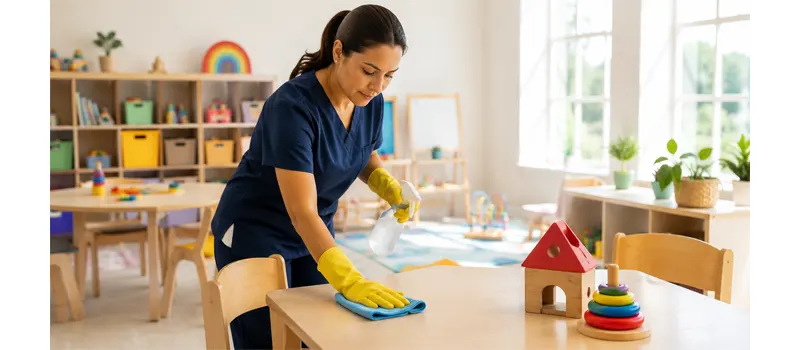
Immediately Clean and Disinfect After Use
You should clean items immediately when they have been used for food, toileting, diapering, or personal care. This includes:
- Diaper changing tables
- Potty chairs
- Toileting equipment
- Food preparation surfaces
- Highchair trays
- Dishes and eating utensils
- Thermometer
- Any surface contaminated by blood, vomit, urine, or feces
You need to clean the surface first, then disinfect it with an appropriate product. Do not wait until the end of the day, because these areas can quickly spread germs.
Clean Daily
At the end of each day, you should focus on frequently touched surfaces and shared classroom equipment, including:
- Door handles and light switches
- Faucets and toilet handles
- Classroom tables and chairs
- Shelf and cabinet handles
- Shared toys and learning materials
- Nap mats and cots
- Floors
- Trash bins
- Sinks and restrooms
You may need to clean these areas more often when they are visibly dirty or during periods of increased illness.
Clean Weekly
Items that are not constantly touched can usually be included in your weekly daycare cleaning schedule. These may include:
- Low-use shelves
- Classroom walls
- Window ledges
- Dramatic play furniture
- Large indoor play equipment
- Washable classroom rugs
- Storage areas
- Art supply containers
Inspect these areas during the week. Do not wait for the scheduled cleaning day when you notice dirt, spills, or contamination. Rotate toys where possible so your staff can clean one group thoroughly without disrupting play.
Clean Monthly or as Needed
Some areas need deeper cleaning rather than daily attention. Add the following tasks to your monthly schedule:
- Clean behind and underneath furniture
- Wash curtains and fabric decorations
- Deep clean carpets and rugs
- Clean air vents and fans
- Inspect storage cabinets
- Remove damaged or difficult-to-clean materials
- Check cleaning tools and replace worn supplies
Your daycare cleaning schedule should remain flexible. Increase the frequency when enrollment is high, children are sick, or an activity creates extra mess. A written checklist for each classroom and shared area will help your team understand what must be cleaned, how it should be treated, and who is responsible.
How to Clean Different Areas in a Daycare?
Divide your center into clear cleaning zones, then give your staff a simple routine for each one. This helps you prevent cross-contamination and makes it easier to check whether important tasks have been completed.
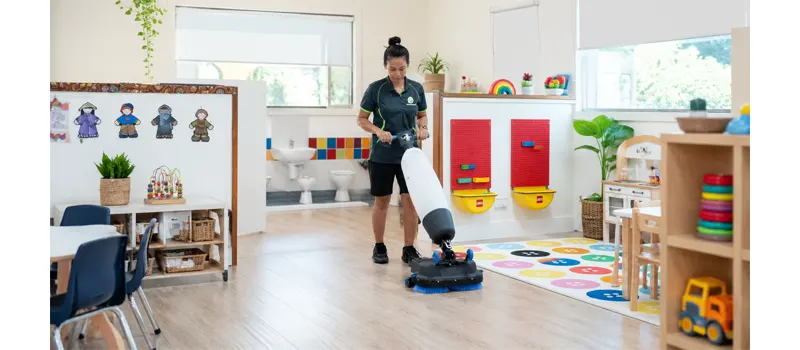
Classroom and Play Areas
Children touch tables, chairs, shelves, toys, and learning materials throughout the day. You can start with shared items and high-touch surfaces. Remove visible dirt first, then sanitize items that children place in their mouths or use closely together.
- Wipe tables and chairs after meals, messy play, and visible spills.
- Clean shelf edges, cabinet handles, light switches, and door handles daily.
- Remove mouthed toys from play immediately.
- Clean toy bins as well as the toys stored inside them.
- Vacuum rugs and clean spills before they soak into the surface.
- Place damaged items aside when cracks or rough edges make them difficult to clean.
Eating and Food Preparation Areas
Food contact areas need to be cleaned immediately after eating, as food crumbs, spills, and food residue can easily harbor bacteria. Please use cleaning products approved for use in food contact areas.
- Remove all food and dishes before you begin.
- Wash tables, highchair trays, counters, and reusable mats.
- Sanitize food contact surfaces after cleaning.
- Rinse the surface when the product label requires it.
- Let the area air dry before serving food again.
- Keep food cleaning cloths separate from classroom and bathroom cloths.
Toilets and Diaper Changing Areas
These areas are prone to bacterial contamination. You should use dedicated cleaning supplies and never move them into classrooms or eating areas. Changing surfaces must be cleaned and disinfected after each use.
- Keep gloves, disposable towels, and disinfectant within staff reach.
- Remove visible waste before applying cleaner.
- Clean and disinfect changing surfaces after every diaper change.
- Clean toilets, flush handles, faucets, sinks, and step stools daily and when soiled.
- Empty diaper bins before they overflow.
- Wash your hands after handling waste or removing gloves.
- Store bathroom tools separately from all other cleaning equipment.
Nap and Rest Areas
Bedding comes into close contact with children’s skin and faces. You should assign each child their own items and prevent clean bedding from touching used bedding.
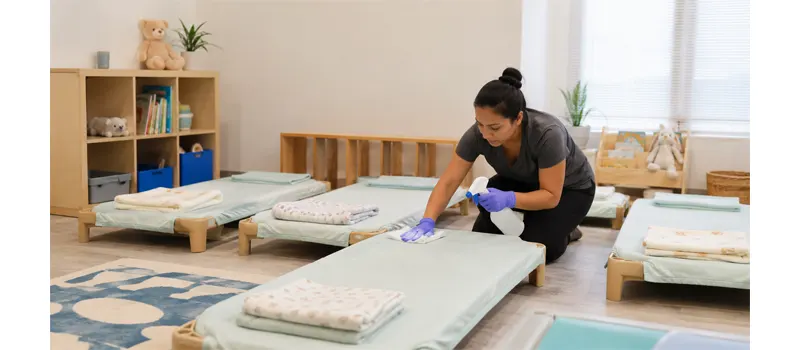
- Label each cot, crib, mat, and bedding set.
- Clean sleep surfaces when visibly soiled and before another child uses them.
- Wash bedding on a fixed schedule and immediately after contamination.
- Store clean and used bedding separately.
- Check seams, corners, and undersides for dirt or moisture.
- Allow all items to dry completely before stacking or storing them.
Entrances, Hallways, and Shared Spaces
These areas easily accumulate mud and grime from shoes, affecting parents’ first impression of the kindergarten. Therefore, you should focus on cleaning the floors and frequently touched surfaces.
- Sweep or vacuum entrances every day.
- Clean door handles, railings, reception counters, and sign-in equipment.
- Mop wet or dirty floors promptly.
- Use mats to reduce the amount of outdoor dirt entering classrooms.
- Keep exits and walkways free from cleaning tools and clutter.
- Place warning signs around wet floors until they are dry.
Outdoor Play Areas
Outdoor equipment also requires regular cleaning and inspection. Dirt, standing water, bird waste, and food residue should not be left for children to contact.
- Inspect equipment before children go outside.
- Remove waste, leaves, standing water, and visible dirt.
- Wash tables, playhouses, ride-on toys, and water play equipment when needed.
- Empty and clean water play containers after use.
- Check sand and sensory areas for contamination.
- Remove damaged equipment until it can be cleaned or repaired safely.
Staff and Cleaning Storage Areas
You should keep supplies organized, labeled, and inaccessible to children.
- Keep products in their original labeled containers when possible.
- Label every diluted solution clearly.
- Store chemicals away from food, medicine, and classroom materials.
- Hang mops and cloths so they can dry fully.
- Separate bathroom tools from classroom and kitchen tools.
- Check expiration dates and replace damaged containers.
- Lock all cleaning products where children cannot reach them.
How to Clean Your Daycare Safely?
Cleaning products can reduce germs, but they can also create risks when they are used incorrectly. Train your staff to follow the safety rules every time they clean.
Keep Children Away from Cleaning Area
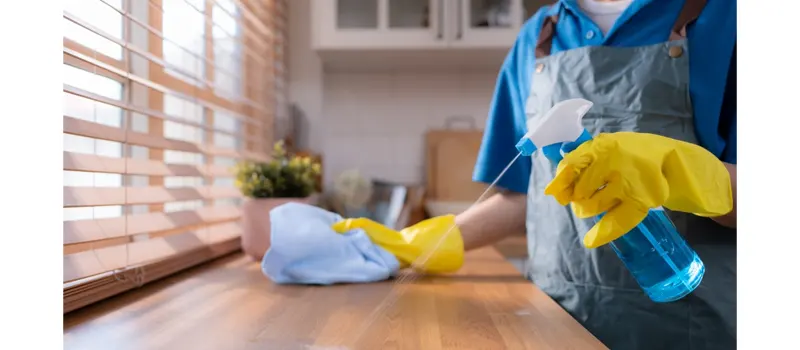
Do not clean or spray disinfectants while children are close to the surface. Do not return toys, bedding, or equipment to children while they are still wet with cleaning products. Follow the label to see whether the surface must be rinsed. Then let it dry fully before reopening the area.
Read the Product Label Before Use
You should check the label before using any cleaner, sanitizer, or disinfectant. Confirm which surfaces it can be used on, whether it needs dilution, and whether you must rinse afterward. Also check the required contact time. The surface must remain visibly wet for that full period to work properly.
Never Mix Cleaning Products
Do not combine bleach, ammonia, disinfectants, or other cleaning chemicals. Mixing products can create dangerous fumes. Use only one product at a time and follow its instructions exactly.
Use the Right Product for Each Surface
Do not assume one disinfectant is suitable for every item. Food surfaces, mouthed toys, wood, fabric, and electronic equipment may require different products or methods. You should check both the cleaning product label and the item’s care instructions before beginning cleaning.
Protect Your Staff
You should provide gloves and any other protective equipment required by the product label for your staff. Make sure the room has enough ventilation during use. Staff should wash their hands after removing gloves and after handling waste or body fluid contamination.
Store Products Securely
Keep cleaning products in a locked area that children cannot access. Store them away from food, medicine, and classroom materials. Keep products in their original containers when possible. If you use a working bottle, label it clearly so staff know what it contains and how it should be used.
Prevent Cross-Contamination
Use separate cloths, brushes, mops, and gloves for classrooms, food areas, toilets, and diapering spaces. Cleaning tools should not be mixed between different areas. Reusable tools should be washed and dried after each use.
Tips to Make Your Daycare Cleaning Easier
A good cleaning routine should save time, not create more work for your staff. You can make cleaning faster by reducing unnecessary items or giving every supply a clear place. Small changes like these help your team work more efficiently and make it less likely that tasks will be missed.
Reduce Unnecessary Clutter
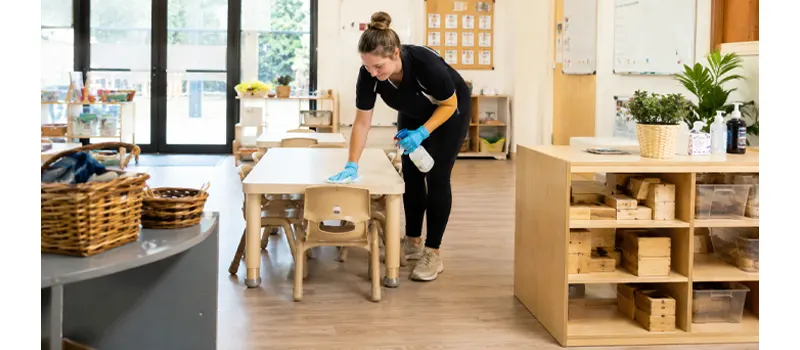
Too many toys, decorations, and loose materials make every surface harder to reach. Keep only the items children use regularly in the room. Store the rest in labeled containers and rotate them when needed.
Use Easy-to-Clean Furniture
You should choose Klassenzimmermöbel with smooth surfaces, sealed edges, and simple shapes. Avoid deep grooves and hard-to-reach gaps where dust and residue can build up. Mobile storage units with locking casters can also make it easier to clean underneath and behind furniture.
Color Code Your Cleaning Tools
Use different color coding for cloths, brushes, buckets, and mops in each area. This helps your staff identify the correct tool quickly and prevents bathroom tools from being used in classrooms or food areas.
Zum Beispiel:
- Red: Toilets and diapering areas
- Blue: Classrooms and play areas
- Green: Food preparation and eating areas
- Yellow: Entrances, hallways, and shared spaces
Post the color guide near your cleaning supply area so every staff member follows the same system. You can choose any colors that work for your center, but keep the assignments consistent.
Use Clearly Marked Containers
Separate clean items from used or contaminated items. For example, you can prepare a clearly marked container for mouthed toys that are waiting to be cleaned. Clear labels help staff handle contaminated materials correctly.
Keep Supplies Close to Where They Are Used
Store approved cleaning supplies near each work area, but always out of children’s reach. Staff should not need to walk across the center to find gloves, cloths, or waste bags during an urgent cleanup.
Rotate Daycare Cleaning Tasks
Do not leave every deep cleaning task until the end of the week. Divide larger jobs across several days. One day can focus on storage units, while another covers rugs, soft furnishings, or furniture undersides.
Check Furniture and Equipment Regularly
Cracked surfaces, damaged edges, and loose joints are harder to clean properly. Add a quick condition check to your routine. Repair or replace them before they cause serious hygiene problems.
Assign Responsibility Clearly
Every task should have a named person responsible for completing and recording it. Avoid general instructions such as “clean the classroom,” because they make it difficult to know whether specific surfaces were missed.
Review What Is Taking Too Long
You need to ask your staff which tasks are difficult or often delayed. The problem may be poor storage, too many materials, or furniture that blocks access. Small layout changes can often save more time.
FAQs
Should you disinfect every surface in a daycare cleaning?
No. Most surfaces only need regular cleaning. Use sanitizing for food contact items and mouthed toys. Reserve disinfecting for higher-risk areas such as toilets, diaper changing surfaces, and body fluid spills.
How should you clean toys that cannot be washed?
Check the manufacturer’s instructions first. For electronic toys, turn them off and wipe them with a slightly damp cloth. Do not spray liquid directly into buttons, ports, speakers, or battery compartments.
Do daycare cleaning rules differ by location?
Yes. Licensing and sanitation requirements may vary by state, province, or local authority. Review the rules that apply to your center and update your procedures when regulations change.
How to Clean Daycare Cots?
Remove the bedding first and wash it separately. Wipe the cot frame and sleeping surface with soap and water or a cleaner suitable for the material. Pay attention to corners, joints, handles, and the underside where dust can collect. Sanitize or disinfect the cot when required by your local rules or after contamination. Let it dry completely before adding clean bedding or stacking it for storage.
Can you clean while children are in the room?
You can handle simple tasks such as wiping small spills when children are safely away from the area. Avoid spraying chemicals near children. Keep them away until the surface has been rinsed or dried as required.
Schlussfolgerung
Daycare cleaning is not only a staff task. It is also a design issue. Poor storage, damaged surfaces, and crowded layouts can make even a good routine difficult to maintain. At Xiha Kidz, we consider these cleaning needs during product design. Our furniture can be finished with non-toxic water-based paint. When children draw on the surface with crayons, many marks can be removed with a damp cloth.


 German
  English
  Arabic
  French
  Italian
  Spanish
  Thai
Thai  Japanese