
Wondering what certifications you need to open a daycare? The requirements can vary depending on your state, the type of daycare you plan to operate, and your role. This guide explains the licenses, certifications, background checks, and professional qualifications you may need. You’ll also learn how to check your local requirements and prepare for the licensing process.
What Do You Need to Open a Daycare Legally?

There is no single national “daycare certification” that qualifies every program in the United States. Each state or territory sets its own requirements, and the answer can change based on whether you operate from a home or center, the children’s ages, the program’s size, and the role you will perform.
Most regulated programs need to account for four separate areas:
- Program authorization: a child care license, registration, or approval to operate.
- Safety training: pediatric CPR and first aid plus other required health and safety courses.
- Screening: background checks and fingerprinting for covered adults.
- Role qualifications: education, experience, or a professional credential for a provider, teacher, or director.
Some programs also need facility, fire, health, food, transportation, or local approvals.
Which Requirements Usually Apply to a Daycare?

The word “certification” is often used for every document a daycare needs, but the documents do different jobs. Use this distinction when reading your state’s rules:
| Requirement | What it covers | Is it a personal certification? |
|---|---|---|
| Child care license or registration | Government authorization for the program to provide care | No. It belongs to the program or provider operation. |
| Training certificate | Completion of an approved course such as CPR, first aid, or safe sleep | Yes, but only for that course and its validity period. |
| Background clearance | Screening of an adult who may work with or access children | No. It is a clearance, not proof of education or skill. |
| Professional credential or degree | Education, experience, or demonstrated early childhood competence | Sometimes. Its value depends on the state and role. |
| Facility approval | Fire, health, building, zoning, or occupancy compliance | No. It applies to the site, not the person. |
A business license is also different from a child care license. Registering a company or obtaining a tax document does not show that the program meets child care rules. Likewise, completing a course does not authorize a program to operate.
Required Training and Certifications for Daycare Staff
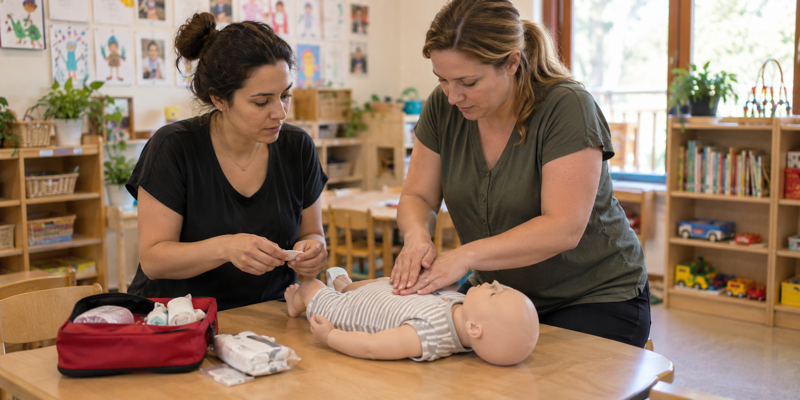
Training is the category most people mean when they ask about daycare certifications. The exact course names, hours, accepted providers, and renewal dates vary, but the following topics are common in regulated settings.
Pediatric CPR and First Aid
Look for training that covers infants and children, includes the practical skills evaluation required by your jurisdiction, and remains current for the required period. A center may need several trained staff members, not only the owner. Some rules also require a currently certified person to be present whenever children are in care.
Before enrolling, ask which organizations the licensing office accepts, whether hands-on practice is required, which roles need the certificate, and how often it must be renewed. A generic online card may not satisfy the rule.
Child Abuse and Mandated Reporter Training
Many jurisdictions require training on recognizing, preventing, and reporting child abuse and neglect. The duty may apply to employees and volunteers who work with children, while the exact course and renewal cycle vary.
Safe Sleep and Infant Care
If you care for infants, expect additional requirements related to safe sleep, supervision, feeding, diapering, medication, and emergency response. Confirm whether the training must be completed before a staff member begins and whether the program must keep written sleep procedures.
Health, Medication, Allergy, and Emergency Response
Required topics can include infection control, sanitation, medication administration, food allergies, emergency preparedness, evacuation, severe weather, and hazardous materials. The rules may separate orientation, pre-service training, annual training, and role-specific training.
Food and Transportation Training
If the program prepares food on site, a food-handler card or kitchen-related approval may apply. If staff transport children, additional driver, vehicle, or emergency training may be required. Do not assume that serving packaged snacks and preparing meals are regulated in the same way.
The official staff qualifications and training guidance lists many of these topic areas and emphasizes that each state or territory sets its own minimums.
Does a CDA or Degree Replace a Daycare License?

No. A CDA, college degree, or other professional credential can help you meet a provider, teacher, or director qualification, but it does not by itself authorize a program to provide child care.
What a CDA Can Do
The Child Development Associate (CDA) Credential is a professional early childhood credential. The Council for Professional Recognition describes a pathway that includes a high school diploma or equivalent, 120 clock hours of early childhood education, 480 hours of experience within three years, a portfolio, an exam, and a verification visit. Requirements can change, so confirm the current pathway with the CDA Council.
Some states accept a CDA as one way to meet a teacher or director qualification. Others require college credits, a state credential, documented experience, or a different combination. Read the exact role standard before paying for a program.
Nuestro CDA credential guide can help you understand the credential itself. Treat it as a professional qualification pathway, not as an operating license.
What a College Degree Can Do
An early childhood, education, psychology, or related degree may satisfy part of a director or lead-teacher standard. The state may still require specific coursework, supervised experience, orientation, CPR, first aid, background clearance, or ongoing training.
The practical question is not “Do I have a degree?” It is “Does my education and experience match the exact provider, director, or teacher standard for this program?”
What Does Each Daycare Role Need?

Owners, directors, providers, and caregivers do not necessarily need the same qualifications. In a small family daycare, one person may fill several roles. In a center, each role may have its own standard.
| Role | Common requirements to verify | Why the distinction matters |
|---|---|---|
| Owner | Background clearance; program application information; provider qualifications if directly caring for children | Ownership alone may not require a teacher credential, but direct care can change the answer. |
| Family child care provider | Provider license or registration; CPR/first aid; background check; required education, experience, and training | The provider is often both the operator and the caregiver. |
| Director or administrator | Background clearance; director education, experience, and management standard; required safety training | Director requirements may be higher than those for an owner who never provides care. |
| Teacher or caregiver | Minimum age; orientation; CPR/first aid; background check; role-specific education and training | Infant and toddler assignments may trigger additional requirements. |
| Household members, volunteers, drivers, or contractors | Screening and safety requirements when covered by state rules | A person may need clearance even when they are not an employee. |
En staff background check guidance explains that checks can cover directors, teachers, caregivers, bus drivers, custodians, kitchen staff, administrators, household members, and other adults depending on their access to children. A background check is not a certificate, but it can still be a condition of employment or approval.
What Changes for Infants, Home Daycares, and License-Exempt Programs?
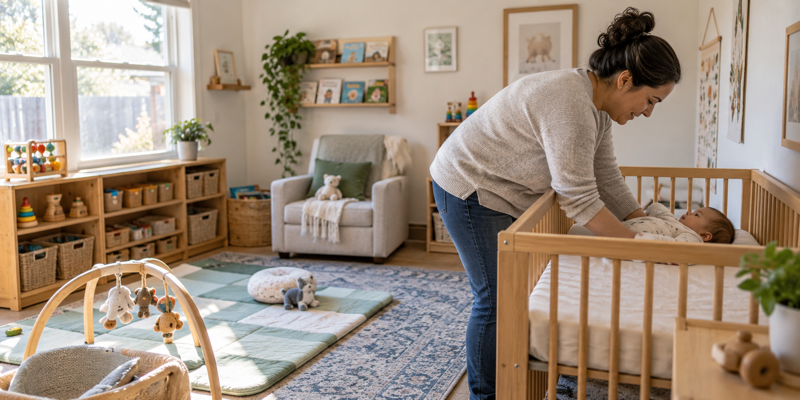
The program category can change which certifications and clearances apply. Check these differences before assuming a course list from another daycare will fit your situation.
Infant Care
Infant programs commonly require safe-sleep training, infant CPR, feeding and diapering procedures, closer supervision, and additional health and safety records. Some rules also specify the type of crib or sleep equipment and how it must be used. For federal crib safety standards, consult the Consumer Product Safety Commission’s commercial crib guidance, then follow the stricter applicable state rule.
Family Child Care Homes
In a home setting, the provider may need one license or registration while other adults who live in or regularly enter the home may need background screening. The provider’s own education and training requirements may differ from those for a center teacher or director.
License-exempt Programs
Some programs qualify for an exemption based on the number of children, hours, relationship to the children, religious or school affiliation, or another state-defined condition. An exemption from licensing does not automatically remove every health, safety, background, fire, or local requirement. Confirm the exemption in writing with the relevant agency.
How to Verify the Certification Requirements in Your State

Use this verification process to turn a general search question into a reliable, role-by-role list.
1. Identify the Regulating Agency
Find the official child care licensing office for the state or territory where the program will operate. The Child Care Technical Assistance Network’s national licensing regulations database can help you locate the correct agency and current regulations.
2. Select the Correct Rule Category
Read the sections for family child care, group homes, centers, school-age programs, infants, or license-exempt care. Also identify whether you will be the provider, director, teacher, or owner who does not work directly with children.
3. Read the Requirement by Role
Look specifically for provider qualifications, director qualifications, staff training, background checks, orientation, CPR and first aid, safe sleep, mandated reporting, medication, food, and transportation. Do not rely on a course provider’s general claim that a certificate is “daycare approved.”
4. Verify the Course Details
Before registering, confirm the approved provider, training hours, hands-on requirement, renewal period, age group covered, and documents you must keep. Ask the licensing specialist if an online-only format is accepted.
5. Record Evidence and Renewal Dates
Save the rule version, agency email, certificates, background-check records, transcripts, experience documentation, and renewal dates in one compliance file. A credential is useful only when it is current, verifiable, and accepted for the role you are filling.
Preguntas frecuentes
Is a child care license the same as a certification?
No. A license authorizes a program to operate. A training certificate proves completion of a course, and a professional credential shows education or competence. You may need more than one category.
Do I need a college degree?
Not necessarily. A family child care provider may qualify through a combination of education, experience, and training, while a center director may have a higher standard. The answer depends on the role, program type, capacity, and state.
Is CPR certification enough?
No. CPR and first aid are important safety credentials, but they do not replace the license, background clearance, professional qualification, or other required training.
Is a CDA required to open a daycare?
Not everywhere. A CDA may help meet a staff or director qualification, but it generally does not replace the license to operate. Check whether your state accepts it for your exact role before enrolling.
Does a background check count as a certification?
No. It is a screening clearance. It can still be required before employment or unsupervised access, and it may need to be repeated under the state’s renewal rules.
Can a license-exempt program skip all certifications?
Not automatically. An exemption may remove or change the licensing process, but safety training, background screening, fire, health, or local requirements may still apply. Confirm the exemption and remaining duties with the relevant agency.
How do I know whether an online certificate is accepted?
Ask the licensing office whether the provider, format, hours, practical evaluation, and renewal period meet the rule for your role. A course provider’s marketing claim is not the same as state approval.
Conclusión
The most accurate answer to “What certifications do I need to open a daycare?” is a current, role-by-role checklist from your licensing agency. Separate the operating license from training certificates, background clearances, professional credentials, and facility approvals. Then verify each item for your state, program type, and age group before treating it as complete.

 Spanish
 English
 Arabic
 French
 Italian
 German
 Thai
 Japanese