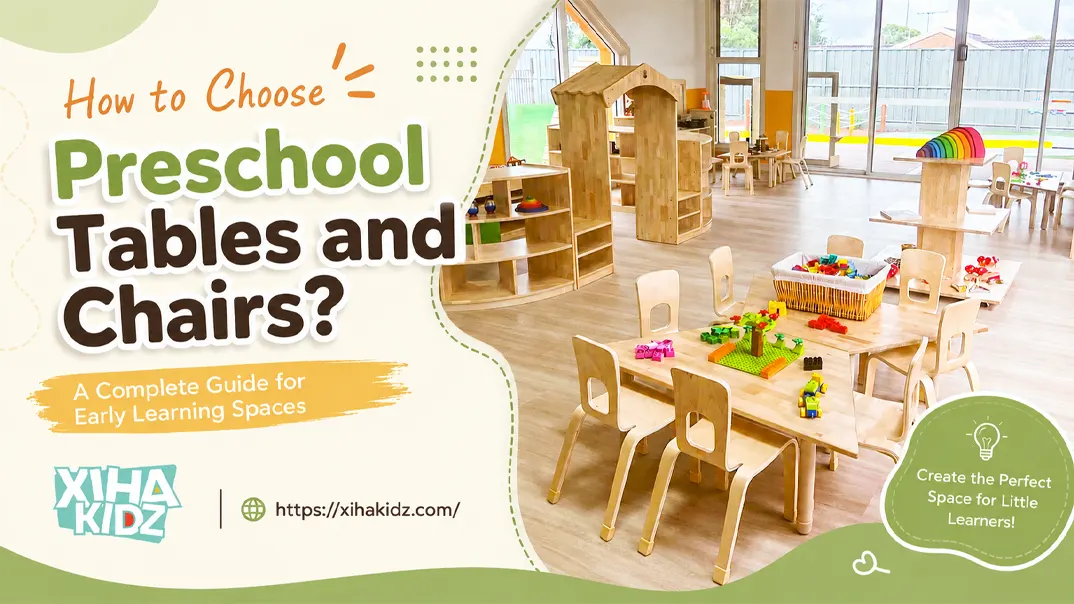
The best way to choose preschool tables and chairs is to match them to the children’s age, classroom size, daily activities, and teaching style. The right preschool tables and chairs should allow children to sit comfortably, move safely, clean easily, and support different classroom activities without making the room feel crowded or difficult to manage.
Many schools focus too much on appearance at the beginning, but the real difference usually comes from the details. A table that is slightly too large can make the classroom harder to walk through. The wrong chair height can affect children’s comfort during meals, art, and learning activities. Materials that are difficult to clean may create extra work for teachers every day.
This guide is based on our extensive experience communicating with daycare and preschool clients worldwide. Keep reading and find out how to choose preschool tables and chairs.
Understanding Your Classroom Needs
Before selecting any furniture, you must first define the core requirements of your classroom. The right furniture should match the room, the children, and the activities. It should not be chosen only because it looks nice in a photo.
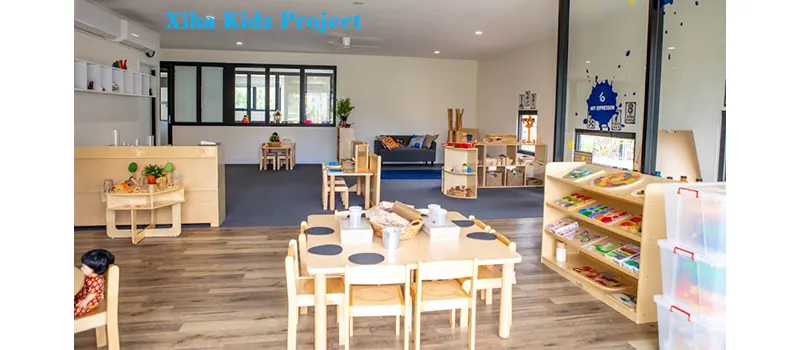
- Class Size and Layout: How many children will be in the room? What is the floor plan? This determines the number of tables and chairs needed and their ideal shapes.
- Age Group: The age of the children directly dictates the required seat height and table height for proper ergonomics.
- Activity Types: Will the tables be used for eating, art, group activities, or individual work? This influences the need for features like wipeable surfaces, wheels for mobility, or specific shapes.
Make Table and Chair Planning Easier
Not sure which tables and chairs are best for your classroom? Xiha Kidz can help you match preschool tables and chairs based on your floor plan, children’s age group, activity areas, and overall classroom style.
From layout planning to product selection and customization, we make the process easier, so you can save time and build a safer, more comfortable learning space.
Choose the Right Size for Children
This is the most fundamental principle. The tables and chairs must fit the child to ensure proper posture and comfort.
The Golden Rule: When seated, the child’s feet should be flat on the floor, knees at a 90-degree angle, and the table height should allow their arms to rest comfortably without raising their shoulders.
Based on our client interactions, here are the recommended seat and table heights for different age groups:
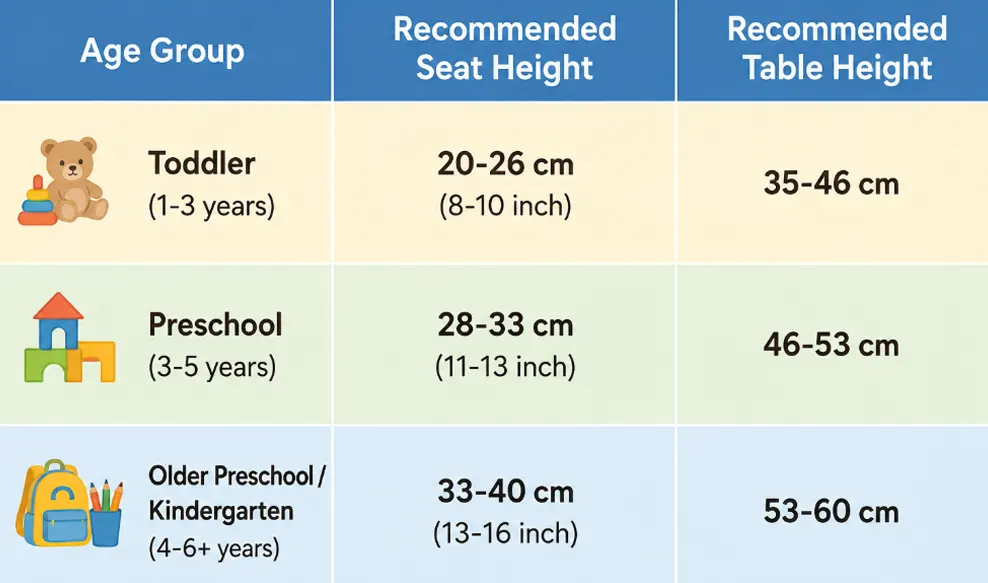
Want to learn more about choosing the right preschool table and chair sizes? Check out our detailed size guide at https://xihakidz.com/table-and-chair-height/
Select Suitable Materials
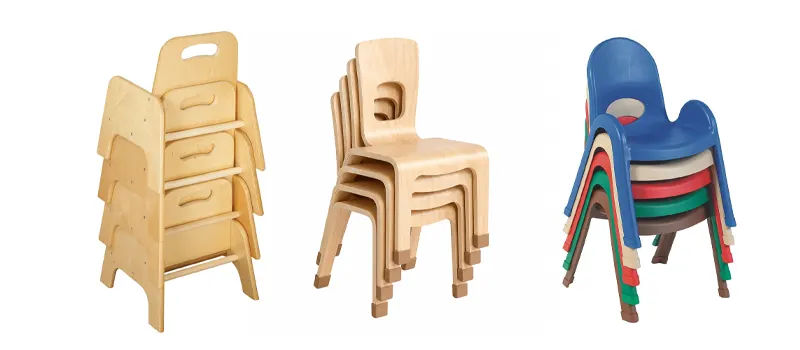
The material impacts durability, safety, aesthetics, and cost. Different classrooms also have different needs. Some schools focus more on natural appearance and classroom style, while others care more about water resistance, easy cleaning, or lightweight furniture.
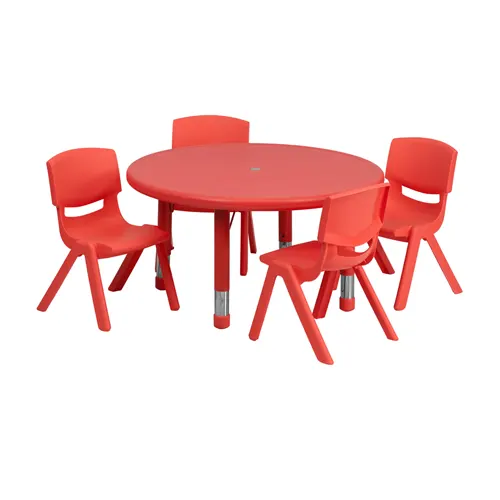
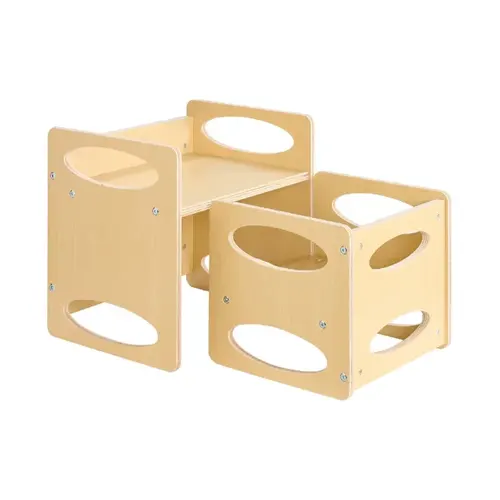
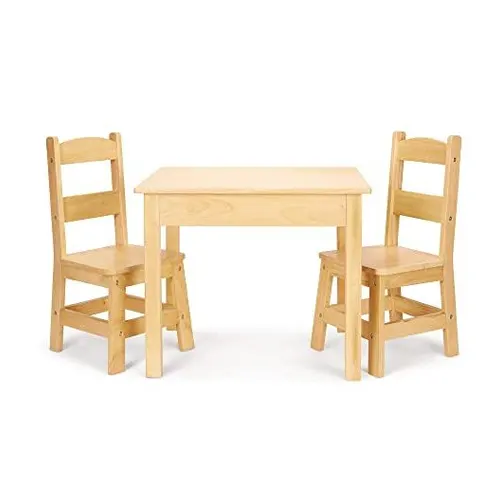
Solid Wood
Solid wood furniture is strong, durable, and has a natural classroom feel. It is commonly used in Montessori classrooms and high-end preschool environments.
Advantages:
- Strong and long-lasting
- Natural wood appearance
- Stable structure
Things to consider:
- Usually more expensive
- Heavier than plastic furniture
- Needs proper surface finishing for daily use
Sperrholz
It is the most popular choice among our clients. It is strong, durable, smooth, and offers a great balance of quality and cost.
Advantages:
- Strong structure with good stability
- Less likely to crack or deform
- More cost-effective than solid wood
Things to consider:
- Quality varies depending on plywood grade
- Thickness affects strength and lifespan
Plastik
Plastic tables and chairs are lightweight and easy to move. They are often used in flexible learning spaces.
Advantages:
- Lightweight and easy to carry
- Easy to clean
- Suitable for high movement classrooms
- Available in many colors
Things to consider:
- Lower-quality plastic may crack over time
- Surface scratches can become visible
- Some styles may feel less stable than wooden furniture
Metal Frame Combinations
Some preschool tables use metal frames combined with wood or plastic tops. This structure improves strength and stability, especially for larger tables.
Advantages:
- Strong support structure
- Better weight capacity
- Good for long-term classroom use
Things to consider:
- Poor-quality metal may rust over time
- Frame edges and welding quality should be checked carefully
Compliant with Safety Standards
Safety is non-negotiable for any childcare environment.

- Rounded Edges: All tables and chairs must have smooth, rounded corners and no sharp edges.
- Stability: Chairs and tables must be sturdy and not tip over easily.
- Non-Toxic Materials: All materials and finishes must be non-toxic and safe for children.
- Safety Certifications: Look for furniture suppliers that support safety standards and certification requirements, such as ASTM, CPSIA, EN71, FSC, or CARB compliance.
Einfache Reinigung
Daycare environments require furniture that is easy to maintain and sanitize.
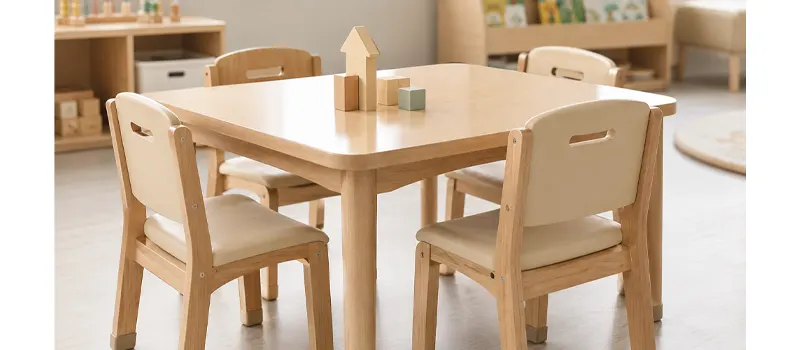
Smooth Surfaces
Tables and chairs with smooth, sealed surfaces are easier to clean after daily use. Materials like birch plywood with a protective finish, plastic, or laminated tabletops can help teachers wipe away food, paint, and water more quickly. A smooth surface also reduces places where dirt can collect.
Wipeable Fabrics
For soft seating, most preschools prefer wipeable fabrics such as PU leather or treated cloth. These materials are easier to clean than regular fabric and are suitable for daycare spaces where spills happen often.
Stackability and Flexibility
This feature is crucial for optimizing space and adapting to different activities.
- Stackable Chairs: Stackable chairs are a huge advantage for cleaning the floor and freeing up space.
- Foldable Tables: They are useful for multi-purpose classrooms that need to change layouts often. When the tables are not being used, they can be folded and stored to free up more classroom space.
- Tables with Wheels: Tables with wheels make it easier to move Klassenzimmermöbel without heavy lifting. Many tables with wheels also include locking casters to help keep the table stable during use.
Match the Classroom Color and Style
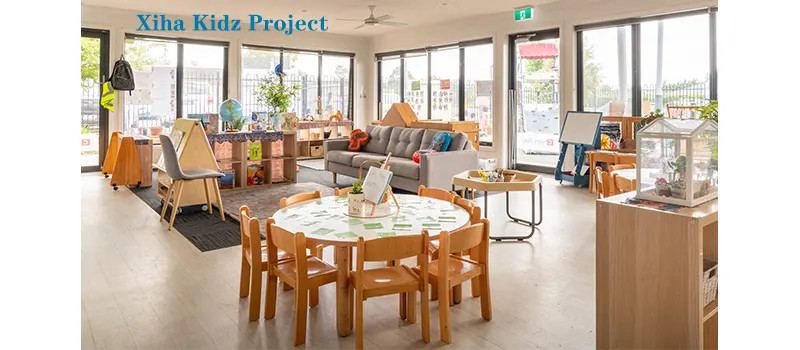
Aesthetics play a role in creating a welcoming and stimulating learning environment. Preschool tables and chairs should match the overall classroom style. A well-matched classroom often feels calmer, cleaner, and more organized. It can also help create a stronger school image and a better learning environment.
Classic Choices: Natural wood tones like Maple and Birch are timeless and fit most decors.
Clients often have specific color requests, such as:
- White
- Light gray
- Soft blue
- Sage green
- Light yellow
Many preschools emphasize that all furniture should be made from the same type of wood with a consistent finish for a professional, cohesive look.
Shape and Comfort
The shape of the furniture affects both comfort and how it can be used in the classroom.
- Rectangular: Best for group activities and maximizing seating (e.g., 120×60 cm for 6 kids).
- Round / Square: Good for smaller groups and collaborative play.
- Specialty Shapes: Half-circle, leaf, or blossom tables can define specific learning zones.
- Chair Comfort: The seat should be wide enough for the child. The backrest should also provide adequate support.
Managing Budget and Long-Term Costs
Making a smart investment means looking beyond the initial price.
- Invest in Adjustable Furniture: Tables with adjustable-height legs are a cost-effective solution as they can grow with the children, serving multiple age groups over several years.
- Prioritize Durability: Choosing high-quality materials like birch plywood or solid wood will withstand years of daily use, reducing replacement costs.
- Consider Multi-Functionality: A table that can be used for art, meals, and group activities provides more value than a single-purpose piece.
- Plan for the Future: By choosing a consistent style and color, you can easily add matching pieces later without a complete overhaul.
Choose a Reliable Supplier
A reliable supplier can help schools avoid quality problems, delivery delays, sizing mistakes, and communication issues during the project process.
Product Quality Consistency
Consistent quality is very important for preschool projects, especially for schools purchasing furniture for multiple classrooms. Reliable suppliers should provide stable materials, consistent colors, accurate sizes, and dependable production quality, so the final classroom setup looks organized and professional instead of mismatched between batches.
Classroom Planning Support
Many schools are unsure which table sizes, chair heights, or layouts work best for their classrooms. A good supplier should be able to provide practical recommendations based on the children’s age group, classroom size, activity areas, and daily teaching needs instead of only sending a product catalog.
Customization Capability
Some classrooms need special table sizes, custom colors, mixed chair heights, or furniture that matches a specific classroom style. Suppliers with customization experience can help schools create more suitable preschool table and chair solutions instead of forcing standard products into every project.
Production and Delivery Stability
Delayed production or shipping problems can affect classroom setup schedules and even school opening plans. Reliable suppliers usually have more stable production systems, clearer delivery timelines, and better export experience, which helps projects move more smoothly from ordering to final delivery.
After Sales Support
Good communication after the order is also important for preschool projects. Schools often prefer suppliers who respond quickly, help solve problems efficiently, and continue supporting the project after delivery instead of disappearing once the payment is completed.
Work with Xiha Kidz
Choosing the right preschool tables and chairs is not only about finding the right size or color. Schools also need to consider safety, comfort, durability, flexibility, daily cleaning, classroom style, and long-term classroom use. The right furniture should support children’s learning while making the classroom easier for teachers to manage every day.
Working with a reliable supplier can make this process much simpler. Instead of spending time comparing countless products, schools can get clearer recommendations based on their classroom size, age group, activity needs, and layout plans.
Bei Xiha Kidz, we help preschools and daycare centers create more practical table and chair solutions for real classroom use. From classroom layout and product selection to personalized customization and project support, our team will provide full assistance to ensure a smoother and more efficient process for purchasing desks and chairs, and to ensure they perfectly match your teaching space.
FAQs
What should I prepare before contacting a preschool furniture supplier?
It is helpful to prepare your classroom floor plan, children’s age group, classroom size, preferred furniture style, and estimated quantity. This helps suppliers recommend more suitable preschool table and chair solutions for your project.
How much space should be left between preschool tables?
Leave enough space for children to pull out chairs, walk safely, and move between activity areas. If the room feels crowded after furniture is placed, it usually means the tables are too large, or the layout needs to be adjusted.
Are wooden tables and chairs better than plastic ones?
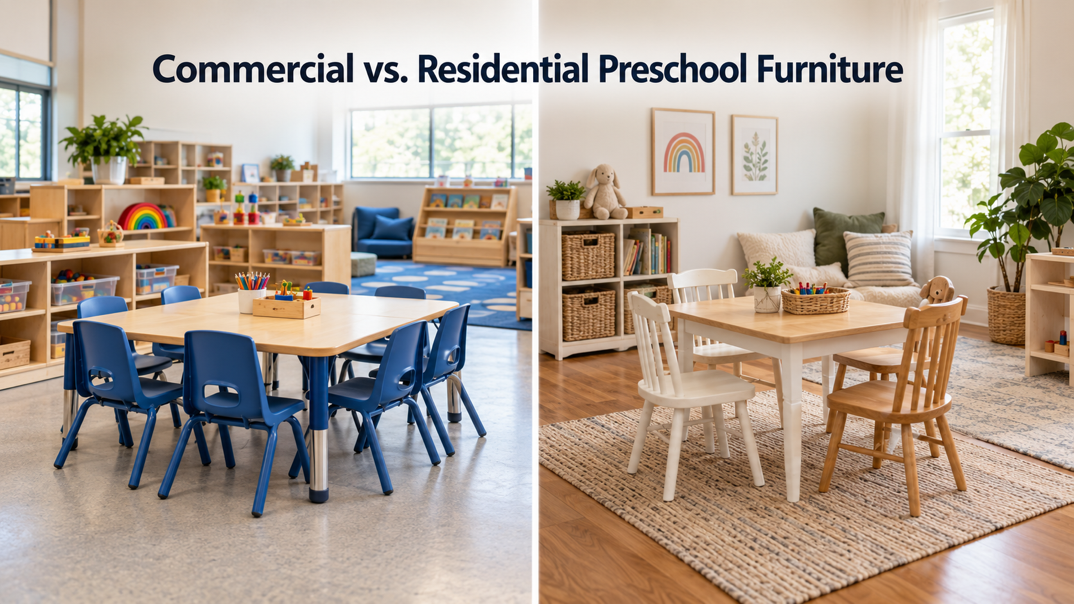
Not always. Wooden tables and chairs often feel warmer and more durable, while plastic options are lighter and easier to move. The better choice depends on your classroom use, budget, cleaning needs, and preferred style.
What table and chair options are best for mixed-age classrooms?
Mixed-age classrooms usually work better with adjustable tables, several chair heights, or flexible table shapes. This helps younger and older children use the same space more comfortably without forcing one standard size on everyone.
How many preschool tables and chairs should I order for one classroom?
Start with the number of children who use the classroom at the same time, then add a small allowance for flexible grouping, teacher-led activities, or future enrollment changes. For chairs, many schools prepare a few extra pieces for visitors, replacement needs, or temporary class changes.



 German
  English
  Arabic
  French
  Italian
  Spanish
  Thai
Thai  Japanese