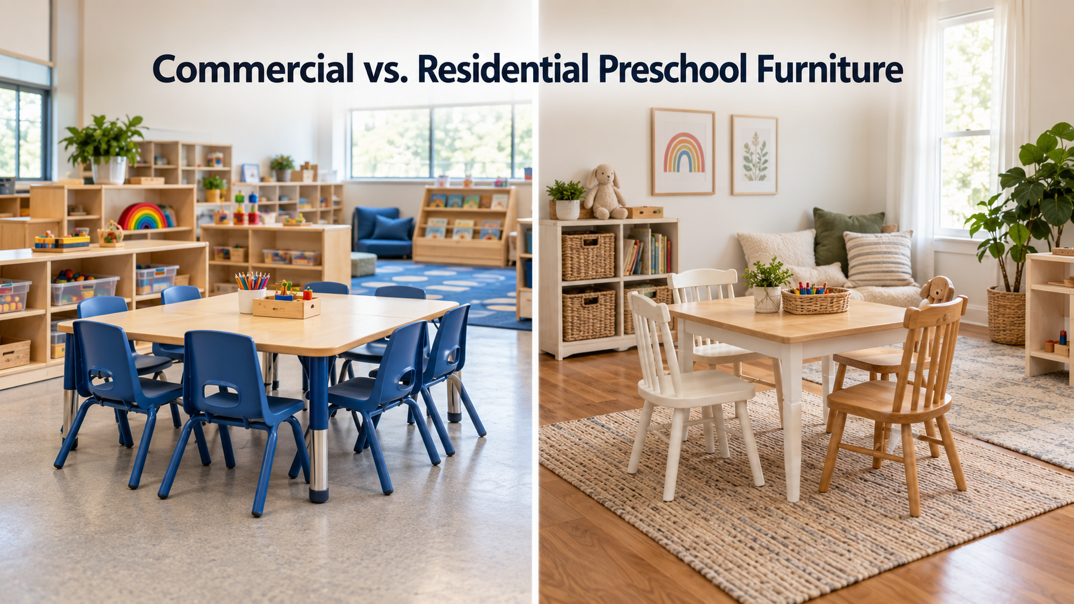
When furnishing a preschool, you may wonder whether commercial furniture is worth the extra cost or if residential furniture can do the same job. While both may look similar, they can differ in durability, safety requirements, and how well they handle daily classroom use. Understanding these differences can help you choose furniture that meets your preschool’s needs and budget.
What Is the Difference Between Commercial Vs Residential Preschool Furniture?
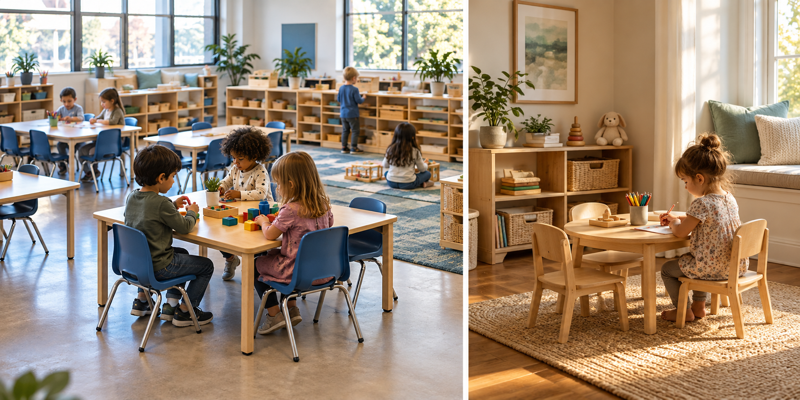
Commercial and residential furniture can look similar, but they are designed around different use conditions. A preschool classroom has more users, more movement, more cleaning, and more supervision requirements than a typical home. The following differences matter when you compare the two categories.
Safety and Stability
Commercial preschool furniture is generally developed for shared environments where children may push, lean, drag, pull, or climb around the furniture. Its evaluation usually needs to consider stability, edges, fasteners, pinch points, anchoring, and the way the item is installed and used in a room.
Residential furniture is usually designed around a smaller number of users and a more controlled home setting. That does not automatically make it unsafe, but it means you must confirm whether the product can handle preschool behavior rather than assuming that a home-use label is enough.
En CPSC Anchor It guidance recommends sturdy furniture, following the manufacturer’s instructions, securing pieces that can tip, keeping heavy items low, and removing objects that encourage climbing. Anchoring is not a substitute for stable construction or a proper installation check.
Durability and Daily Use
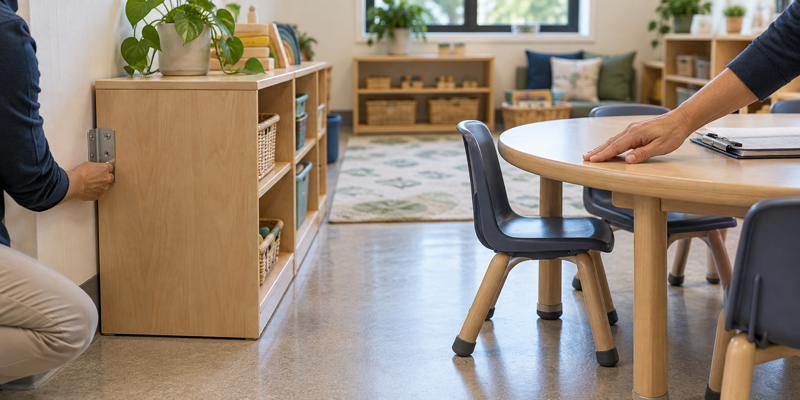
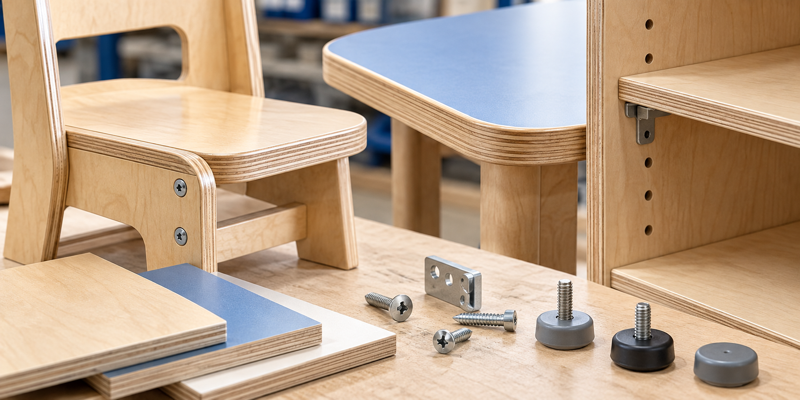
In a preschool classroom, the same furniture may be used by 15–20 children every day. Chairs are frequently moved, tables support different activities, and storage units are opened and closed repeatedly.
Commercial furniture is generally designed to withstand this level of use. Residential furniture may also be durable, but products intended for occasional household use can wear out faster in a busy classroom, especially at joints, edges, and frequently touched surfaces.
Standards can help you ask for the right evidence. The BIFMA standards descriptions identify separate performance references for educational seating, desk and table products, and storage units. ANSI/BIFMA X6.1 addresses educational seating, X5.5 addresses desk and table products, and X5.9 addresses storage units.
Funcionalidad
Commercial preschool furniture is usually planned around children’s activities, teacher supervision, independent access, room changes, and repeated daily routines. It is more likely to be offered in age-related dimensions, modular formats, mobile units, or coordinated product families.
Residential furniture often prioritizes home appearance, comfort, and general-purpose storage. It may fit a room physically but still be inconvenient in a classroom if it blocks sightlines, creates difficult traffic paths, cannot be moved safely, or places materials outside children’s reach.
Limpieza y Mantenimiento
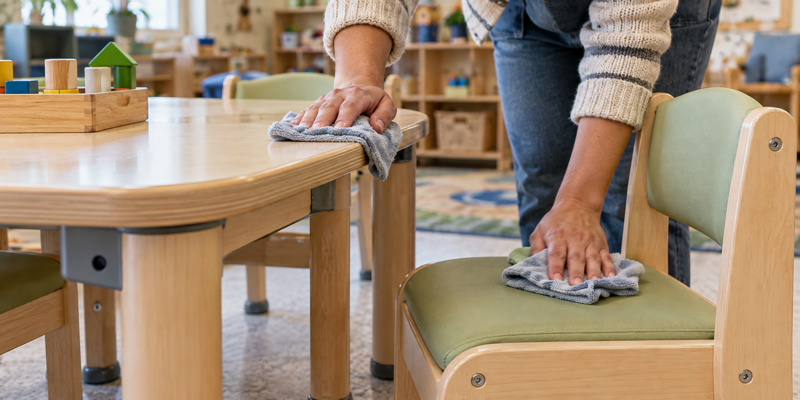
Preschool furniture requires more frequent cleaning than most household furniture. Tables may be wiped several times a day, and frequently used surfaces must tolerate the cleaning products and procedures used by the facility.
Commercial furniture often features durable finishes, accessible surfaces, and construction details that make routine cleaning easier.
Residential furniture may have decorative grooves, delicate finishes, or materials that are less suitable for repeated cleaning. Before purchasing, check the manufacturer’s cleaning instructions and whether the surfaces can withstand your facility’s required cleaning procedures.
Costo
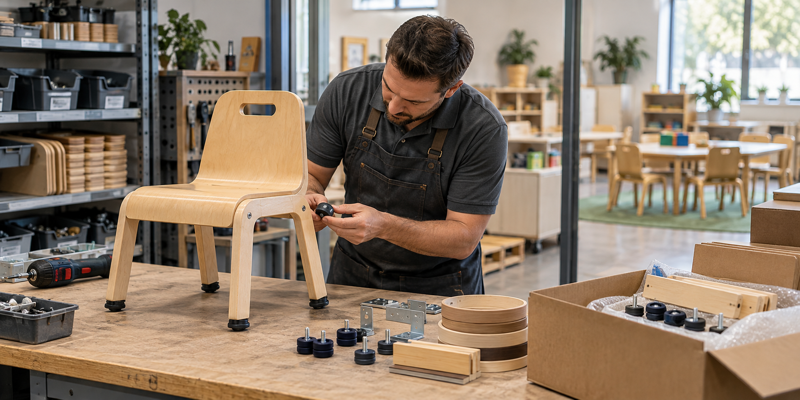
Residential furniture usually has a lower initial price, especially when purchased as individual pieces. Commercial furniture may cost more because the quotation can include stronger construction, classroom dimensions, documentation, modular components, packaging, replacement parts, and project support.
The useful comparison is the total ownership cost:
Total ownership cost = purchase price + delivery and installation + maintenance and parts + replacement or downtime risk.
This is a planning model, not a promise of a particular lifespan. A lower-priced residential shelf may become more expensive if it cannot be anchored properly, develops damaged edges, or has no compatible replacement parts. A commercial unit may be worth the higher starting price when its construction and service support match a high-use classroom.
Why Does Preschool Furniture Need to Be Commercial Grade?
Preschool furniture is part of your daily operations. Your furniture choices affect how classrooms function, how staff manage activities, and how much time and money you spend maintaining the space. Commercial-grade furniture can help meet these needs, particularly in classrooms with high occupancy and intensive daily use.
Keep Classrooms Ready for Daily Activities
Preschool classrooms often follow a fixed daily schedule, with furniture used for different activities throughout the day. If a table becomes unstable or a chair needs replacing, teachers may have to rearrange activities or remove equipment from use.
Choosing furniture suitable for institutional use helps reduce these disruptions, especially for essential items that children rely on every day.
Meet Childcare Licensing and Inspection Requirements
Preschools must meet local childcare licensing requirements, which may include furniture safety, stability, age-appropriate sizing, and equipment condition. Furniture that does not meet these requirements may need to be replaced before a facility can pass inspection.
Commercial preschool furniture is typically designed with childcare environments and their safety requirements in mind. Manufacturers may also provide relevant test reports and product specifications, making it easier for you to verify compliance and prepare for inspections. However, you should still confirm that the furniture meets the specific requirements in your location.
Manage Furniture Across Multiple Classrooms
For preschools operating several classrooms, using furniture with consistent dimensions and specifications makes purchasing, maintenance, and replacement easier.
For example, if several classrooms use the same chair model, you can order matching replacements without introducing different seat heights or designs. Consistent furniture specifications also make it easier to plan new classrooms as enrollment grows.
Reduce Long-Term Operational Costs
For preschool operators, replacing furniture involves more than buying a new item. Staff may need to inspect the damaged product, arrange its removal, find a suitable replacement, and reorganize the classroom.
Selecting furniture designed for your expected usage can reduce replacement frequency and related administrative work. This is particularly valuable for centers purchasing furniture in larger quantities.
Can You Use Residential Furniture in a Preschool?
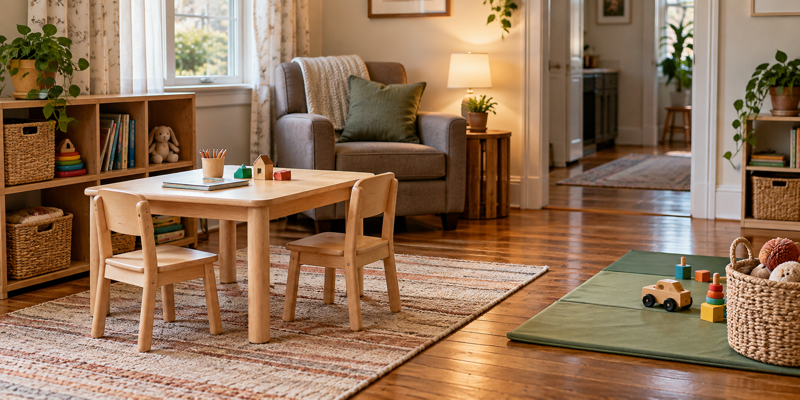
Yes, some residential furniture can be used in a preschool, provided it meets the safety requirements and suits the intended use. However, not every household product is designed for the demands of a childcare environment. Before purchasing, consider where the furniture will be used, how often children will use it, and whether it meets your local licensing requirements.
Some Residential Furniture May Be Suitable for Low-Traffic Areas
Furniture in staff offices, parent waiting areas, or other adult-only spaces may not need the same specifications as furniture used directly by children. In these areas, you can evaluate residential options based on their stability, durability, and suitability for the intended setting.
You can consider residential furniture for staff offices, parent waiting areas, break rooms, and adult workspaces. For example, a residential sofa in a parent waiting area or a standard office desk for administrative work may be suitable if it meets the needs of the space.
Before purchasing, evaluate each item using four criteria:
- Safety: Is it stable, free of hazardous edges or loose parts?
- Durability: Can it withstand repeated daily use and routine cleaning?
- Function: Does its size and design suit the activity and available space?
- Compliance: Does it meet applicable product safety standards and local childcare regulations?
Residential furniture can be a practical option in selected areas, but it should not be chosen on price or appearance alone. For furniture that children use intensively every day, commercial-grade products are generally a better starting point.
How To Choose Commercial Furniture for Your Preschool?
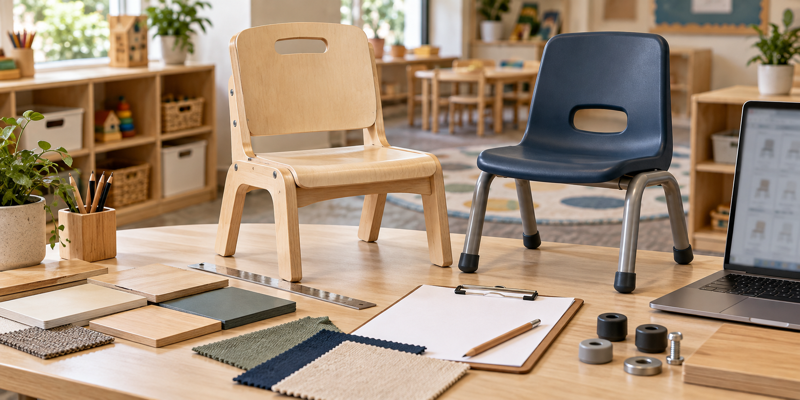
Not all commercial furniture is designed for the same level of use. When choosing furniture for your preschool, look beyond the commercial-grade label and focus on whether the product is designed for childcare environments, meets your facility’s requirements, and can support your daily operations.
Look for Furniture Designed for Childcare Environments
Commercial furniture is used in many settings, from offices to restaurants, so not every commercial product is suitable for preschool children. Look for furniture specifically designed for early learning or childcare environments, with child-appropriate dimensions, accessible storage, and designs suited to classroom activities.
Check the Quality of Commercial Furniture
Commercial-grade furniture should be evaluated through its actual construction rather than its marketing claims. Review the joints, hardware, surface finishes, edge treatment, and overall stability. Ask the manufacturer how the products are tested and whether relevant test reports are available for your target market.
Choose a Supplier with Consistent Product Quality
When furnishing several classrooms, consistency matters. Choose a supplier that can maintain consistent specifications across multiple orders, provide clear product documentation, and offer suitable options for different age groups and learning areas.
If you are purchasing directly from a manufacturer, ask whether dimensions, colors, or configurations can be customized to match your project requirements. This can be particularly useful when furnishing an entire center rather than buying a few individual items.
Preguntas frecuentes
Can Commercial Preschool Furniture Be Customized?
Yes. As a preschool furniture manufacturer, we can customize furniture dimensions, colors, materials, and storage configurations to suit your classroom needs. We can also help coordinate furniture designs across multiple classrooms.
Is Commercial-Grade Furniture Always Better Than Residential Furniture?
Not necessarily. Quality varies between manufacturers, and a commercial-grade label alone doesn’t guarantee better performance. However, furniture specifically designed and tested for childcare environments is generally a more reliable choice for busy preschool classrooms.
Can Residential Furniture Be Modified for Commercial Preschool Use?
Some furniture can be reinforced or modified, but these changes don’t automatically make it suitable for preschool use. Modifications may also affect the original product’s safety testing or warranty. For frequently used classroom furniture, choosing a purpose-built commercial product is usually more practical.
Should Small or Home-Based Daycares Buy Commercial Furniture?
Commercial furniture can be worthwhile even for small daycare centers. The number of children matters less than how frequently the furniture is used and the requirements that apply to your facility. You can prioritize commercial-grade furniture for essential classroom items while evaluating other options for less demanding areas.
Why Does Commercial Furniture Cost More?
The price may include stronger construction, classroom dimensions, documentation, modular components, packaging, replacement parts, and project support. Compare those features with your actual use and calculate delivered ownership cost instead of comparing unit prices alone.
Conclusión
Based on my years of experience in the preschool furniture industry, I would recommend choosing commercial daycare furniture for your classrooms. While the upfront cost may be higher, it’s usually a better investment when you consider children’s safety, compliance requirements, and long-term replacement costs. If you’re unsure what furniture would work best for your center, Xiha Kidz can help you explore suitable options based on your needs and budget.




 Spanish
 English
 Arabic
 French
 Italian
 German
 Thai
 Japanese