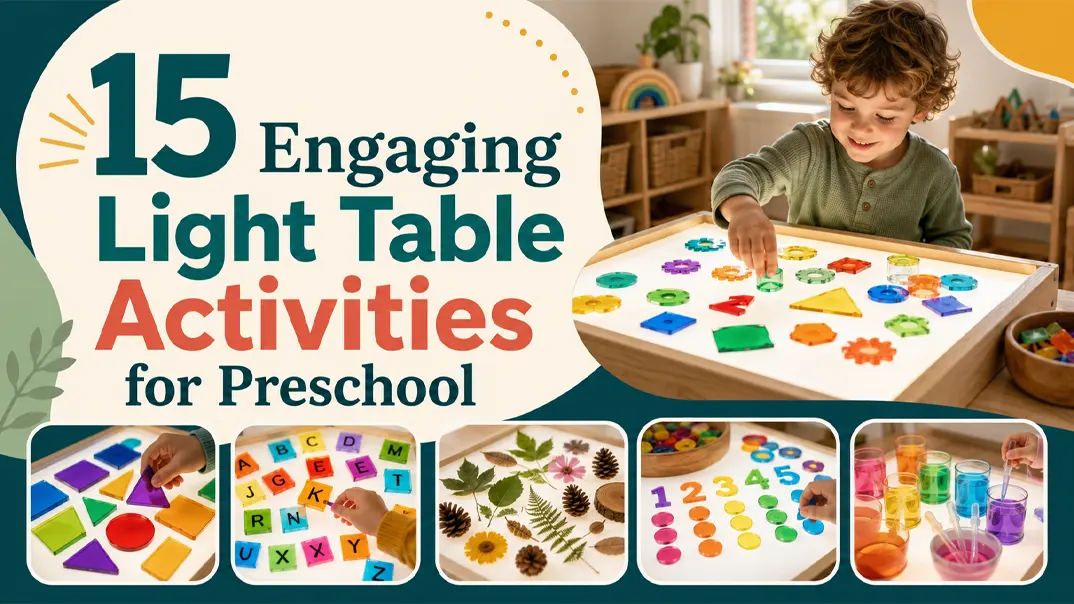
A light table is a low, illuminated learning surface that allows children to explore materials through light, color, shadow, transparency, and reflection. In preschool classrooms, it is often used as a hands-on discovery area where children can investigate letters, shapes, natural objects, sensory materials, and open-ended loose parts. A light table makes small details easier to notice and encourages children to slow down, observe, compare, and experiment.
For preschoolers, learning often begins with curiosity. Small details become more noticeable. When children place a transparent shape or a loose part on the glowing surface, the material suddenly looks different. Colors become brighter, edges become clearer, shadows appear, and small details are easier to notice. These changes naturally make children slow down, look more carefully, ask questions, and test new ideas. As they move objects, compare patterns, trace outlines, and talk about what they see, they are building important early learning skills through hands-on exploration.
What Are the Benefits of Light Table Play?
Light table play gives preschool children a different way to see, touch, move, compare, and explore materials. The light draws children’s attention to details they may miss on a regular table, such as color changes, outlines, shadows, layers, and textures. This makes the activity feel engaging, but it also supports real learning across many areas of early childhood development.
Supports Sensory Exploration
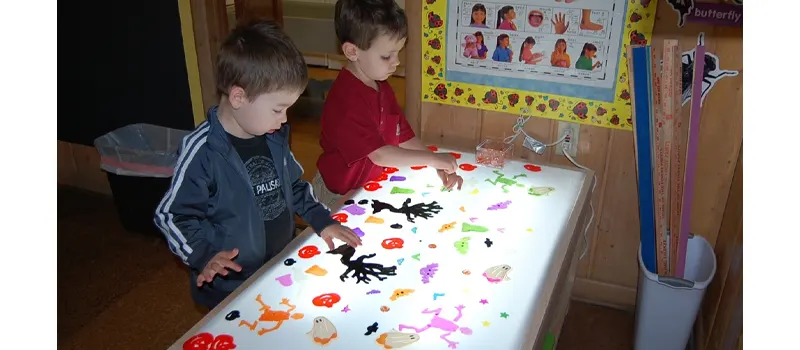
A light table gives children a rich visual and tactile experience. They can explore various materials while watching how light changes what they see. For many preschoolers, this type of sensory play feels calming because the glowing surface encourages slower, more focused movements.
Builds Observation Skills
Children naturally look more closely when objects are placed on a light table. A leaf may show its veins, and a feather may reveal fine lines. These small discoveries help children practice careful observation, which is an important foundation for early science learning.
Encourages Early Science Thinking
Light table play gives children many chances to predict, test, and notice changes. They may wonder what happens when two colors overlap, why ice melts, or why some materials let more light pass through than others. These experiences help children begin to think like young investigators.
Strengthens Fine Motor Skills
Many light table activities involve small, careful hand movements. Children move gems with tweezers, trace lines in gel bags, or arrange loose parts into designs. These actions strengthen finger control, hand-eye coordination, and the small muscles children need for writing, cutting, drawing, and daily self-care tasks.
Supports Early Math Learning
A light table can make early math concepts easier to see and touch. Children can sort translucent gems, count transparent counters, match shapes, and explore symmetry. Because the materials are hands-on and visually clear, children can understand math through direct experience.
Improves Language Development
Light table play often leads to natural conversation. Children describe what they see, explain their designs, compare materials, and tell stories with figures or silhouettes. Teachers can introduce useful words such as transparent, darker, lighter, shadow, and so on. These words feel meaningful because children are using them during real exploration.
Encourages Creativity and Imagination
A light table can become many things depending on the materials placed on it. It may become an ocean scene, a glowing city, or a building area. Children can create without needing one correct answer. This open-ended quality helps them make choices, solve problems, and express ideas in their own way.
Helps Children Focus for Longer
The soft light and clear visual contrast often help children slow down. Many preschoolers stay with light table activities longer than expected because the materials respond to their actions. When they move a color paddle, stack a transparent block, or trace a line in a gel bag, they see an immediate result. This keeps them interested and encourages deeper engagement.
Supports Social Interaction
Light table activities can be used by one child, but they also work well for small group play. Children may build together, share materials, create a story scene, or solve a shape puzzle as a team. These moments help them practice turn-taking, communication, cooperation, and respect for shared workspace.
Makes Learning More Visible
Light table play makes learning easier to see. Children can watch colors blend, shadows form, shapes fit, counters fill a ten-frame, and patterns grow across the surface. For teachers, this makes it easier to observe how children think, what they understand, and where they may need more support.
15 Light Table Activities for Preschool
The following 15 light table activities are designed for real preschool classrooms. They do not require complicated preparation, and most can be adjusted for different ages, themes, and group sizes. Each activity gives children a clear reason to explore while supporting skills.
1. X-Ray Light Table
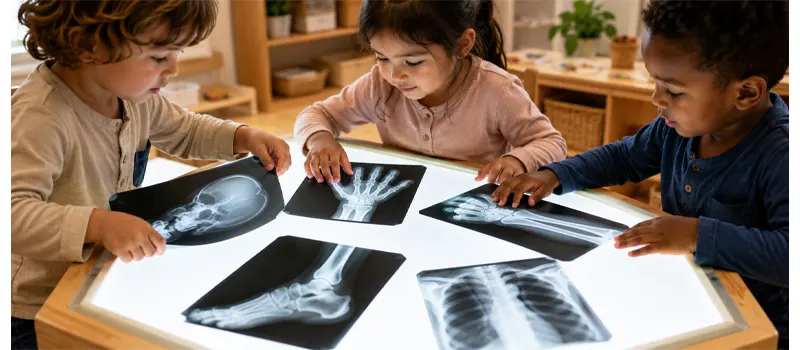
Using X-ray cards on the light table. The light makes the details much clearer, so children can see bones, outlines, and hidden structures more easily. I like this activity because it naturally encourages children to ask questions. They may notice that a fish skeleton looks different from a bird’s wing, or that a hand x-ray has many small bones.
Materialien:
- Animal X-ray cards
- Human body x-ray cards
- Matching animal picture cards
- Magnifying glasses
- Small trays for sorting
The activity can begin with free observation. Children place the x-ray cards on the light table and talk about what they notice. Later, you can turn it into a matching game by asking them to match each X-ray card with the correct animal or body part.
This light table activity supports science vocabulary, visual discrimination, observation skills, and comparison. It also gives children a very natural reason to use words like bones, inside, and shape.
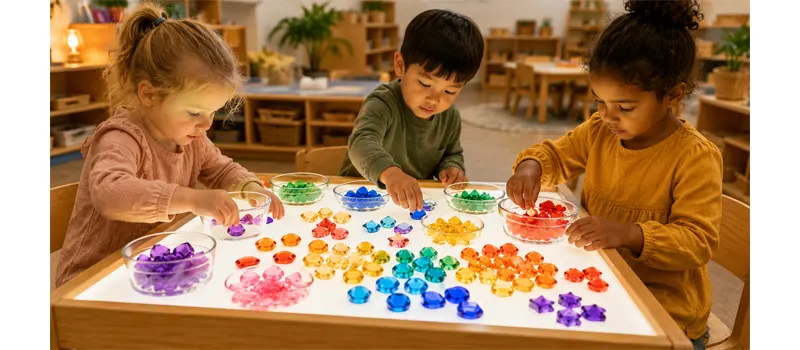
2. Translucent Gem Sorting
This is a quick and beautiful light table activity using translucent gems. The gems look much brighter on the light table, which makes children more interested in sorting, counting, and arranging them.
I usually start with a small amount of gems instead of giving children a full container. Too many materials can make the activity messy and unfocused. A small tray of gems, a few clear cups, and one simple sorting goal are enough to keep preschoolers engaged.
Materialien:
- Translucent gems
- Clear cups or sorting trays
- Color cards
- Zahlenkarten
- Child-safe tweezers
Children can sort the gems by color first. After that, they can count a certain number into each cup or create simple patterns on the light table. If you want to strengthen fine motor skills, add tweezers and invite children to pick up each gem carefully.
This activity helps children practice color recognition, counting, grouping, and early math language. It also strengthens hand control because children need to pick up, place, and move each gem with care.
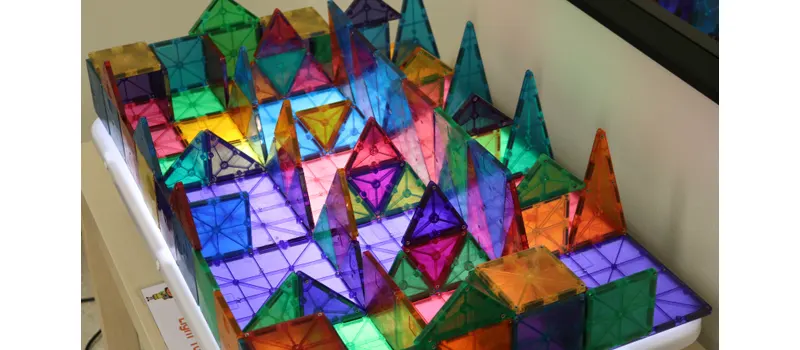
3. Block Building on the Light Table
This is one of the easiest light table activities to set up, but it often keeps children busy for a long time. Transparent blocks, magnetic tiles, and lucite cubes look beautiful by themselves. Block building becomes even more exciting when the blocks glow from underneath.
Materialien:
- Rainbow transparent blocks
- Magnetic tiles
- Lucite cubes
- Window blocks
- Small mirrors
Children can build towers, bridges, walls, or patterns. Some children may focus on height, while others may care more about color and design. The light table makes every structure feel more interesting because the colors shine through the blocks.
This activity supports spatial awareness, balance, problem-solving, and early engineering thinking. Children also learn through trial and error. When a tower falls, they naturally adjust the blocks and try again.
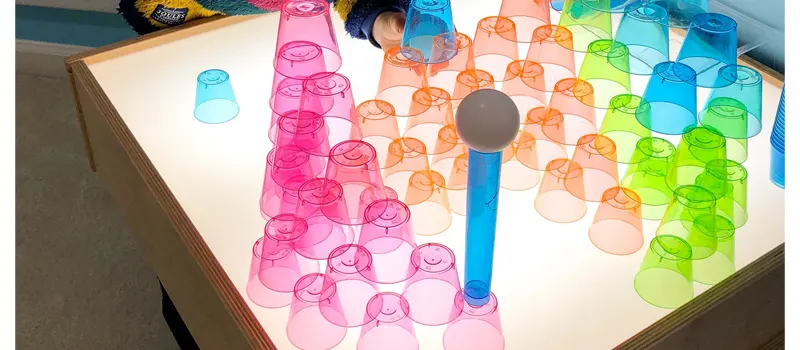
4. Transparent Cup Stacking
Transparent cups are easy to underestimate, but they can create surprisingly rich exploration on a light table. When children stack one cup over another, the light passes through several layers at once. The tower may look darker, brighter, taller, or more distorted depending on how the cups overlap. This gives children a real reason to look, adjust, rebuild, and compare.
In the classroom, I would use this activity more as a height, balance, and spatial awareness activity. Children can test which cup position makes the tower stronger, whether a wide base helps, and how many cups they can stack before the structure begins to wobble. Some children may also enjoy looking through the cups like a tunnel or placing one cup over another to see how the view changes.
Materialien:
- Colored transparent cups
- A ruler or measuring strip
Children can start by freely stacking the cups. After they become familiar with the materials, you can add a simple challenge, such as building a tower with five cups or making two towers that are the same height.
This activity supports hand-eye coordination, balance, counting, and spatial awareness. It also gives children a natural way to test stability. When a tower falls, they often adjust the base, slow down their movements, and try again.
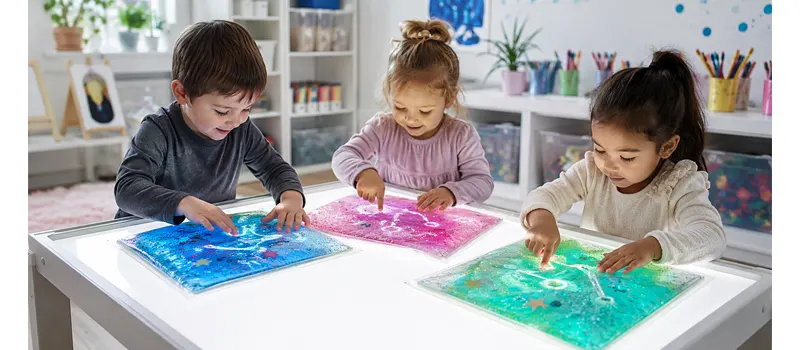
5. Gel Bag Tracing
Gel bag tracing works well for pre-writing practice. The light makes every finger movement easier to see, so children can watch their lines appear and disappear as they press into the bag.
This activity is especially useful for children who are not ready to write with a pencil yet. They can practice lines, curves, circles, letters, or name shapes without worrying about making mistakes. If they want to start again, they simply smooth the gel and try another mark.
Materialien:
- Clear zip bags
- Hair gel or clear sensory gel
- Lebensmittelfarbe
- Strong tape
- Letter cards
- Shape cards
Fill the bag with a small amount of gel, seal it carefully, and tape the edges to prevent leaks. Place it flat on the light table. Children can use their fingers to draw lines, shapes, letters, or simple pictures. You can place a letter card if they need a visual guide.
This activity supports finger strength, pre-writing control, letter formation, and sensory regulation. It is also a good, quiet activity for children who need a slower moment during a busy classroom day.
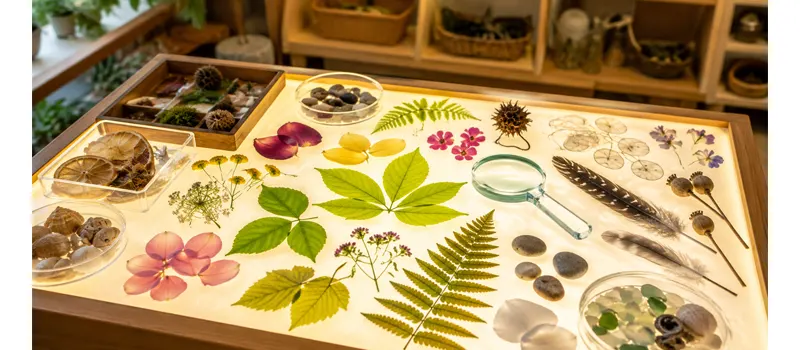
6. Nature Observation On the Light Table
Natural materials become much more interesting when children view them on a light table. Leaves show their veins clearly. Flower petals reveal soft color changes. Feathers, seed pods, and thin slices of fruit can all invite children to look more carefully.
This is a lovely activity after an outdoor walk. Children are often more engaged when they help collect the materials themselves. It gives them a reason to return to something they found outside and study it more closely indoors.
Materialien:
- Blätter
- Flower petals
- Feathers
- Seed pods
- Thin fruit slices
- Magnifying glasses
- Clear trays
Place a small selection of natural materials on the light table. Keep the arrangement simple so children are not overwhelmed. You can invite them to compare two leaves, notice the lines inside a petal, or describe which object lets more light pass through.
This activity supports observation, science vocabulary, comparison, and respect for natural materials. It also helps children understand that nature has details we may miss when we look too quickly.
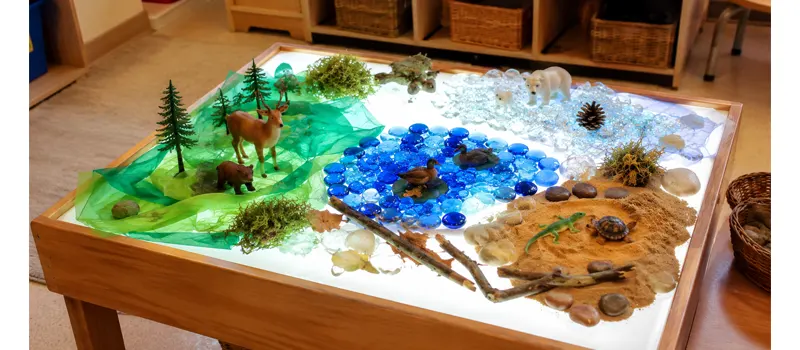
7. Habitats Light Table Scene
This activity allows children to build small environments using transparent materials and animal figures. The light table makes the scene feel more vivid, so children often become more interested in arranging the space and telling stories about the animals.
This activity works well when your class is learning about animals, seasons, oceans, forests, ponds, or weather. You do not need a complicated setup. A few colored transparent sheets and a small group of animals are enough to begin.
Materialien:
- Transparent blue, green, brown, or white sheets
- Small animal figures
- Clear stones or gems
- Leaves or natural loose parts
- Habitat picture cards
For an ocean habitat, place a blue transparent sheet on the light table and add fish, shells, or sea animals. For a forest habitat, use green and brown materials with small animal figures and leaves. Children can decide where each animal belongs and explain why.
This activity supports science vocabulary, classification, oral language, and storytelling. It also helps children connect play with real-world knowledge, because they begin to think about where animals live and what they need in their environment.
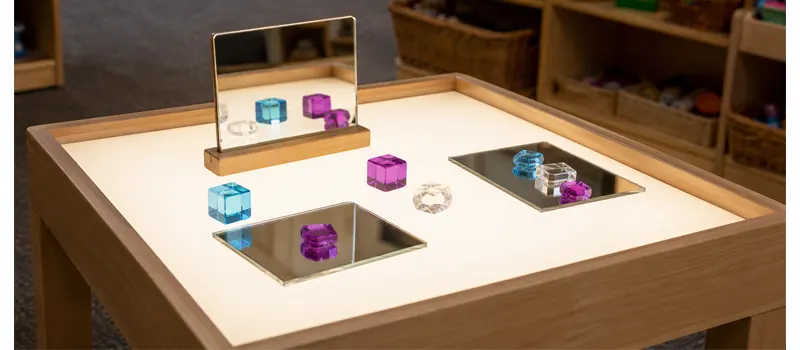
8. Mirror Play On the Light Table
Adding mirrors is a small change, but it can make a light table activity feel completely new. Mirrors help children notice reflection, symmetry, and repeated images. They also make simple materials look more interesting.
Materialien:
- Child-safe acrylic mirrors
- Translucent gems
- Transparent blocks
- Acrylic shapes
- Loose parts
Place one mirror upright near the edge of the light table and let children arrange materials in front of it. They may notice that one gem suddenly looks like two, or that a half-circle shape appears to become a full circle in the mirror.
This light table activity supports symmetry, reflection, spatial awareness, and careful observation. It also gives children a beautiful way to connect early math ideas with creative play.
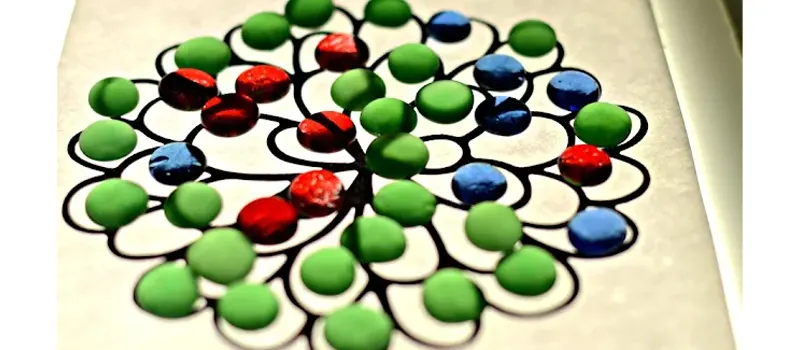
9. Light Table Mandalas
Light table mandalas are perfect for quieter moments in the classroom. Children can use gems, buttons, transparent shapes, acrylic stones, or loose parts to create circular designs on the glowing surface. The activity gives children time to arrange materials carefully, notice patterns, and enjoy the process of making something beautiful.
Materialien:
- Translucent gems
- Acrylic rings
- Clear buttons
- Transparent pattern blocks
- Round clear mats
- Simple circle guides
Begin with a clear circular mat or a simple center point. Some children may start by placing one object in the middle and building around it. You can gently guide observation by asking, “What do you want to add next?” or “Do you want this side to match that side?” These questions help children think about balance without turning the activity into a rigid task.
This activity supports concentration, visual planning, pattern awareness, fine motor control, and a sense of order. It also gives children a quiet way to work through design choices, which can be very grounding in a busy classroom.
10. Color Exploration With Transparent Paddles
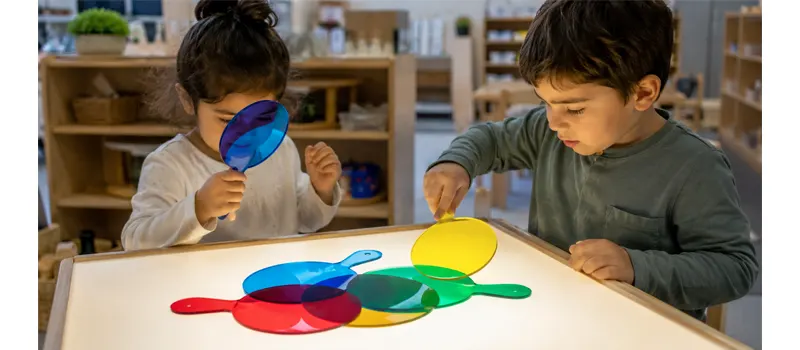
Transparent color paddles are one of the clearest ways for preschoolers to see color mixing happen in front of them. When children place one paddle over another, the new color appears instantly. They do not need a long explanation because the change is visible.
This activity should focus on prediction and discovery, not just naming colors. Before children overlap two paddles, invite them to guess what might happen. After they test it, they can compare their prediction with what they actually see.
Materialien:
- Transparent color paddles
- White paper or a clear mat
- Color cards
- Small clipboards, optional
- Simple color mixing chart, optional
Place only a few paddles on the light table at first. Red, yellow, and blue are enough for a strong first experience. Children can hold one paddle over the table, place another on top, and watch how the colors change. Some may begin testing different combinations again and again because the result feels almost magical.
This light table activity supports color understanding, prediction, observation, and early scientific thinking. Children learn that materials can change visually when they are layered, and they begin using language such as lighter, darker, brighter, same, and changed.
11. Letter Hunt With Transparent Alphabet Tiles
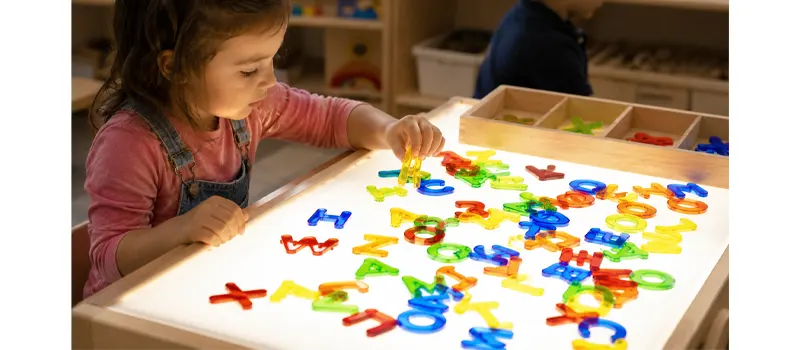
Spread transparent alphabet tiles across the glowing surface, or hide them under a thin layer of translucent gems, color film, or clear sensory materials. Children can search for letters they recognize or match uppercase and lowercase letters.
This activity works especially well when it begins with something personal. Many preschoolers are most interested in the letters from their own names, so you can place name cards nearby and invite children to find matching letters.
Materialien:
- Transparent alphabet tiles
- Name cards
- Letter matching cards
- Clear tray
- Translucent gems or color film
- Small baskets for collecting letters
You can keep the activity simple for younger children by asking them to find one familiar letter at a time. For older preschoolers, you can invite them to build short words, match beginning sounds, or sort letters by shape.
This light table activity supports early literacy in a playful way. Children practice letter recognition, visual attention, sound awareness, and name recognition, but the activity still feels like searching for hidden treasures.
12. Shadow and Silhouette Play
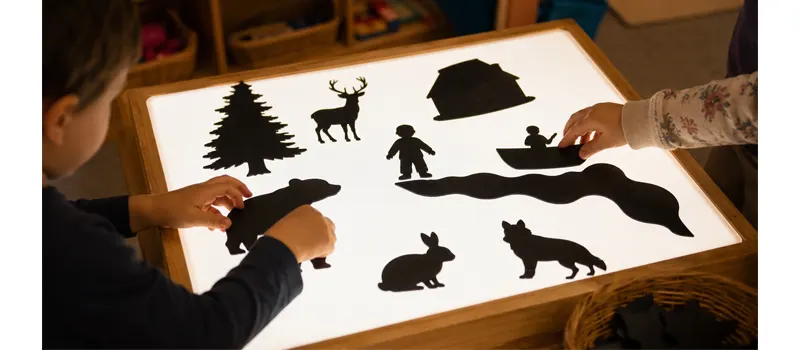
Shadow and silhouette play gives the light table a completely different feeling from color-based activities. Instead of focusing on transparency, children begin to notice outlines, contrast, shape, and negative space. Dark figures placed on a glowing surface immediately attract attention because the edges become clear and dramatic.
This activity works especially well with animal silhouettes, people figures, trees, buildings, vehicles, or simple story characters. Children can move the pieces around, create scenes, compare large and small shadows, or use the silhouettes to tell a short story. A tree shape may become part of a forest. A boat outline may turn into an ocean adventure. A group of animals may become the beginning of a pretend habitat scene.
Materialien:
- Black cardstock silhouette cutouts
- Animal, people, or vehicle outlines
- Transparent background sheets
- Story scene cards
- Small acrylic props
- Dry-erase markers and clear sheets, optional
Place a few silhouette pieces on the light table with one simple background. Avoid giving children too many figures at once, or the scene may become crowded. Let them arrange the pieces first, then invite them to describe what is happening. Some children may focus on storytelling, while others may become interested in tracing the outline or comparing the shapes.
For older preschoolers, you can add a clear sheet over the silhouettes and let children trace the shapes with dry-erase markers. This turns the activity into a quiet fine motor task without losing the visual interest of the light table.
This light table activity supports visual discrimination, storytelling, shape recognition, oral language, and fine motor control. It also helps children understand that we can recognize objects by their outlines, even when we cannot see color or detail.
13. Light Table Water Bead Exploration
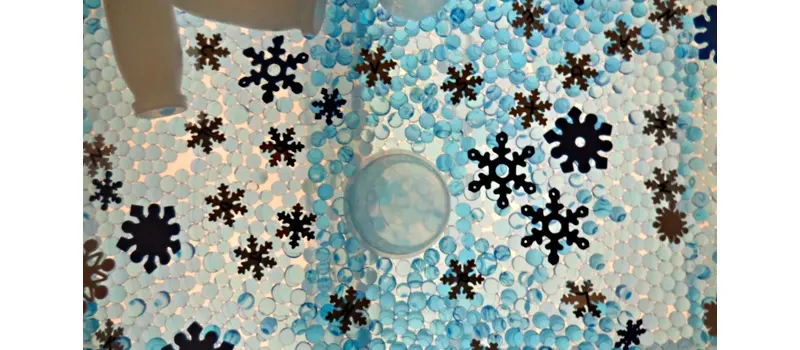
Water beads can look fascinating on a light table because the light passes through them and makes each bead appear brighter, softer, and almost glass-like. Children often enjoy rolling them gently with their fingers, gathering them into small groups, or watching how the colors change when the beads are placed close together.
Use a clear shallow tray with only a small amount of fully hydrated water beads. The tray helps keep the beads contained, and the light table makes it easier for children to notice color, movement, size, and texture without needing too many extra materials.
Materialien:
- Light table
- Clear shallow tray
- Fully hydrated water beads
- Spoons or small scoops
- Clear cups or bowls
- Tweezers or tongs
- Towels for quick cleanup
At first, children can simply explore how the beads move. They may roll them from one side of the tray to the other, scoop them into clear cups, or sort them by color. Later, you can add simple prompts such as asking children to fill a cup with five beads, make a line of one color, or compare which group has more. Because the beads are smooth and slippery, children naturally slow down and use more careful hand movements.
This activity cleverly integrates sensory play, color exploration, counting, and fine motor skills practice into a simple installation. Children are not just touching materials; they are also observing how the materials move, how they feel, how light changes their appearance, and how subtle movements produce different effects.
Safety note: Water beads should only be used with close adult supervision. Avoid this activity with toddlers or any child who may put materials in their mouth, nose, or ears. Count the beads before and after the activity, and clean the area carefully when finished.
14. Light Table Ice Exploration
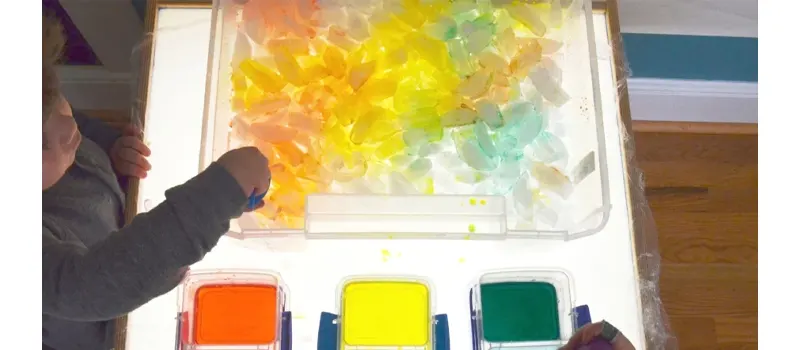
Ice always feels a little special to preschoolers, and it becomes even more interesting on a light table. When colored ice begins to melt in a clear tray, children can see water spread, colors blend, and the shape of the ice slowly change. The light underneath makes the whole process easier to observe.
This activity works well for science exploration because children can see cause and effect. Warm water makes the ice melt faster. Smaller pieces melt before larger ones. Two colors may mix as the water moves across the tray.
Materialien:
- Colored ice cubes
- Clear shallow trays
- Droppers
- Small cups of warm water
- Plastic spoons
- Towels for cleanup
Place the ice cubes in a clear tray on the light table. Give children droppers so they can add small amounts of warm water. Ask them to observe what changes first. Avoid turning it into a rushed experiment. The value comes from watching the process slowly.
This light table activity supports observation, prediction, temperature awareness, cause-and-effect thinking, and descriptive language. Children can use words such as melting, cold, water, faster, slower, spread, mix, and change.
15. Light Table Story Scenes
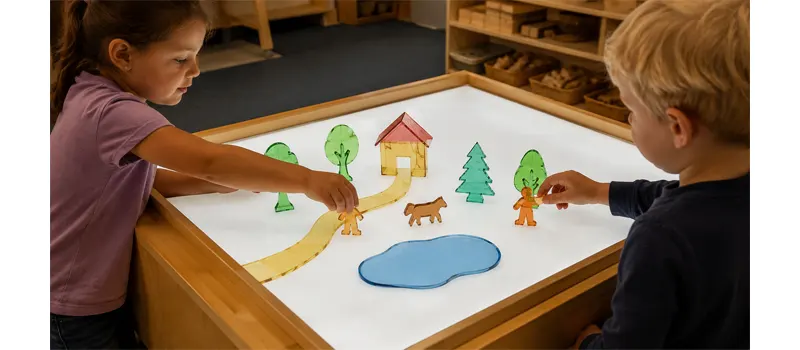
A light table can become a small storytelling stage when children are given characters, background pieces, and open-ended props. The glowing surface gives the scene a special feeling, which often encourages children to slow down and explain what is happening.
This activity is especially valuable for children who do not always speak much during group discussions. When they can move figures, build a setting, and act out a moment, language often comes more naturally.
Materialien:
- Transparent character cutouts
- Animal figures
- Scene background sheets
- Acrylic loose parts
- Small houses, trees, boats, or bridges
- Story prompt cards, optional
Choose one simple setting rather than giving children too many themes at once. A pond, forest, night sky, ocean, or classroom scene is enough. Children can place the figures, move them around, and tell what is happening. The teacher can support the story with gentle prompts: “Who is here?” “What happened first?” “Where are they going next?”
The key is to leave room for children’s ideas. A blue sheet may become water, sky, ice, or a magic road depending on the child’s story. That flexibility is what makes the activity rich.
This light table activity supports oral language, sequencing, imagination, social communication, and narrative thinking. It also helps children connect visual play with spoken expression, which is an important part of early literacy development.
How to Choose the Right Light Table for Preschool Classrooms
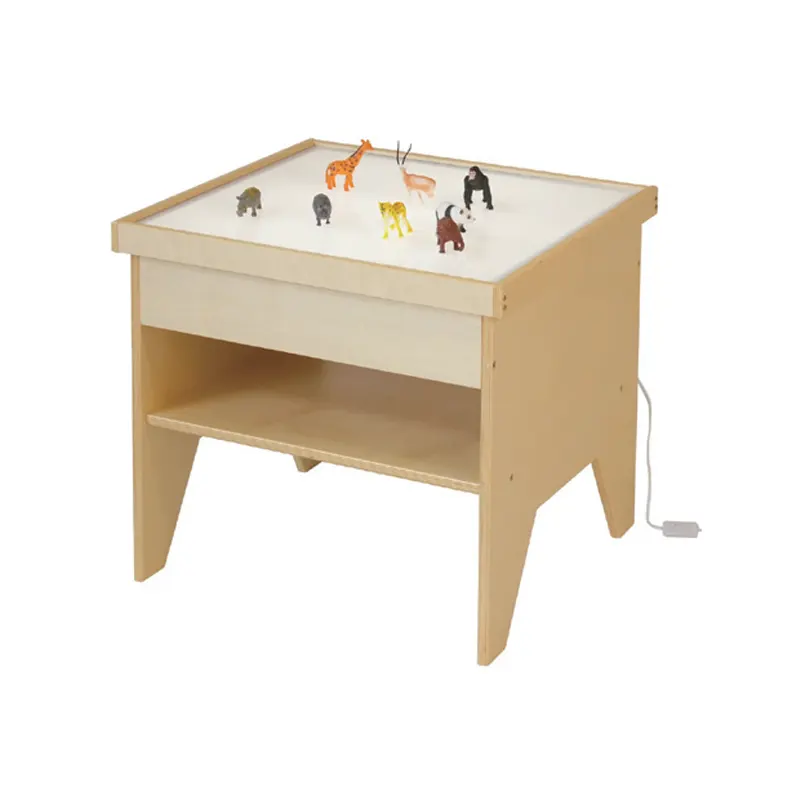
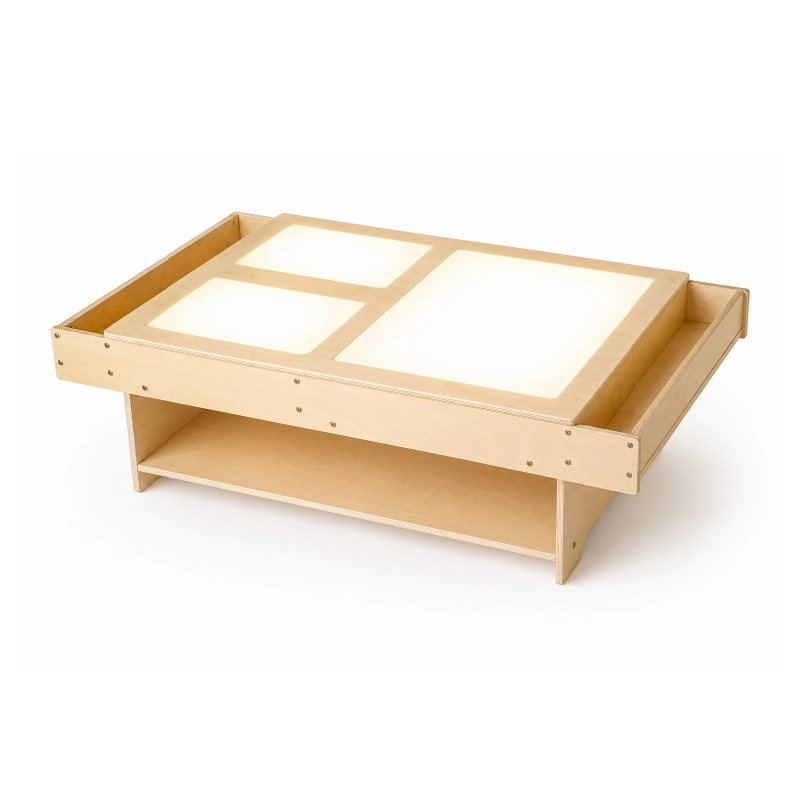
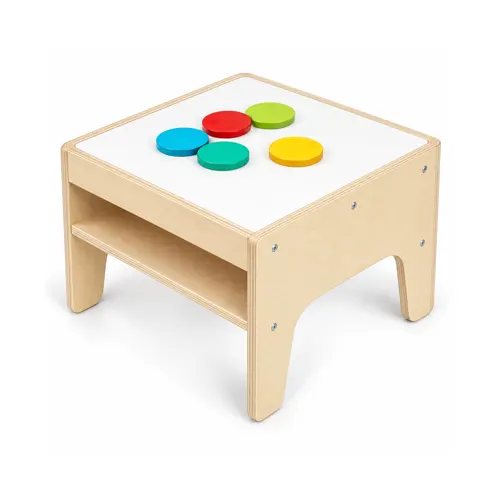
Choosing a light table for a preschool classroom should start with one question: how will children actually use it every day? A good light table is not only bright and attractive. It should be safe, stable, easy to clean, comfortable for young children, and flexible enough for different activities such as color mixing, tracing, sorting, sensory exploration, building, and early math games.
Start with the Right Size for Your Classroom
The size of the light table should match both your room layout and the number of children who will use it at the same time. For most preschool classrooms, a medium-sized light table works well because it allows two to four children to explore together without feeling cramped. If the light table will be used in a learning center, art area, or sensory corner, make sure there is enough space around it for children to move, sit, reach materials, and clean up independently.
Check the Height for Preschool Children
Height is very important because children need to reach the surface comfortably. A light table should allow children to stand or sit without raising their shoulders, bending awkwardly, or leaning too far across the table.
For younger preschoolers, lower tables are easier to use while standing. For older preschoolers, a slightly taller table can work well with small chairs. If the table will be used by mixed age groups, an adjustable height design can be a better long-term option.
Choose Safe and Comfortable Lighting
The light should be bright enough to make materials glow clearly, but not so harsh that it causes eye discomfort. Look for soft, even lighting across the whole surface. Avoid tables with strong bright spots, flickering light, or uneven corners because these can make activities less comfortable and less useful.
A dimmable light table is especially helpful in preschool classrooms. Teachers can lower the brightness for calm sensory play or increase it for tracing, color work, and close observation. Warm or neutral white lighting usually feels softer and more natural for young children than extremely cold, bluish light.
Look for a Strong, Child-safe Table
Preschool children will press, tap, build, spill, and sometimes climb their hands onto the surface. The light table needs a durable top that can handle daily use. The surface should feel smooth, stable, and easy to wipe clean.
A good classroom light table should have:
- A strong, impact-resistant light surface
- Rounded corners and smooth edges
- A stable frame that does not wobble
- A surface that is easy to clean after sensory play
- Materials that can handle frequent classroom use
If you plan to use water beads, gel bags, washable paint bags, natural materials, or sensory trays, easy cleaning becomes even more important. The surface should not stain easily or leave marks after repeated use.
Check the Power and Cord Design
The power cord should not cross walking areas or create a tripping risk. If the light table is rechargeable, check how long it can be used after charging. Safe power design makes the table easier to manage in a preschool setting.
Consider Storage and Accessories
A light table becomes much easier to use when materials are stored nearby. Transparent counters, acrylic blocks, tracing sheets, color paddles, magnifying tools, mirrors, and sensory trays should be easy for teachers to prepare and easy for children to return. If possible, choose a light table with nearby shelves, bins, or storage carts. This keeps the activity area organized and helps children use the materials independently.
Decide Between a Light Table and a Light Panel
Not every classroom needs a full light table. A light panel can be a smart choice for smaller spaces or flexible activities. It can be placed on a table, used on the floor, stored away after use, or moved between classrooms.
A full light table is better when you want a permanent learning center. It gives children a dedicated space and usually feels more stable for daily classroom routines.
Tips for Supporting Light Table Activities in Preschool Classrooms
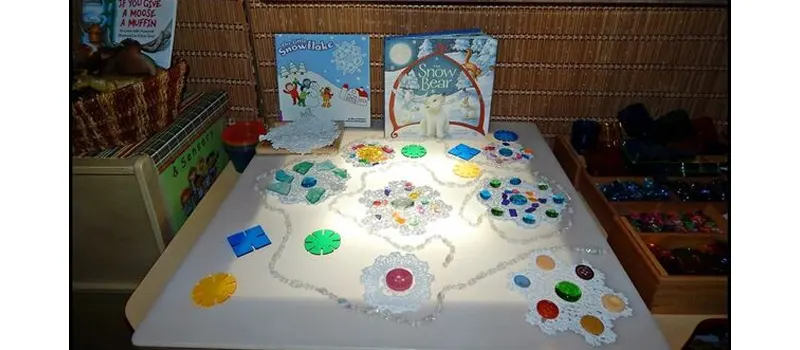
A light table can quickly catch children’s attention, but the real value comes from how teachers prepare the space, choose the materials, and guide the exploration. When materials are chosen carefully, and the space is well managed, children can explore more independently and stay engaged for longer.
Keep the Setup Simple
A crowded light table can quickly make children lose focus. When there are too many pieces on the surface, children often begin dumping, grabbing, or moving things without much thought. A smaller setup usually works better because it gives children space to observe, arrange, test, and return to the same idea several times.
Choose Materials With a Clear Purpose
The best materials are the ones that change in some visible way under light. They may reveal hidden details, create stronger outlines, show color changes, or encourage children to look from a new angle. When choosing materials, think less about how many items you can add and more about what children will be able to notice, compare, or test.
Rotate Materials Slowly
Children do not need a completely new setup every day. In many classrooms, children need time to return to the same materials and deepen their play. Instead of changing everything, adjust one small part of the activity. You might change the background, add one tool, reduce the number of pieces, or introduce a new question for children to explore.
Set Clear Rules Before Play
Simple rules help children use the light table safely and respectfully. The rules should be short and easy to follow, such as keeping materials on the table, using gentle hands, and giving others enough space. When expectations are clear, children can explore more independently without constant teacher correction.
Use Trays to Define the Activity Space
Trays help children understand where the activity begins and ends. They also keep small or messy materials from spreading across the whole table. This is especially helpful when the activity involves sensory exploration, natural objects, or loose parts that children may want to move around.
Limit the Number of Children
A light table needs enough space for children to see, reach, and move materials carefully. If too many children gather around it, the activity can quickly become noisy and rushed. A smaller group allows children to slow down, talk about what they notice, and take more care with their work.
Ask Questions That Help Children Notice More
Teacher questions should support observation, not interrupt the play. Instead of giving too many instructions, ask questions that help children look again: “What changed?” “What do you notice now?” “How did you make that happen?” “What happens if you move it closer?” These questions keep the learning connected to the child’s own exploration.
Connect Activities to Classroom Themes
Light table activities become more meaningful when they connect to what children are already exploring in the classroom. A nature study can lead to close observation of thin leaves or petals. A story theme can become a shadow scene. A math focus can become a hands-on counting or pattern activity. The connection should feel natural, not forced.
Watch for Sensory Needs
Some children are strongly drawn to the glow of a light table, while others may find it too bright or visually busy. Teachers should observe how children respond. Softer lighting, fewer materials, and calmer activities can help children who need a quieter experience.
Make Cleanup Easy to Understand
Children are more likely to clean up when every material has a clear home. Use small containers, simple labels, or picture cues so children know where things belong. A simple cleanup system also makes it easier for teachers to use the light table regularly.
Observe How Children Use the Materials
The way children use the light table can tell teachers a lot. Some children may focus on building, while others may notice tiny details, create stories, or repeat the same movement many times. These choices show what children are interested in and what skills they are practicing.
Keep the Activity Open-Ended
The strongest light table activities leave room for children to make decisions. There does not need to be one correct result. Children should be able to move, test, rebuild, compare, and change their ideas. This keeps the activity meaningful while still supporting real learning.
Schlussfolgerung
A well-planned light table area can make classroom exploration easier to organize and more enjoyable to use. Xiha Kidz can help you match the right light table with the materials needed for daily classroom use, including transparent blocks, color exploration tools, sensory materials, counting resources, and other hands-on learning supplies. With the right setup, a light table becomes more than a special activity corner. It becomes a flexible learning space that teachers can use again and again with confidence.
FAQs
At what age is best for light table activities?
Light table activities are usually suitable for preschool children around ages 3 to 5, but the materials should always match the child’s age and safety needs. Younger children need larger pieces, simpler setups, and close supervision. Older preschoolers can handle more detailed activities, such as letter hunts, counting mats, pattern building, and simple science observations.
What is a light table activity in preschool?
A light table activity is a hands-on learning experience that uses light to help children explore color, shape, texture, and small details. In preschool classrooms, teachers often use light tables with gems, blocks, natural materials, gel bags, or sensory trays. The goal is not only to make materials look attractive, but to help children observe more carefully and stay engaged in meaningful exploration.
How do you clean a preschool light table?
Wipe the surface after each use with a soft cloth and a classroom-safe cleaner. Clean spills immediately, especially after water, gel, ice, or sensory play. Avoid rough cleaning tools that may scratch the surface. Materials such as counters, tiles, trays, and paddles should also be cleaned regularly.
What should teachers avoid when preparing light table activities?
Avoid placing too many materials on the light table at once. When the setup is overcrowded, children often move pieces around without real focus. It is also important to avoid sharp objects, fragile glass, unsafe small parts, and materials that are difficult to clean. For preschool use, the best activities are simple, safe, and easy to reset.
How can Xiha Kidz help schools set up a light table area?
Xiha Kidz can provide a one-stop solution for preschool light table areas, including suitable light tables and matching activity materials. Schools can get support with product selection, material matching, and classroom setup planning, instead of purchasing separate items without knowing whether they work well together. This makes it easier to build a practical, safe, and engaging light table area from the beginning.

 German
  English
  Arabic
  French
  Italian
  Spanish
  Thai
Thai  Japanese